
→ Me voy a ir, me voy, estoy ido. San Sebastian, DAE-Donostiako Arte Ekinbideak : Egia Cultural Centre, 28 May – 26 June 1999.
This first FOKU is dedicated to Iñaki Garmendia, whose video work has been referential for many of us. On February 25th 2020, we met with Iñaki and offered him to make do an exhibition in Atoi, which we are finally opening: Ratatatat. This collaboration has granted us a deep knowledge of Iñaki’s work, and we have discovered that its driving force is fragility, be it structural, discursive or emotional. His processes often start from derivatives, versions of cultural objects to which he remains secretly linked and over which he works from a logic of attrition. All this is most clearly revealed in his video production of the last 20 years. We believe it is important to make such a body of work available to the public, and therefore, it will be displayed as long as the exhibition is open.
Okatik itsasora
2025
In 2025 artist Gema Intxausti presented at Iturribide Etxea, an art space managed by Caniche, Ura ibaia da Ibaia ura da. The exhibition showed the result of the creative process carried out by Gemma during a residency in that same space. Iturribide Etxea is located in Elantxobe, a town that is part of Urdaibai, a reserve of the biosphere located in the Busturialdea region in Biscay. Gema Intxausti is from Gernika, which is also part of Urdaibai. Her exhibition included graphic sculptural pieces as well as some of the original documentation she had used during her creative process.
A biosphere reserve is a representative geographical area of diverse terrestrial or marine ecosystems that has been internationally recognised by UNESCO’s MAB programme to demonstrate that it is possible to reconcile nature conservation with sustainable socio-economic development. In this case, the name is composed of the Basque words ur (‘water’) and ibai (‘river’).
In response to the invitation to elaborate an exhibition handout, Amaia created a text piece, which is the basis for Okatik itsasora, a performance she presented as part of the Kortak programme, also in Iturribide Etxea. Oka is the name of the river that flows through the Urdaibai reserve, the backbone of its landscape, geographically defined by the river’s drainage basin and its small tributaries. In the performance, Amaia reads and pairs up two groups of word combinations. The first is a list of permutations —all possible combinations— of the names of the neighbourhoods belonging to Urdaibai, enunciated as journeys between them using the Basque formula -tik …-ra (‘from… to’). With each permutation, she draws a connecting line on a sheet of tracing paper overlaid on a map of Urdaibai, on which she has previously marked the point corresponding to each location. The second list combines words and expressions relating to water, its qualities, and its movements, alongside others extracted from the materials used by Intxausti during her research and motifs from folk songs. The Oka is born a river and dies an estuary. Its physical transformation clearly divides its course into two sections owing to the effect of the sea. As the performance unfolds, the combinatorial exercise in Okatik itsasora also departs from the idea of narrative sense, bringing poetic associations to light through the blend.
See: Early works
Comienzo
2025
Comienzo is a version of Inauguro, and it is part of the series Deriva de sinónimos. It originates in the context of a workshop Amaia teaches in ESABP, École supérieure d’art Pays Basque. Amaia decides to perform her work instead of talking about it. Other teachers warn her: the students usually show late, in dribs and drabs. In response, and because she thinks it is necessary for the workshop that all of the students see the performance, Amaia prepares a versión in French of Inauguro that begins with ‘Je commence (in English ‘I begin’), to which she adds a rule: if any new person enters the classroom, then she interrupts the workshop to start Comienzo once again, which, in fact, happened multiple times over that morning.
This performance was later presented in Holding breath: a dying poem, an exhibition curated by Alex Alonso Dían at fluent, an art space he has directed since its creation in 2016. The curatorial tests starts as follows: ‘Holding breath: a dying poem is a year–long exhibition that considers how transmission, change and affection reverberate on us, once objects and bodies are no longer present.’ The exhibition was articulated in five acts, plus an ouverture and and an epilogue. Amaia took part in the second act.
In this version, the performance restarts if someone new enters the space while the performance is happening, but it does so only after “I interrupt myself” has been said. Unlike in previous Derivas de sinónimos, this time Amaia does not read but recites by heart instead. She decides to do so based on the feedback she receives in a workshop she teaches at Hangar in Barcelona as part of the programme Resonancias, in which Amaia shares with a group of artists her writing process.
In Holding breath: a dying poem Amaia shows for the first time the graphic version of the performance, a poster that inhabits the space together with other objects and texts, traces left by the interventions of other artists by which their times overlap.
See: Early works, Desaparezco (2012–), Renuncio (2012–), Inauguro (2014–), Je marche / Camino (2014–), Tarareo (2014), Tronco, ramas, delta (2015)
Robert Collins et Urra
2016
Amaia is multilingual. Her two mother tongues are French and Spanish. She has occasionally mentioned that this means she is constantly engaged in mental translation —a ceaseless search for the precise word— which provides fertile ground for artistic practice. This is the context for Robert Collins et Urra, a collaborative project with the artist Oier Iruretagoiena.
The only presentations of this project to date took place in 2016, in two different formats and contexts. First, as a radio clip, it was released as a podcast as part of RSS’s (Radio Reina Sofía) Ecolalias II series, within the section dedicated to the creative processes of artists who use spoken language. It is a recording of an exercise carried out by Amaia and Oier in two voices, and the languages involved are Spanish and Basque.
Oier’s mother tongue is Basque, a language which, although not her mother tongue, Amaia also speaks. In the exercise, the two engage in conversation using combinations of words that can turn out to be false friends between the two languages. A false friend is a word from another language that resembles, in spelling or pronunciation, a word from the speaker’s mother tongue, but which has a different meaning. The result is a bizarre conversation in which it is ultimately difficult to tell who is translating for whom. The words used are also part of a graphic glossary listing the false friends and their translations.
The second presentation of the project was in graphic form. To mark the tenth anniversary of the Zarata Fest festival, the publisher Lalavandera produced a book entitled Zarata Fest Book, designed by Elena Aitzkoa, with contributions from various authors. These include Amaia Urra and Oier Iruretagoiena, who publish the graphic versions of several exercises carried out as part of Robert Collins et Urra.
See: Early works
Pulkiki pulfiki
2023
Pulkiki Pulfiki is a sung performance with a slide show of digital photographs taken at the Bretxa Market in Donostia-San Sebastian, where Amaia lives. The images mainly show the fishmongers’ counters, where signs listing the names and prices of the fish can be seen alongside the fish themselves, but also the butchers’ counters, greengrocers’ and other market stalls. In each photograph, Amaia hums a melody in which she combines the syllables of the different products. The method is reminiscent of Mikel Laboa’s Lekeitioak in which, as Oier Etxeberria —an artist and friend of Amaia’s— states, the text is blurred, becoming a sonic riddle.
At the moment, Amaia is fully focused on raising her newborn baby; going shopping is one of the things she does during the day. In the evenings, she prepares for the performance whilst her daughter sleeps.
In her book For More Than One Voice: Toward a Philosophy of Vocal Expression (2005), Adriana Cavarero writes about the voice in a lullaby: ‘In the lullaby, language returns to being pure voice, pure sound, a rhythmic pulse that does not communicate a text but rather the presence of a unique body to another. The words of the lullaby do not matter for what they mean, but for how they resonate: a vocal cradle that lulls the child into sleep through the absolute acoustic materiality of the mother’s voice’. The political body on which Cavarero’s lullabies and the Lekeitioak focus is, in this case, the body of a woman who combines artistic creation with childcare.
In the opening pages of the book Diario del afuera (Exteriors in English), which are an introduction of sorts, Annie Ernaux writes: ‘have avoided as much as possible putting myself on stage and expressing the emotion that lies at the origin of each text. On the contrary, I have tried to practice a sort of photographic writing of the real, in which the lives I happened upon would retain their opacity and their mystery. (…) But, in the end, I put much more of myself into these texts than I had intended: obsessions, memories unconsciously dictating my choice of words or the scenes I recorded. And now I am sure that one discovers more about oneself by projecting oneself into the outside world than through the introspection traditionally associated with the journal intime—which, having been around for two centuries, is not necessarily eternal’.
See: Early works, C/Aldamar (2012), Berio Pasalekua (2014), Pantalón vaquero (2012), Muleta gris (2012), Una vuelta-ta (2013–)
Buisson ardent
2024 -
Buisson ardent is the French version of the performance Arbusto Ardiente, which is part of the Growing Images & Talking Weeds series, presented at the Fête de la Moisson organised by Les Laboratoires d’Aubervilliers, Aubervilliers, in collaboration with La Semeuse, a community garden that serves as a meeting place for the neighbourhood and a centre for ecological research. The garden itself is an artwork created in 2010 by the Slovenian artist and architect Marjetica Potrč. Buisson Ardent returns to the performance’s original format: a reading in which Amaia is partially concealed amongst plants.
See: Early works, Growing Images & Talking Weeds (2015–), Arbusto ardiente (2016–), Maleza ardiente (2017), Maleza ardiente (2018), Arbusto ardiente (2019), Sasia sugarretan (2021–), Burning Bush (2021–)
Burning Bush
2021 -
Burning Bush is the graphic and English-language version of Arbusto Ardiente; it is part of the Growing Images & Talking Weeds series and is based on plants from the British Isles, Ireland and Scotland. Amaia spent time as a resident at the library of the Royal Botanic Gardens, in Kew (England), which houses one of the most comprehensive collections of British plants, and she used this collection as the basis for this adaptation into English. It has the form of a poster designed in close collaboration with Maite Zabaleta, and was part of the group exhibition Komunikazio-Inkomunikazio, curated by Oier Etxeberria at Tabakalera Donostia-San Sebastian, which took the work Lekeitioak by the Basque singer-songwriter Mikel Laboa (1934–2008) as its departure point.
See: Early works, Growing Images & Talking Weeds (2015–), Arbusto ardiente (2016–), Maleza ardiente (2017), Maleza ardiente (2018), Arbusto ardiente (2019), Sasia sugarretan (2021–), Buisson ardent (2024–)
Sasia sugarretan
2021
Sasia Sugarretan is the Basque version of Maleza Ardiente, based on plants from the Basque Country, and is part of the Growing Images & Talking Weeds series. In the recording, we hear the voice of Saioa Martin Telletxea, who also helps Amaia with her writing. The piece formed part of the group exhibition Komunikazio-Inkomunikazio, curated by Oier Etxeberria at Tabakalera Donostia-San Sebastian, which took the Lekeitioak series by the Basque singer-songwriter Mikel Laboa (1934–2008) as its point of departure. Alongside the sound installation, Amaia displayed bales of straw and Burning Bush (2021), a graphic version in English of Arbusto Ardiente.
See: Early works, Growing Images & Talking Weeds (2015–), Arbusto ardiente (2016–), Maleza ardiente (2017), Maleza ardiente (2018), Arbusto ardiente (2019), Burning Bush (2021–), Buisson ardent (2024–)
Arbusto ardiente
2019
Arbusto ardiente (2019) is a version of its eponymous Arbusto ardiente (2016–), conceived in this case not as a performance but as an installation. It was presented as part of the 45th National Salon of Artists in Bogotá, Colombia. Under the subtitle The Fabric of Reversal, the piece was part of a group exhibition that took place across various art venues in the city. The installation was set up in the Jardín-Huerta at Espacio Odeón, created that same year as a result of the Laboratorio de Regeneración Urbana: Huertas y Arquitectura organised by the same venue, and conceived as an experiment to intertwine architectural design, landscape and urban agriculture within the cultural centre. Today, this garden remains active under the name Huerta Comunal del Espacio Odeón and continues to be dedicated to educational activities and community engagement.
See: Early works, Growing Images & Talking Weeds (2015–), Arbusto ardiente (2016–), Maleza ardiente (2017), Maleza ardiente (2018), Sasia sugarretan (2021–), Burning Bush (2021–), Buisson ardent (2024–)
Maleza ardiente
2018
Maleza ardiente (2018) is a version of the piece of the same name, Maleza ardiente (2017), which in turn is a version of Arbusto ardiente (2016–). They all belong to the series Growing Images & Talking Weeds. In this case, it is an adaptation of the performance she staged in Mexico, based on the vegetation of the Iberian Peninsula, which was presented as part of the group show Bi Dos Two, organised by eremuak at Azkuna Zentroa in Bilbao. On this occasion, Amaia decided to not use any plants, and the piece is presented in a completely darkened cinema theatre, without any visual references.
In cinema, there are different types of sound treatment, which are defined according to the way the sound relates to the image. Amaia’s voice in Maleza ardiente sounds like what is known in cinema as a close-up voice; a sound that is close, intimate, echo-free and rich in detail, and which does not carry the acoustic qualities of the space depicted in the image, but instead seems to speak directly into the viewer’s ear. A close-up voice is recorded with the mouth very close to the microphone, giving it an almost tactile quality. Amaia uses this same technique to record her voice. But unlike in cinema, the image to which this voice relates is not the one on the screen, but the one that each member of the audience imagines.
See: Early works, Growing Images & Talking Weeds (2015–), Arbusto ardiente (2016–), Maleza ardiente (2017), Arbusto ardiente (2019), Sasia sugarretan (2021–), Burning Bush (2021–), Buisson ardent (2024–)
Maleza ardiente
2017
Maleza ardiente is a version of Arbusto Ardiente; both are performances from the series Growing Images & Talking Weeds. It is an adaptation of the piece to a classification of weeds in Mexico, created following an invitation from the Héctor Escandón Gallery in Mexico City. Weeds —also known as brush or arvense herbs— do not constitute a botanical category, since there is no botanical distinction between ‘bad’ and ‘good’ plants —despite the existence of weed science, the science and technology dedicated to the study and control of ‘weeds’—. Weeds are an anthropocentric concept referring to plants that grow in places and at times unwanted by humans, interfering with their interests. Amaia came across the idea of using weeds for this adaptation quite by chance, unintentionally. Whilst in Mexico, she asked someone the name of a plant she had stumbled upon, who replied that it was simply a weed.
See: Early works, Growing Images & Talking Weeds (2015–), Arbusto ardiente (2016–), Maleza ardiente (2018), Arbusto ardiente (2019), Sasia sugarretan (2021–), Burning Bush (2021–), Buisson ardent (2024–)
Arbusto ardiente
2016 -
Arbusto ardiente is a performance from the series Growing Images & Talking Weeds, for which Amaia uses the botany manuals she studied during her residency at the Jean-Jacques Rousseau Park in France. Amaia compiles lists which she reads out live, partially concealed amongst plants. The lists are divided into three sections. The first section consists of plant names, which she reads preceded by ‘eres mi… (in English ‘you are my…’). The second comprises morphological characteristics of plants, preceded by ‘me gusta que seas…’ (in English ‘I like that you are…), and the third is made up of the places where they grow, recited as ‘me gusta encontrarte en…’ (in English ‘I like to find you in…’). Freed from the scientific criteria of their botanical classification, and read in a soft, measured and (almost) neutral tone, the lists express the emotional, popular, sexual, colonial and sometimes comical qualities of the language that human beings —scientists, men and Westerners— have projected onto them.
See: Early works, Growing Images & Talking Weeds (2015–), Maleza ardiente (2017), Maleza ardiente (2018), Arbusto ardiente (2019), Sasia sugarretan (2021–), Burning Bush (2021–), Buisson ardent (2024–)
Bla. Un coup des dés hazard jamais le n’abolira un
2017
In 2017, Amaia will once again employ the strategy she used with Bla for The Great Conversation. This time, she used it in a study group organised by Bulegoa z/b, which was dedicated to the work of Marcel Broodthaers. Her contribution is entitled Bla. Coup de dés hazard jamais le n’abolira un, and Amaia uses three texts: an extract from a conversation between the critic Irmeline Lebeer and Broodthaers regarding his exhibition Catalogue-Catalogus; the introduction for the working group written by the graphic designer Filiep Tacq; and an extract from the self-interview that Broodthaers published in the catalogue of another of his exhibitions, MTL. The technique in this case involves compiling lists from the words contained in these texts and arranging them alphabetically. Short words are grouped together in a second group. Punctuation marks form a third group, in which the silence between marks reflects the duration of the absent words. Amaia reads them all aloud in public. Unlike in previous presentations of Bla, in Bulegoa z/b Amaia shares with the audience —projected onto the wall— the lists she has compiled as a sort of score to be performed, read aloud, live. In the discussion that followed, Amaia mentions that in the interview with Broodthaers, Lebeer asked him whether he regarded objects as words, whereas she, on the other hand, likes to regard objects as words and subject them to different kinds of operations, such as classification and ordering.
See: Early works, Bla (2015–)
Bla
2015 -
In 2015, Amaia received an invitation to speak about her artistic practice at Tabakalera, as part of the Bistariak programme. To structure the talk, Amaia wrote a script listing the activities that made up her practice, and read it out using the infinitive form of verbs. The talk is also punctuated by quotations from authors such as Emmanuel Hocquard and David Antin, both experimental poets —the latter known for his ‘talk poems’, based on lectures. These quotations are the exception to the rule; they act as hiatuses in a method otherwise strictly followed to its fullest extent, resulting in a string of infinitives, only interrupted to read a few quotations from these authors.
Later that same year, The Great Conversation took place in Tabakalera’s newly inaugurated premises: a series of events organised as public round-table discussions, which acted as a prelude to the first of the biennial curatorial and research cycles directed by Oier Etxeberria at the Tabakalera International Centre for Contemporary Culture in Donostia-San Sebastian. Each roundtable included guests from different fields of knowledge who shared a roughly ten-minute, freely formatted reflection on a given topic. The project for the 2016–2017 biennium was entitled Stimulants: Traffic and Euphoria, and The Great Conversation was structured around four round-table discussions, each centred on a stimulant such as coffee, sugar or opium, exploring the significance these stimulants —derived from colonial exchange— had played in the shaping of modernity. Amaia was invited to join the panel on tobacco, composed of five people. Her response to this invitation was Bla, which is part of a series of the same name through which Amaia develops a method for sidestepping, and thus confronting, the invitations she receives to speak in public.
Bla is a strategy that allows Amaia to address —whilst at the same time avoiding— the topic of the invitation —in the case of The Great Conversation, tobacco— by using one or more pre-existing texts that do address it. Among the texts she used for Stimulants: Traffic and Euphoria were the opening text on the theme and the format of the round-table discussion, written by Oier Etxeberria, and The Gesture of Speaking by Vilém Flusser. Both allowed her to address the proposed topic whilst simultaneously confronting the fear she felt of speaking in public and of being part of the panel at an event with many guests and little time to speak. Amaia employed a technique whereby she arranged the words she found in the texts she used in alphabetical order. This process rendered the texts unintelligible and, at the same time, expressive. She spoke about speaking, but without actually saying anything.
In 2018, Amaia is invited to Radio Consonni, a series of live radio programmes with an audience that took place at Azkuna Zentroa in Bilbao, an institution where Consonni spent two years as a resident collective. The shows covered a range of topics, featuring guests from various professional fields, and were subsequently released as podcasts, available via the Azkuna Zentroa and Consonni websites. The programme in which Amaia takes part is hosted by Miguel Álvarez-Fernández, who also presents the Ars Sonora programme on Radio Nacional de España, and is entitled ‘Art and Radio’. The guests appear before the audience seated around a table on stage. Amaia performs once again with Bla, incorporating the text she received as an invitation, which mentions The Great Conversation.
See: Early works, Bla. Coup de dés hazard jamais le n’abolira un (2017)
Growing Images & Talking Weeds
2015 -
Chêne Charme Platane is the working title with which Amaia begins a new series that she will eventually call Growing Images & Talking Weeds. It originated in 2015, when Amaia had the opportunity to work with the botanists at the Jean Jacques Rousseau park, an English-style park situated in the French region of Oise, where the philosopher spent the final weeks of his life. The English-style garden, also known as a landscape garden, is a type of Romantic garden that mimics wild and idealised nature, mirroring the soul. Within the philosophy of the Romantic garden, the stroll occupies a central place for self-knowledge and is understood as the means through which the aesthetic experience is organised. In works such as Una vuelta-ta, Amaia also explores the stroll as a space for exploring the fluidity of the relationship between perception, cognition and language. In response to the invitation, Amaia once again relies on the form of the stroll and on naming what she sees, a technique she had previously used in the series Cantar las calles and in Una vuelta-ta. Unlike in these previous performances, in Chême Charme Platane, the eye that observes and describes is, this time, a trained eye. For the performance, an expert in botany names the plants, and Amaia’s focus shifts from the object —the plant— to its technical terminology.
Botanical catalogues grow as new species are discovered, catalogued, classified and named. The scientific names of plants are assigned using the binomial nomenclature system, devised by the Swedish naturalist Carl Linnaeus in the 18th century and formalised in his work Species Plantarum (1753). In the binomial system, each plant species has a unique scientific name in Latin consisting of two parts written in italics. The first part refers to the genus and is written with a capital letter. The second part is called the epithet, and this is where options come into play. The botanist who discovers or formally describes the plant will choose the specific epithet. Usually, they do so by drawing inspiration from sources such as the plant’s physical properties, its geographical origin, its uses, sometimes even a kind of secret tribute (eponyms). If the catalogue is examined closely, it is not difficult to find, for example, more or less veiled tributes to their loved ones. Linnaeus himself was known for his mischievous touch: he named beautiful or useful plants after his friends, whilst giving weeds or thorny plants the names of his enemies.
Amaia uses botany manuals often in her work. Just as with the dictionary, she employs these as a working tool in a series of consecutive pieces. These are the sources from which she extracts words, which she then sorts according to criteria not related to botany, but rather using more subjective approaches, which bring out their most expressive qualities.
See: Early works, Arbusto ardiente (2016–), Maleza ardiente (2017), Maleza ardiente (2018), Arbusto ardiente (2019), Sasia sugarretan (2021–), Burning Bush (2021–), Buisson ardent (2024–)
Tronco, ramas, delta
2015
Tronco, ramas, delta is an artist book self-published by Amaia Urra and created in close collaboration with the designer Maite Zabaleta. It brings together the graphic versions of various pieces from the series Deriva de sinónimos. These graphic versions are not transcriptions of the performances but rather the scores that serve as the basis for the performances. In the Derivas de sinónimos, Amaia establishes a code according to which certain synonyms must be read, whilst others are optional. Whether to read them or not —to go through them or not— is a decision made in the here and now of the performance, giving rise to one or another possible chain of synonyms. Tronco, Ramas, Delta also includes a new performance, Ramificarse, which is exclusively graphic in form and occupies the central spread of the publication, printed on semi-transparent paper. Its structure —that of a table whose columns double in number across successive rows— mirrors the way in which the Microsoft Word word-processing programme transcribes the information obtained from an online dictionary search; therefore, its graphic form is an expression of the process of creating the performance.
Foku is always an intense learning journey for us. Delving so deeply into the work of an artist teaches us a lot about their processes and motivations, and also opens up a world of contextual references and practices from other parts of the world and different contexts with which the artist has engaged throughout their life, and alongside which they have shaped their understanding of artistic practice. When we talk amongst ourselves about Foku, we often point out this paradox: the fact that the more you focus on an individual —the closer you zoom in— the more the community that shaped the subjectivity behind the work comes to the fore. Sometimes, you find elements in these documents that are useful for the work you’re currently undertaking, and, as in this case, you borrow methodological approaches that can be helpful.
The Coming Boogie-Woogie has been a lovely discovery. It is a publication by Mychoreography, a Master’s programme and research initiative in choreography developed at the Stockholm University of the Arts, which sought to challenge the traditional boundaries of dance, understanding choreography not only as the design of bodily movements, but as a critical tool for organising space, time, thought and social structures. The programme was led, amongst others, by Mårten Spångberg, with whom Amaia had collaborated in the context of Mugatxoan and in Xavier Le Roy’s Project. The book, itself an essay on choreography, functions as a collection of texts by students and researchers associated with this experimental programme, and is structured as a glossary of terms organised in alphabetical order and cross-referenced via a ‘See:’ section—an approach we have borrowed to link Amaia Urra’s series of works to one another.
The Coming Boogie-Woogie has a particular quality: it works well for practising bibliomancy. If we open it at random, it is highly likely that what we read will resonate, to a greater or lesser extent, with Amaia Urra’s artistic practice, and maybe also to any other’s. Let’s try… Page 97: ‘HESITANCE is a neologism that joins hesitation and resistance. Confronting the pause, the uncertainty, even the reluctance that hesitation bears with the refusal, preventative and oppositional force of resistance produces a more strategic stubbornness. This can be found of unmistakable value when working in groups or in politics. It prolongs the space traditionally allowed for uncertainty. This is not simply as a means of “buying time” (See: Opportunism) but rather claiming that to be certain (about something) is a highly contingent and historically produced phenomenon. The pause before action is not inert nor lost but full of resistance and precision. It is not waiting to pounce; that again, privileges a particular dramaturgy of strategic action. It is not waiting. It permeates. It steeps. It feels. It diffuses. It says, “Fuck off, we have imagination” which is, politically speaking, desperately shy. It does not resist in order to think further, to plan better, to devise solutions but instead to carve space for full porous inaction. See: Goal.’
See: Early works, Desaparezco (2012–), Renuncio (2012–), Inauguro (2014–), Je marche / Camino (2014–), Tarareo (2014), Comienzo (2025–)
Tarareo
2014
According to the Royal Spanish Academy (RAE), ‘literal’ refers to that which is ‘in accordance with the letter of the text, or the exact and proper meaning – rather than a broad or figurative one – of the words used therein’. The literal is the antonym of the figurative, and establishes the baseline from which certain figures of speech, such as the metaphor, are understood as deviations. Vice versa, literalness can also be used to create wordplay, often of a comic nature; for example, by taking metaphors strictly at face value to create an absurd situation.
In response to an invitation to take part in Zarata Fest, Festival of Rare and Related Music held in Madrid in 2014, Amaia Urra presents a new piece from the series Deriva de sinónimos in the form of a concert, which begins with the verb ‘tararear’ (‘to hum’ in English), conjugated in the first person singular of the present indicative. Unlike other pieces in the same series, its musicality is different; rather than repeating the same melody, on this occasion —because she is performing on stage— Amaia interprets each of the verbs she “walks through” during the piece: she hums whilst humming, vocalises whilst vocalising, shouts whilst shouting, and so on.
See: Early works, Desaparezco (2012–), Renuncio (2012–), Inauguro (2014–), Je marche / Camino (2014–), Tronco, ramas, delta (2015), Comienzo (2025–)
Je Marche / Camino
2014 -
Amaia Urra is invited to take part in the Plastique, Danse, Flore festival, which takes place at Le Potager du Roi in Versailles, created by Jean-Baptiste de La Quintinie on commission from Louis XVI in the 17th century. Le Potager du Roi served as an experimental garden for testing ways of growing fruit and vegetables out of season to supply the king’s kitchen. Its director, Frédérique Séguette, was a fellow performer with Amaia on the tours of Jérôme Bel’s stage piece The Show Must Go On, and he approaches the festival with a focus on promoting visual and choreographic practices that challenge the notion of landscape and environment. For the occasion, Amaia presents a performance from the series Deriva de sinónimos, which she titled Tronco Ramas Delta, and in later presentations would come to be titled Je Marche —in French— or Camino —in Spanish—, meaning ‘I walk’ in English.
Tronco, Ramas, Delta is a Deriva de sinónimos for the verb ‘caminar (in English, ‘to walk’), hummed in the first-person singular of the present indicative. During the performance, Amaia, followed by the audience, walks briskly through the gardens with the portable PA system she previously used in Una vuelta-ta.
The triad formed by trunk, branches and delta does not belong to the field of botany, but rather to historical linguistics and dialectology, sometimes extended to taxonomy or information theory. The reference to botany is used in these contexts as an evolutionary and structural metaphor to classify the diversification of a phenomenon from its origin to its dispersion. The title, therefore, does not refer to any of the trees and plants in the King’s Garden, but to the tree-like structure itself that makes up the scores in the Derivas de sinónimos series.
See: Early works, Desaparezco (2012–), Renuncio (2012–), Inauguro (2014–), Tarareo (2014), Tronco, ramas, delta (2015), Comienzo (2025–)
Inauguro
2014 -
During the opening of the exhibition First Thought Best, organised by eremuak at Artium Museoa, Amaia Urra performs a new piece from the series Deriva de sinónimos. She begins by conjugating the verb ‘to inaugurate’ in the first-person singular present indicative: ‘inauguro’. She does so from amongst the audience, walking slowly as she moves forward, turning back to try out new combinations. At a certain point, she switches to conjugating the verb in the first-person plural present indicative, in its reflexive form: ‘miro, me miras, nos miramos, nos miramos, nos vemos, nos vemos, nos divisamos, nos oteamos, oteamos, atisbamos, nos excrutamos, nos excrutamos, nos juzgamos, nos analizamos…’ In this section, the silences lengthen, addressing a ‘nos’ comprising those present at the event—many of them artists, whether or not they are participating in the exhibition—which increases the tension in the room.
This procedure, which involves applying methods of estrangement to the perception of the everyday environment, takes us back to the Situationist drifts, specifically to Guy Debord’s psychogeographies. Interestingly, this series does not take the city as its object of perception —as in the series Cantar las calles —but rather trips through maps of synonyms taken from the dictionary, which is an ordered and relational reservoir of the words that make up a language. What the Deriva de sinónimos, when considered in Situationist terms, would bring to the surface, would therefore be the tensions and emotions relating to the use of language itself.
See: Early works, Desaparezco (2012–), Renuncio (2012–), Camino/Je Marche (2014–), Tarareo (2014), Tronco, ramas, delta (2015), Comienzo (2025–)
Berio pasalekua
2014
In 2014, Amaia took part in the first eremuak group exhibition at Artium Museoa. Entitled First Thought Best, the exhibition brought together the work of around twenty artists from the Basque Country who had applied to the call for submissions. Amaia presented two performances on this occasion: Berio Pasalekua and Inauguro.
Berio Pasalekua is part of the series Cantar las calles, in which Amaia improvises a reading of everything a street has to offer that can be read. Berio Pasalekua, like C/Aldamar (2012), is the name of a street in Donostia-San Sebastian. In this piece, Amaia does not sing, but reads rhythmically instead. Adapted for the context of a group exhibition, Berio Pasalekua took the form of a sound piece that could be listened to with headphones connected to an audio player mounted on the wall.
See: Early works, C/Aldamar (2012), Pantalón vaquero (2012), Muleta gris (2012), Una vuelta-ta (2013–), Pulkiki pulfiki (2023)
Una vuelta-ta
2013 -
In 2013, Amaia Urra revisits in Una vuelta-ta the technique of naming what she sees, which she had previously used in Pantalón Vaquero and Muleta Gris (2012). In Una vuelta-ta, the audience accompanies Amaia on a stroll through the city, during which she improvises a soft hum to name whatever catches her attention. The pace of this piece is relaxed, and the slow walk matches the rhythm of the melody. Amaia’s voice guides the audience’s gaze in a calm, almost dreamy tone, creating a sense of shared intimacy. To achieve this, rather than projecting her voice, Amaia uses a portable PA system that allows her to amplify a voice somewhere between a whisper and a sing, with her mouth very close to the microphone —a precise vocal technique she often uses in much of her work.
The intonation that Amaia employs in many of her pieces is neutral ‘but not dry’, (almost) devoid of emotion, which creates an effect of intimate detachment, giving rise to a space of possibility between two qualities that are, in principle, opposites. In For More Than One Voice: Toward a Philosophy of Vocal Expression (2003), Adriana Cavarero proposes an ontology of the voice based on the uniqueness of each body and on human relationships. For Adriana, this ontology could serve as an alternative to the traditional subordination of the voice (phoné) to abstract meaning (logos) in the Western philosophical tradition. Cavarero theorises how intimate vocalisation (murmuring, whispering or singing between lovers or between mother and child) renounces the public function of political or informative discourse to withdraw into the pure relationship between bodies. The voice thus acquires a tactile, haptic quality, to which Amaia also refers to in her text Frondoso Matorral (‘Luxuriant Bushes’).
See: Early works, C/Aldamar (2012), Pantalón vaquero (2012), Muleta gris (2012), Berio pasalekua (2014), Pulkiki pulfiki (2023)
Renuncio
2012
In 2012, during the final edition of the In-Presentable Festival, Juan Domínguez invited 100 artists who had performed at the festival over the course of its ten-year history to gather for 10 days. In-Presentable functioned as a laboratory for radical experimentation in the performing arts. In Frondoso Matorral (‘Luxuriant Bushes’), Amaia quotes the invitation she received for the tenth edition, in which Juan Domínguez writes: ‘I think there are a lot of aspects to reflect about in our field and it is also very important to realize where we are and what do we want and for what in the future. What makes sense nowadays, which are our politics, where is our activism, our desires, how we have developed our work’. In the same text from Frondoso Matorral, Amaia speaks about the personal and professional moment she is going through: ‘Sometimes, to act from inside can be a good strategy to change things. I’m not yet ready to disappear completely, but I have questions about the place where I want to be: I do not know where I want to go, but I know where I don’t want to remain (I speak in present because the question still remains unsolved’. ‘Resigning whilst continuing’ is her response to the questions raised in the context of the festival, and she does so by adapting a method and a technique to answer a question that appeals to her.
See: Early works, Desaparezco (2012–), Inauguro (2014–), Camino/Je Marche (2014–), Tarareo (2014), Tronco, ramas, delta (2015), Comienzo (2025–)
Pantalón vaquero, Muleta gris
2012
Pantalón vaquero and Muleta gris are two works featured in Emisión 1 of Mugatxoan’s project Cuando el cuerpo desaparece, which follows Emisión 0, in which Amaia presented Calle Aldamar (2012) and Desaparezco (2012). Once again, Amaia participates as the programme’s ‘external correspondent’, with the events taking place simultaneously on a community radio station and in the Laboratory space at San Telmo Museum in Donostia-San Sebastian. In these two short performances, part of the series Cantar las calles, Amaia implements a third technique, that of naming what she sees, once again using the humming of a repeated melodic line. In the series Cantar las calles, the melody functions as a ritornello that links texts detached from their physical bearers, bringing us closer to the safe space of children’s play, to the gaze of the little girl who points at objects to touch them from a distance by naming them. Distancing —the abstraction that language imposes on vision— lies at the heart of both actions, which find in voice and humming a medium and a shared space of possibility. Interestingly, this method results in the repetition of certain words, such as ‘jeans’ or ‘mobile phone in hand’, a perspective that is closer to statistics, where frequency is more important than variation.
See: Early works, C/Aldamar (2012), Una vuelta-ta (2013–), Berio pasalekua (2014), Pulkiki pulfiki (2023)
Desaparezco
2012
Desaparezco is Amaia Urra’s second contribution to Emisión 0. Cuando el cuerpo desaparece. Amaia goes live on the radio and performs ‘the classic magic trick’ in which someone disappears and reappears. To do so, she uses a technique with which she initiates a new series, the Derivas de sinónimos, which, like Cantar las calles, she will often use, with different variations, in the future. Synonym Drifts are journeys that Amaia constructs through an iterative search in the dictionary for the synonyms derived from a verb —in this case, ‘to disappear’— until she reaches its antonym, ‘to appear’. It is not an exhaustive list; Amaia chooses potential detours from among those offered by the dictionary; some must be followed, others are optional. The script is like a road map, allowing her to choose one route or another along the way. The route in Desaparezco runs parallel to the one Amaia follows on foot, as indicated by a pedestrian sign, at a brisk pace for approximately seven minutes, between the Kursaal bridge and San Telmo Museum.
See: Early works, Renuncio (2012–), Inauguro (2014–), Camino/Je Marche (2014–), Tarareo (2014), Tronco, ramas, delta (2015), Comienzo (2025–)
C/Aldamar
2012
In 2012, Emisión 0 took place, a programme by Blanca Calvo and Ion Munduate that was part of the Mugatxoan project Cuando el cuerpo desaparece. Emisión 0 explored the dematerialisation of performance through sound by means of a schedule of performances, lectures, talks and interventions happening simultaneously on a community radio station and in the Laboratory space at San Telmo Museum in Donostia-San Sebastian. Amaia Urra, as part of the artistic community articulated around Mugatxoan, participated in the role of ‘external correspondent’, exploring the possibilities offered by operating from outside the museum, through her voice.
Emisión 0 was followed by Emisión 1. Una voz sin cuerpo, hacia el amor, which, as well as being a radio programme, was also a print publication: Cuaderno 1. Una voz sin cuerpo, hacia el amor, the first in a series published by Mugatxoan. Amaia contributes to Cuaderno 1 with a text entitled ‘Frondoso Matorral’ (‘Luxuriant Bushes’), a key text in which she reflects on her practice in the context of her contributions to both radio programmes, as well as her participation in the In-presentable Festival in Madrid. The pieces in this body of work —Calle Aldamar, Pantalón Vaquero, Muleta Gris, Desaparezco and Renuncio— will lay the foundations for Amaia’s future productions. All of them were presented in 2012, a pivotal moment after which Amaia will leave the stage after a self-imposed hiatus that she herself describes as: ‘Need/desire to get out. To step outside the familiar, out of the studio, out of the uniform bubble of performance spaces (be they white, black or greenish cubes), to distance myself from a mechanism, a system and a way of operating’.
Calle Aldamar refers to the location from which the piece was supposedly broadcast. In reality, it was what is known in radio terms as a fake live broadcast, that is to say, it had already been recorded; it was the first in a series of trials on different streets, and it turned out to be the best. With this piece, Amaia launches the series Cantar las calles; in this case, by reading whatever the street offers to be read —advertisements, posters, signage, etc.— and thus linking texts detached from their original bearers. She reads whilst singing, using a variety of melodies, as she walks down the street. Amaia writes on singing as a strategy to let the emotional transcend, but not in a voluntary, willful or deliberate way, but letting it belong to that which escapes control; something that penetrates and alters the original text. Taken as a whole, the piece sketches a portrait of Aldamar Street, a portrait that the spectator-listener must assemble from the fragmentary and diffracted information of what Amaia sees. The performance aims, in her own words, ‘to dismantle the inertia of the gaze’.
See: Early works, Berio Pasalekua (2014), Pantalón vaquero (2012), Muleta gris (2012), Una vuelta-ta (2013–), Pulkiki pulfiki (2023)
Early works
2000-2018
Double meaning is a type of wordplay that Amaia has used in her practice since the very beginning. ‘Double meaning’ is translated into Spanish as ‘doble sentido’, where ‘sentido’ means ‘sense’ as well as ‘direction’. ‘Double sense’, therefore, can also be interpreted in two ways: it can mean that a word has two different synonyms, which are not synonyms with each other, or that an action takes place in two different directions, for example, from left to right and from right to left.
In June 2000, Amaia attended a workshop led by Claudia Triozzi as part of Dos entrecuerpos. Mugatxoan hiru – A workshop by Ion Munduate and Blanca Calvo. Triozzi’s practice at that time lay somewhere between installation and performance, exploring the relationship with everyday objects in domestic settings, often through absurdity. As an individual exercise in the workshop, Amaia produced her first piece, a domestic performance recorded on video entitled Desayuno con diamantes (2000) —a wordplay with Breakfast at Tiffany’s, a film that was translated into Spanish as Breakfast with Diamonds—, which has never been presented in public. The video portrays a family breakfast of Amaia and her parents, who also take part in the piece. It is a weekday in June 2000 and the news is playing on the radio; ETA has resumed its armed struggle, José María Aznar is Prime Minister and political tensions dominate the headlines. Family dynamics run their course whilst Amaia, looking sleepy, slowly pours herself a cup of coffee, spilling it over the rim. Instead of drinking it, she lets a stream of coffee flow from her mouth, which gushes out in spurts whenever she speaks. There is a play on words in this piece, in which Amaia subverts an everyday event. To subvert is composed of the prefix ‘sub’ —low, beneath— and ‘vertere’ —to turn over, to rotate. ‘Vertere’ is also the root of the Spanish verb ‘verter —to pour a liquid, such as coffee into a cup.
A year later, in 2001, Amaia began working on what would later become El Eclipse de A (2002), a piece she prepared and premiered at Arteleku as part of the Mugatxoan programme. El Eclipse de A is a play on words in which A stands for both Amaia and Antonioni, and the performance is structured around his film L’Eclisse (1962). According to specialised reviews, Antonioni also makes use of a play on words, in his case between ‘eclipse’ and ‘ellipsis’. Amaia uses rewind in combination with ellipsis to, through a carefully staged performance, ‘re-edit’ the film, both in the sense of reworking the plot and in that of travelling the opposite way, as if it were a river, against the current. The image and sound are brought onto the stage via two video players connected to a monitor and a projector respectively, and a cassette player, all of which are controlled live by Amaia using remote controls that she takes in and out of a handbag similar to the one worn by Monica Vitti in the film.
No Goal is a video project created to be screened in the café at the Recyclart production centre in Brussels. In English, goal means an objective or purpose, but also a football goal. In the preparatory video that Amaia found on one of her hard drives, we see a group of children playing five-a-side football in an outdoor area near Recyclart. The game seems chaotic at first —partly fuelled by Amaia’s presence with her camera— but it gradually becomes more organised as the video progresses. The children do not count the goals, and there is no scoreboard. Amaia follows the movement of the ball with the camera; she, too, keeps it in motion. In 2015, as part of the Proklama No. 5 programme at Artium Museoa, José Antonio Sánchez gave a lecture on contemporary performance practices. During that lecture, he quoted Rafael Sánchez Ferlosio, who, in God & Gun, proposes a classification of games based on the ideas of Johan Huizinga, according to two dimensions: agonistic/anagonistic games —competitive or non-competitive— and nomic/anomic games —with rules or without rules. According to Sánchez Ferlosio, there is a type of game that is both anagonistic and anomic. A particular case of this type of game are what he calls ‘sliding’ games —games with no rules or meaning beyond pure present-moment joy– typical of slippery surfaces such as snow-covered slopes. As one slides down a slope, the kinetic pleasure, in itself, exceeds the effort required to make the most of the terrain and the context, ‘as if in a present moment that kept spinning round and round, or, in a word, in a state of still’. Football, for both Huizinga and Sánchez Ferlosio, is a clear example of an agonistic game. But if some of its rules are suspended —such as not counting goals— then it is the pure movement of the ball, captured on video, that matters.
The Neverstarting Story is a collaborative project by Cuqui Jerez, María Jerez, Cris Blanco and Amaia Urra that took place between 2006 and 2009. Like many of the works grouped under the term ‘new scene’, which emerged in Central Europe in the 1990s and gained a significant presence in Spain in the 2000s, The Neverstarting Story is characterised by a critical examination of staging, extending the concept of choreography to the processes of research, creation, presentation, production and dissemination, as well as to the relationship established between the stage and the audience, its involvement and perceptual experience. The premise behind The Neverstarting Story was to create a context for collaborative work that was not based on the authorship of ideas, but on the creation of a shared lexicon. The work, which took place in the studio, was presented to the public in various ways across the different residency spaces and festivals where it was staged. As a result, four pieces were created in which, whilst each was credited to a specific author, all four were involved, as well as a short film co-authored by the group, entitled Cinthy Tuloh.
La cosa (or The Thing), by Amaia Urra, took on different forms in its performances. In Bogotá, it was presented as a stage piece comprising four monologues delivered with a touch of humour, in which the instructions that all the performers were following could be guessed. In the introduction, Amaia presented ‘the thing’ as that for which we cannot find —or perhaps do not even seek— a more specific definition. She also expressed her interest in the things we do more or less unintentionally when we ought to be doing something else. Amaia uses the English term ‘fiddling’ to refer to the material she was working on whilst preparing La cosa. In Spanish, we use words that could be translated into English as toying, tinkering or rollicking to describe what we do with our hands when our minds are elsewhere —for example, whilst we are doing or attending to other things. These are more or less automatic or involuntary actions, without any pre-determined meaning, which often take place in the background. How do these gestures operate, transform and organise? This is perhaps what all the representations in La cosa have in common: an approach to the indeterminate, the open and the subtle, which embraces small, shifting and meaningless forms.
At La Villette, La cosa (or The Thing) evolved into a video installation made up of three single-channel works, created from video recordings of traffic scenes: airports, roundabouts and road signs alongside motorways. Amaia played with these during the editing process, mixing the images with sounds in the style of a video game. In the book Rules of Play: Game Design Fundamentals, Katie Salen and Eric Zimmerman draw on Huizinga’s concept of the ‘temporary world’ and make it the cornerstone for explaining how video game players immerse themselves in virtual universes. Huizinga’s ‘temporal world’ is a refuge; it withdraws from everyday life to create its own micro-universe with its own perfect rules, and when it ends, the player returns to his or her reality unchanged.
These same recordings, stripped of their graphic elements and remixed into a single mono track, would later become Time Wasters. Divert and distract share an etymological root in the Latin divertere, composed of the prefix dis / di —meaning separation, or towards two different sides— and vertere —to turn, to turn round or to turn over. In Old Spanish, it retained its original meaning of ‘to divert or separate’, but over time, the metaphorical sense of ‘diverting one’s mind or attention from work, routine and worries’ came to almost completely replace the word’s original meaning. Today, in Spanish, it means exclusively ‘to provide recreation, to entertain or to bring joy’. It entered English in the 16th century via French. As in Spanish, it retained its original meaning, but over time, whilst the verb kept it, the noun diversion eventually split into two meanings and is now a polysemous term referring both to a change or separation of direction and to entertainment. Interestingly, it has also become a partial false friend of distraction; let’s say they were friends who at some point parted ways and who, in this piece by Amaia, meet again.
Time Wasters plays with the non-places defined by Marc Augé: places of transit, anonymous spaces where interaction is mediated by posters, text and signage. During the years that Amaia toured extensively, mainly with artists Xavier Le Roy and Jérôme Bel, she spent many hours waiting in and around airports, which she captured on video with a handycam, abstracting, displacing and separating the image from its specific context through a playful use of editing and camera movements.
In La Cosa, Amaia Urra combines video, voice, music and a variety of objects to create a solo performance. Just as she stated in that other La Cosa (or The Thing) from 2008, the word thing is a semantic void, an abstraction of language that only acquires meaning the moment a speaker applies it to a specific reality. Its mathematical equivalent would be the numbers. Amaia lists objects, words, letters and sounds, using them to link together a series of actions that connect them. Amaia avoids narrative. La Cosa deals with indeterminacy itself; it is an exercise in deviation, in escape, reminiscent of the film The Way Things Go (1987) by Peter Fischli and David Weiss. In both works, what is crucial is to keep the movement alive, and with it the power of a during without an end. Where to begin? With A, in alphabetical order. And what is A? Whatever the dictionary says, which in its definition links it to other words. The dictionary is an important creative resource for Amaia. So too is video, a medium through which she connects with other spaces. In the images, as well as in the postcards that Amaia is supposed to have sent to herself and which she reads on stage, here —and therefore there— can refer both to the scene and to her studio at Arteleku.
Massages
2017 - 2023
I believe that from the first Fissures to the current Massages there is a core of concerns that is maintained and whose development is constant. A continuous research over time that results in unique solutions. For me, the Massages are a step further in Idoia’s process of transcending frontality, a step in which her practice aims for a haptic feeling that links her to artists such as Lygia Clark or Helio Oiticica. With Idoia, in her Massages, we see through the skin and through the ear, we touch with the eye, we produce images directly inward. She does not refuse to produce images, but she does renounce to produce clear, directed, located, separate and distinct images. Sensibility and thought are worked as a web of relations, blurring the distinction established by our western conception of the functioning of the senses and logic, between the res extensa of the body and the res cogita of the mind. In the Massages, the distance between the audience and Idoia finally tends to blur. Idoia’s commitment as an artist grows exponentially from the Fissures to the Massages. In the first ones, a strong impulse wins the game and there is no negotiation with the world. As her career progresses and her research develops, first in the Mantras, and even more in the Massages, Idoia’s agency grows and along with it the will to transform the world from the basics; to expand perception and thus redistribute the territories given to materiality, thought and experience. Text Massage (2017) seeks to touch with words, to wrap you in them like a mantle and to move you. In Vision Massage (2019) the images and movements are created in the body of the audience, they are produced in the inner movement of the sensations of the person receiving the massage. The body of the performer and the body of the spectator fade their boundaries as separate and distinct elements, both participating in the same sensorium, also blurring the supposedly active function of the performer and the supposedly passive function of the audience. The eye is treated as a tactile surface while images are created through the ear by listening. Everything is fluid and indistinct, sensorial and changing. In Scanner Massage (2023), the extremes touch each other in the R, from radical to romantic, rare, radiant. The R of vibration, of rose, of laughter. In Idoia’s words, “the stroke of the R is a symbol, a sign, but also a drawing that touches your face”. Idoia creates processing machines, what Karen Barad calls intra-actions, processing machines that are in themselves choreographic and whose aim is to help us touch by thinking and thus open up, in the words of Marie Bardet, a breach in the Cartesian monument.
Mantras
2016 - 2021
Idoia often says that her dancing has always had a speech, a kind of blah-blah. The question of speech, the distortion of speech, the inclusion of theatrical elements in dance links her to Meredith Monk, for example, but more closely to Itziar Okariz, Amaia Urra, Ixiar Rozas, to a generation of artists linked to performance who have worked on speech, language and the word within a discipline organised around the body. All of them speak but, like Idoia, they reject the clarity of discourse. In the fissures, Idoia uses her own speaking as a way of opening a crack in the primacy of the frontal, central, distanced, flattened gaze. She seeks to touch the other with her words, to appeal to the other, often directly, to try to sum up the distance that separates them. In the Mantras, however, she begins to unfold the potencies of that moving by speaking. The attention has already slipped from the body to language and to the choreographic powers of the spoken word. The Mantras seem an escape path from the way she used language in her previous performances, in a straight line, to go through, like a vector. In order to transcend it, Idoia begins to manipulate what she was using instrumentally to fissure the mutism of a dancing body. In Fissures she used speech to create displacements, movement, after all. But how to think language if not with language itself, how to exercise its movement, how to encourage it, to wave it, how to transcend its frontality? The earliest documented Mantras are audio recordings. Idoia tells us that these Mantras often appear while driving in a car. The landscape moves quickly, the foreground blurs and perspective twists, everything is mutable and fluid outside while moving at high speed, but in the cockpit, driving requires a discipline and technique that puts the body on alert. You have to change gear, respect traffic signs, remember the turn, turn on the indicator. In the collision between these two forms of perception, is where Idoia’s Mantras are often born, like a sonnet. Then she goes to the studio and works on them. There is no outside movement, the white walls, the wooden ceiling of Azala define the space like a constant. The body, on the other hand, is free of constraint. There is no need to mark, reduce or give way. This is where the audio recordings that are the basis of the Mantras are created. In them, a kind of phrases are worked out, repetition structures with tonal variations that are modulated in a serial way. Many of the Mantras start from structures based on binarity (while you X I Y, they X we Y). Once again, the initial elements confront each other. In all of them, Idoia begins to work on the materiality of the voice as a becoming and the saying as a movement. Through the Mantras she focuses her work on all those potentialities that escape from the scheme of modern rational scientific thought and language ceases to be straightforward. In this series, there is a stronger work with sensations, with how it feels to pronounce this or another word, what gesture produces a g, how an m moves me after a g, what images they shape. Idoia twists and plays with language, diction and tone to create images in transformation, to foster an in between that opens up possibilities of zigzagging, swirling, escaping. When I think about the process of creating the Mantras in order to be able to write, I fall into shadows, I think that I am thinking and I become obsessed. The performance aims for a continuous present, I tell myself; that’s what Idoia is looking for. And then I doubt, and a song by Pepe Suero (Andalucía la que divierte, 1978) that I used to listen to with Vicente comes to my mind like a mantra. The song goes like this: “I think I die when I think, I think that thinking I die (…) I think I live when I sing, I want to sing and I can’t (…) I die wanting to live, I think I live when I sing, I want to sing and I can’t, I think that thinking I die, I think I die when I think”.
Fissures
2007 - 2016
On returning from her international tours with companies whose practice is based on improvisation, through which she got to know first-hand the farm of Steve Paxton and Lisa Nelson in Vermont (USA), Idoia created La puta inocencia (2002) and El rato de José (2002). In both pieces she collaborated horizontally with other artists and dancers, and her success opened up a slot for her among the Basque choreographers of the early 2000s. One of the invitations to stage this figure, that of the Basque choreographer presenting a piece in the Guggenheim Hall, was the origin of the second Fissure, Txoriak (2007). Txoriak is the second in a series of pieces with common features that Idoia groups under the title Fissures. All of them deal with frontality as a coercive element. Facing, going head-on, implies a distance towards the other. I am here and you are there, between us, a distance opens up. Although our foreheads lean against each other in mourning, what defines us continues to be that in-between, that emptiness that both organises and separates us. Fissures can be considered a study in progress of this split, of frontality as a structuring element in dance, but also in social and political choreography (the demonstrations and marches she grew up with in her native Gasteiz), as well as in interpersonal relationships or in the political and activist slogans that construct identity by confronting what we are not in order to define what we are. The Fissures are perhaps a study of how performativity in these different spheres, in family relations, in social and political struggles, in dance and also in gender are similar if we pay attention to frontality as a staging device. We march in crowds with a banner on the road in front of the oppressive state, we leave to confront what is expected of us at home, we show what we are capable of in front of a jury, an audience, on stage, we cut our hair and dress up to take the streets. In the Fissures, Idoia tries to open cracks in this structuring element, she strives to crack this given frontality, often by stressing the violent qualities that they impose as positions. We find in the Fissures a certain fondness for walls, surfaces, screens and walls as a trope. There is a continuous formal relationship between frontality and violence; in a way, the Fissures can be read as an attack on the arbitrary paradigm of frontality and its reductive character, producing an uninhabitable split. The frontal in Idoia’s Fissures flattens, crushes even, it is a conflictive heritage. Holes are opened in walls (Fisura nº4: per fora, 2012), and books are perforated (Fisura nª5: zuloak / neska eta mutila, 2013), the images of an action are superimposed on the action itself carried out live. In other cases, such as Fisura nª2: txoriak, the body is forced into a silhouette, into a series of flat, rigid figures for which movement is a pure transition between one hardened state and another. Idoia pierces encyclopaedias or paints a Martian on her breasts, waving her pelvis to distort the rigidity of the line (Fisura nº1, 2007). After all, t-shirts wear out, hair grows wild, and when you dig, you get mud under your nails, Idoia seems to be telling us. Water always finds a crack through which to escape, and laughter, as Bergson says, is an inarticulate sound that sprouts in search of an echo. When we witness the Fissures we clearly perceive that incorporating them hurts. Frontality and hardening injure bodies, whether our own or the social body, and this pain finds expression in the delirious gesture that inhabits these solos. The Fissures involve a certain hieratism. They harden the bodies, both of the one who performs them and of the one who contemplates them, and the resulting documents acquire an unsettling character. And if I am unsettling, it is because I am moving inside. Something dances inside me. The references to the material bases that gave shape to the Basque political conflict are clear in this series and their social correlates, such as drug consumption, slip in through figurative winks in Idoia’s works (Fisura nº6: zaldiak, 2016). Our bodies are altered. The same happens with the duality they entail. Idoia overcomes the contradiction in which she is immersed with a galloping howl. I perceive in them a certain animality opening up that can be revealed to us as abject, sexual or pathetic. We lack words.
Kanala (1999). Chalet uno y dos
1999
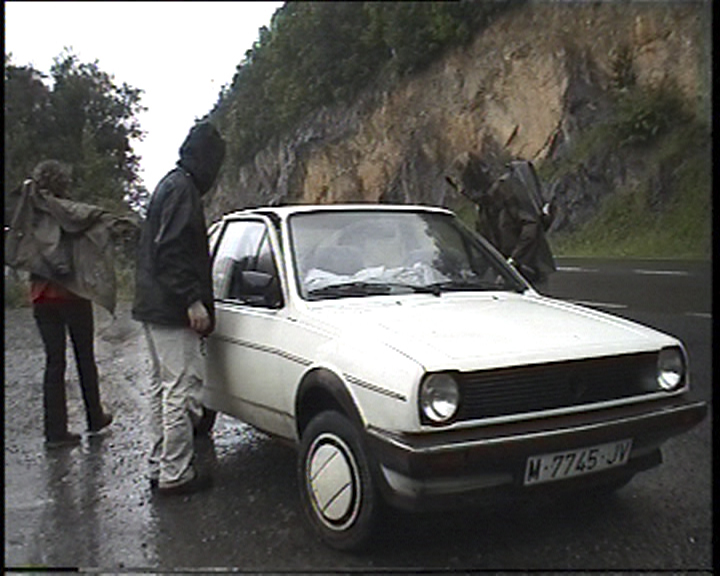
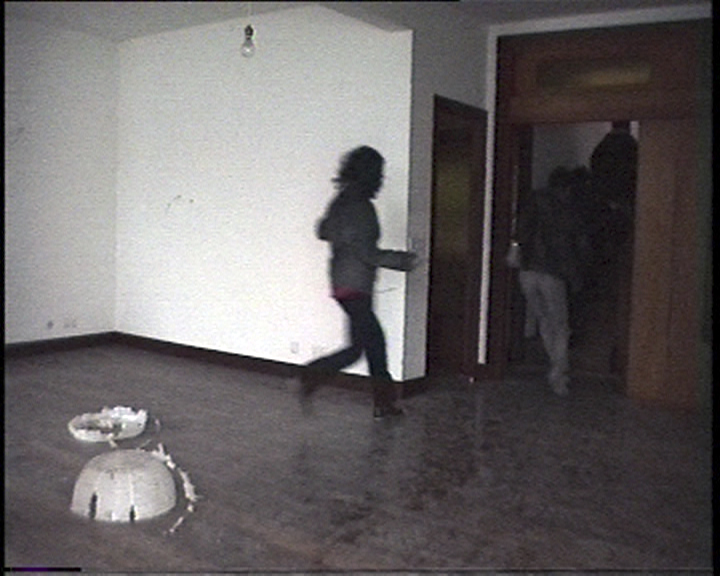
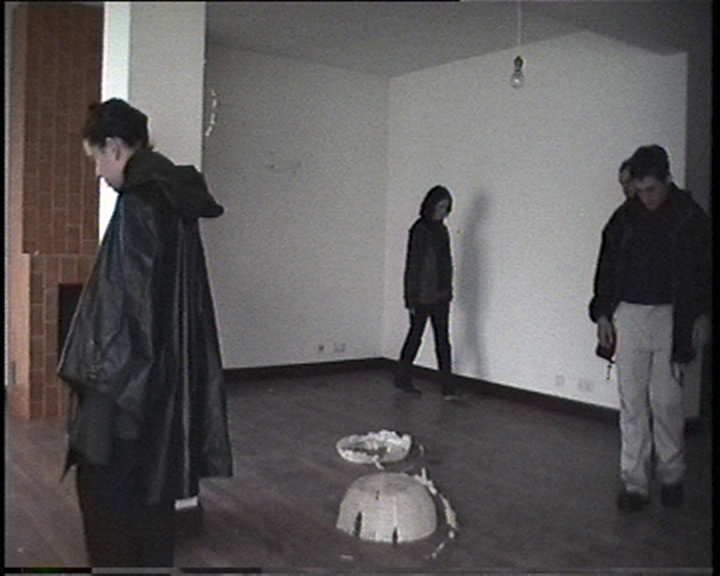
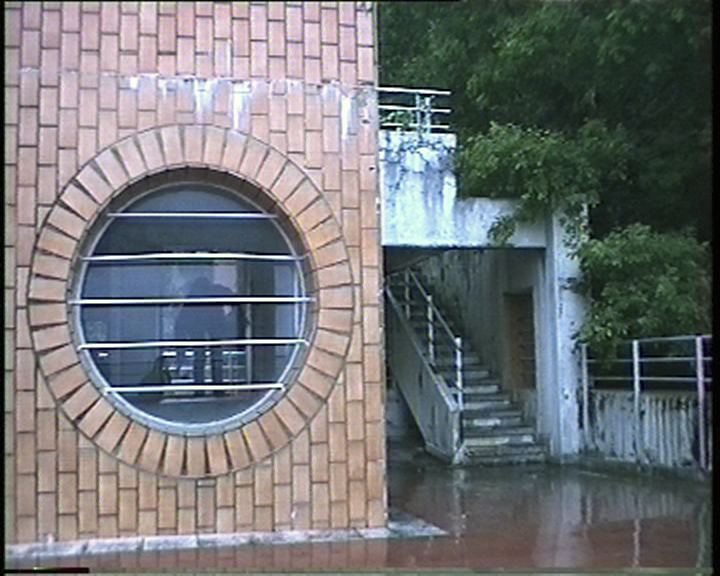
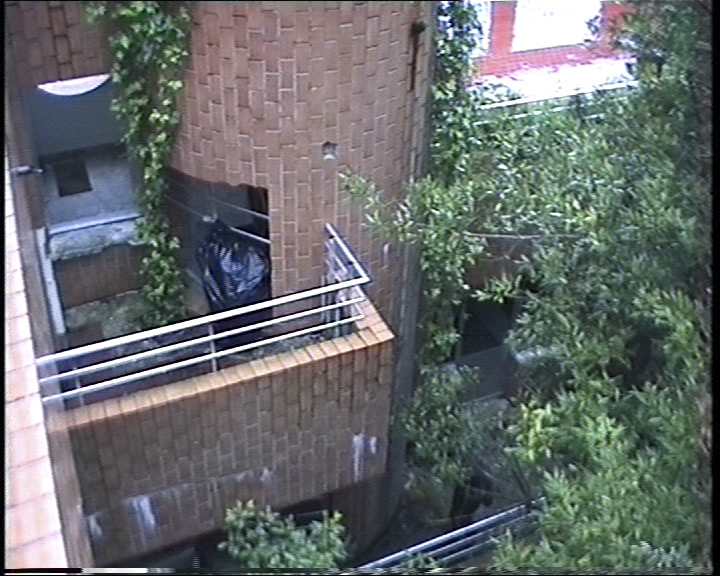
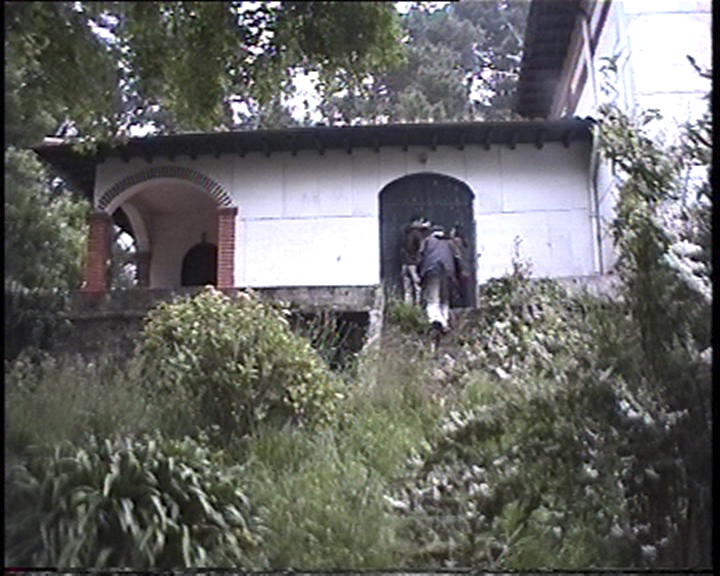
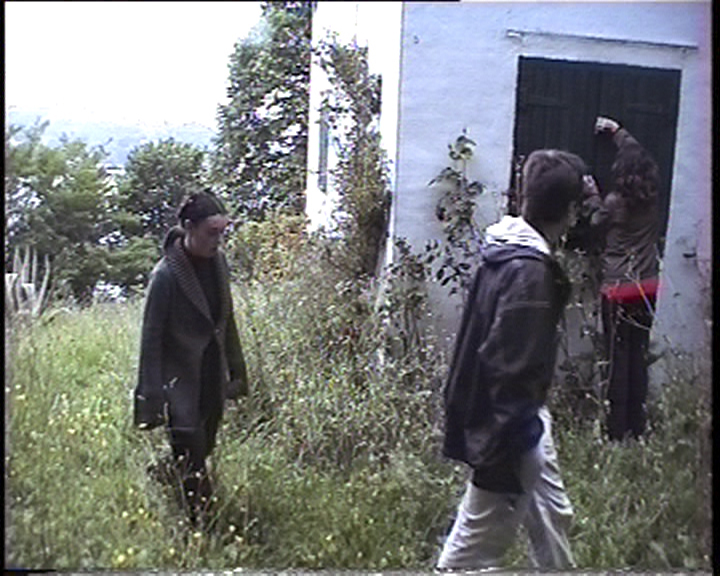
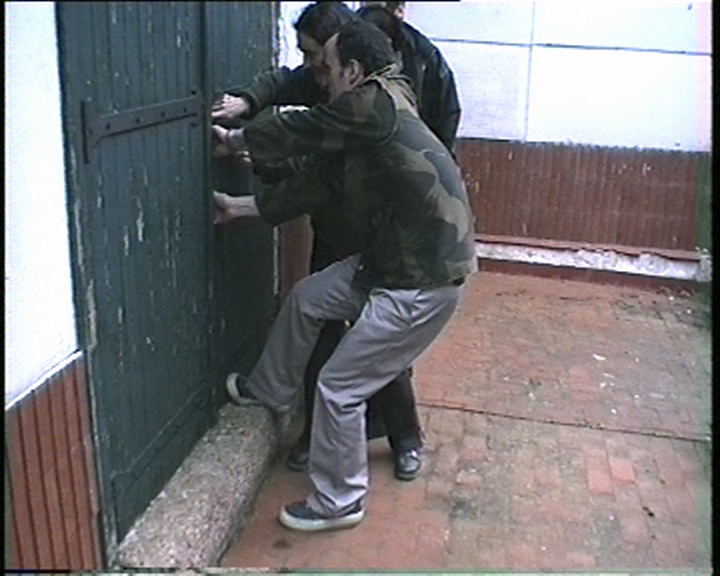
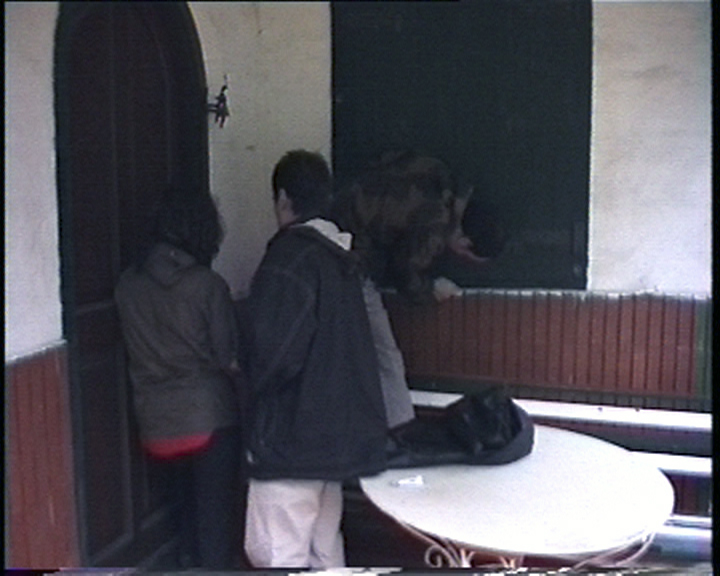
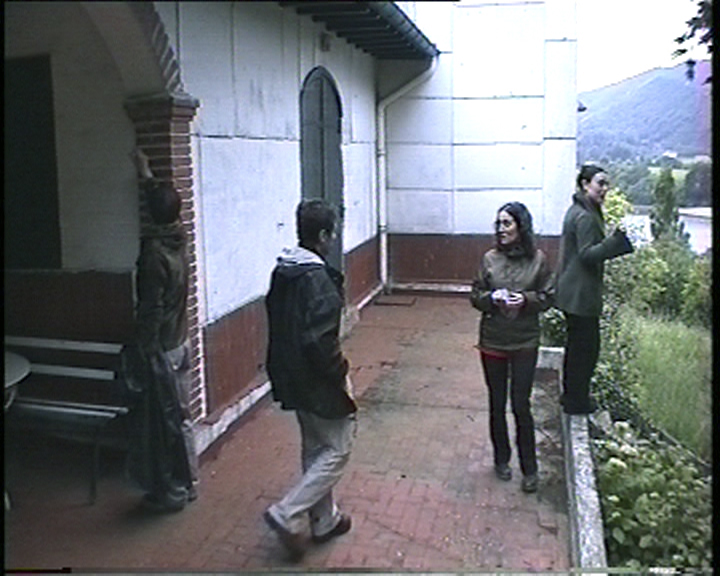
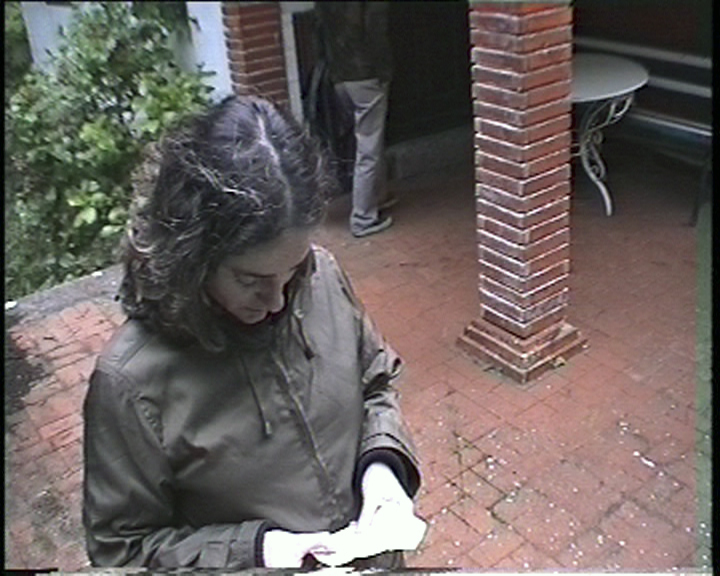
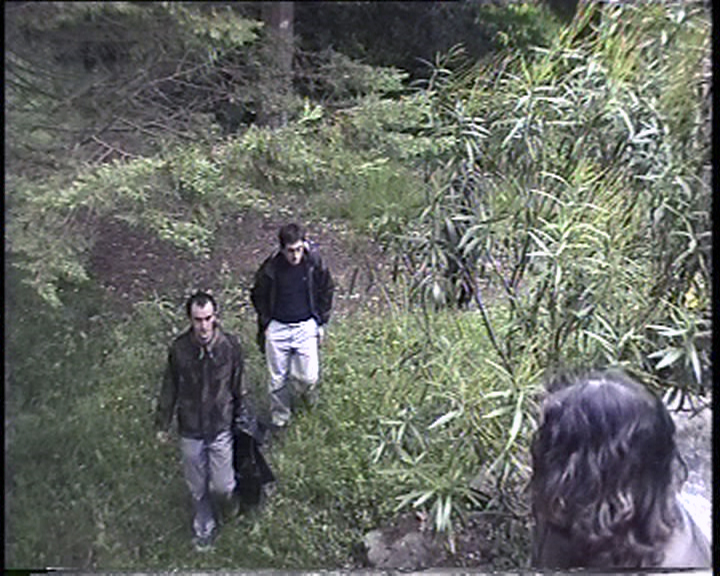
Single-channel video, with sound, colour
20’20’’
DV PAL (720X540)
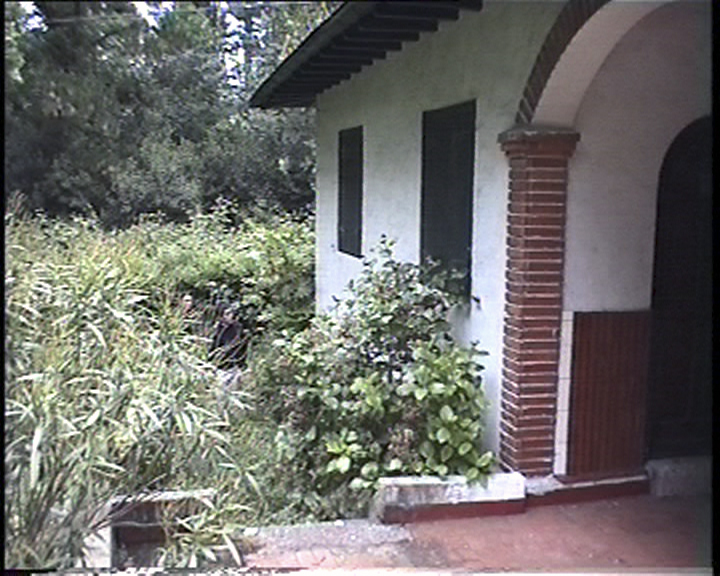
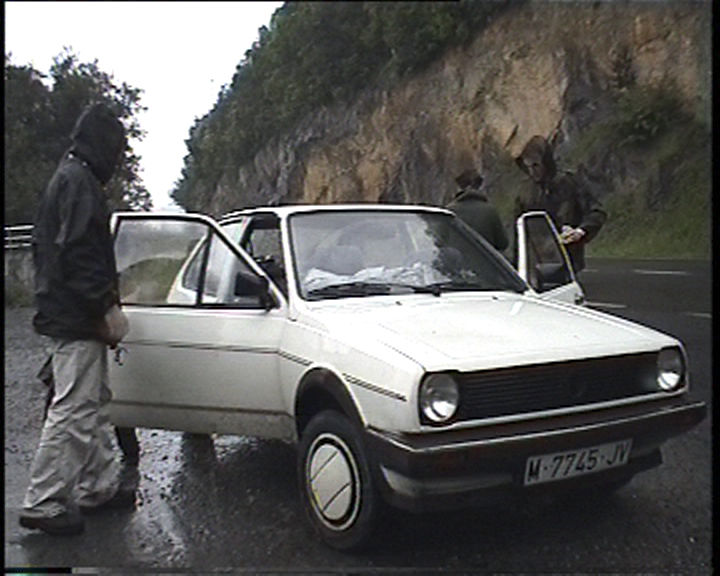
A group of young people step out of a white car with a Madrid license plate. They put their raincoats’ hoods up, it looks like it might rain. The scene changes immediately, taking us straight to the garden of a private home. The group goes over some notes written on a sheet of paper; Basque and Spanish mix up in an unplanned way. English has crept into the credits at the beginning of the video:
US vs THEM
Trying to get in: Chalet 1 & 2
- 1999 a video by Iñaki Garmendia
The camera makes itself evident with fast zoom-ins on the group, who try to enter Chalet 1 through the gate and windows. They look into the camera and ask “Do you have a pen?”, to which Iñaki replies: “No!”. The crumbling property is not displayed in its entirety. The camera, from a distance, frames all possible points of access. A platform rising on one side defines the entrance area, where they stay for most of the time. A number of elements structure the framing: dark green shutters on white, undecorated walls. A part for the whole a house in the rationalist strand of the “neo-Basque” style, a pastiche projected from the early 30s as an archetype of the bourgeoisie. The garden is unkempt, but the house is tightly locked. US vs THEM. US in the scene, THEM out of it. Time draws on in the entrance to the house in the late 90s, at the threshold between US and THEM. At this, a double portrait, subject and object are part of the representation in equal measure. They sit, smoke, talk, forget why they are there. Basque and Spanish become a murmur and blend into the location’s sound. The image blurs when the voice behind the camera interrupts them again. They have to keep trying to break in. It starts to rain again, and they leave.
The group steps out of the car again. Now they enter another empty house. They soon access the interior, through the first floor balconies and windows. Once again, only the parts: a brick façade with curved angles, large windows, some of them of whimsical circular forms, dark wood —iroko or tali—, mark the style’s evolution through time. Another variant of the Basque repertoire, resembling organic architecture from the mid-twentieth century. The group navigates the property, penetrating its nooks and crannies. The scene, a static shot, flows like a composition between the decisions and interests of each individual. House number 2 could have been built in the late 60s or early 70s. It is now abandoned, but in perfect condition. Perhaps THEY fled somewhere safer. Once inside, in one of the rooms, the group goes through the notes together. Iñaki’s presence in the image clearly shows that the action concerns a planned structure, but even then, we are not capable of delimiting it clearly. They walk in circles, naturally, as if they moved through the space on a skateboard in slow motion. They run across the room, the sound is deafening. THEY cannot hear them.
Related bibliography
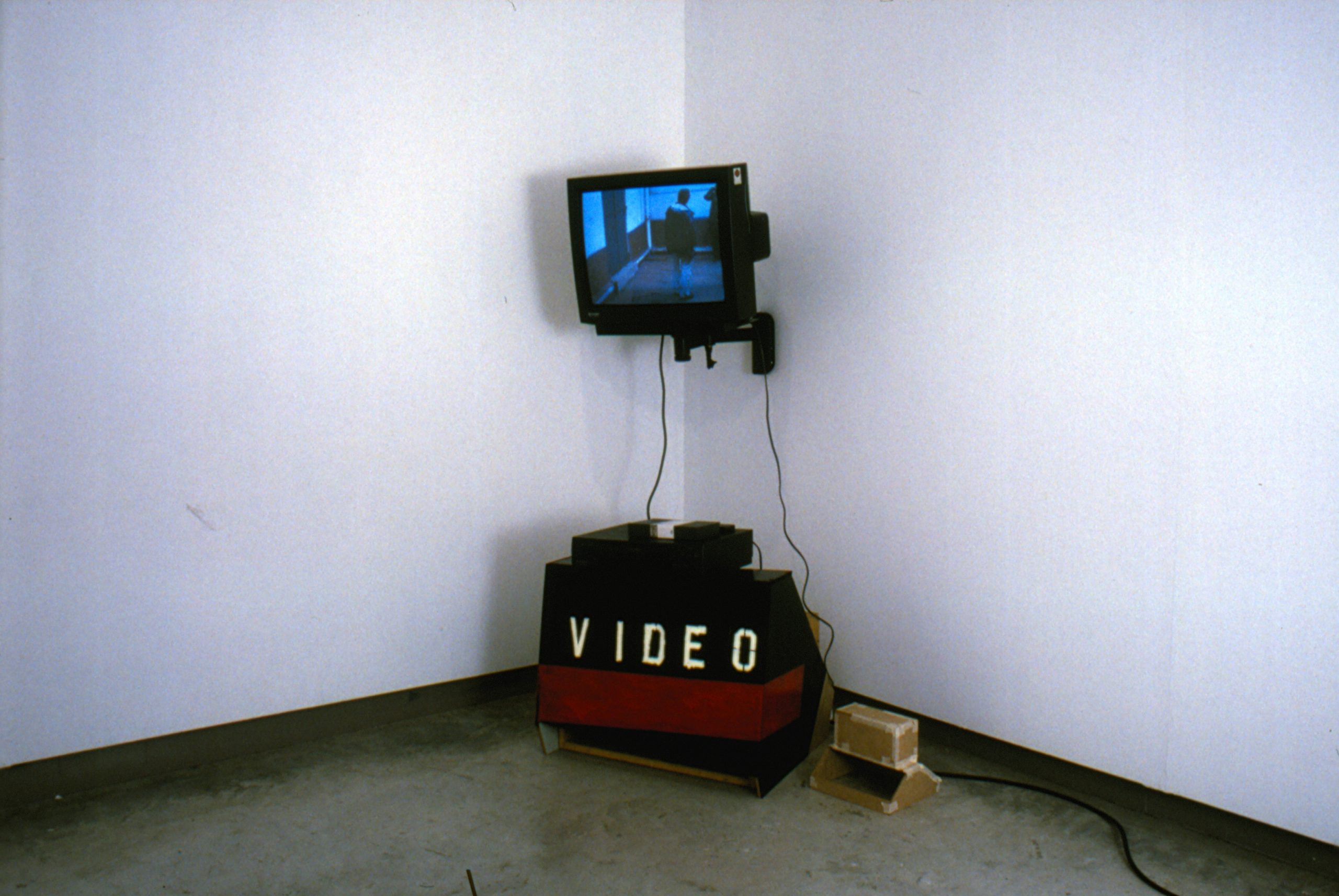
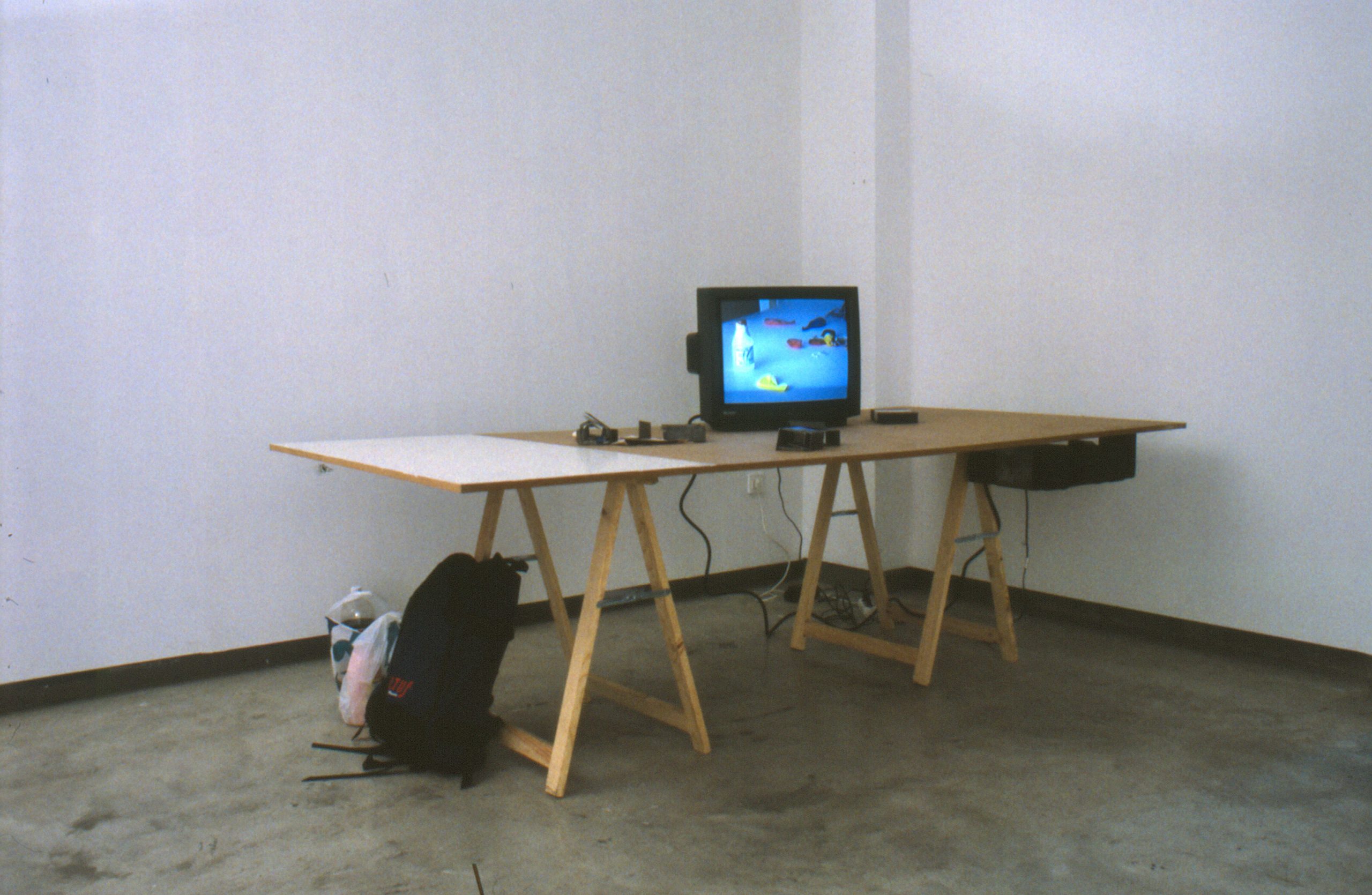
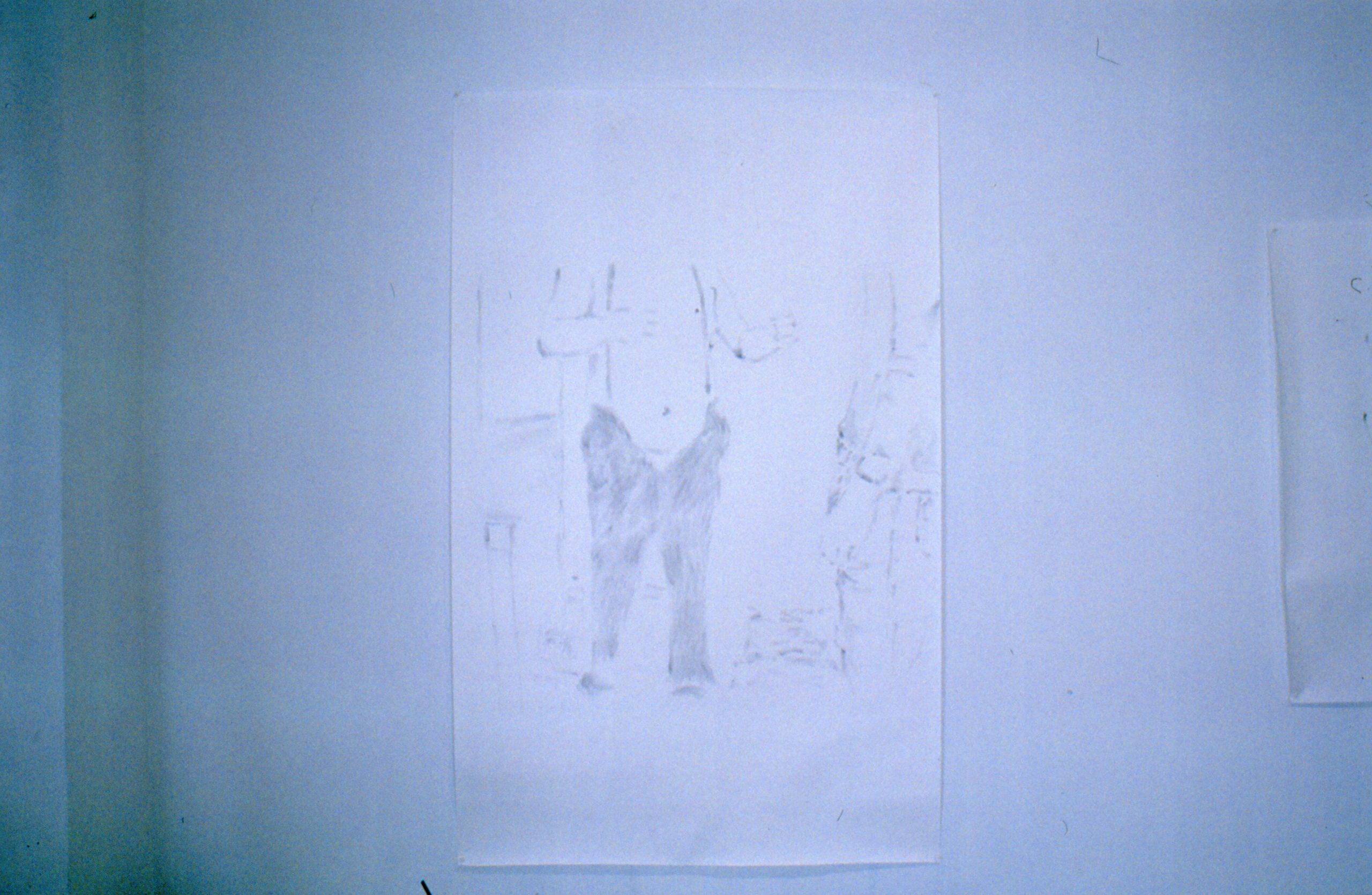
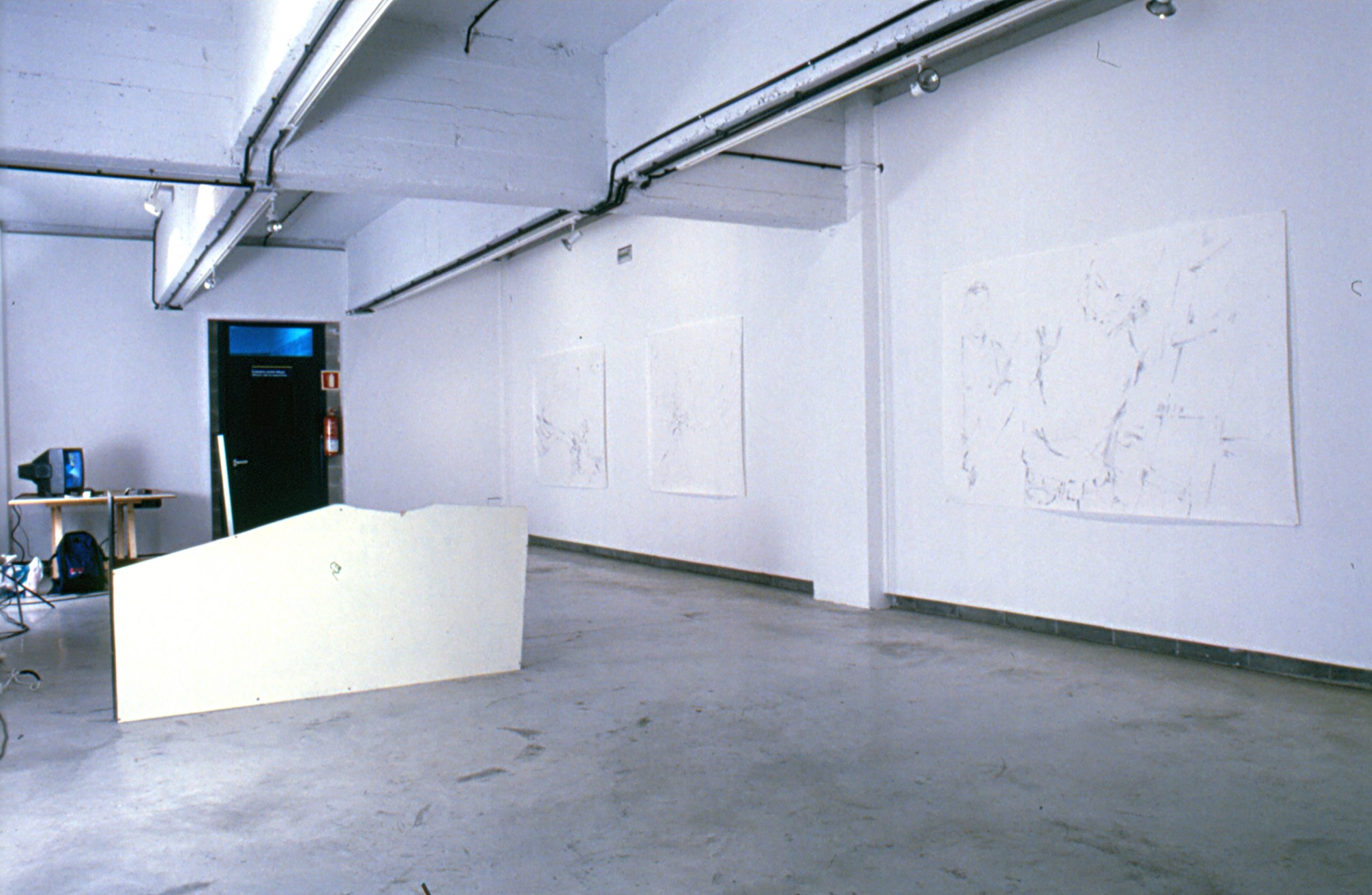
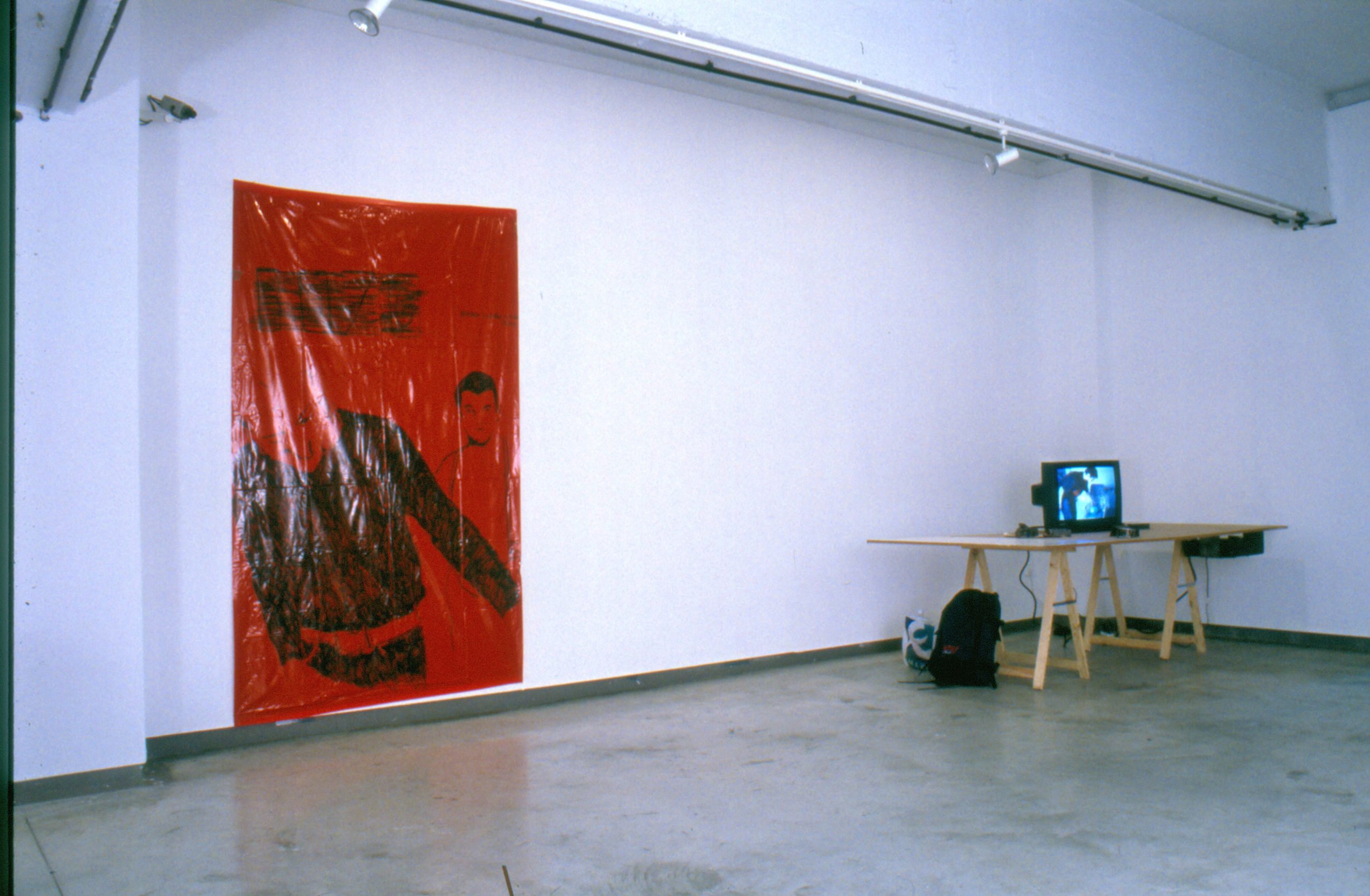
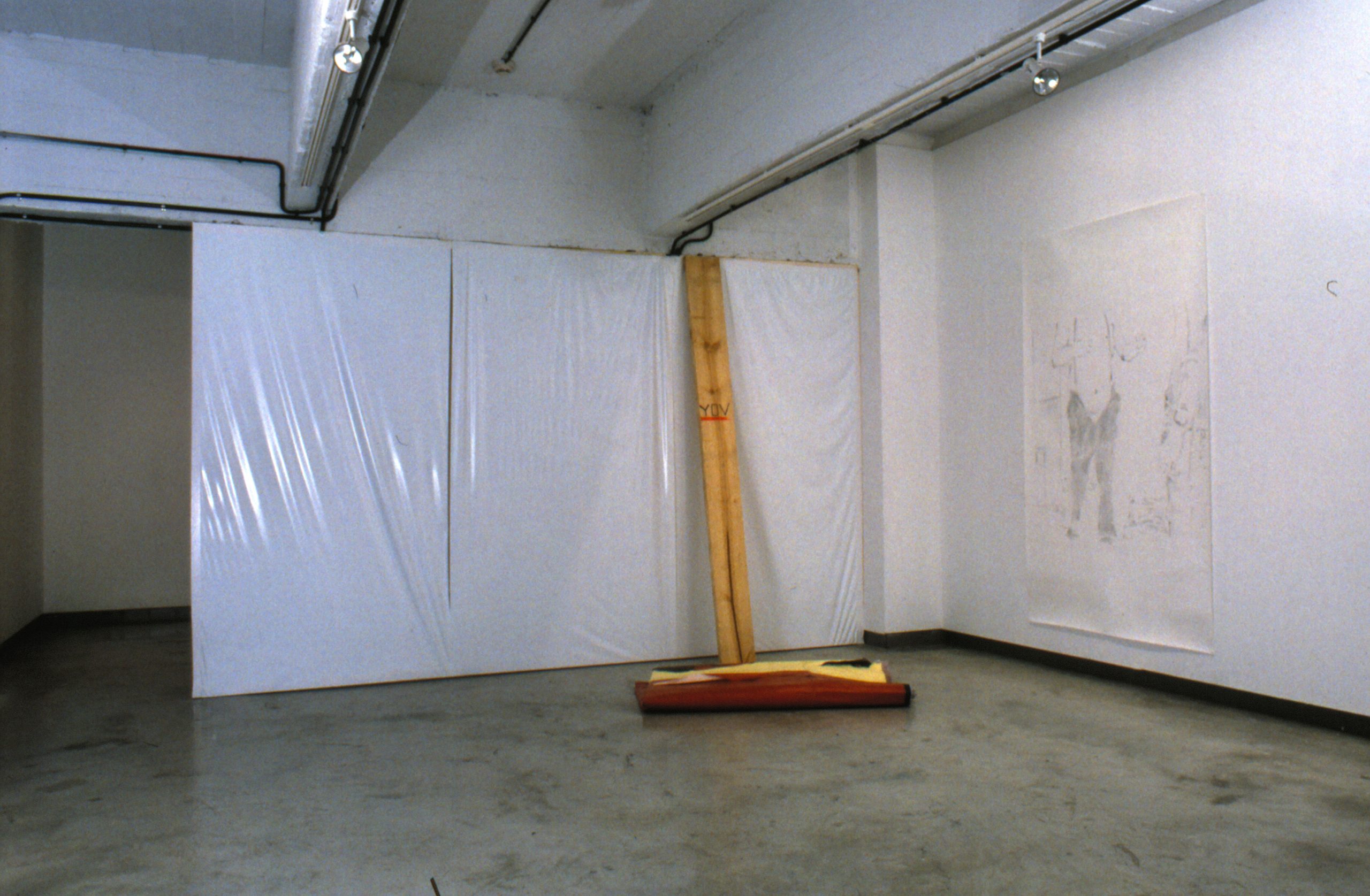
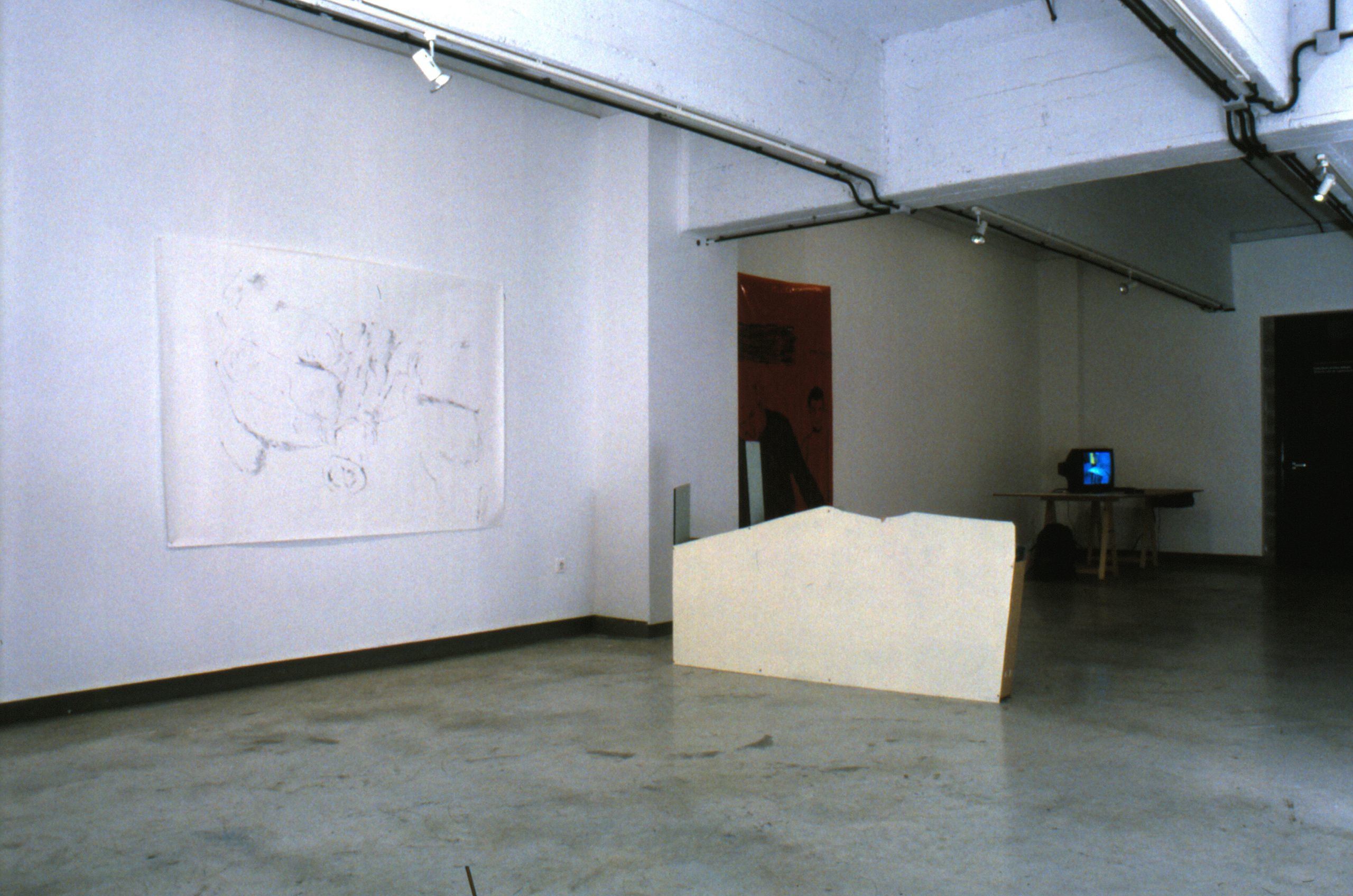
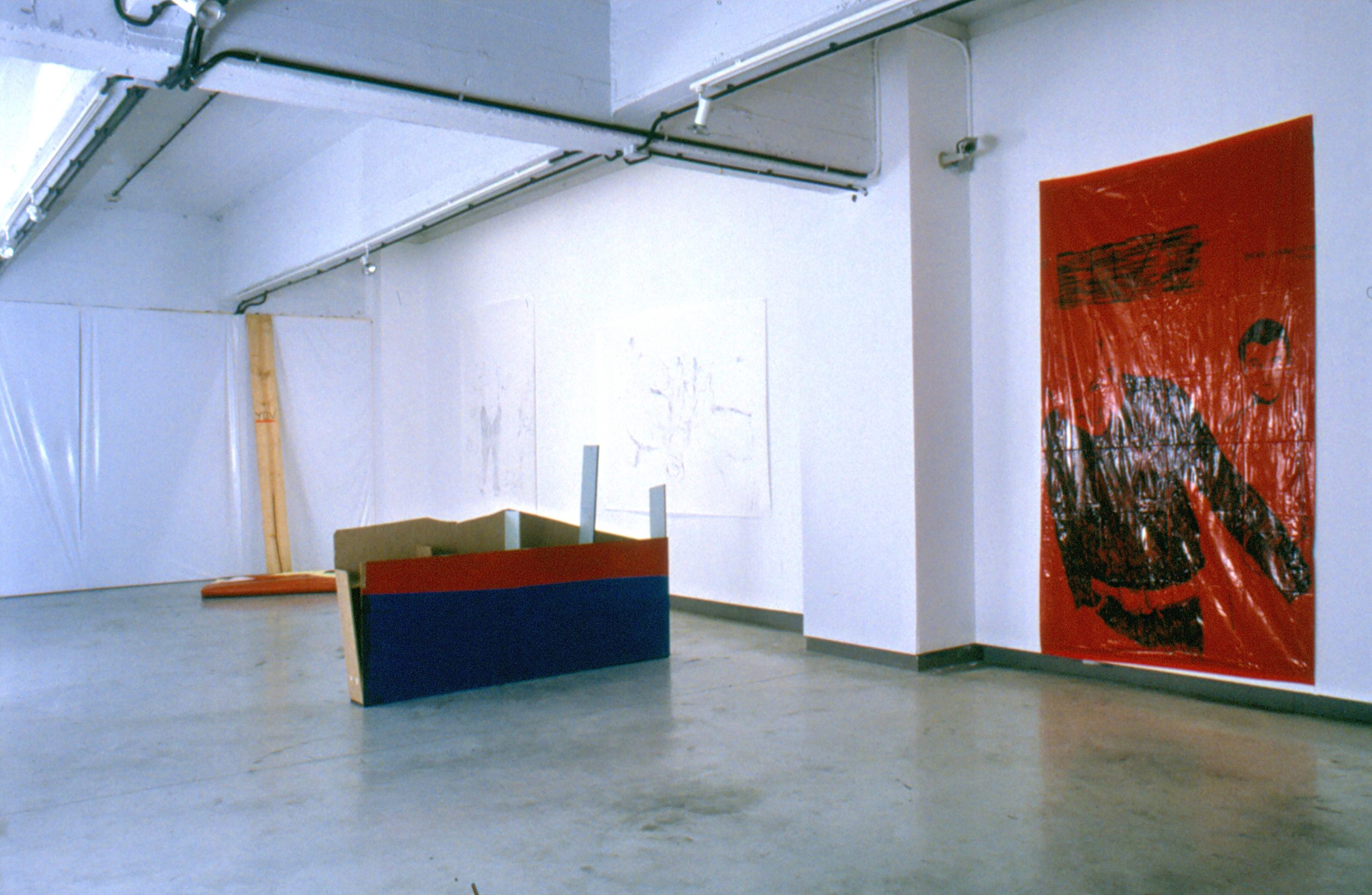
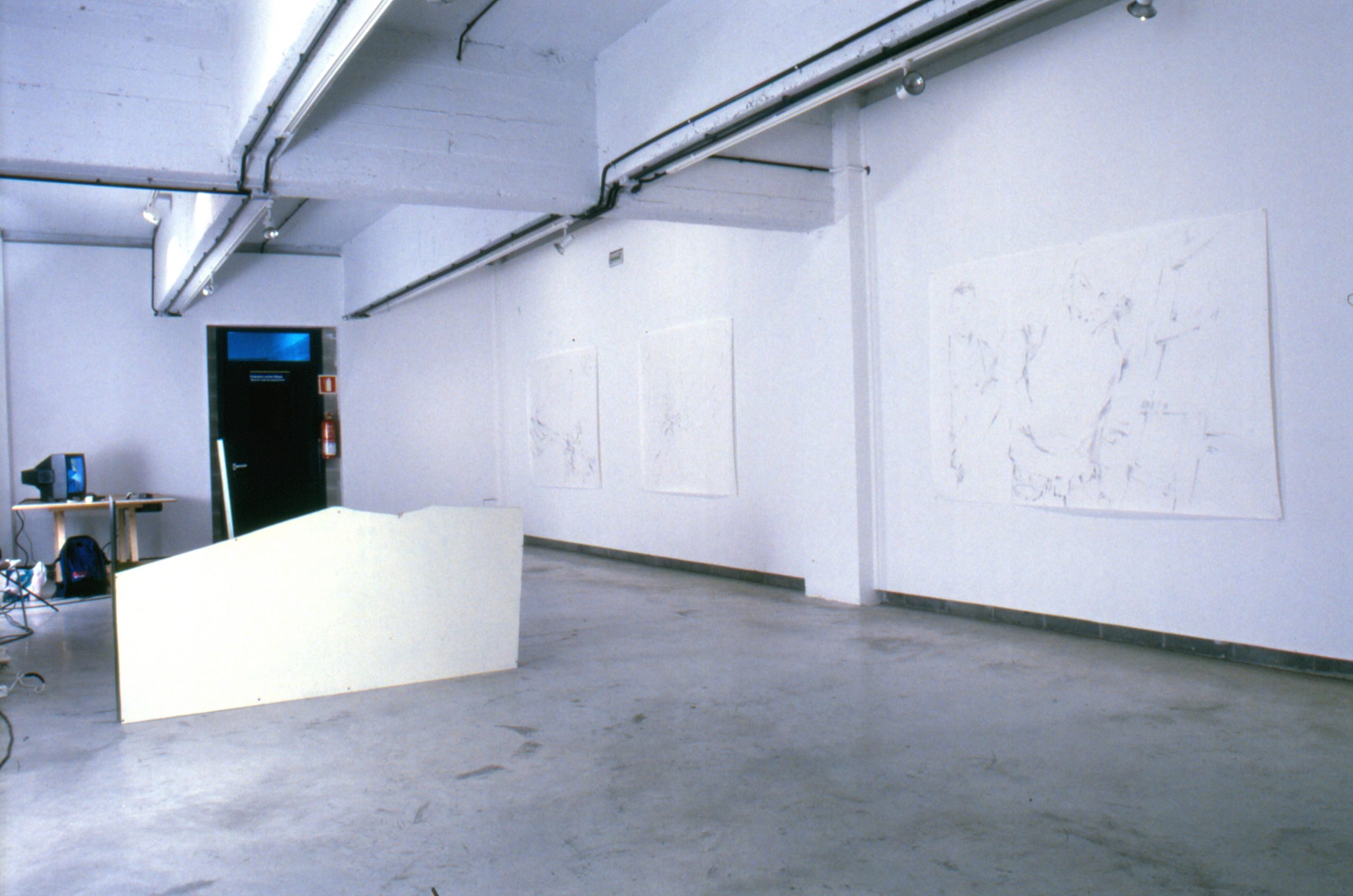
Exhibition views of Me voy a ir, me voy, estoy ido . Donostia-San Sebastián, DAE-Donostiako Arte Ekinbideak : Egiako Kultur Etxea = Casa de Cultura de Egia, May 28 – JUne 26, 1999.
Images courtesy of DAE and Peio Aguirre.
Taja y sus amigos
1999 - 2001
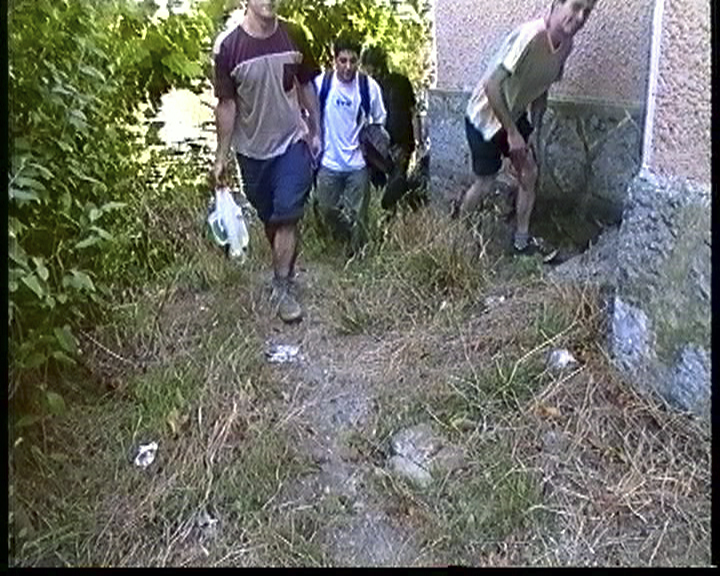
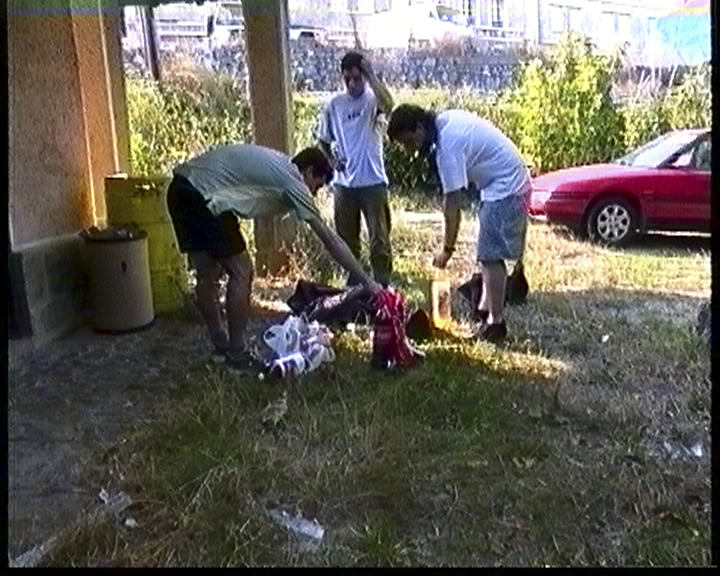
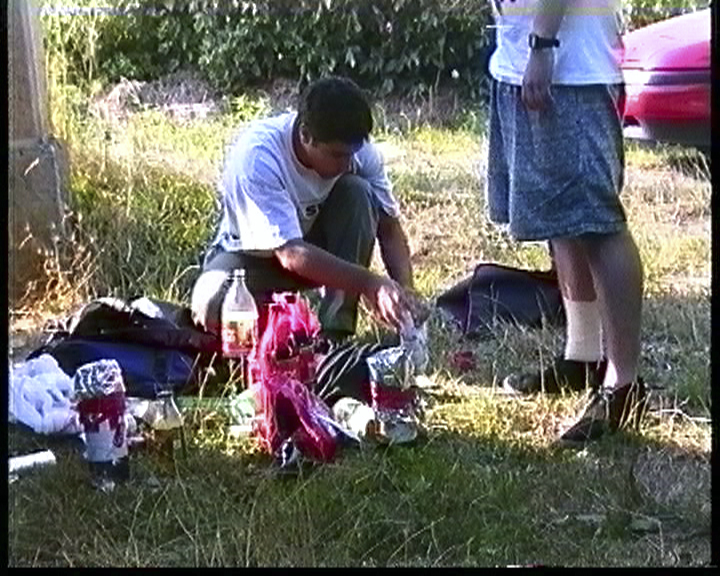
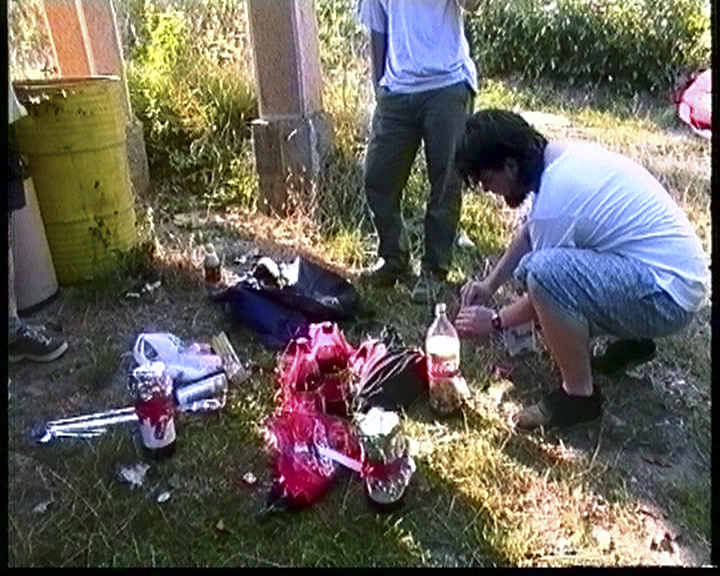
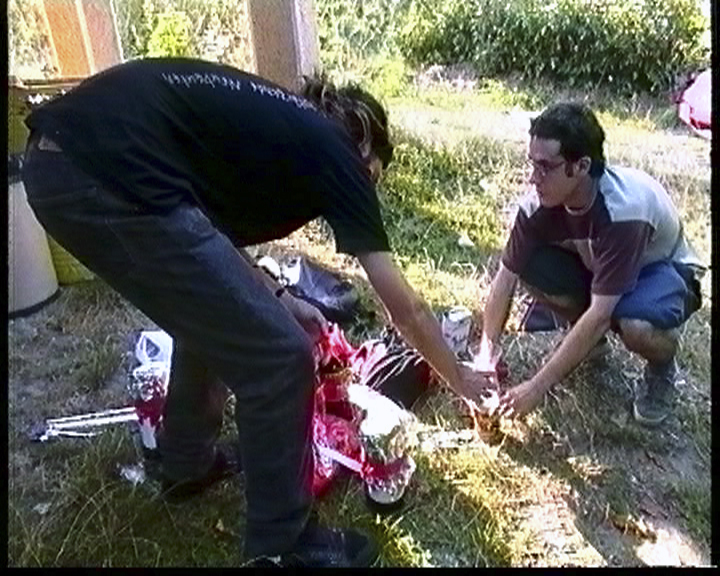
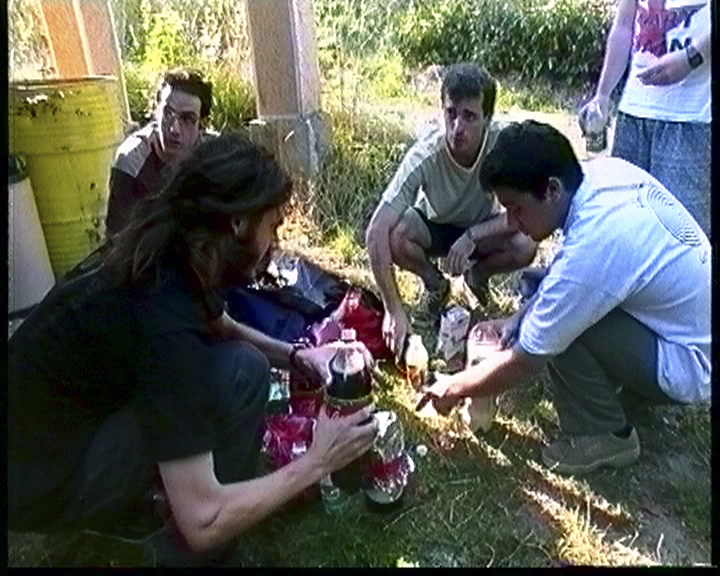
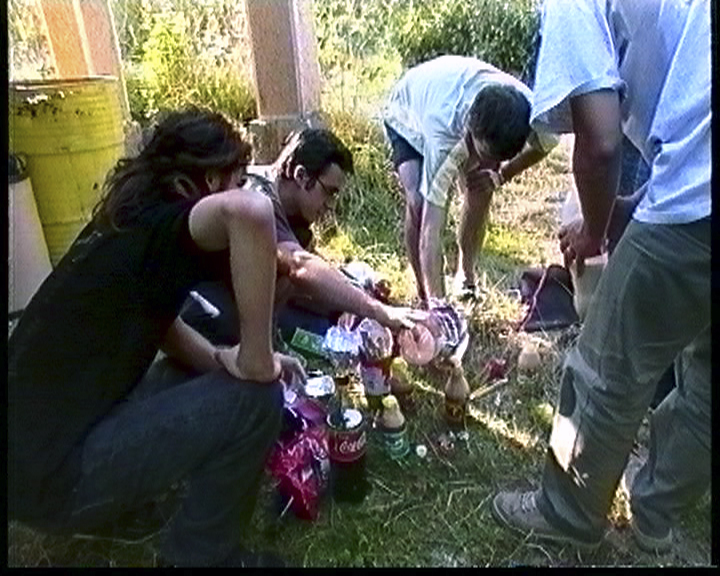
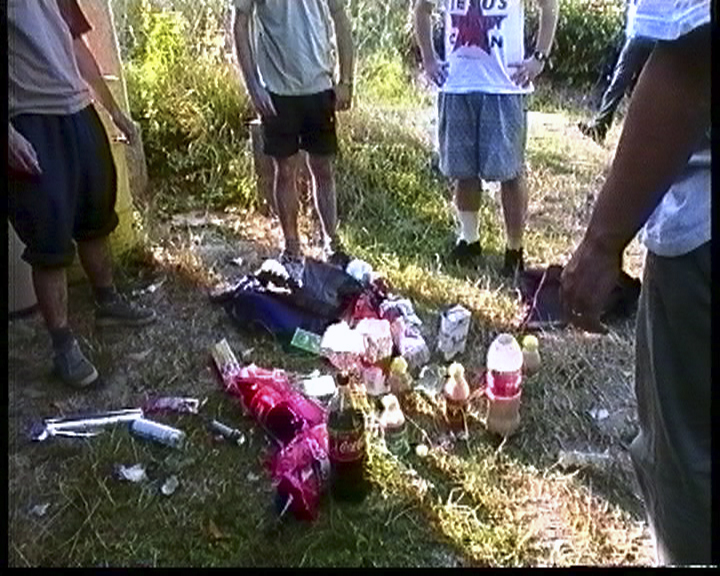
Single-channel video, with sound, colour
11’39’’
DV PAL (720 x 576)
A “technical image”, as Vilém Flusser called it, is initiated at the meeting point between the lens, the eye, and the scene captured. The High 8 video camera used in Taja y sus amigos had no viewfinder, which made it necessary to connect it to a monitor in order to access the footage. This domestic procedure also made the editing of the recording possible with the help of a VHS player. This is how the editing was carried out—pressing rec and pause in order to connect the different takes.
This video was finished in 2001, but the shooting was completed two years prior. I remember this when seeing some of the t-shirts, the battered dreadlocks sported by one of them —which he would soon cut off—, the thin frame of somebody else’s glasses. I remember the rehearsal room by the train tracks too, a summer afternoon, even though none of these elements were planned. They just happened, and happened to be there.
The scenes are built along the way, following a set of undefined rules. A group of young people step out of the frame and back into it as indicated. Together they develop a confusing composition, an ambiguous still life made of plastic, drinks, aluminium foil, duct tape and plasticine. The arrangement invites us to see it as a blurry form between paint and sculpture, onto which we can project a certain voyeuristic pleasure. Taja y sus amigos unfolds as a still life on a vacant lot by the train tracks and the road. In the beginning, the logic of arranging the elements in close up, typical of the aforementioned pictorial medium, is denied to some extent, as the resulting image is captured from a cautious distance, generating a feeling of alienation. As the video continues, the camera zooms in and a new arrangement of the frame offers a more detailed image. The light bathing the objects also reinforces the idea of pictorial composition. However, the camera’s distance remains contained at all times, despite progressively drawing closer, which prevents us from accepting the conformity of its nature. This might be caused by the composition refusing to be neither painting nor sculpture, merchandise nor footage/weapon. It merely offers itself as an ambiguous image facing the battleground of the TV medium.
A version with a rough transfer of the raw material was screened at the Festival Audiovisual de Vitoria-Gasteiz in 2000. Part of this screening involved broadcasting it at different times on TV. Later on, the final cut was exhibited on a monitor on a large, high stand in the installation Kolpez/Kolpe at the 2002 Taipei Biennial.
Related bibliography
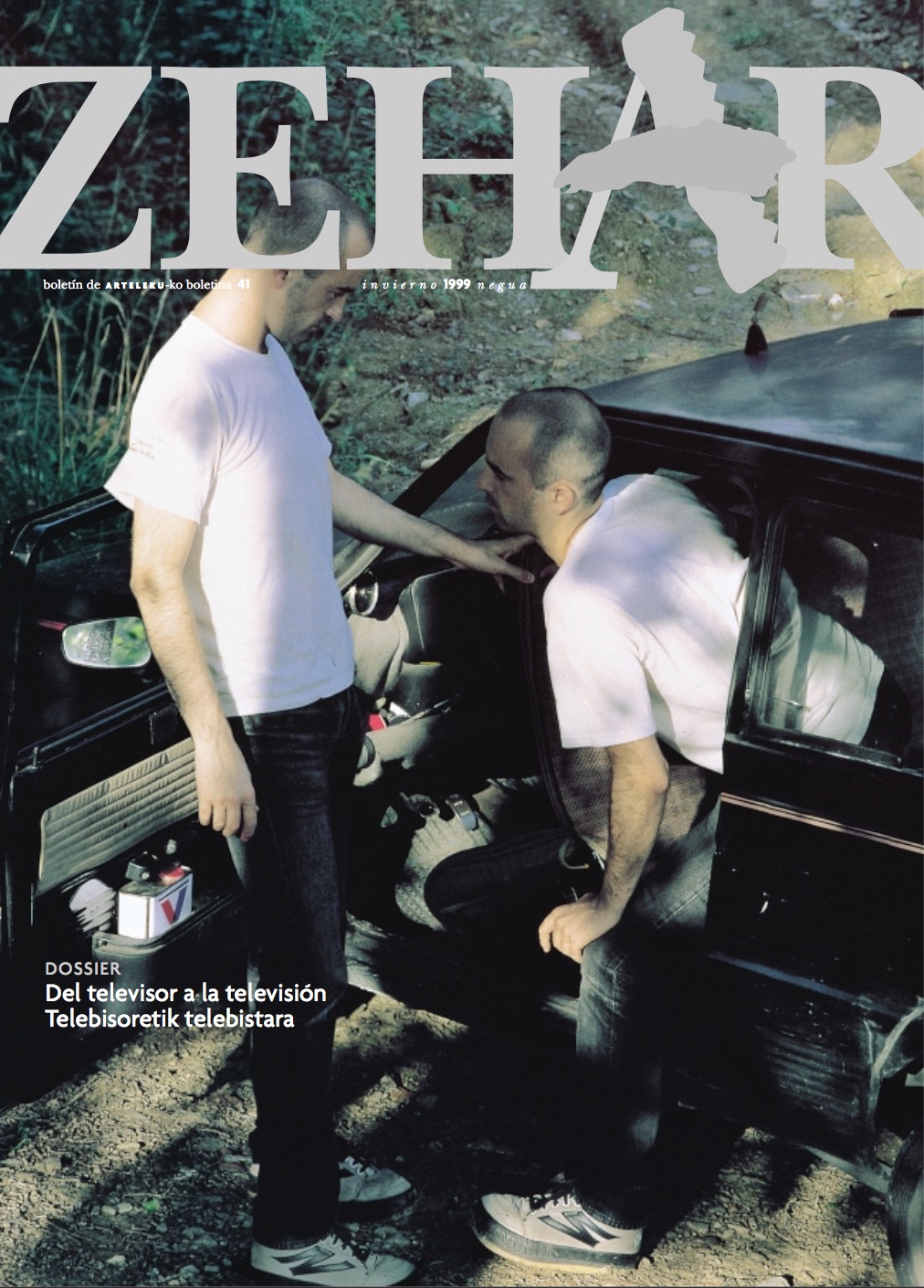
Zehar magazine, published by Arteleku, San Sebastian , in which the “Gunea” section, coordinated by Asier Mendizabal, includes works by Aernout Mik and Iñaki Garmendia (two stills from Garmendia’s video Taja y sus amigos (1999) with extracts of dialogues) [pp. 32-33]. Download.
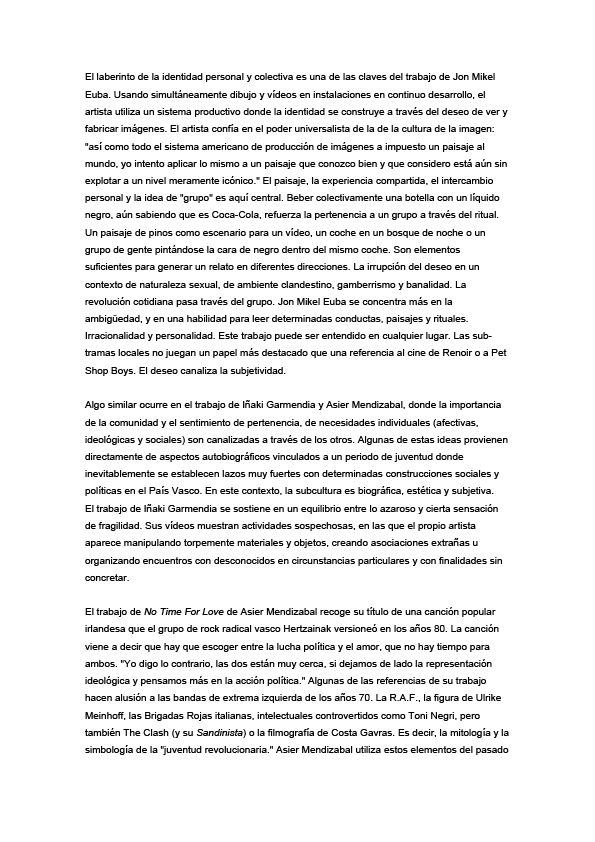
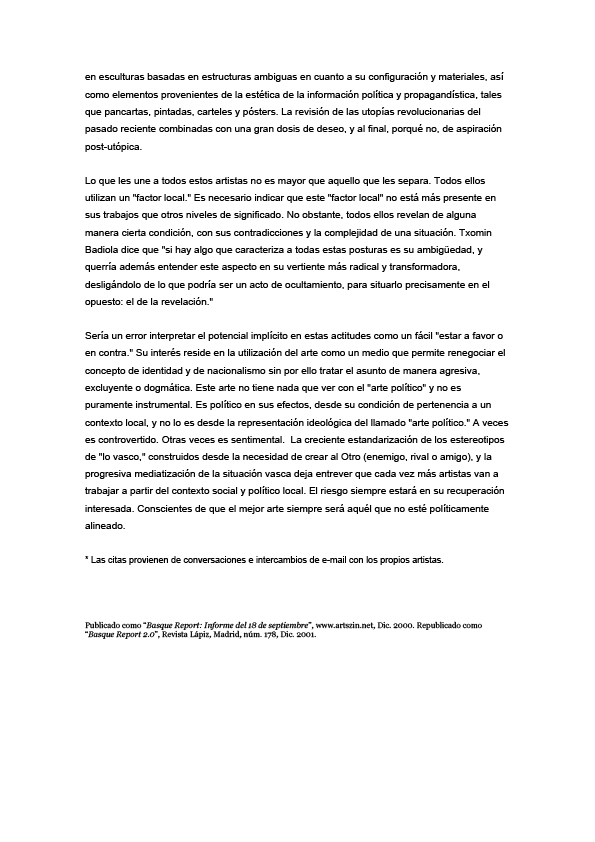
Article by Peio Aguirre on the current situation of art in the Basque Country. Cites Garmendia’s work and illustrates his video Taja y sus amigos (1999). Originally published in Arts.zin : crítica online de las nuevas prácticas artísticas Madrid, vol. II, October 2000 – July 2001. Text in images courtesy of Peio Aguirre.
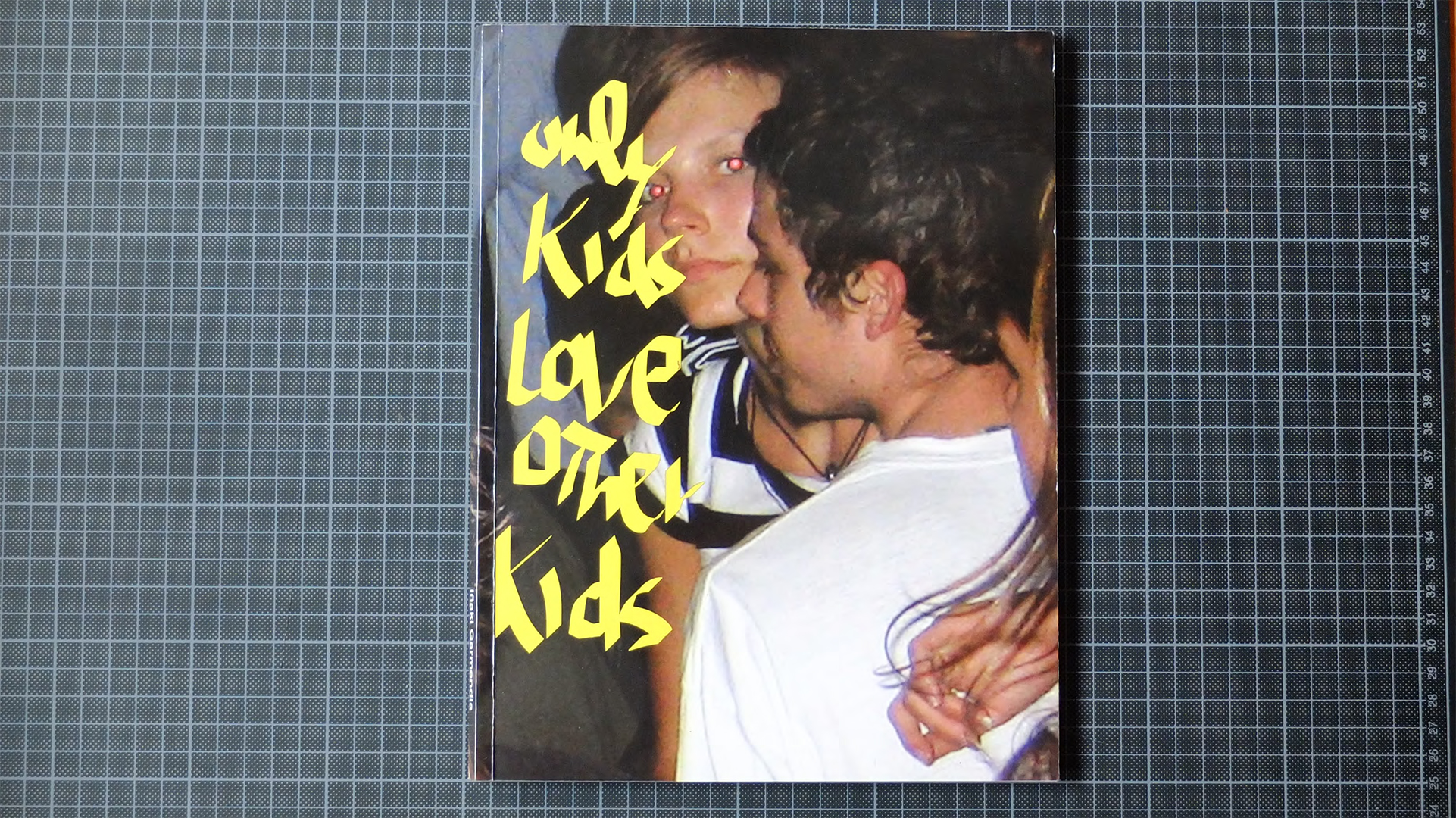
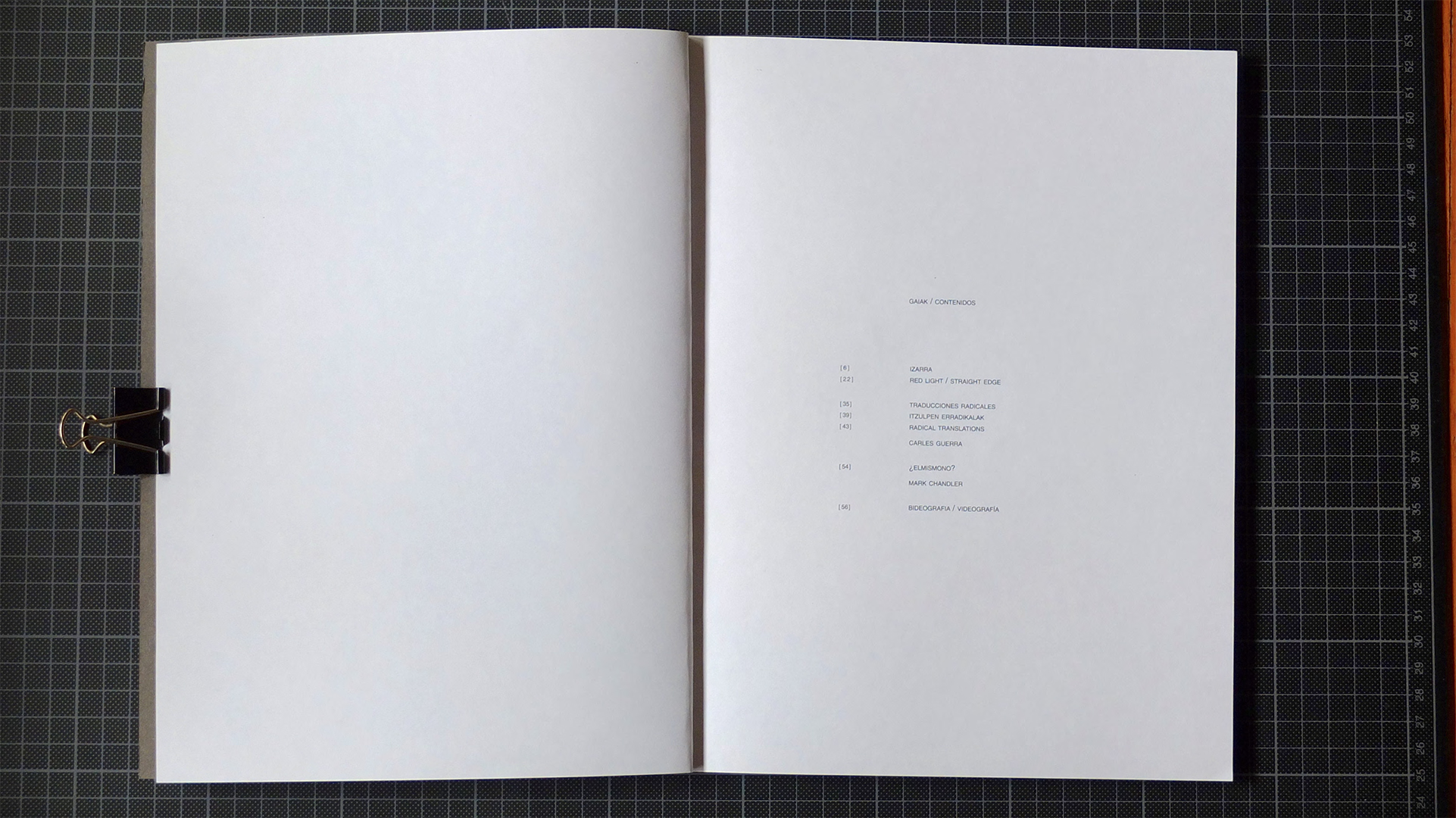
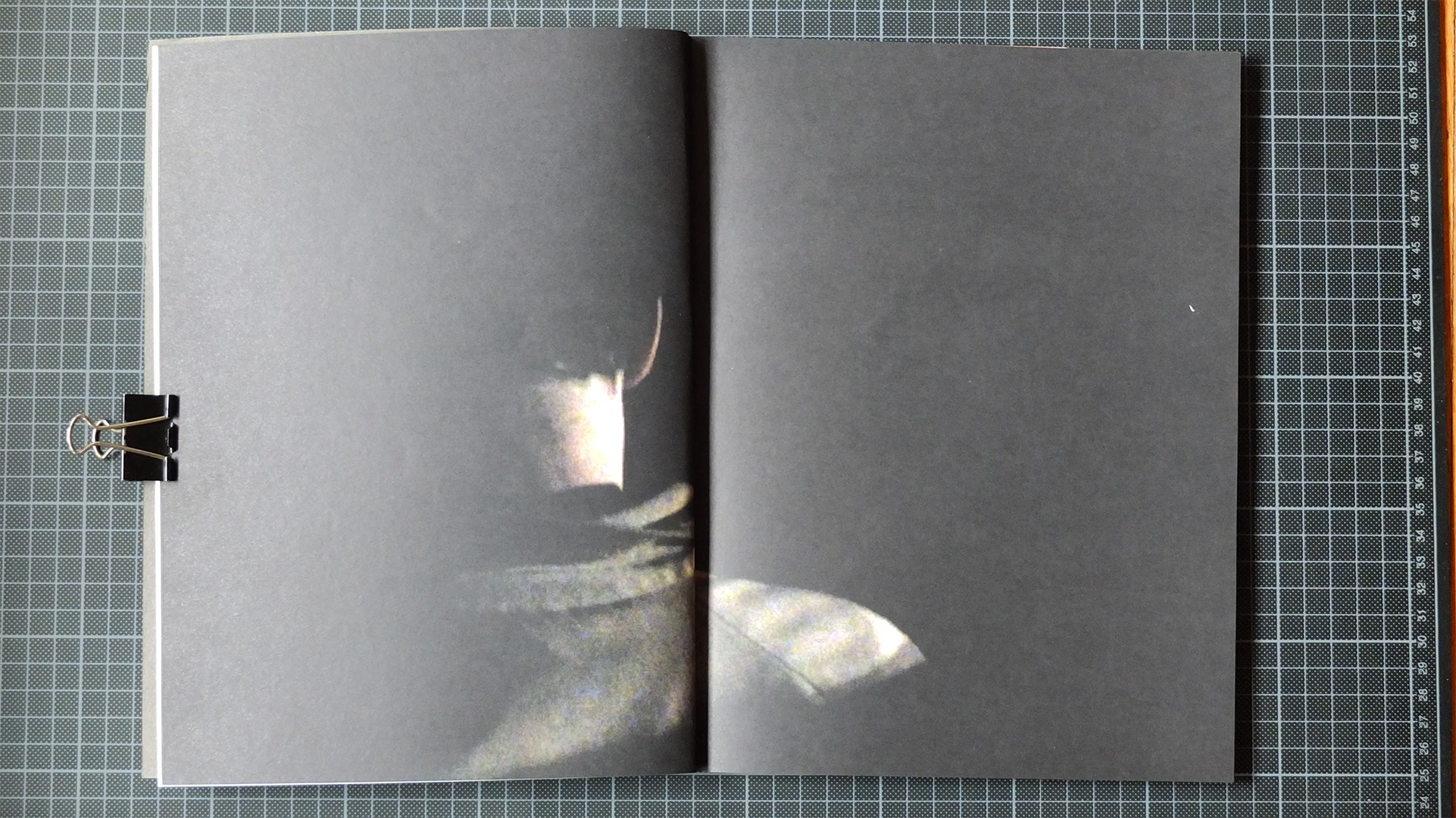
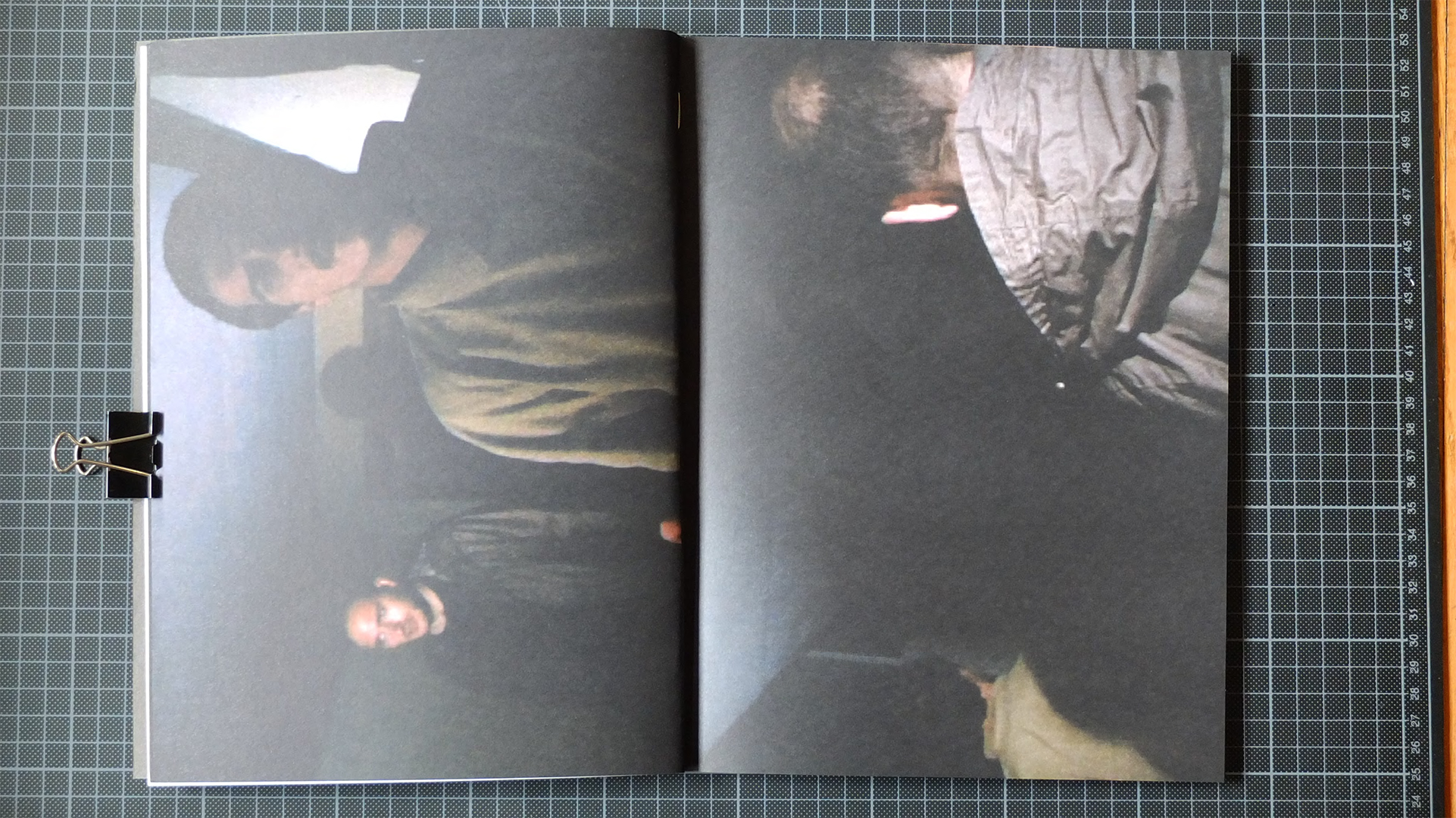
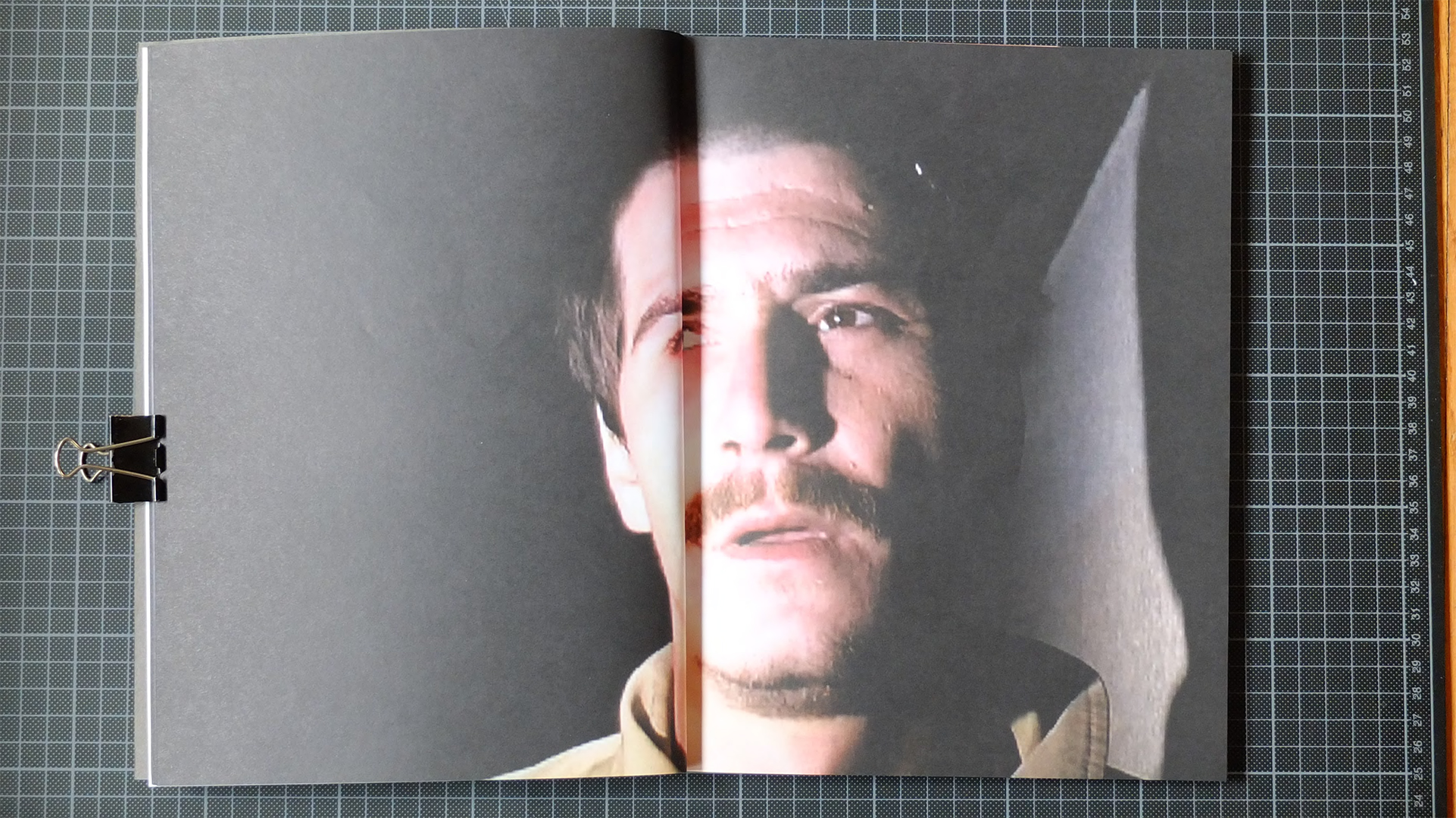
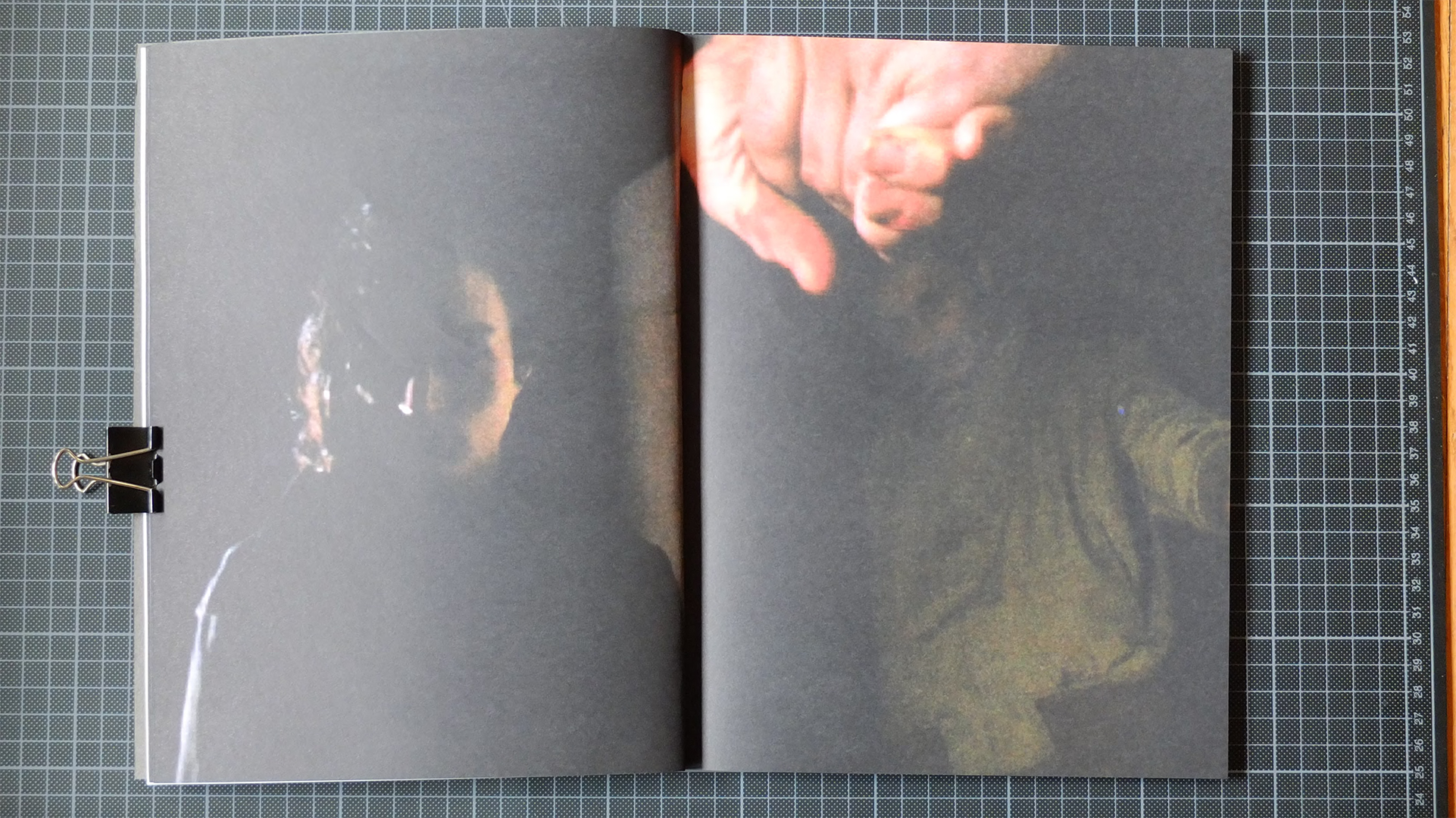
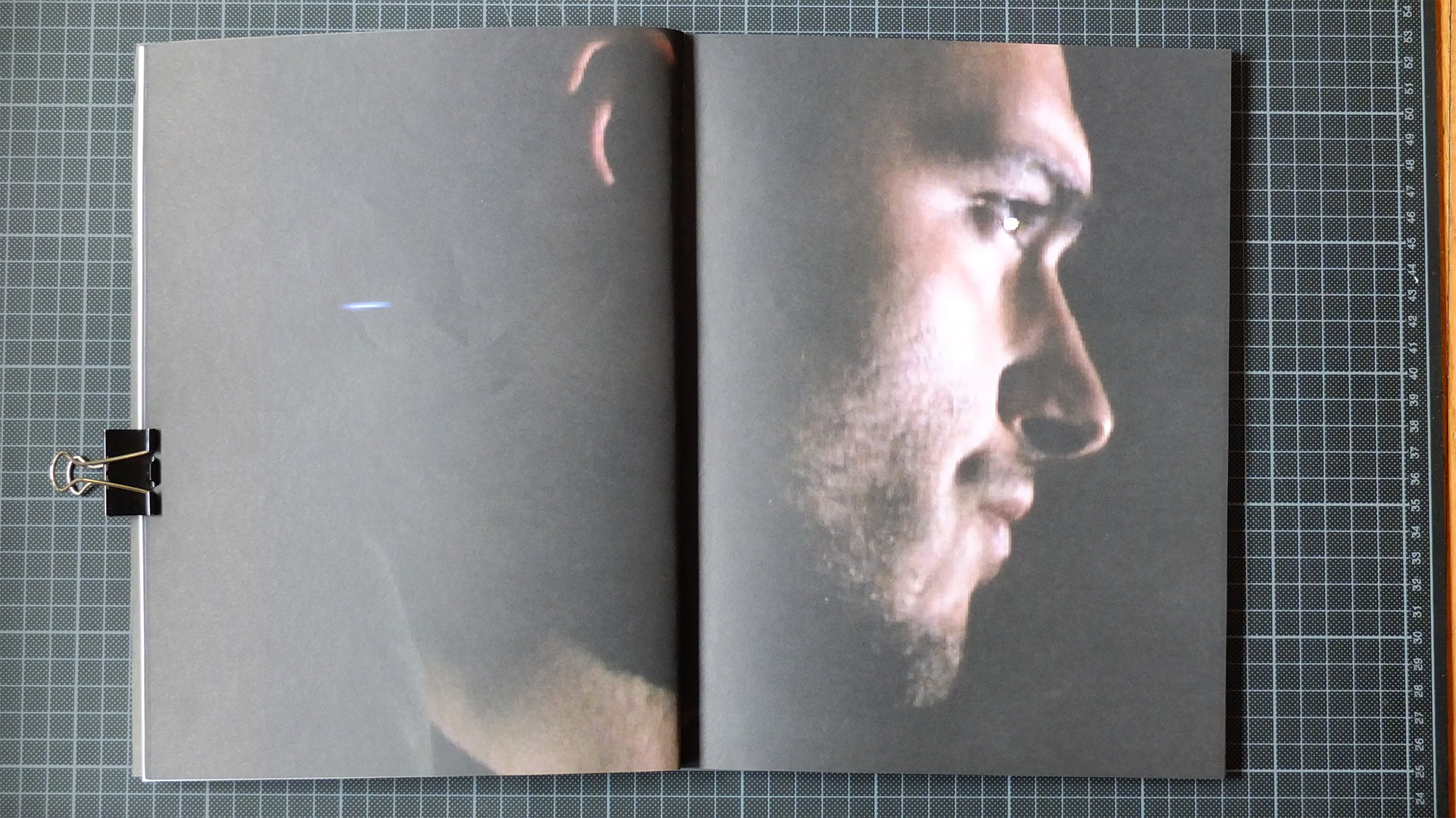
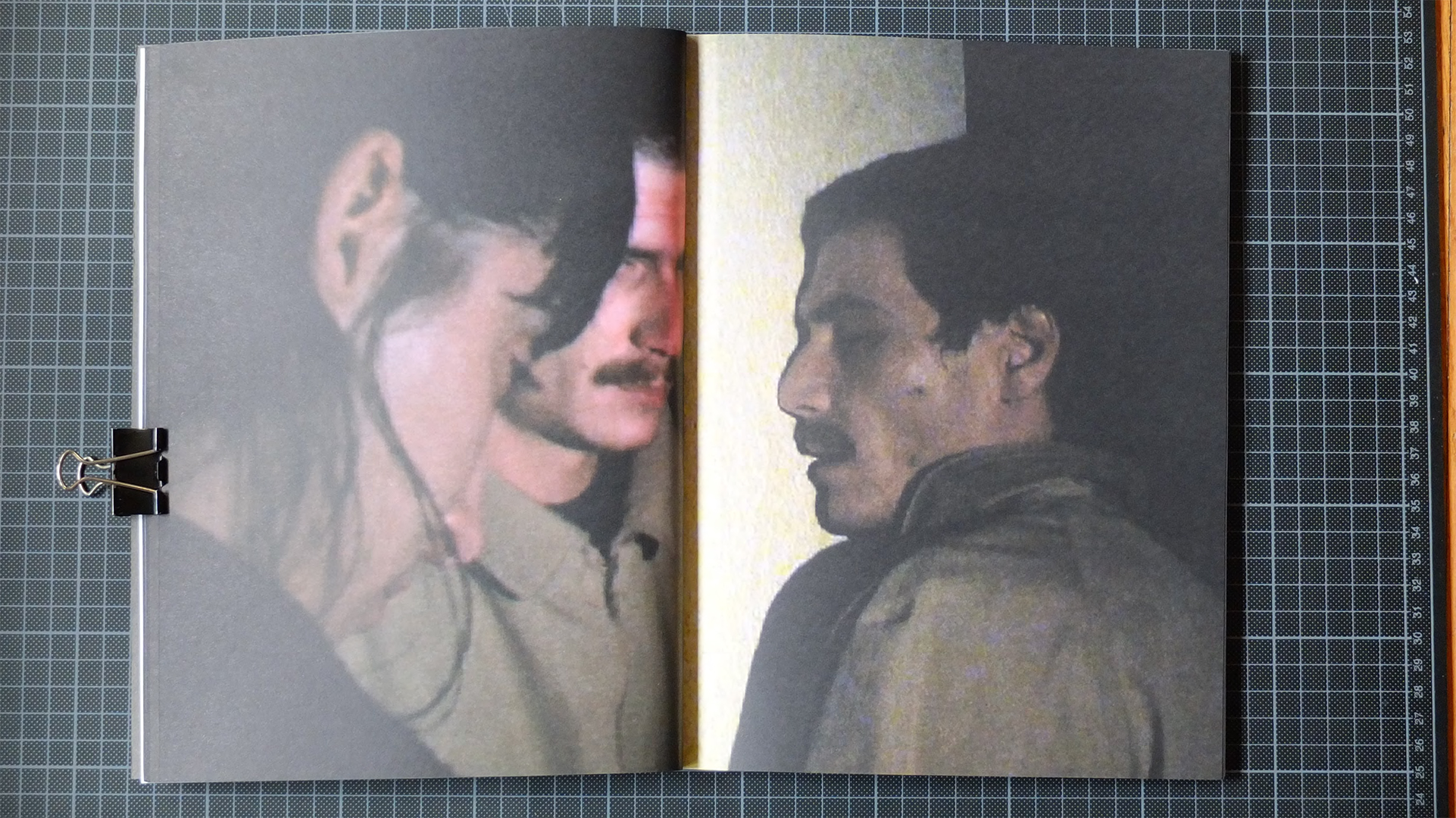
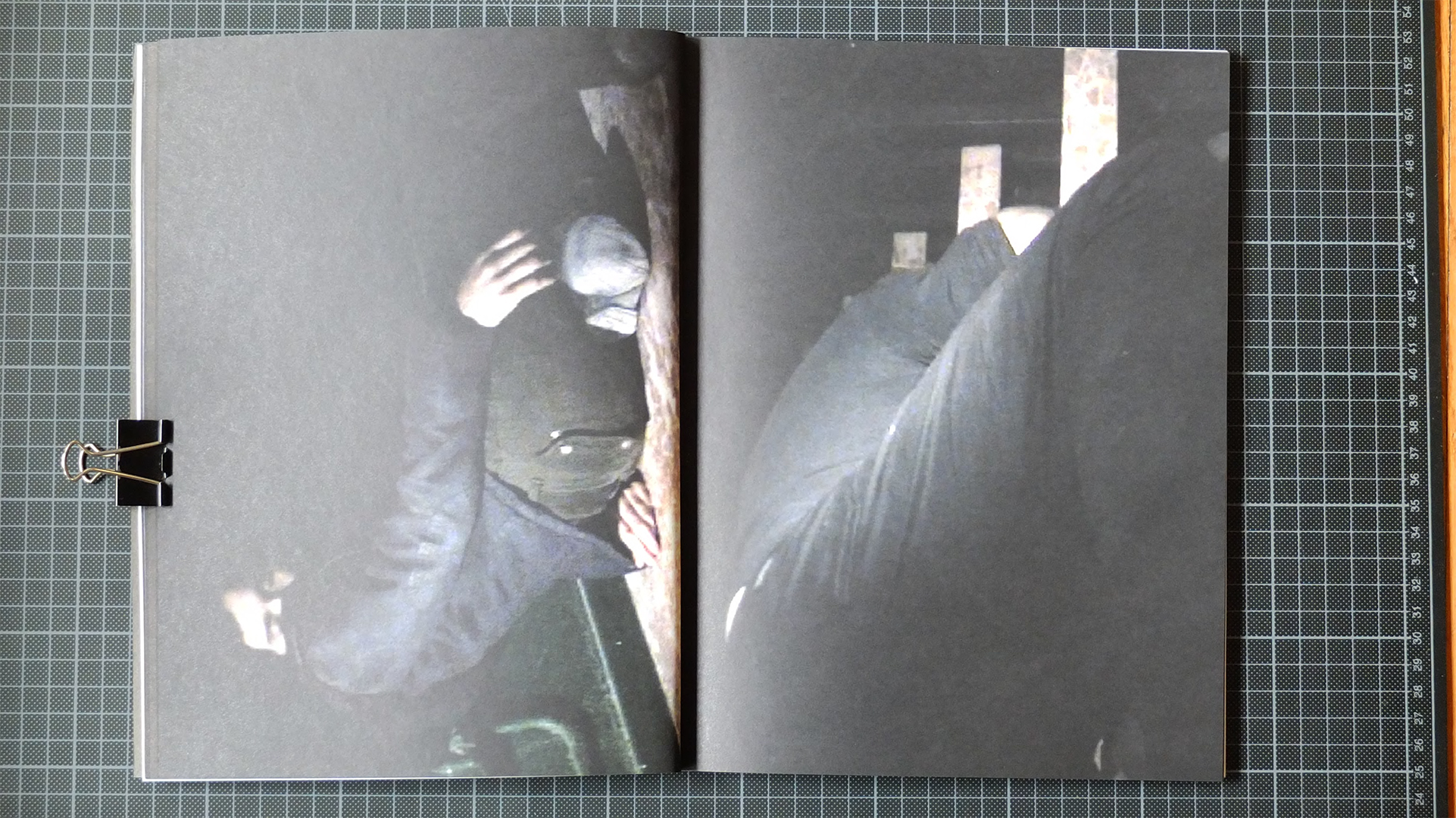
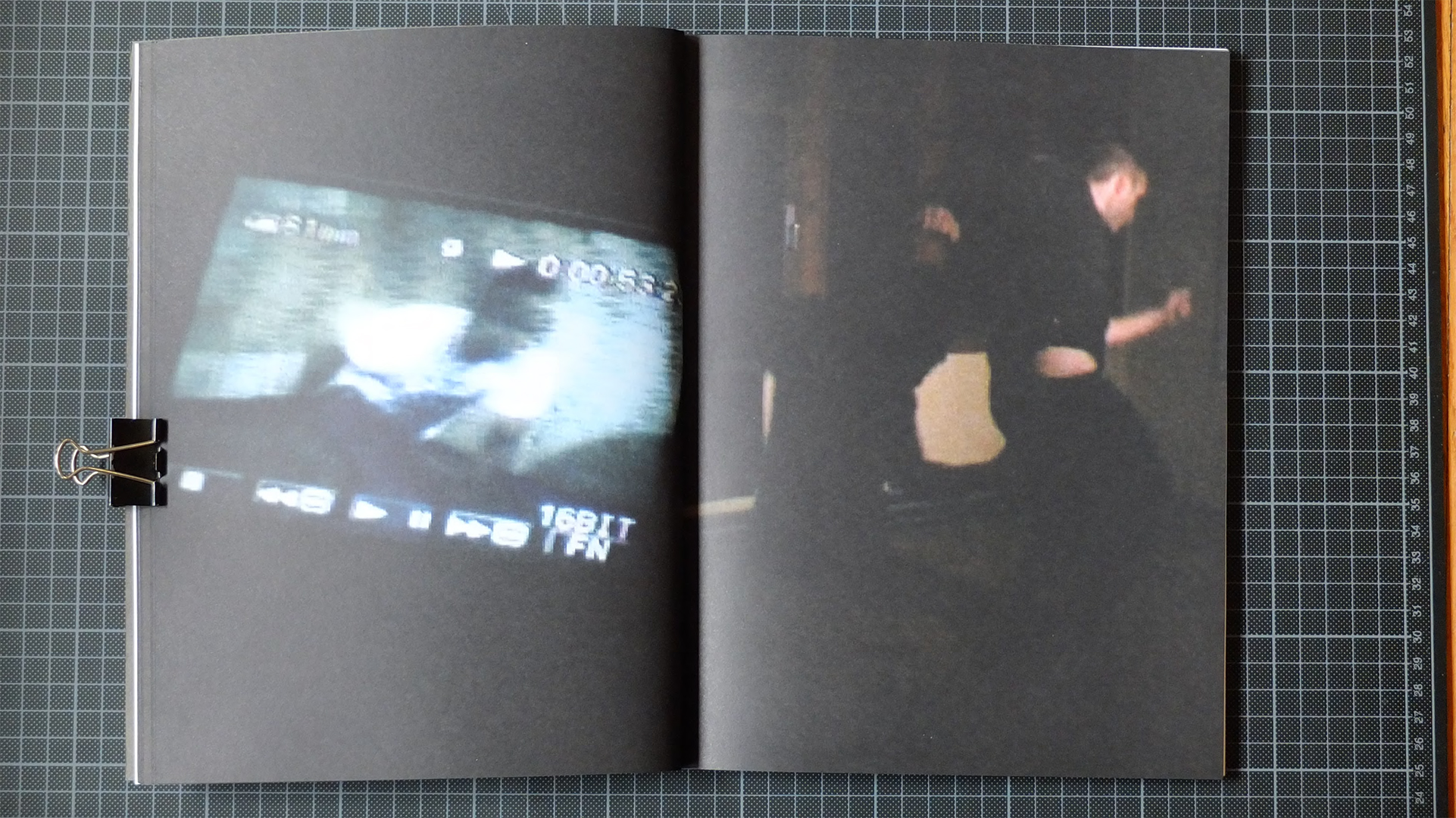
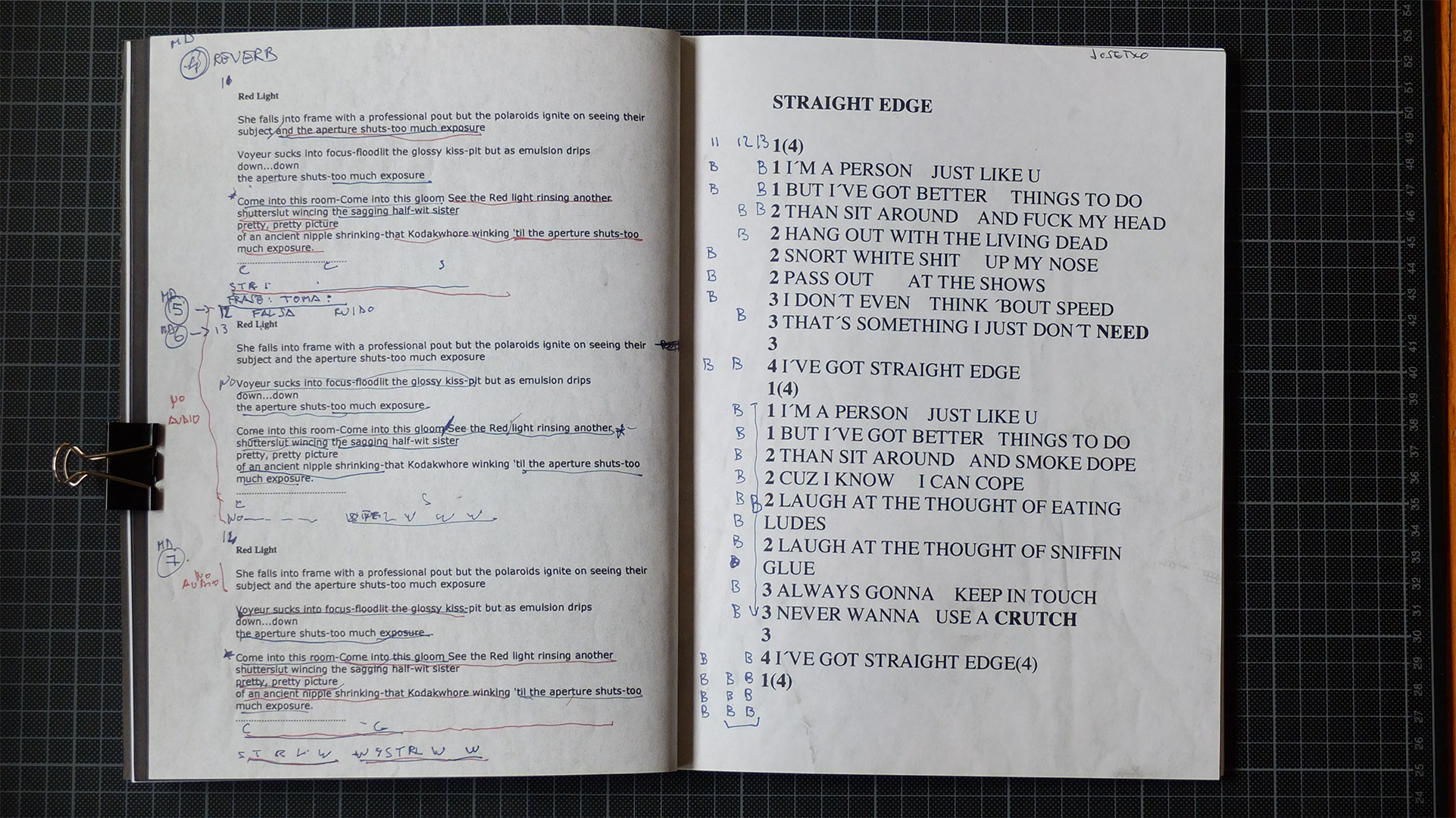
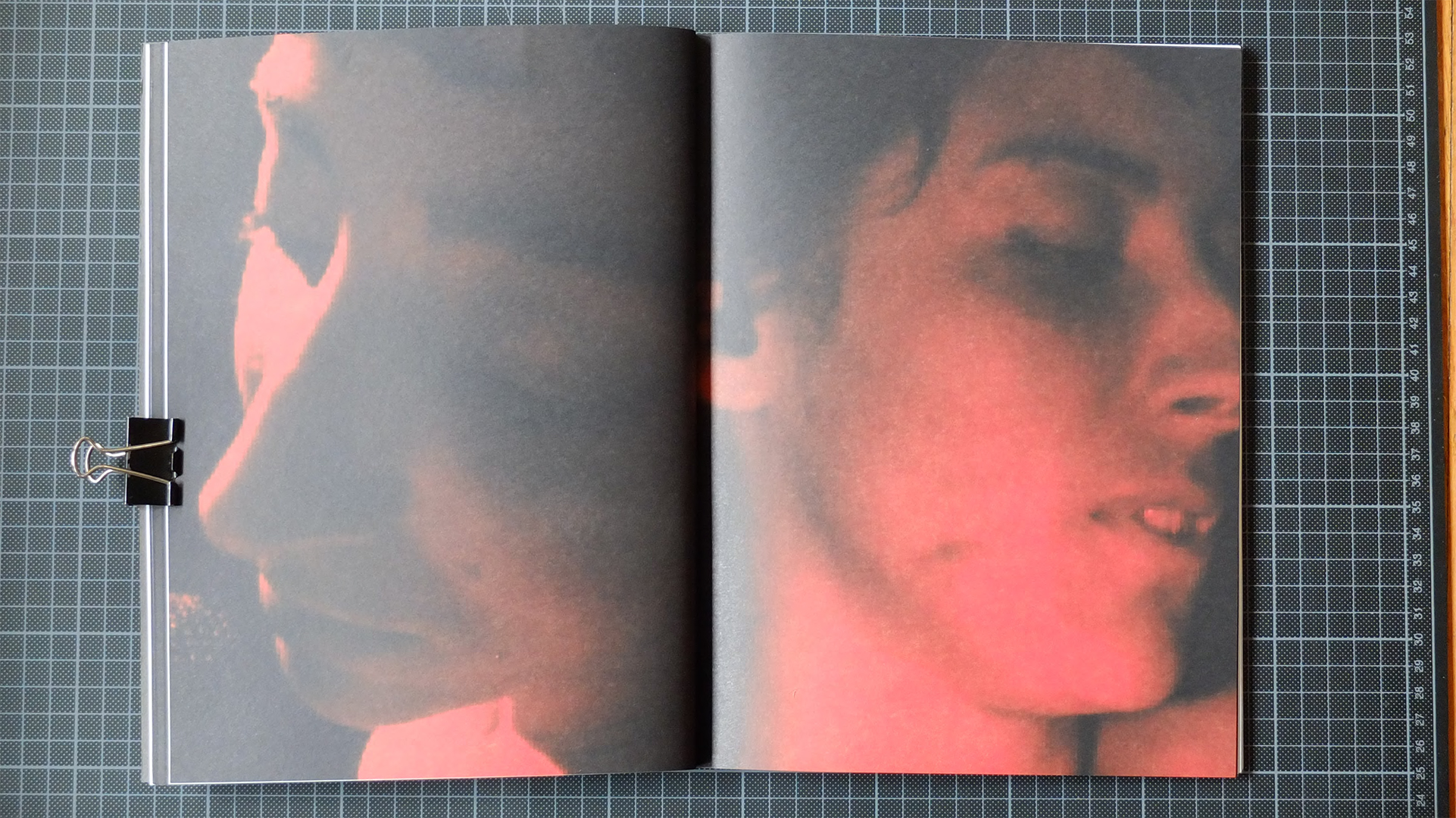
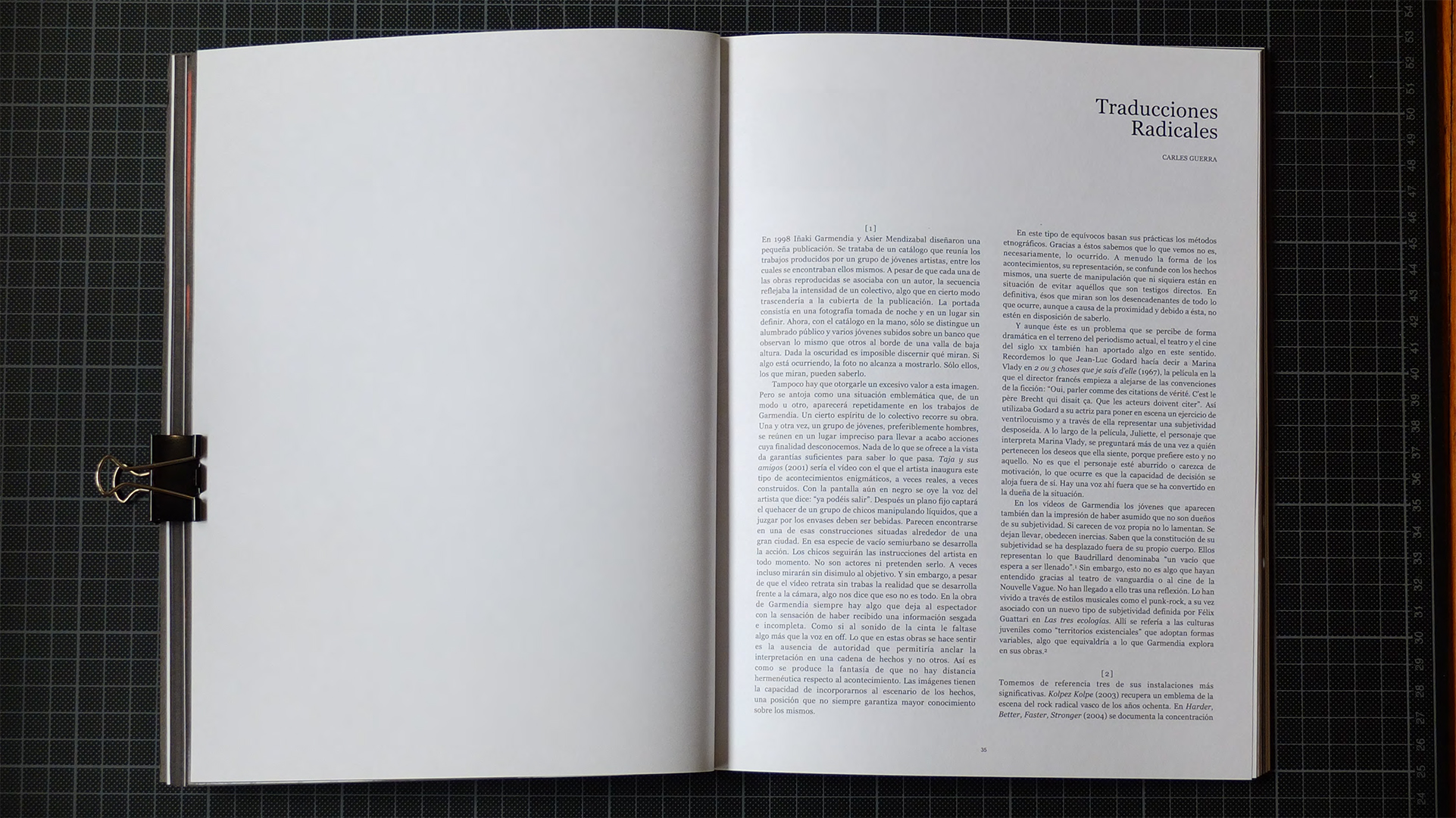
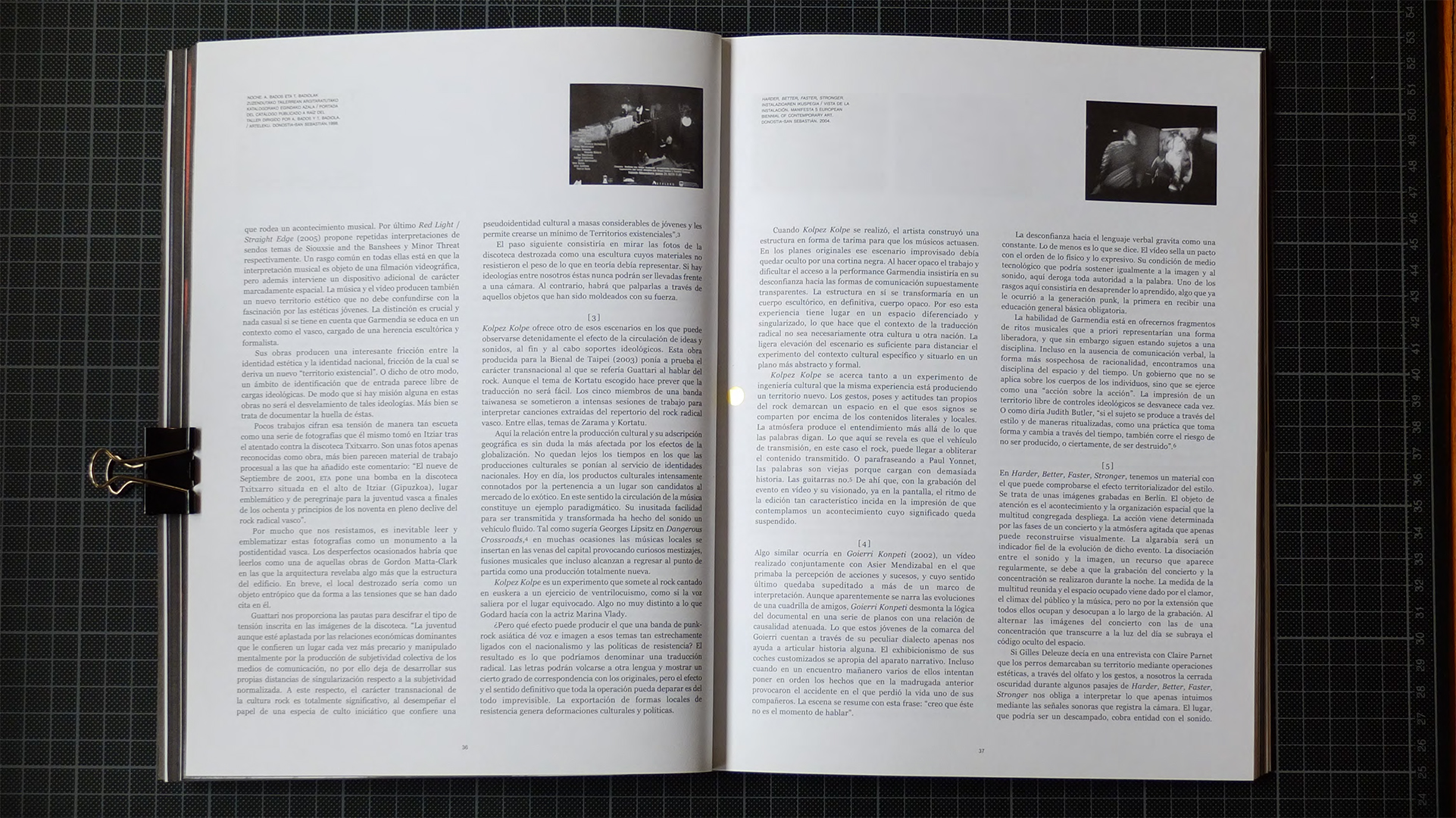
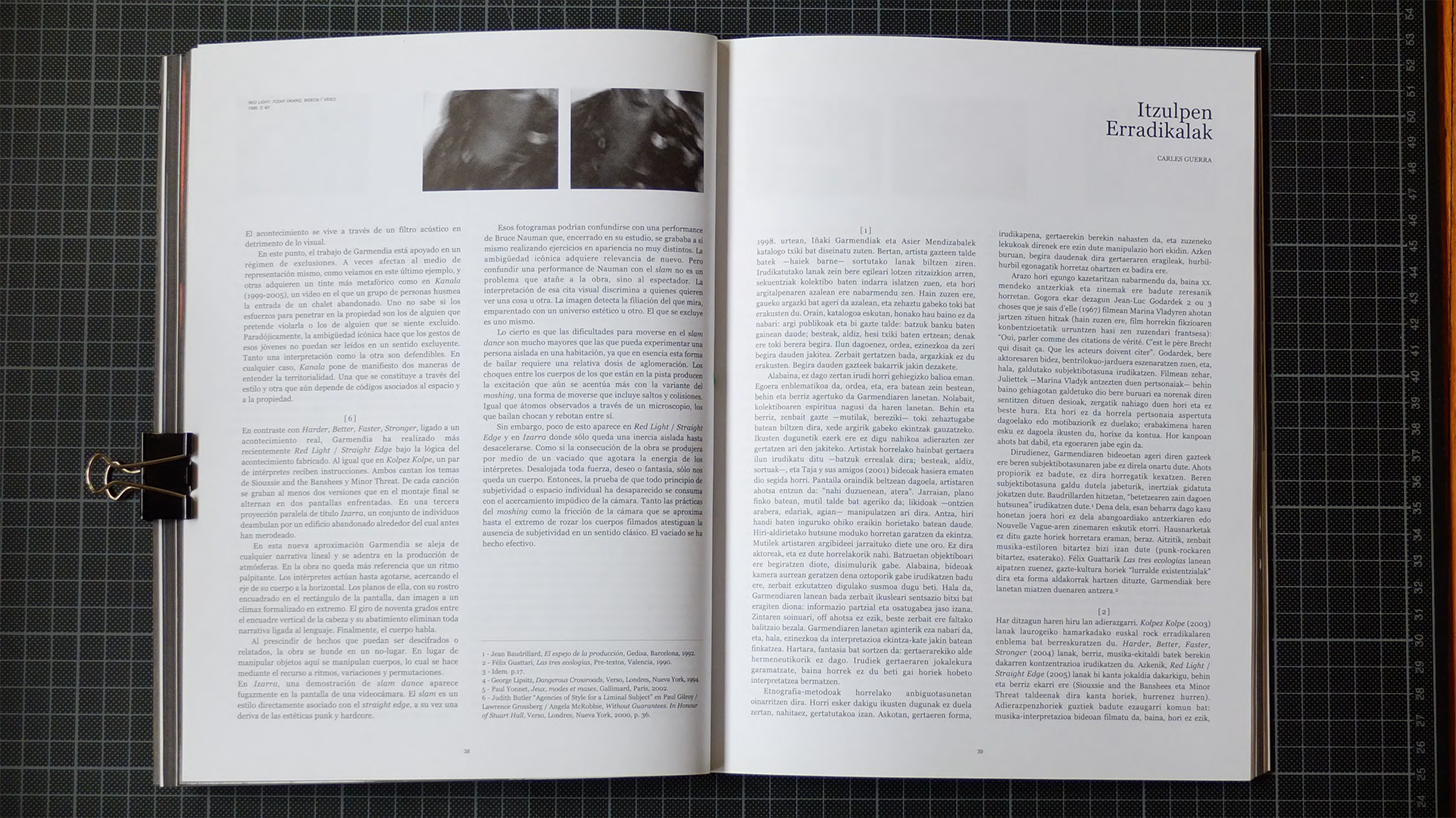
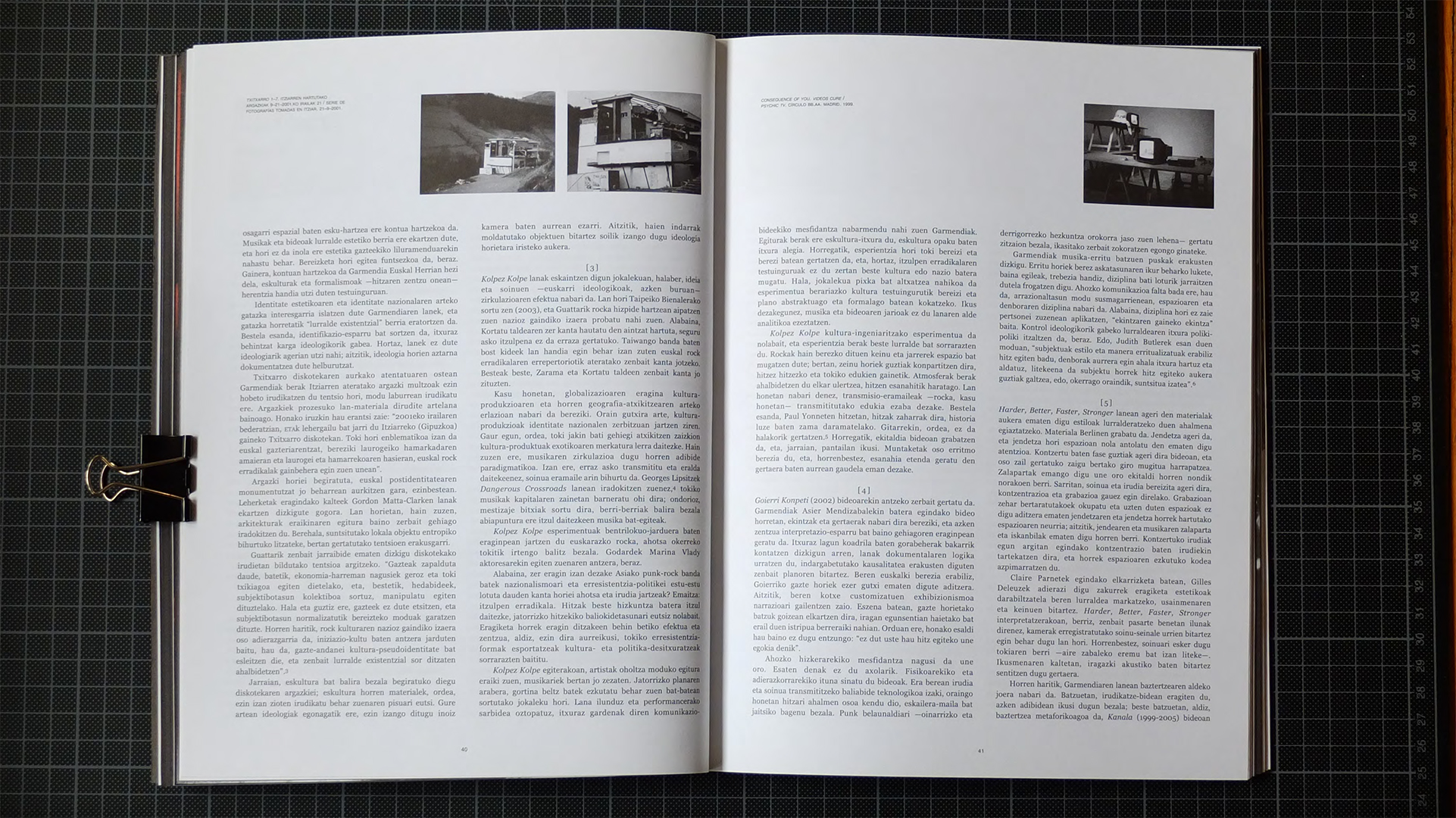
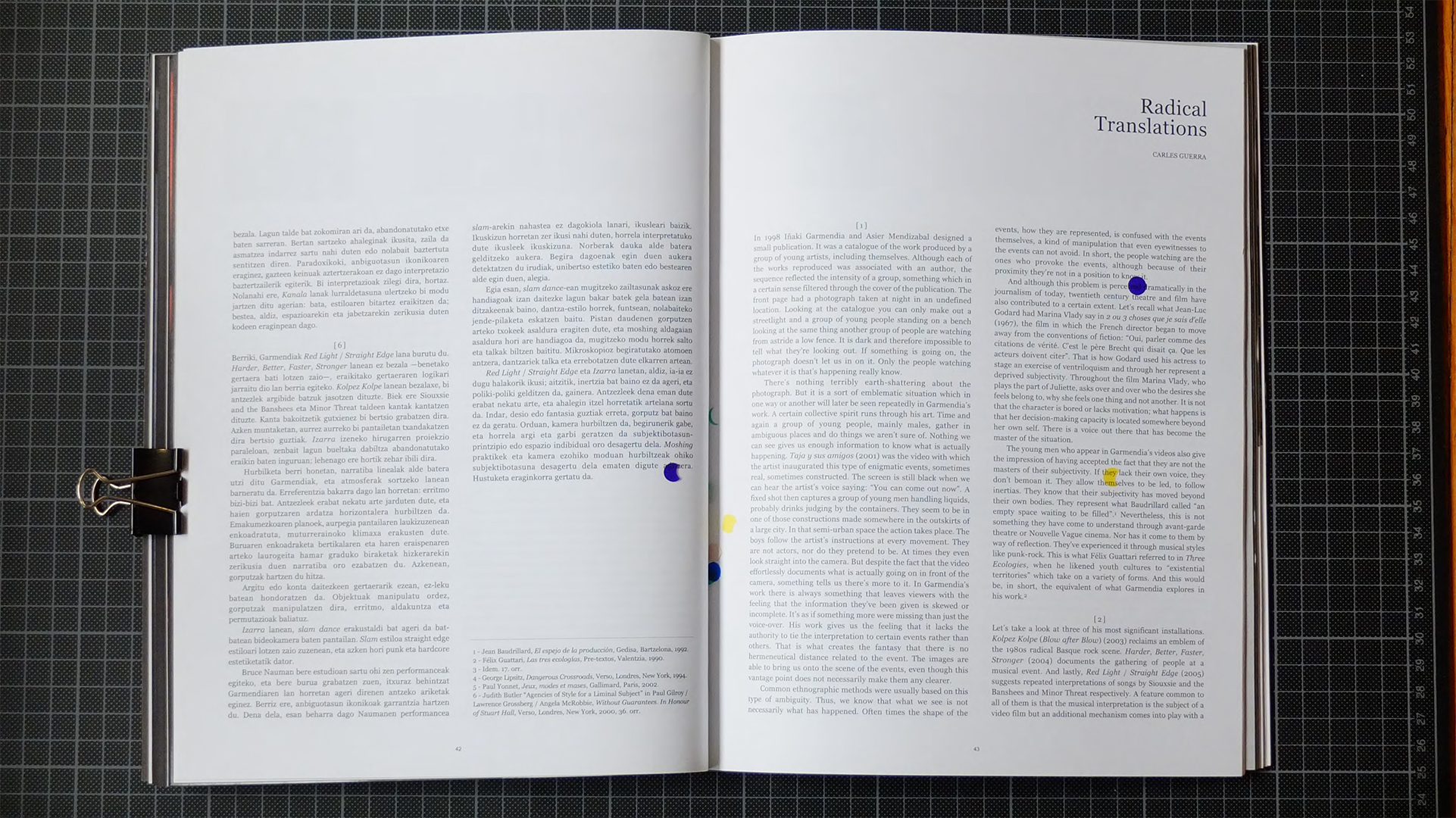
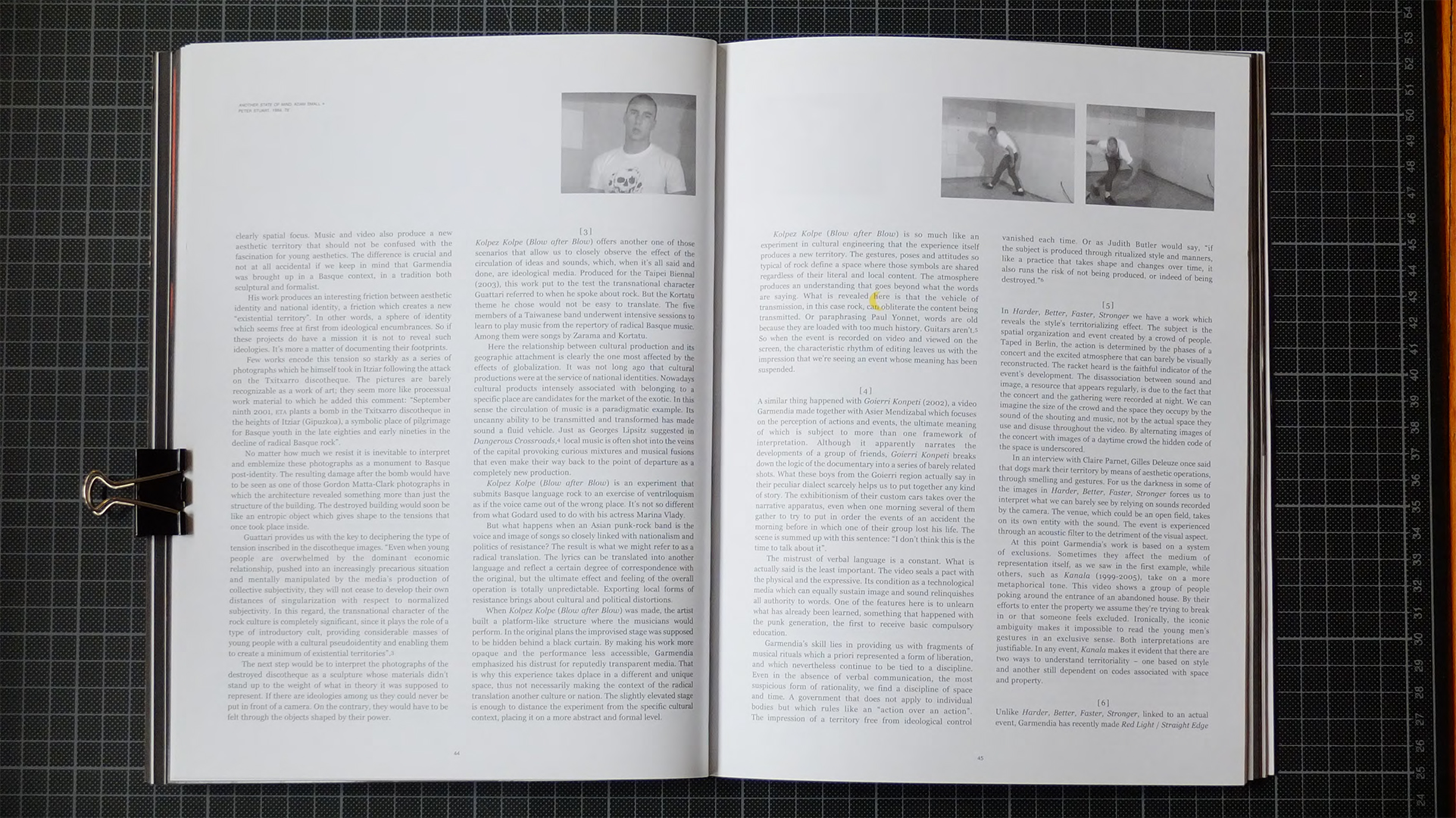
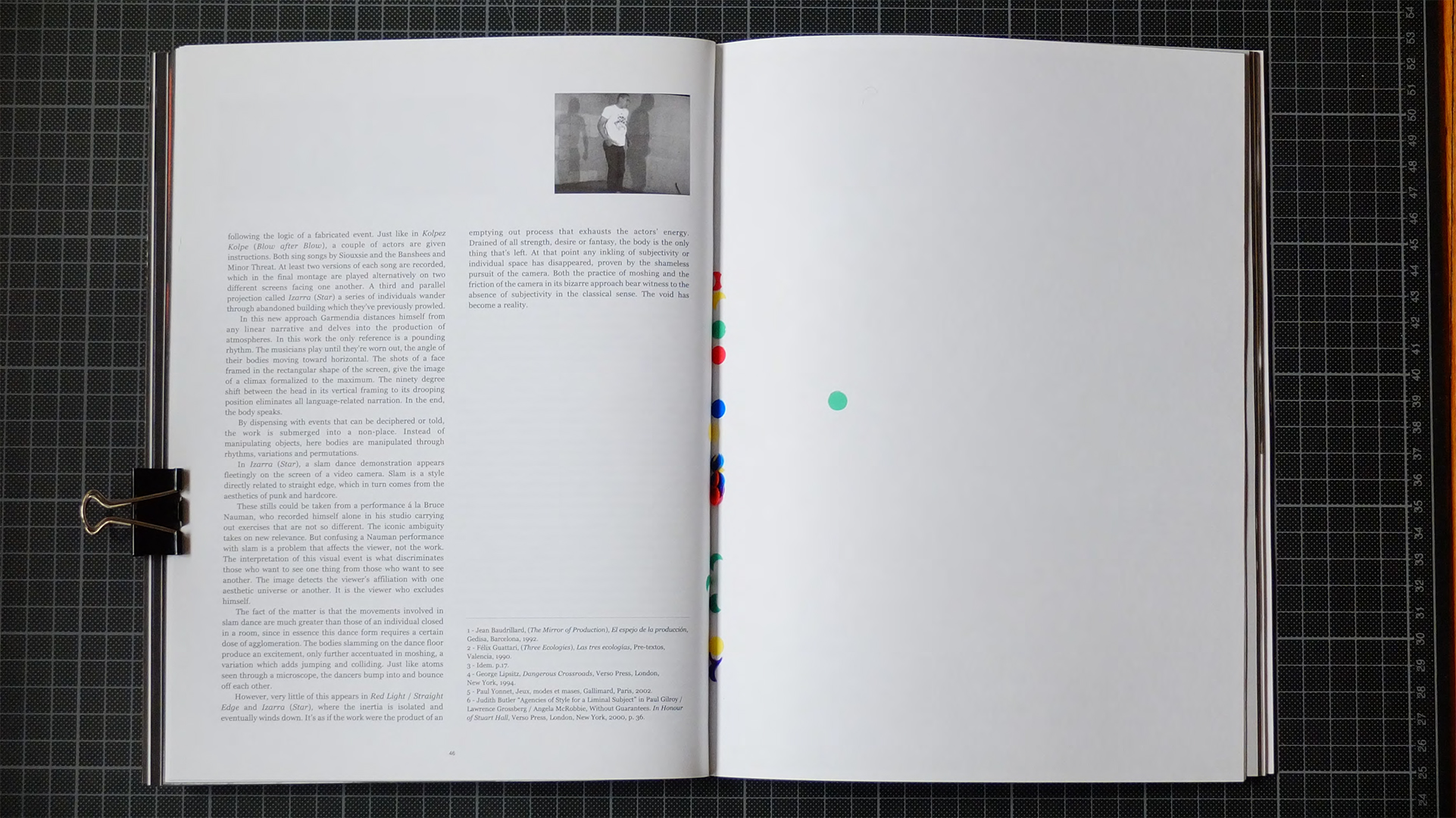
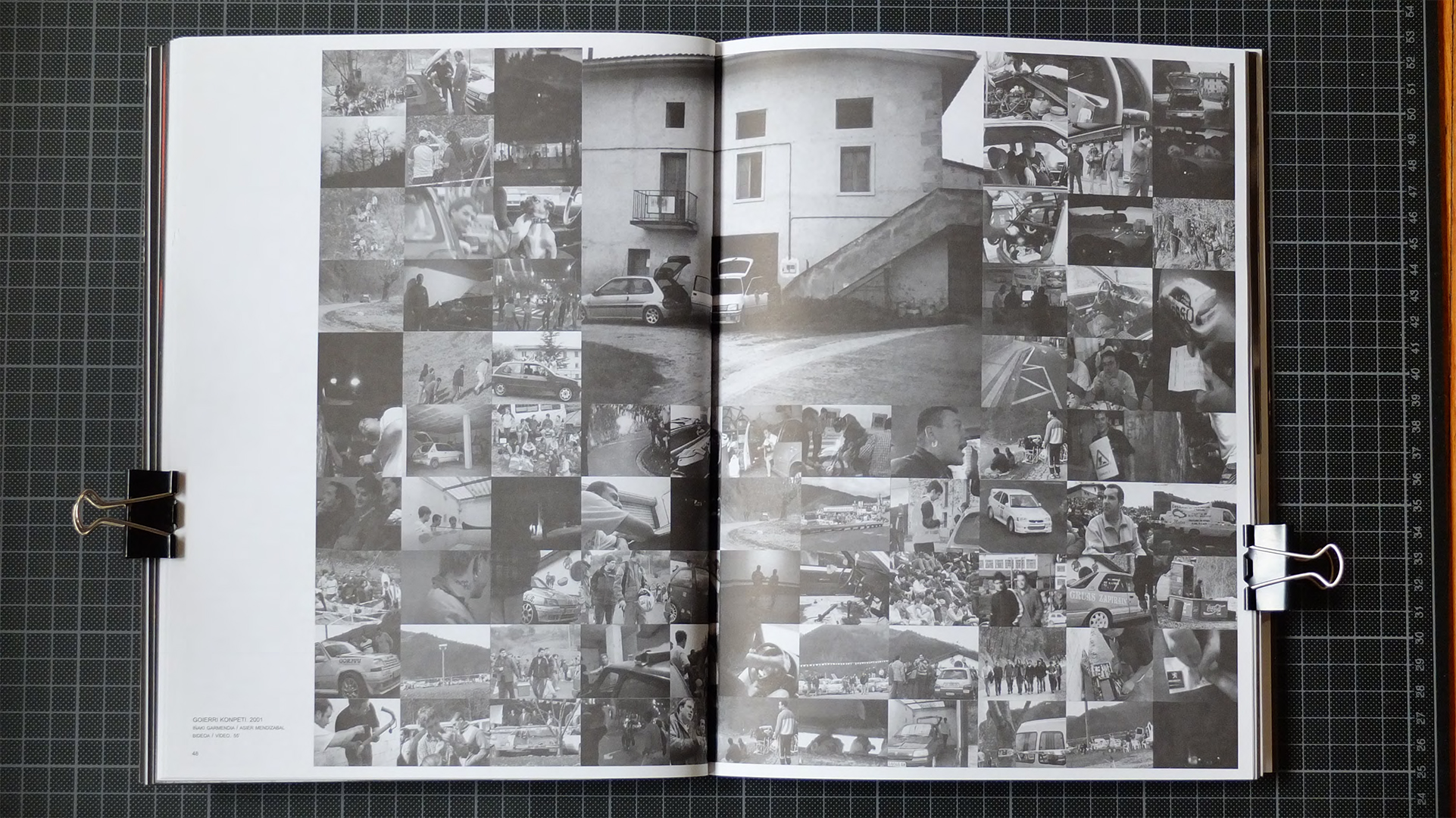
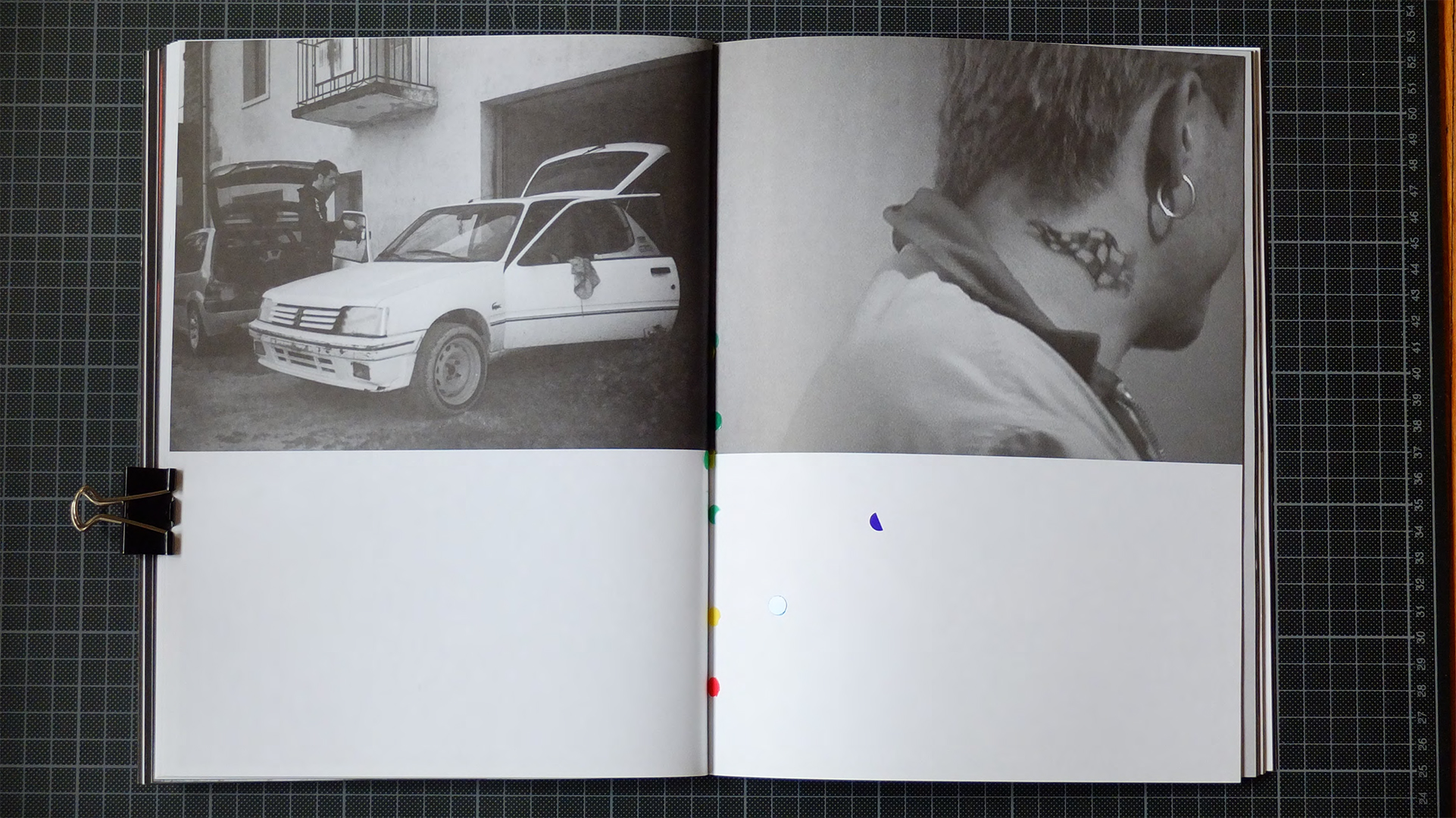
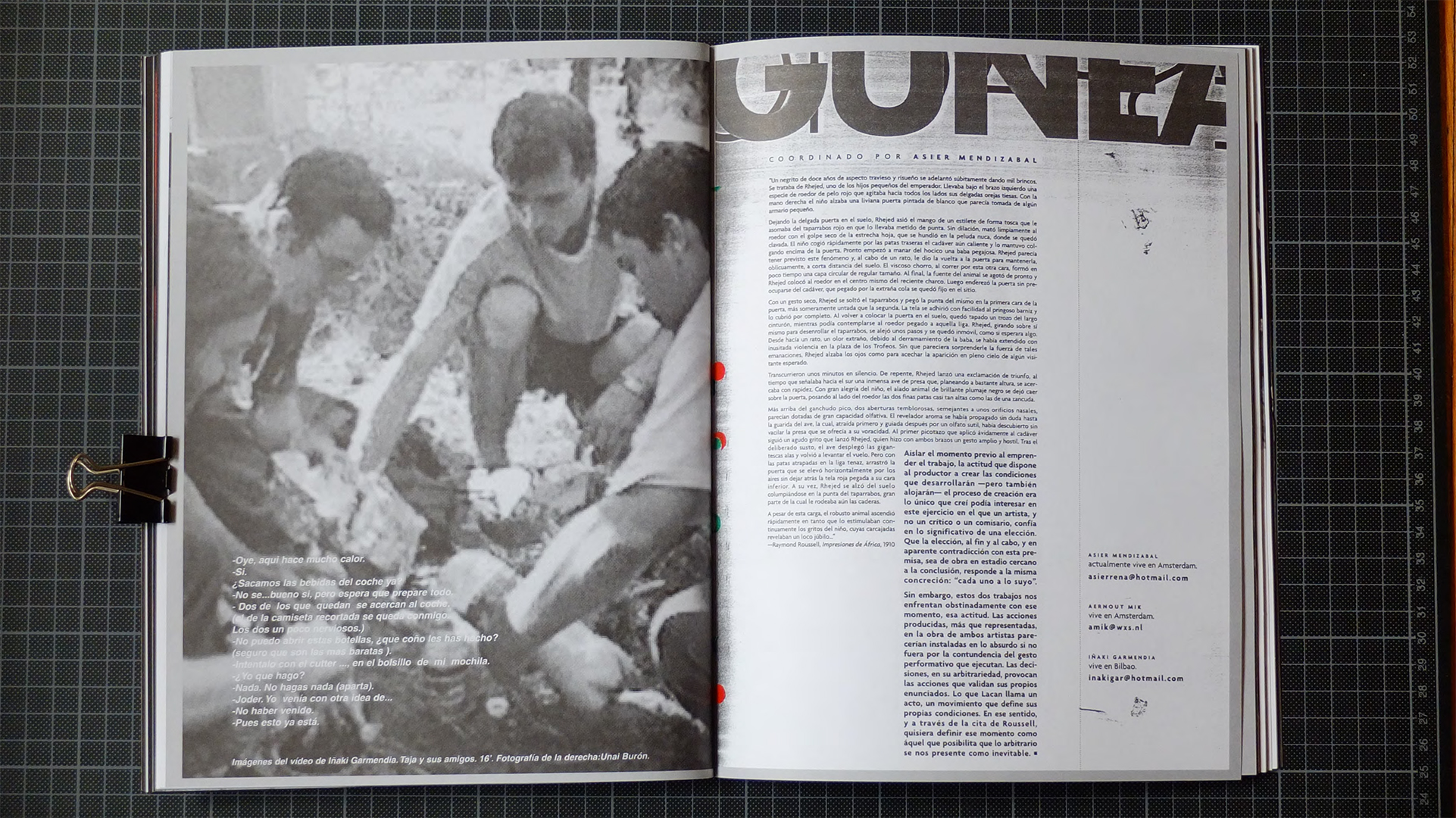
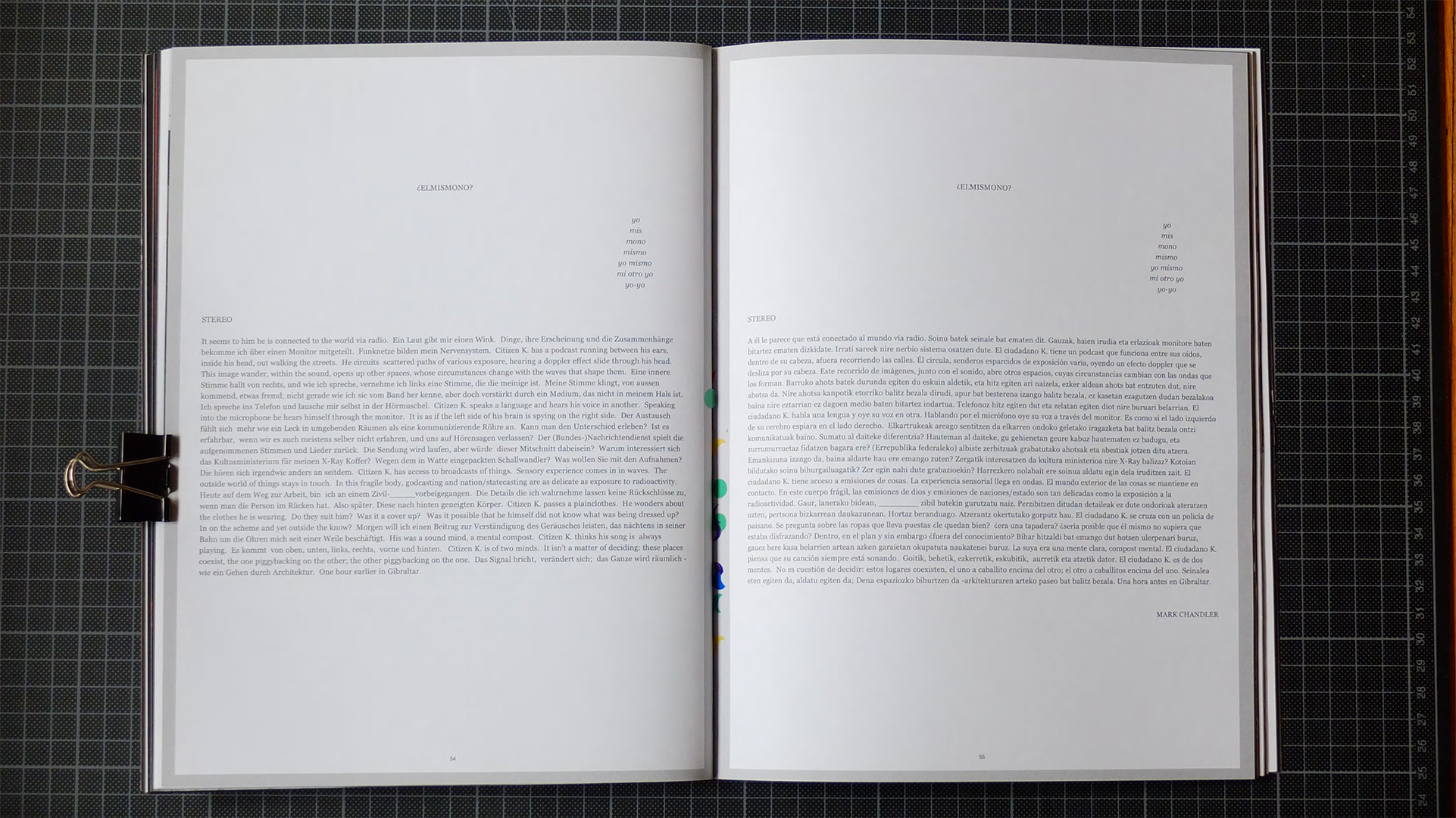
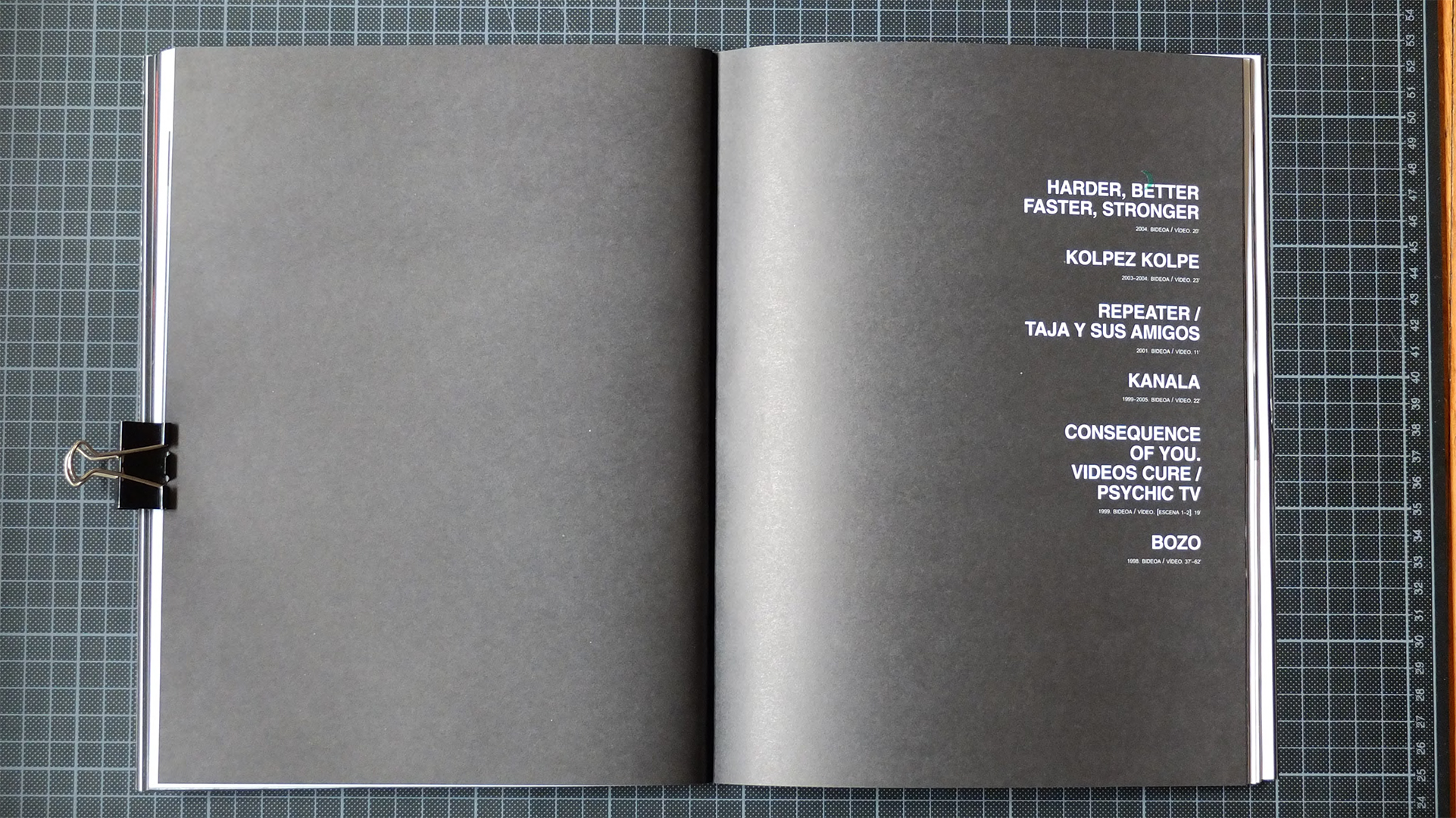
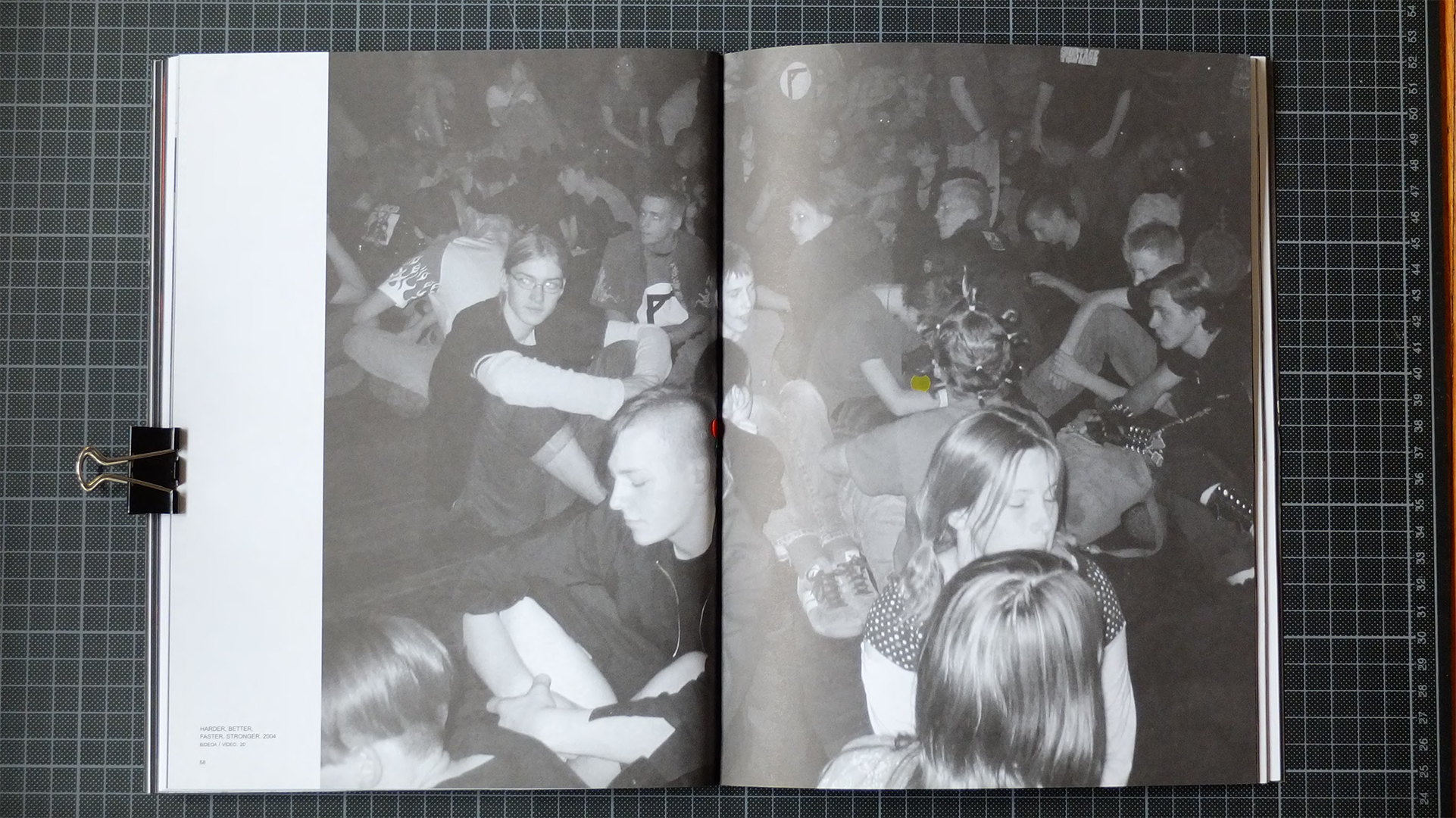
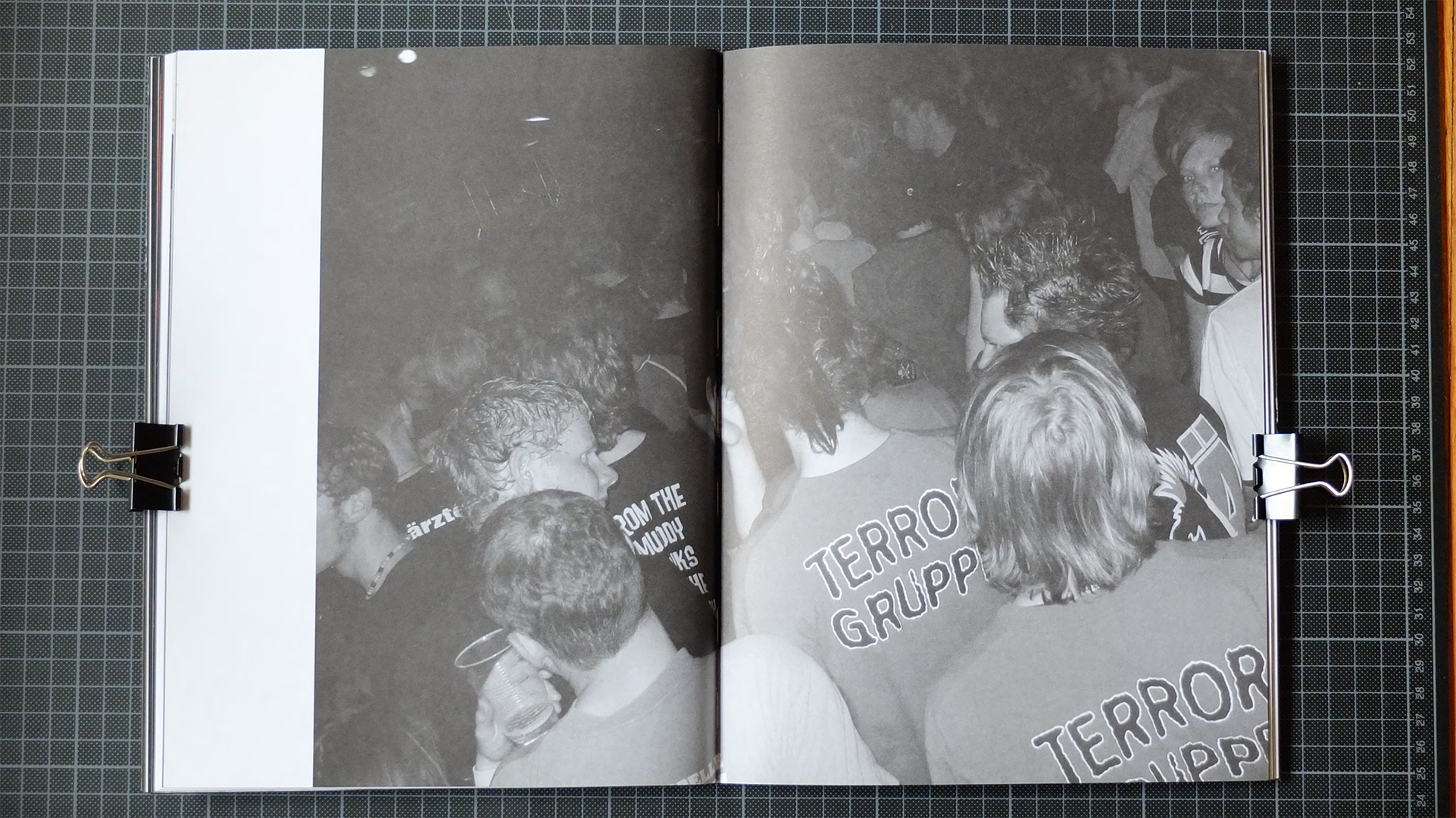
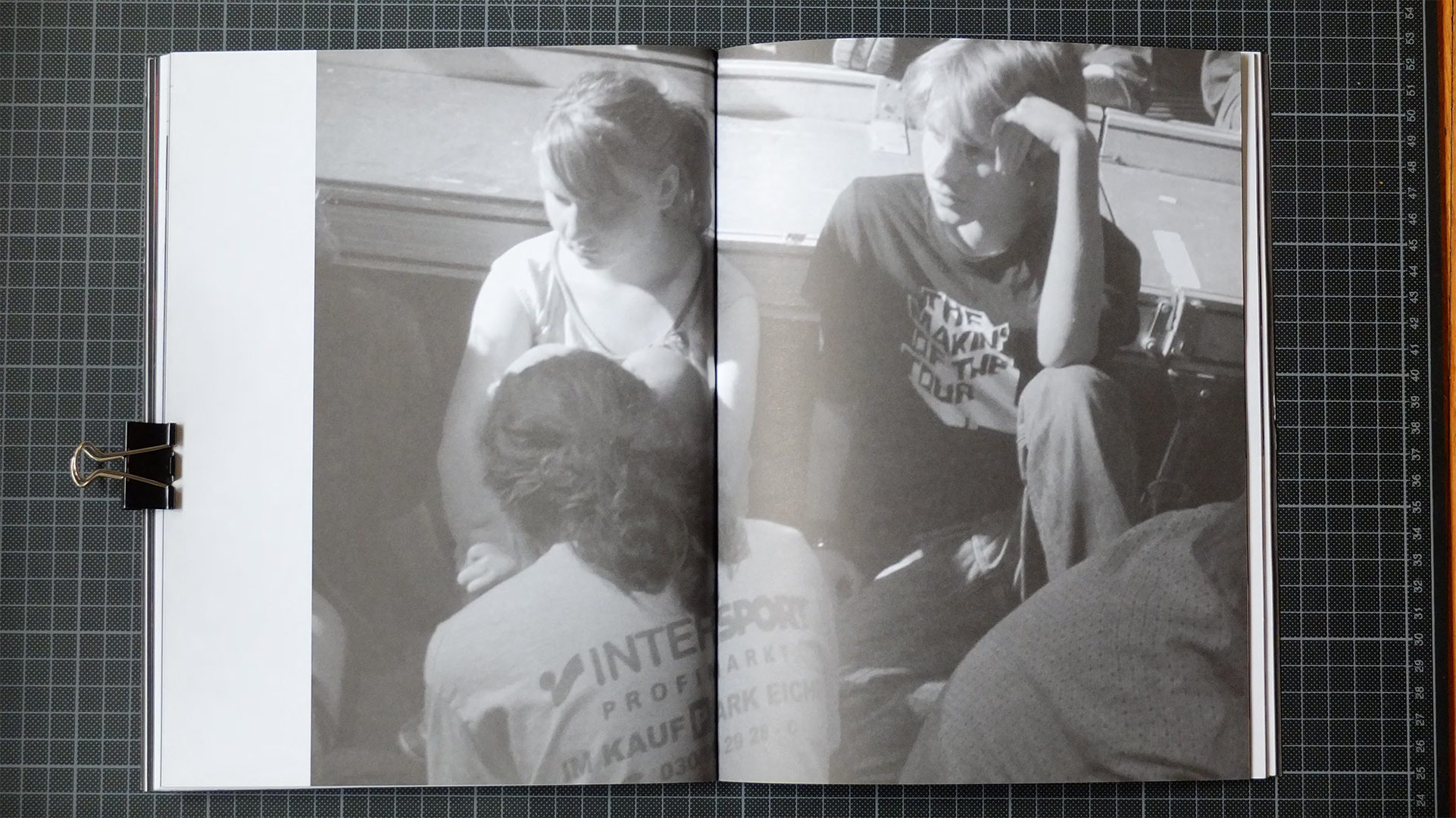
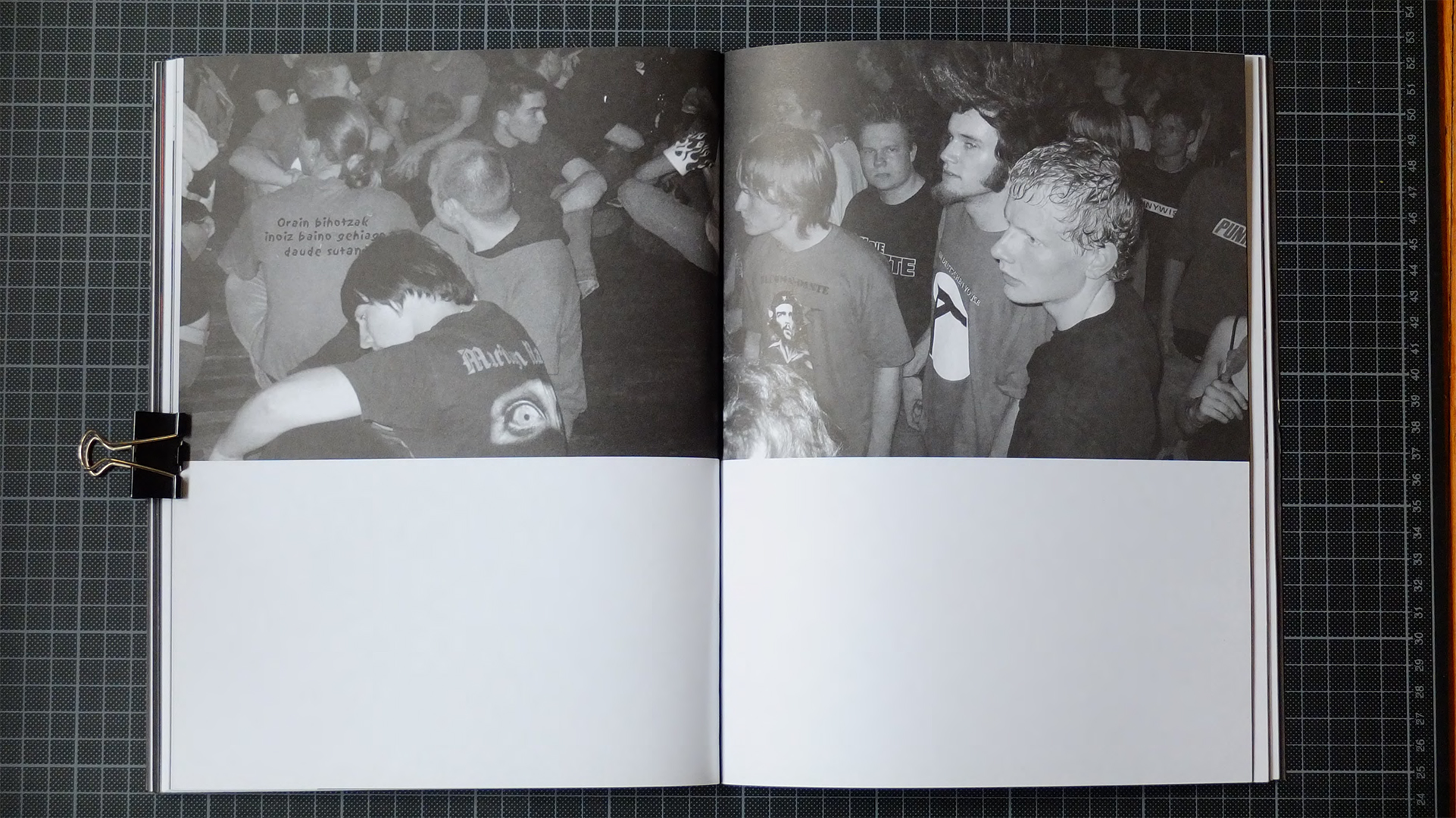
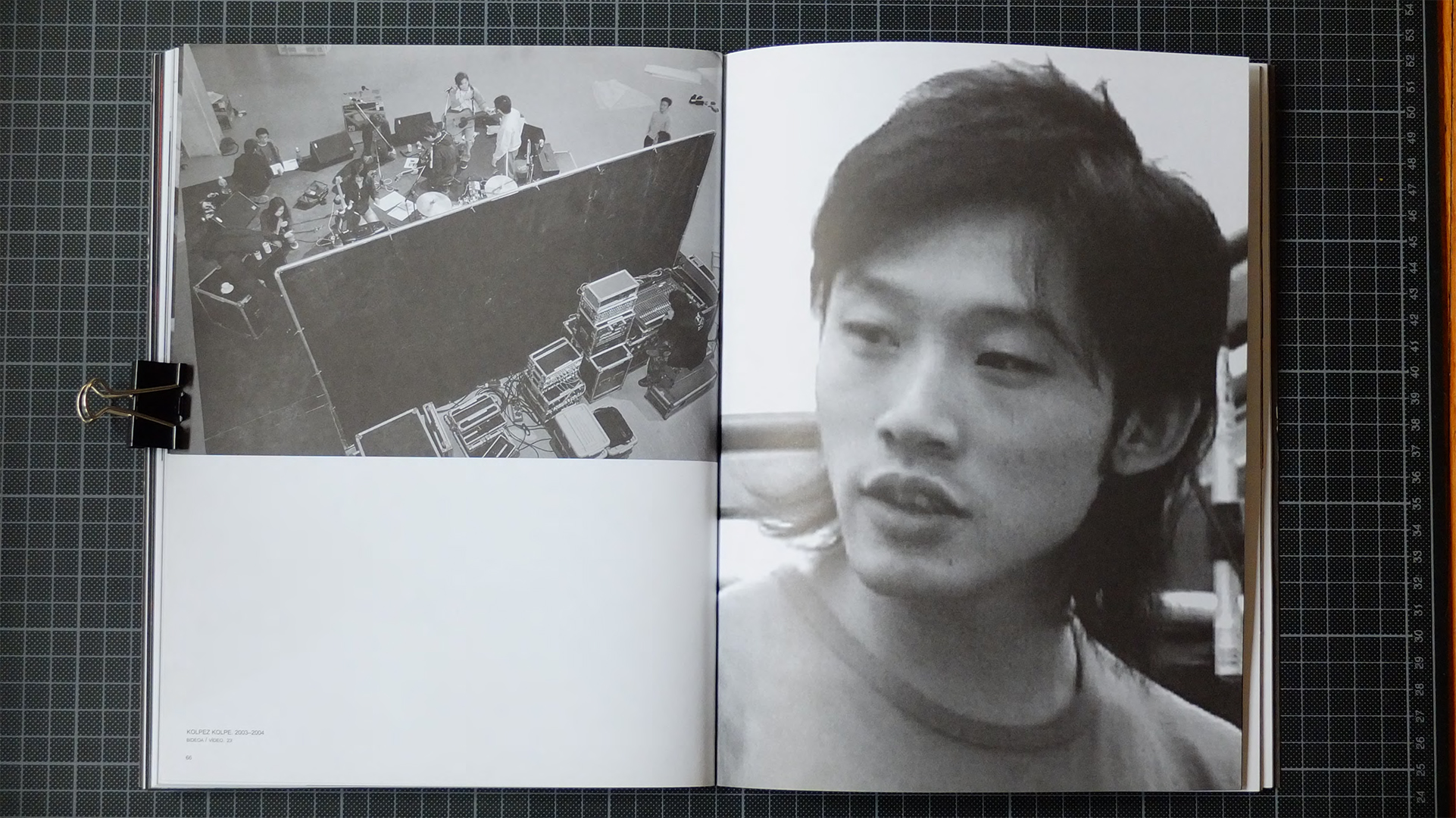
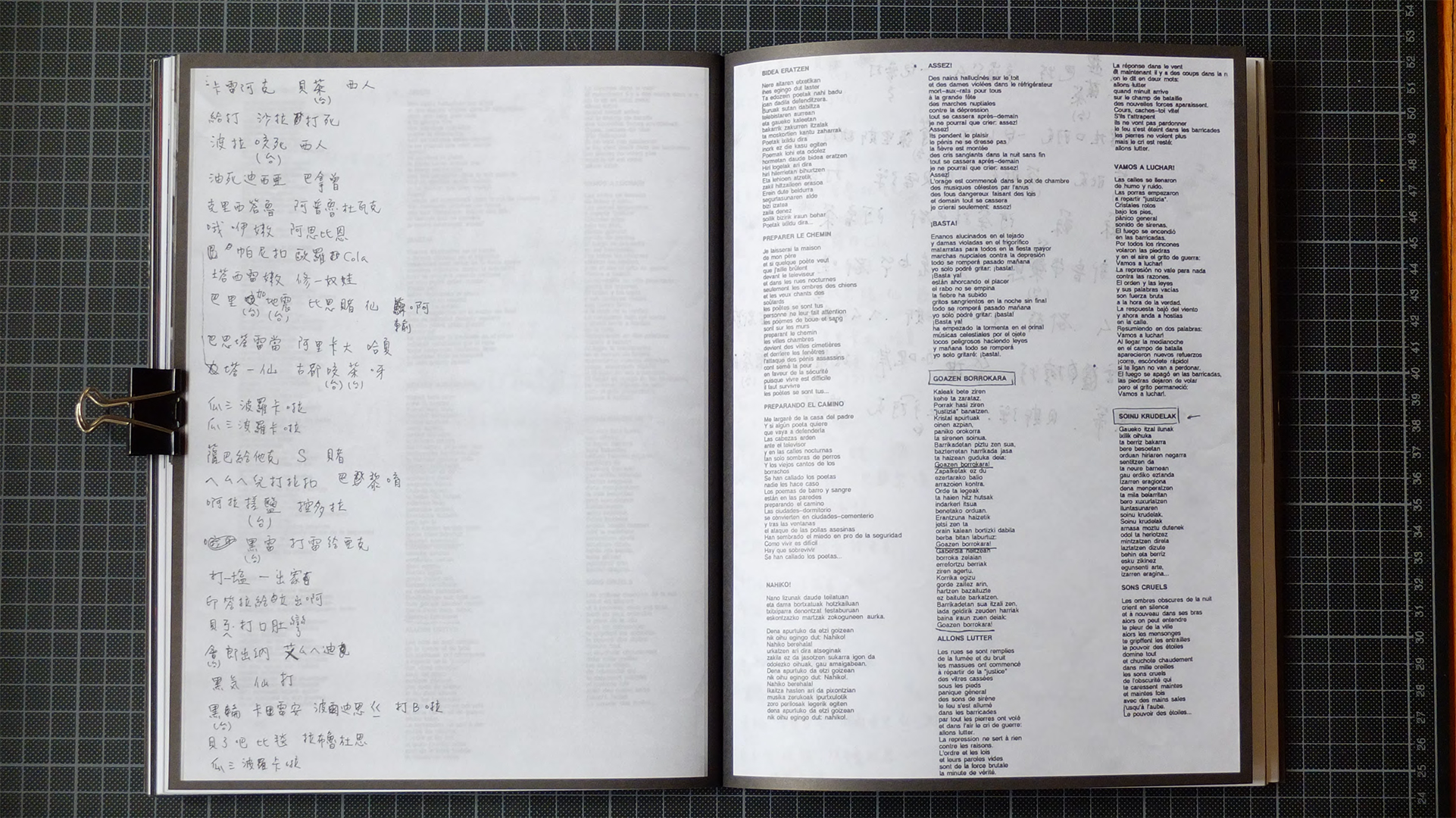
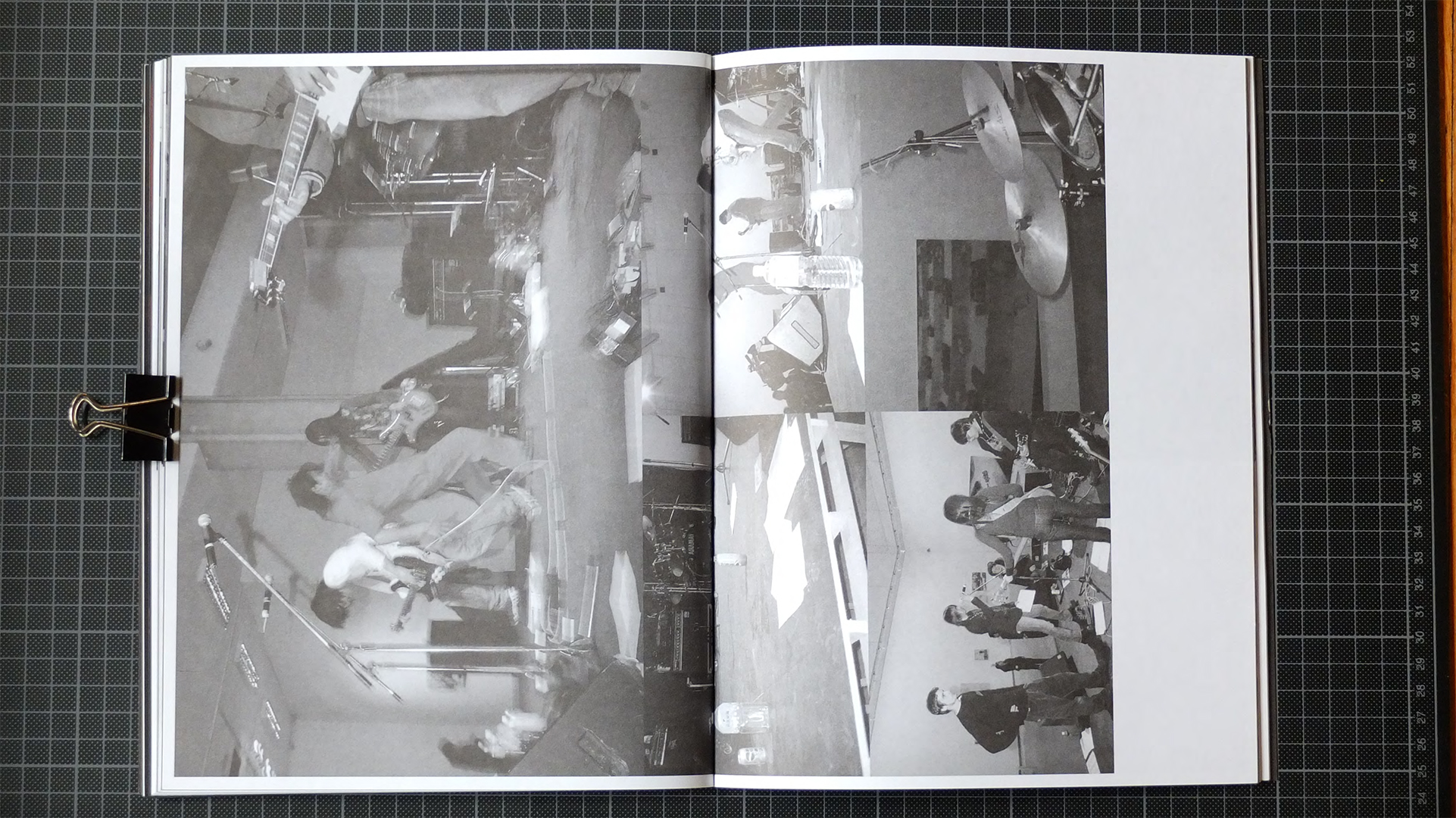
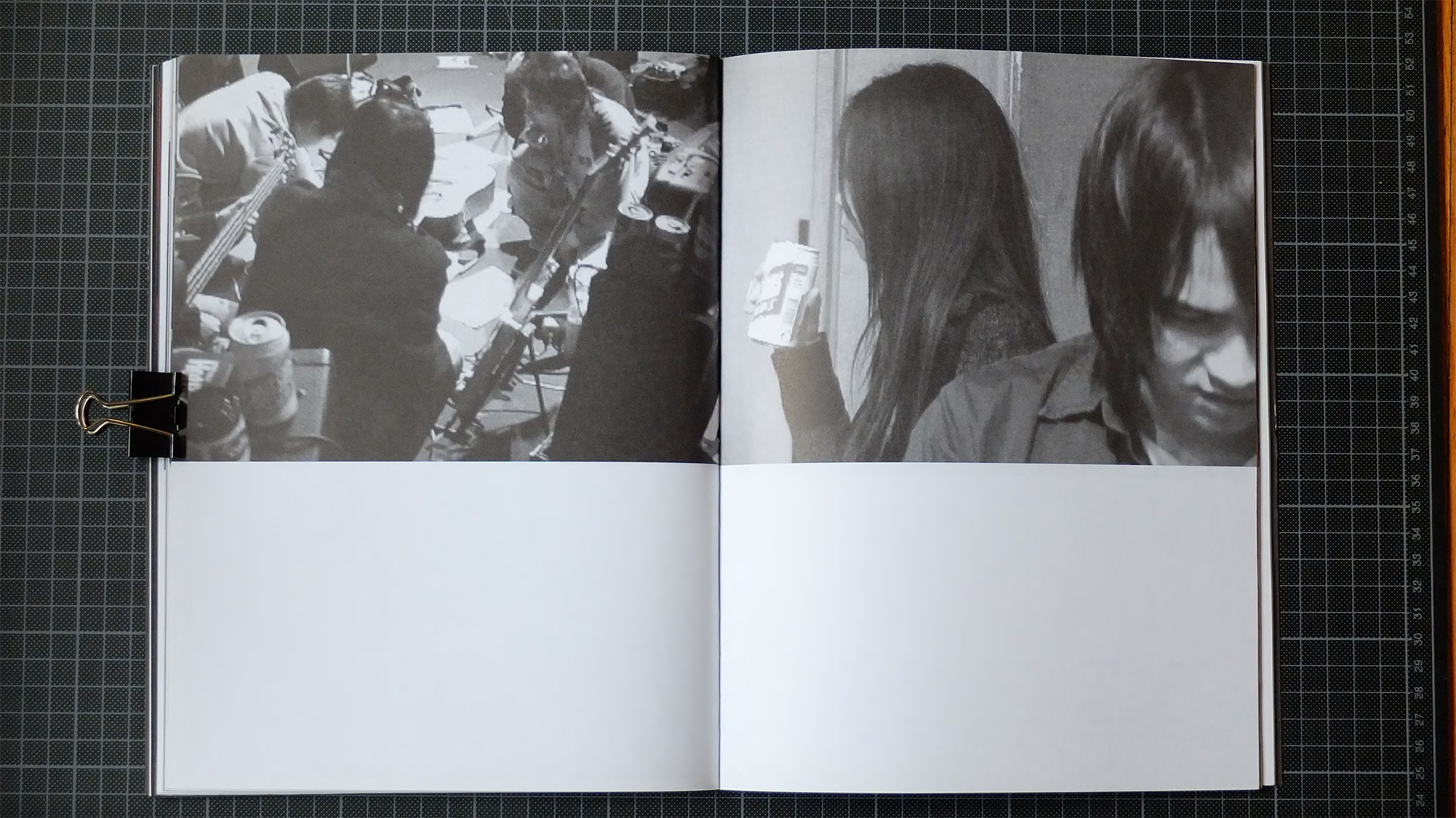
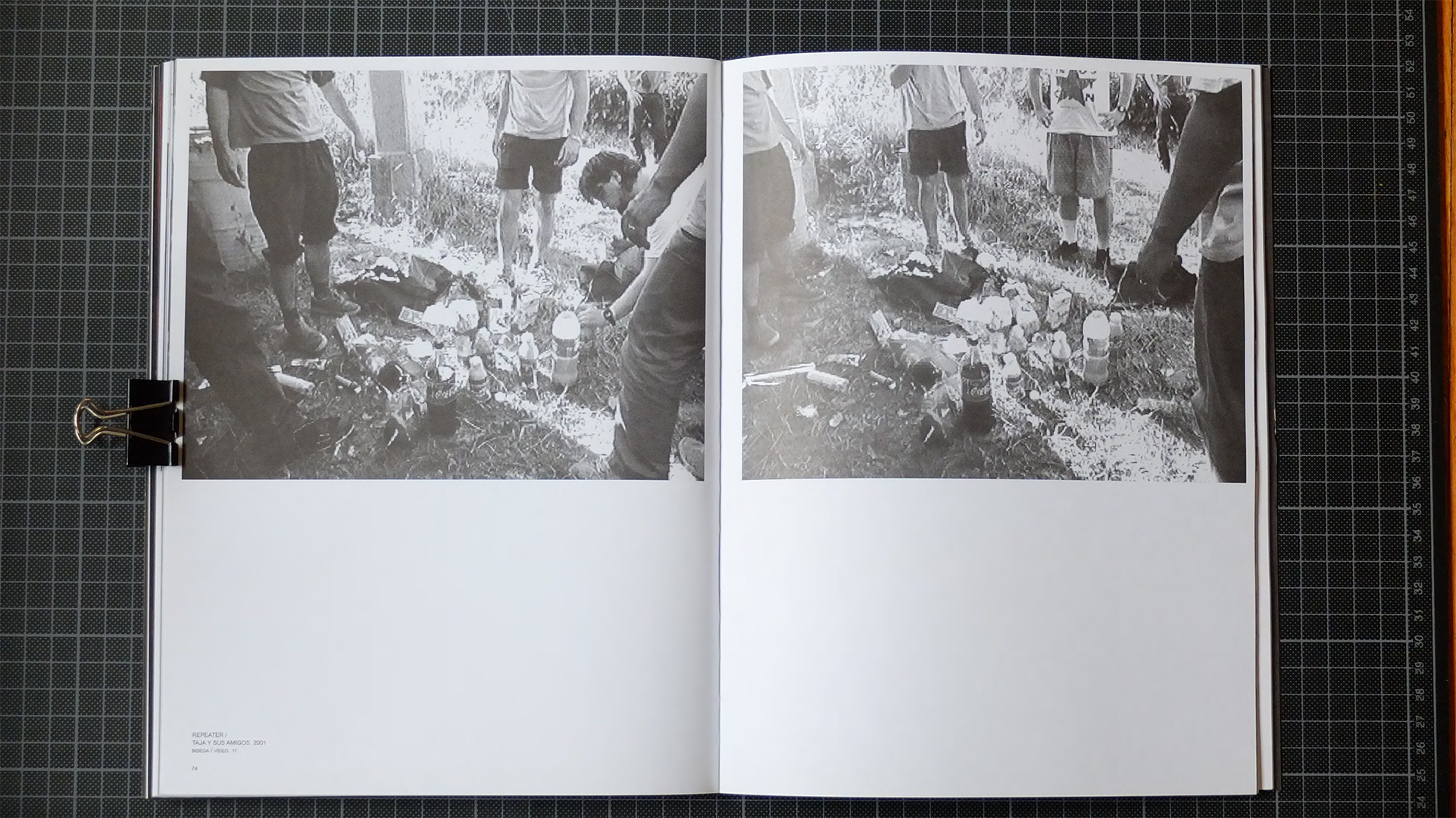
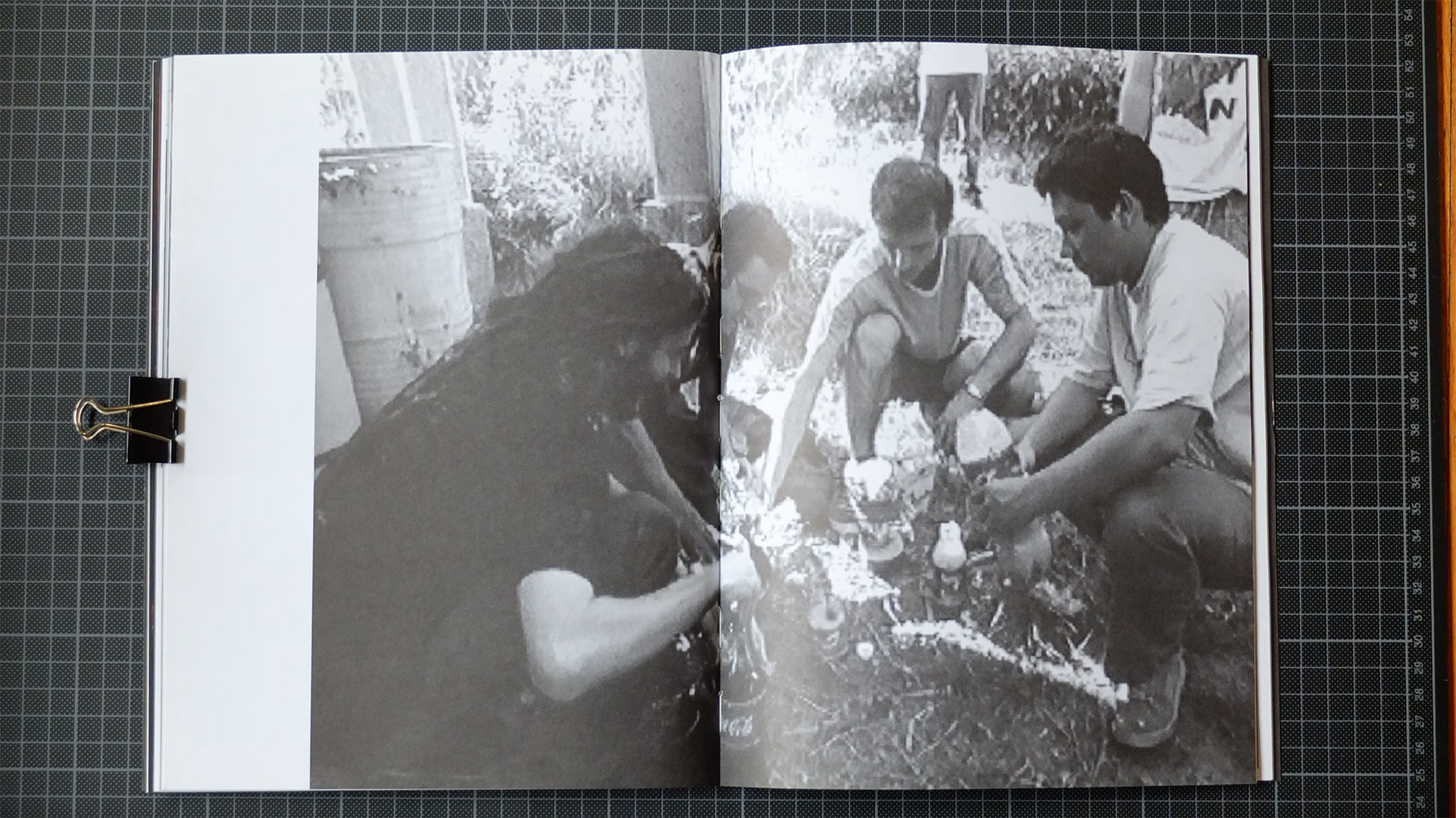
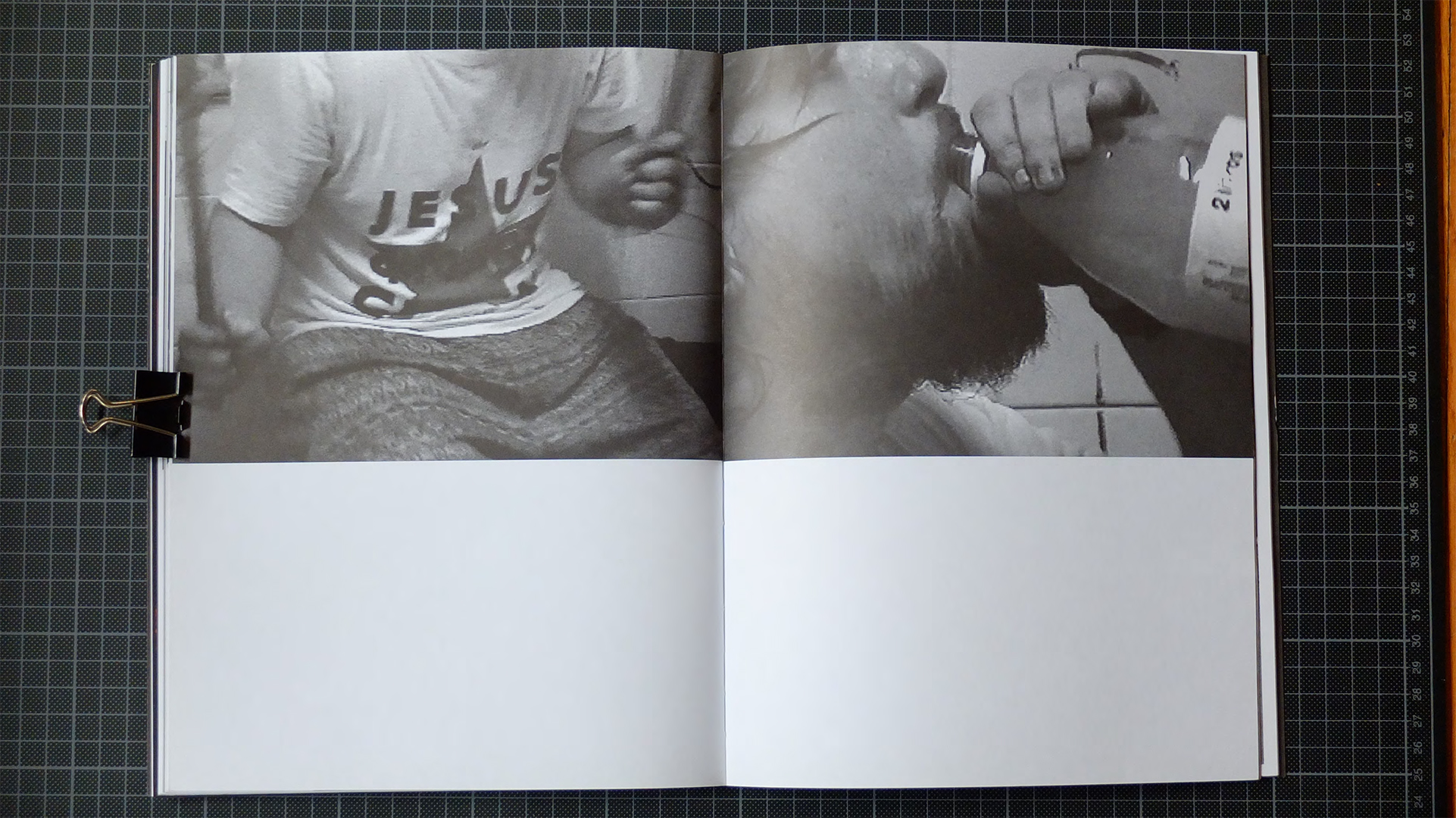
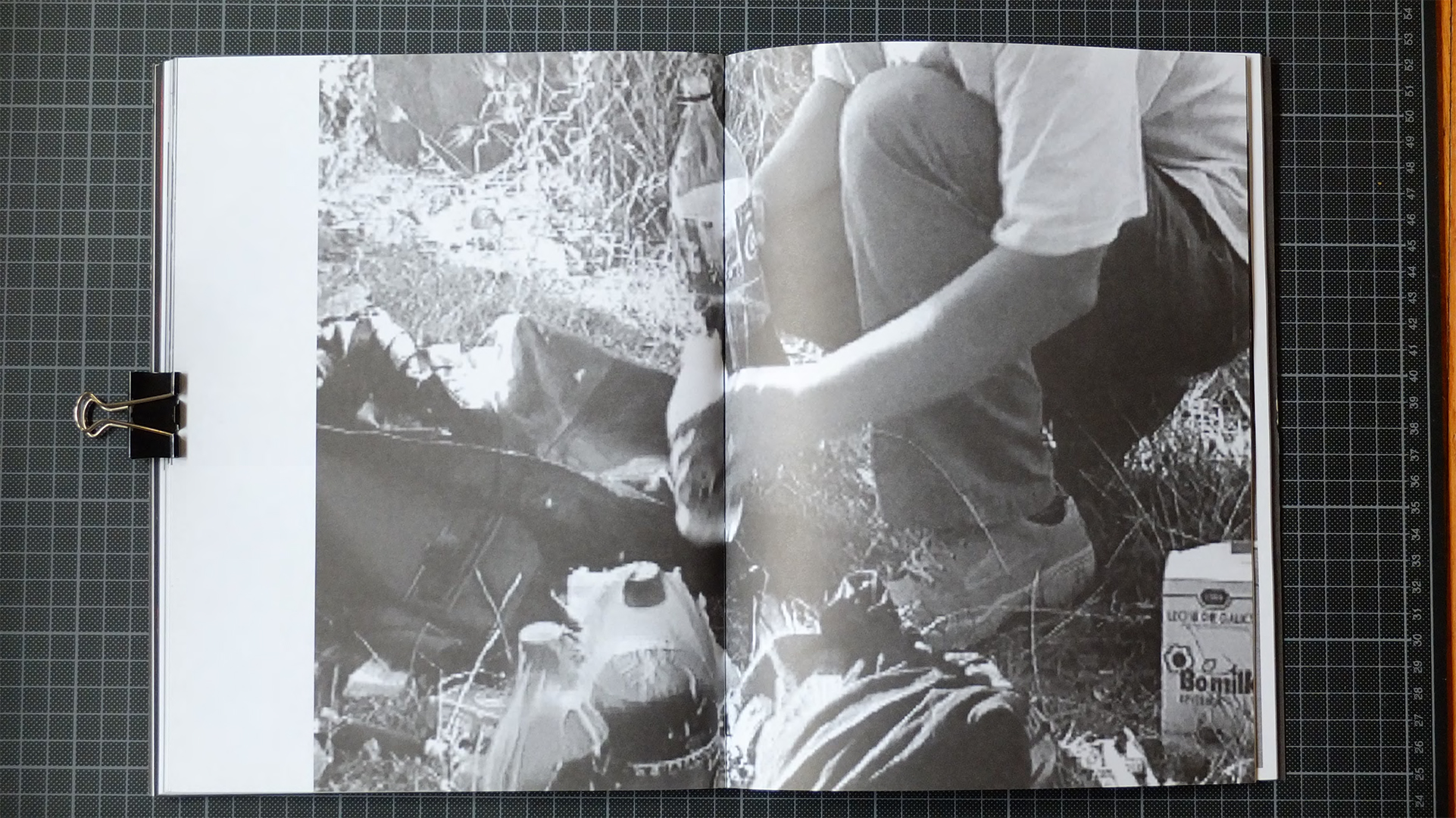
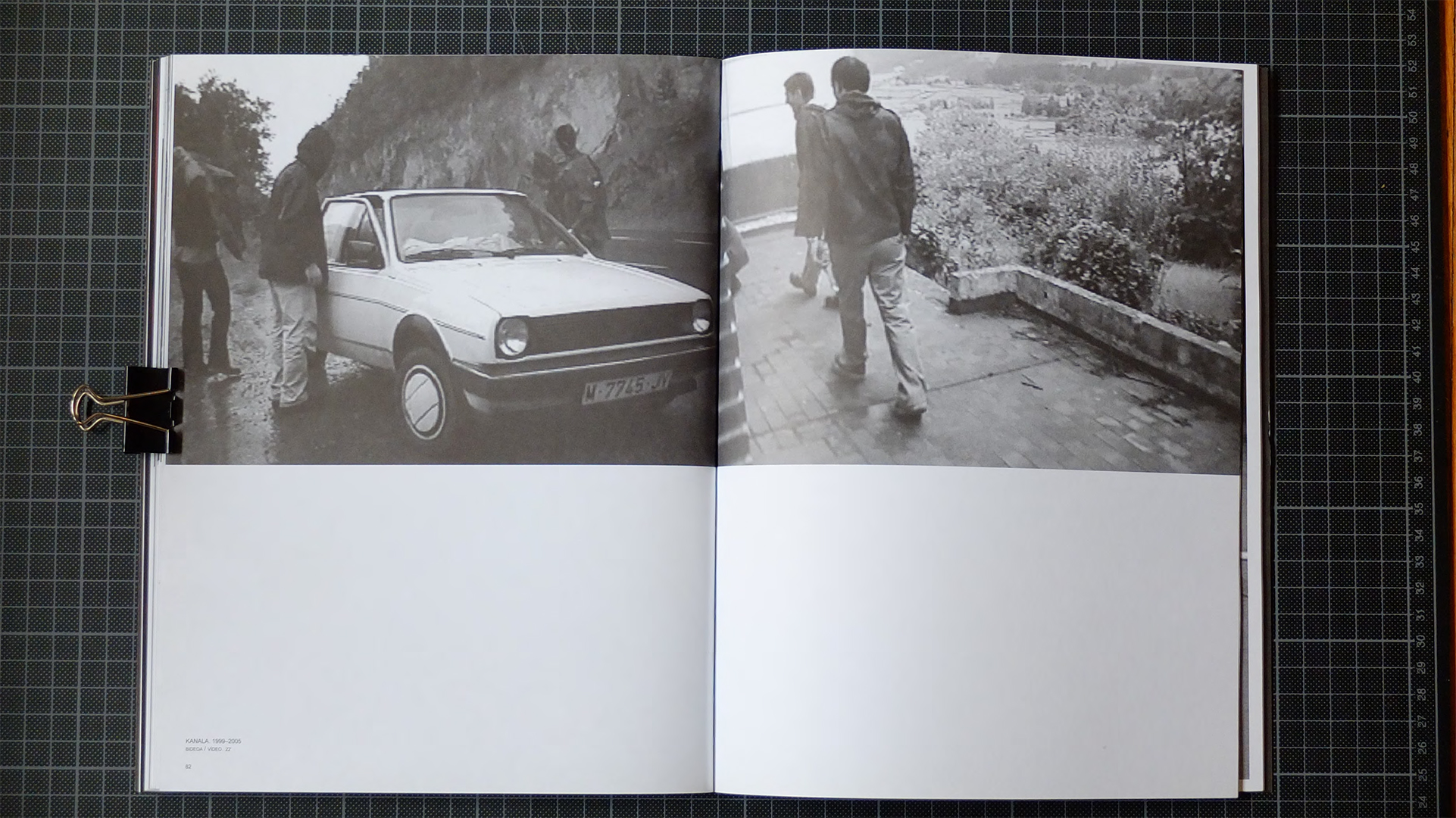
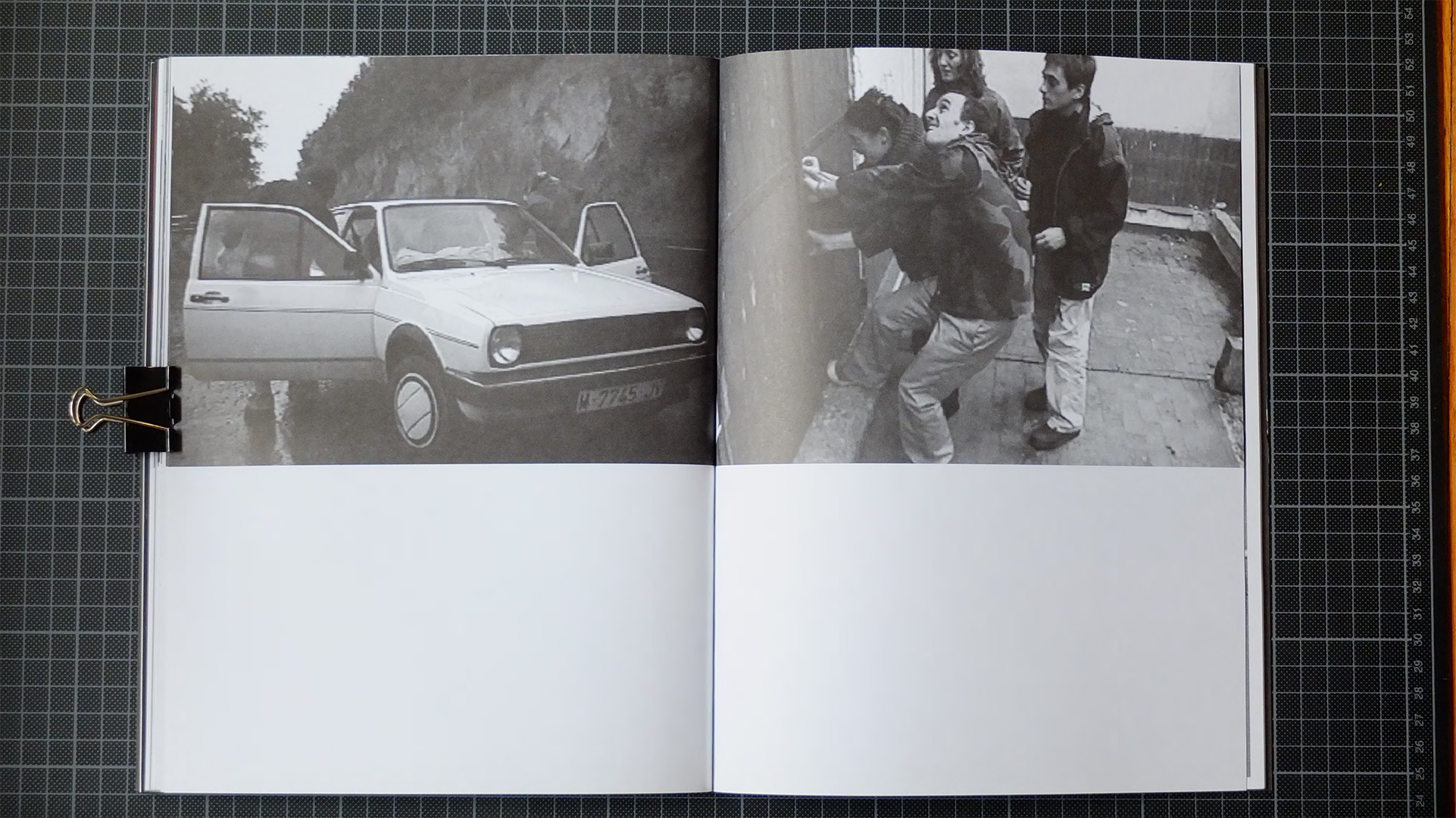
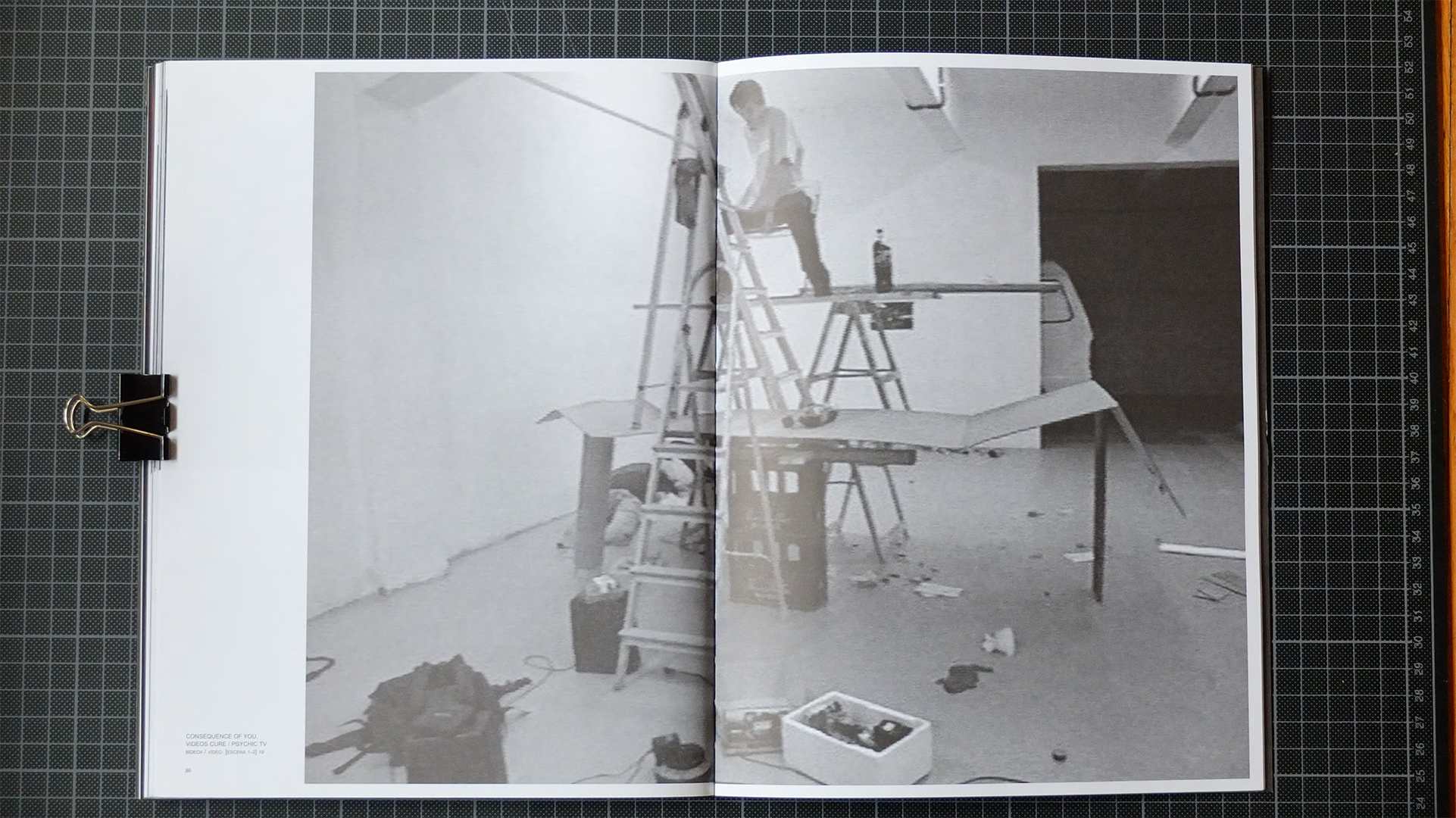
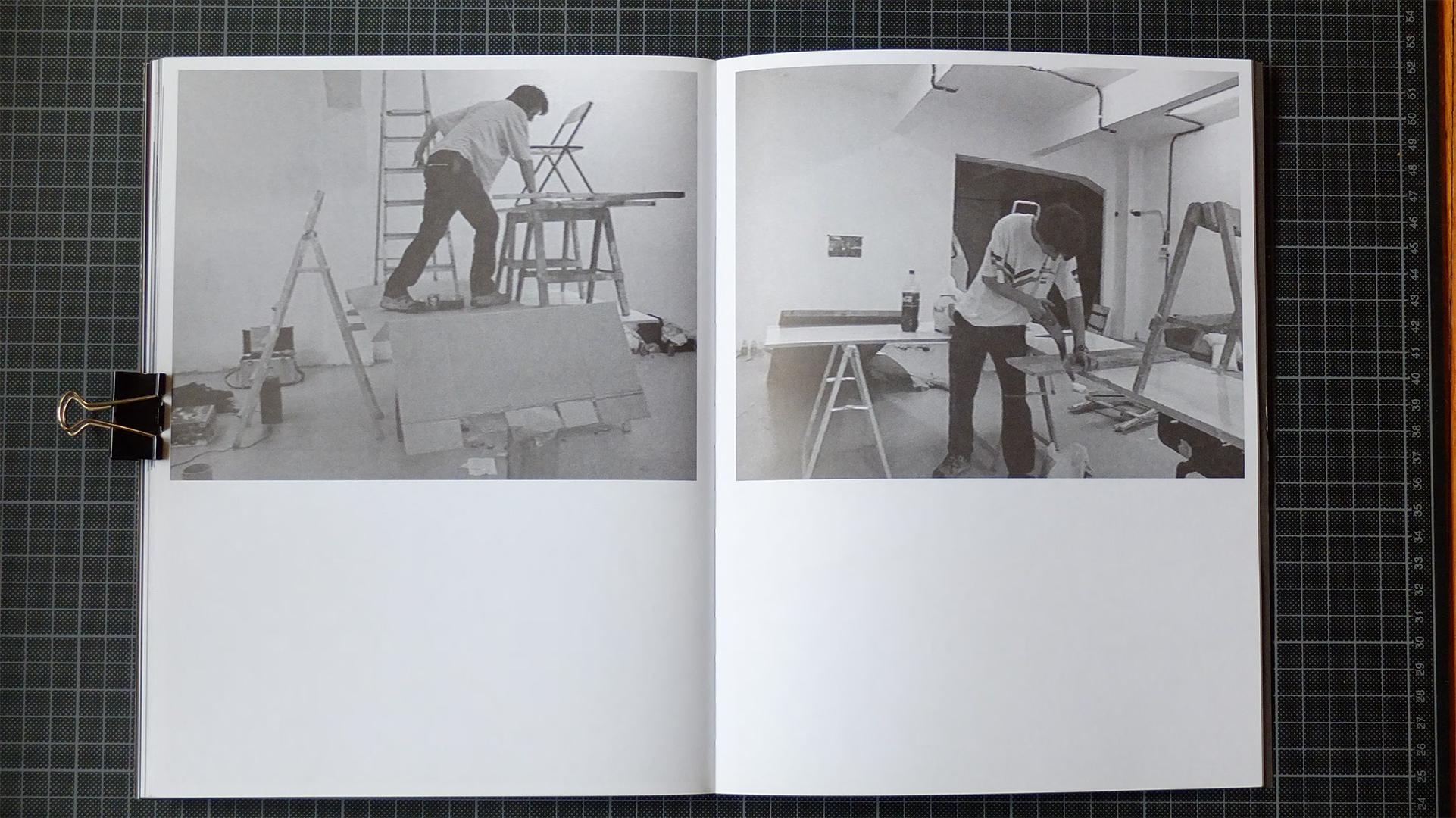
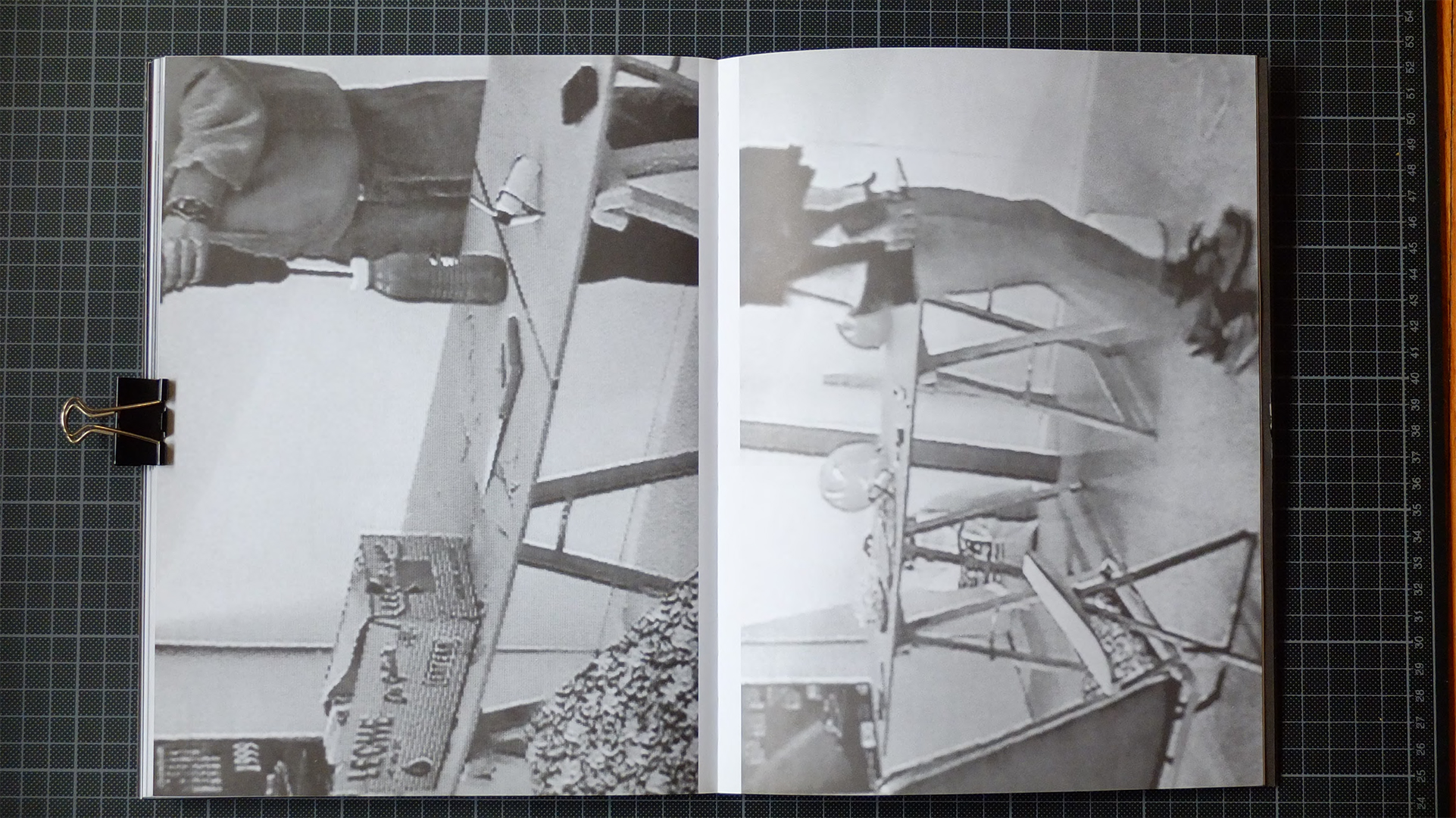
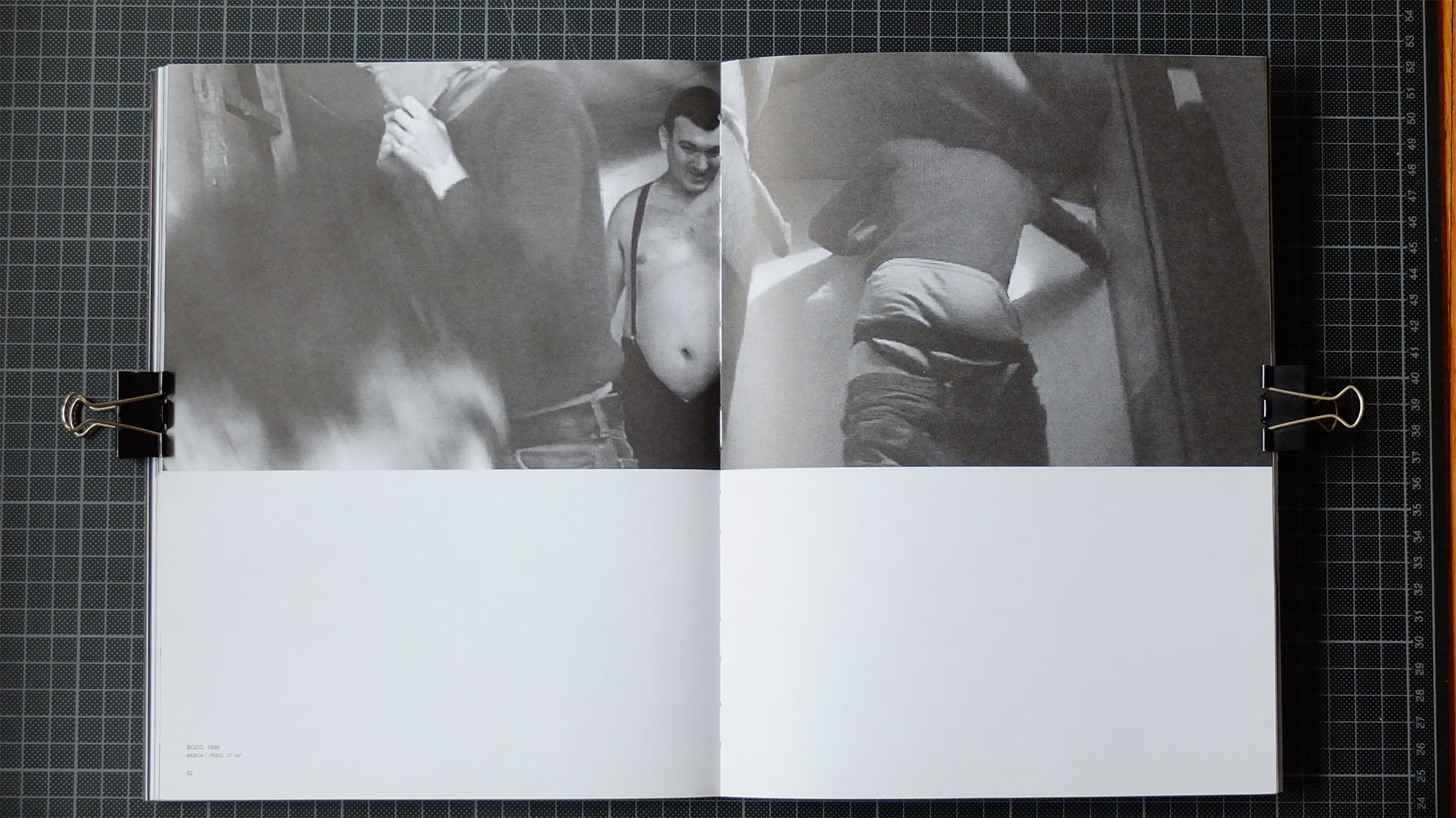
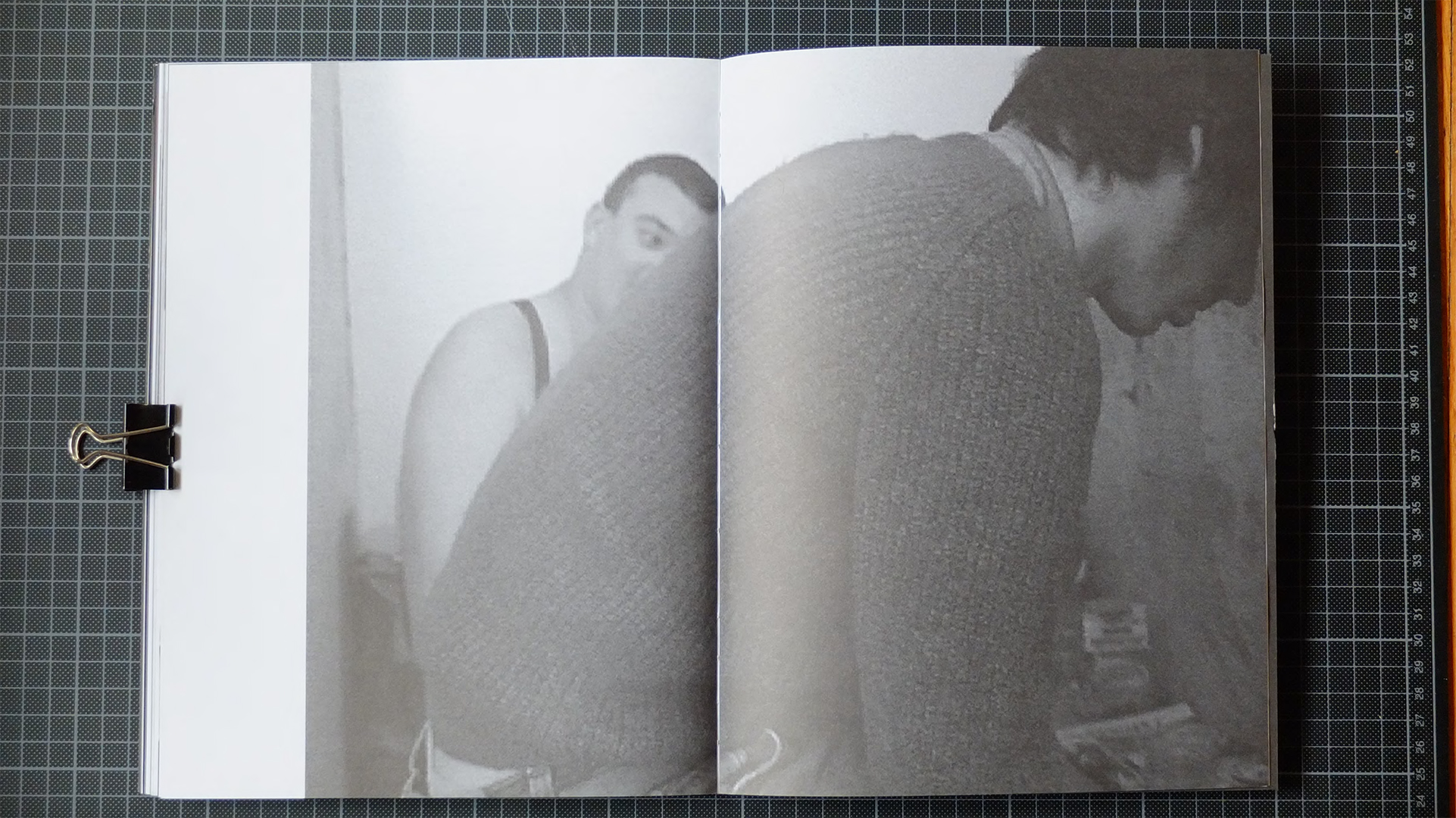
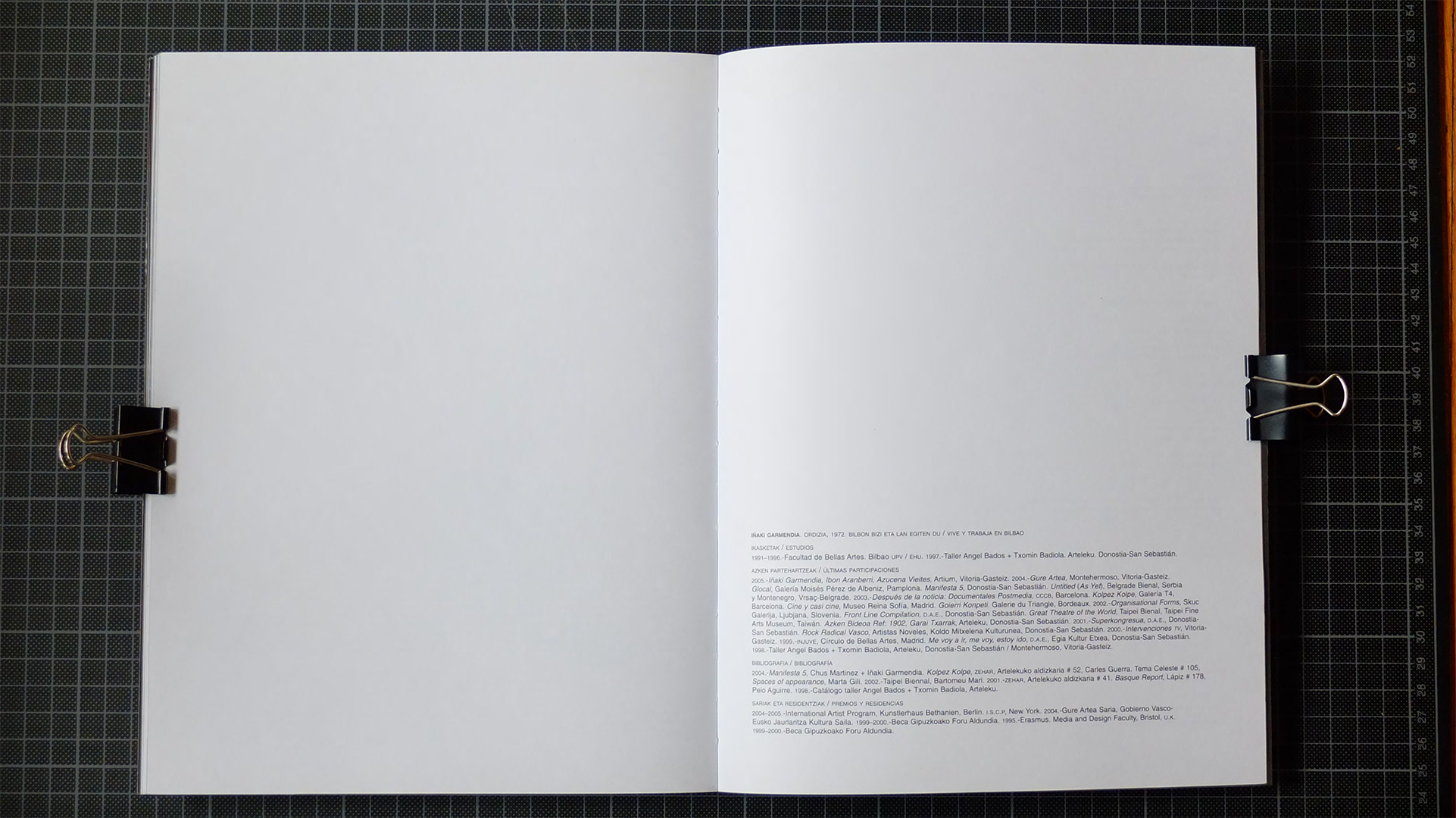
Catalogue of Iñaki Garmendia’s work published on the occasion of the Basque Government MMIV Gure Artea Awards. Including video stills from Izarra (2005); Red Light/Straight Edge (2005); Goierri Konpeti (2001); Harder, Better, Faster, Stronger (2004); Kolpez Kolpe (2003-2004); Repeater / Taja y sus amigos (2001); Kanala (1999-2005); Consequence Of You. Videos Cure / Psychic TV (1999); and Carles Guerra’s text ‘Traducciones Radicales’ on the artist’s work, in Spanish, Basque and English [p. 35-46].
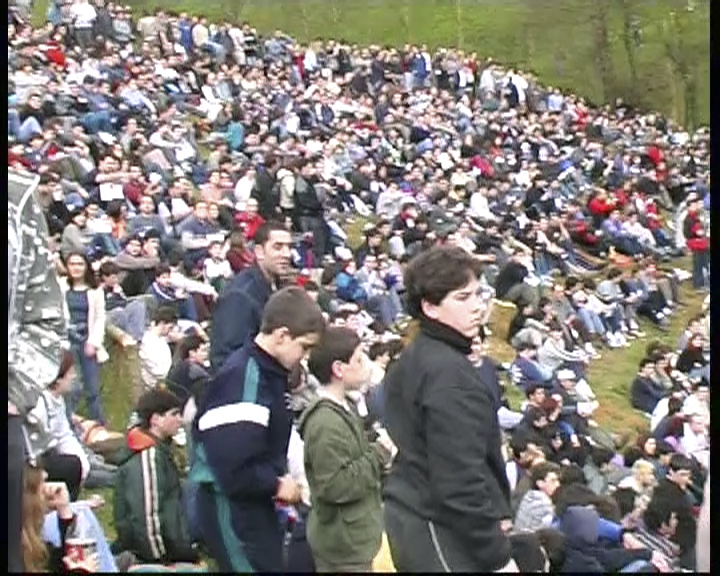
Goierri Konpeti
2002
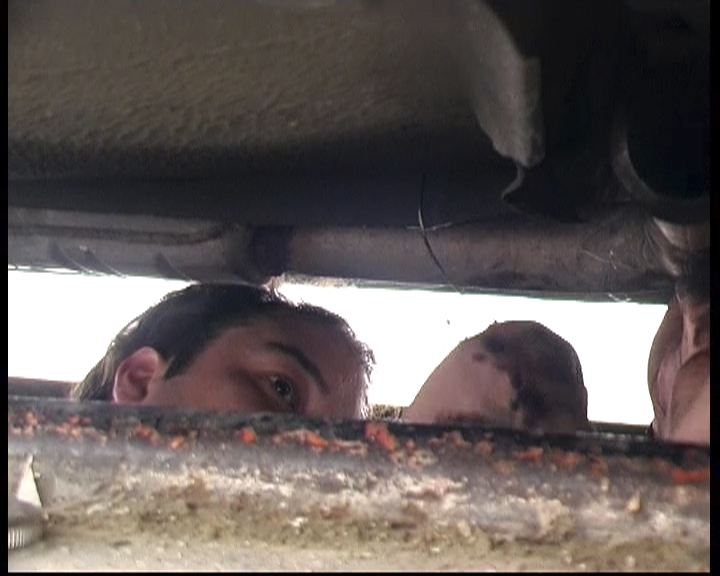
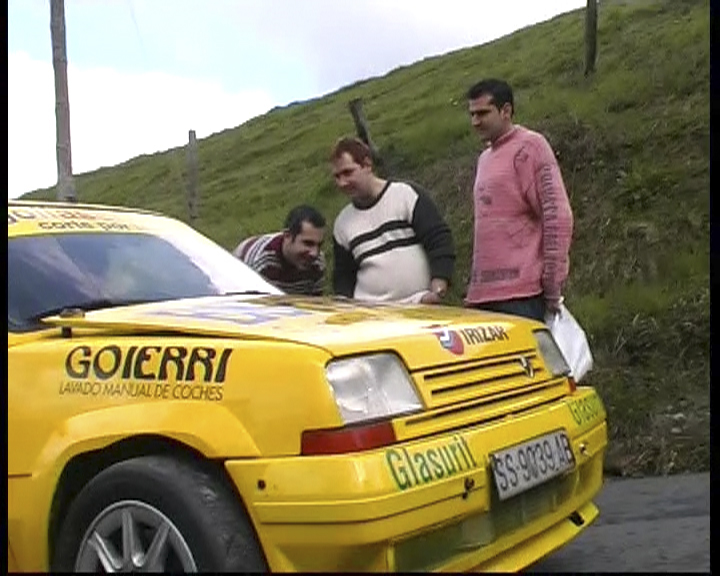
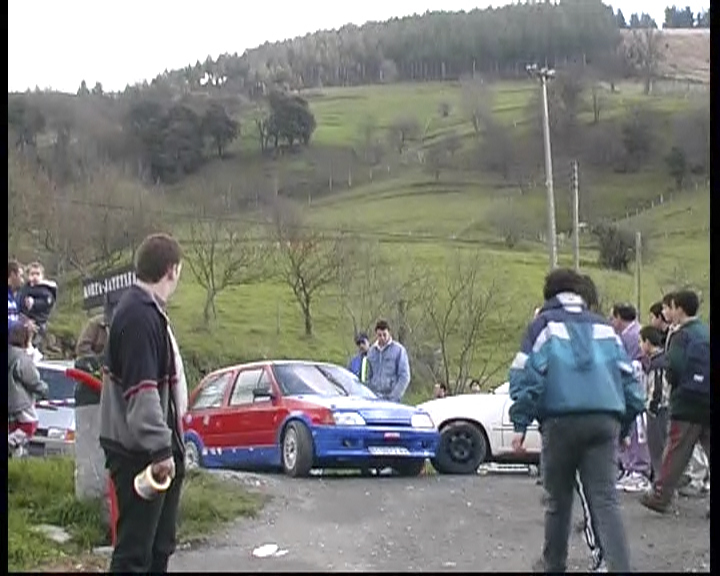
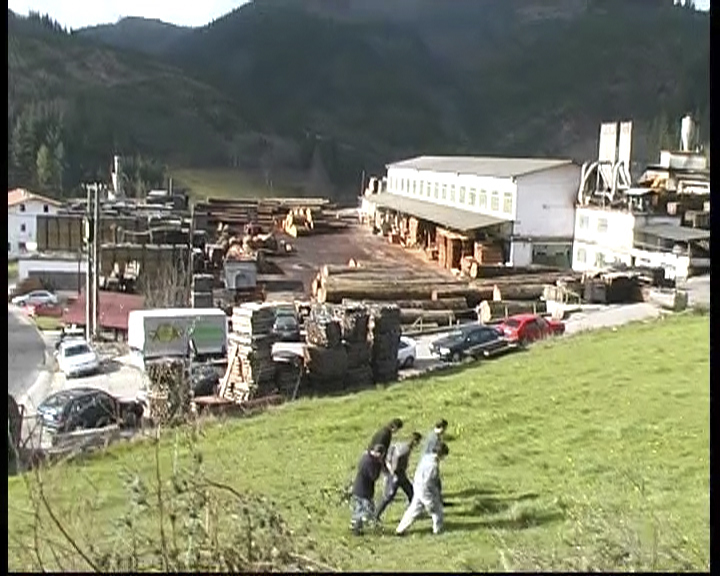
In collaboration with Asier Mendizabal
Single-channel video, with sound, colour
53’35’’
DV PAL (720 x 576)
The work An Artist Who Cannot Speak English Is Not An Artist by Croatian artist Mladen Stilinović —produced in 1992, only a couple of years after the fall of the Berlin wall— helps to situate the difficulty that carrying out a retrospective on the early 90s in the international art context implies. This was a transitional period, as described by the —also Croatian— curator collective WHW as “the narrow-minded local interests clash with the implacable and ever-present logic of capital and globalisation”. Stilinović’s precept, sewn on a pink piece of fabric in the form of a banner, questions the hegemony of English in the capitalist Western art world, hungry for great narratives and reluctant to devote its efforts to listening to specific types of storytelling from the periphery. In the early 2000s, the transition initiated during the 90s brought forth a new process of normalisation in contexts such as Croatia and other ex-Yugoslavian territories. This transformation comes at the same time —as pointed out also by WHW— as “the promise to progress towards the normalcy of late-capitalist Western societies, considered as welfare states in which human rights would be fully respected”.
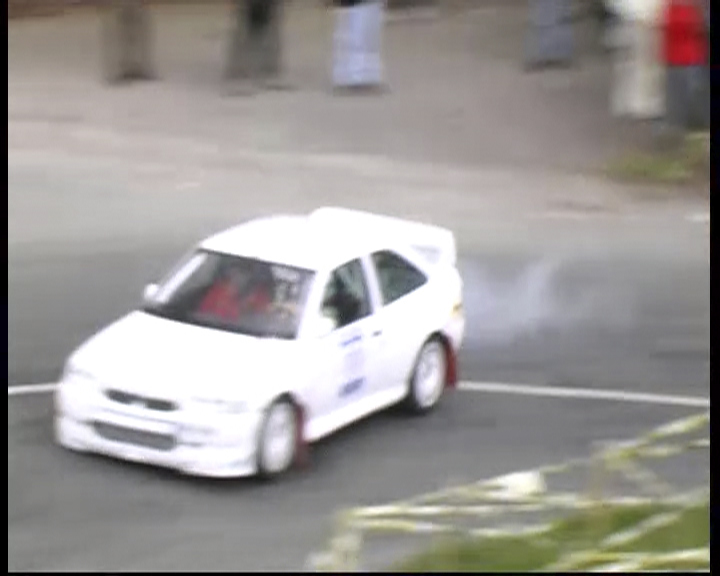
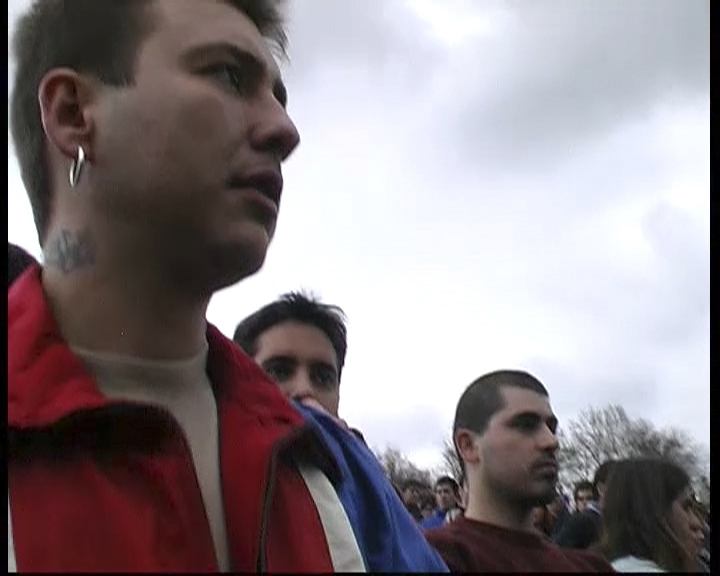
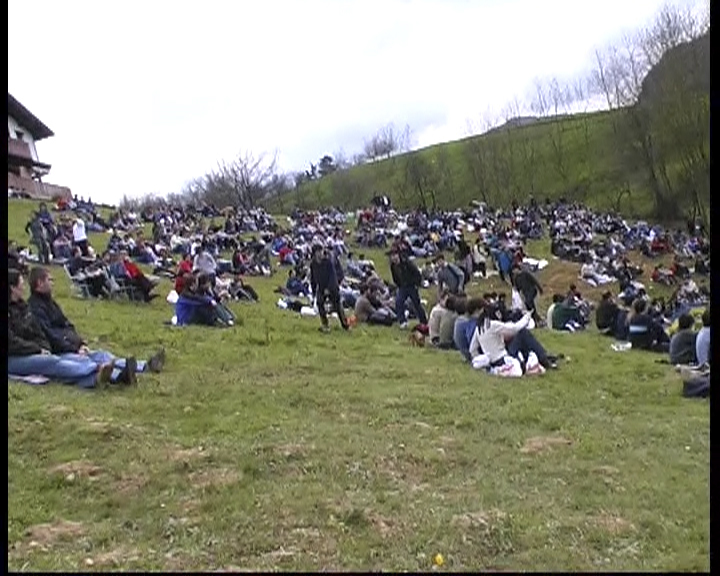
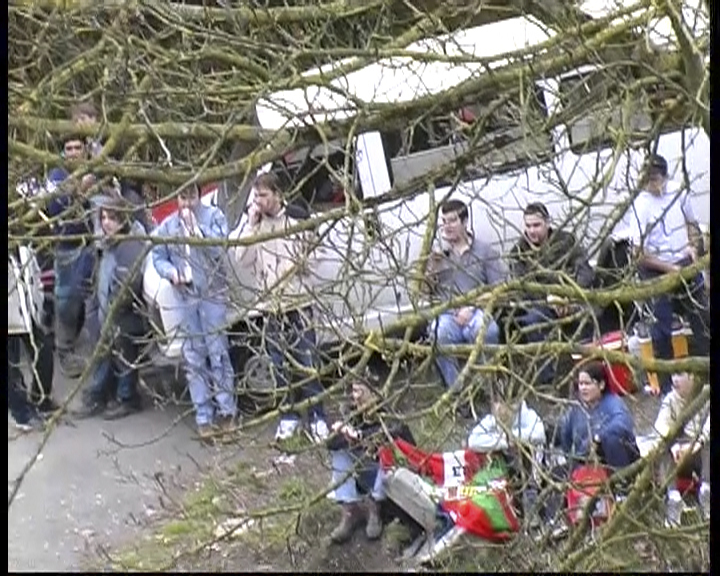
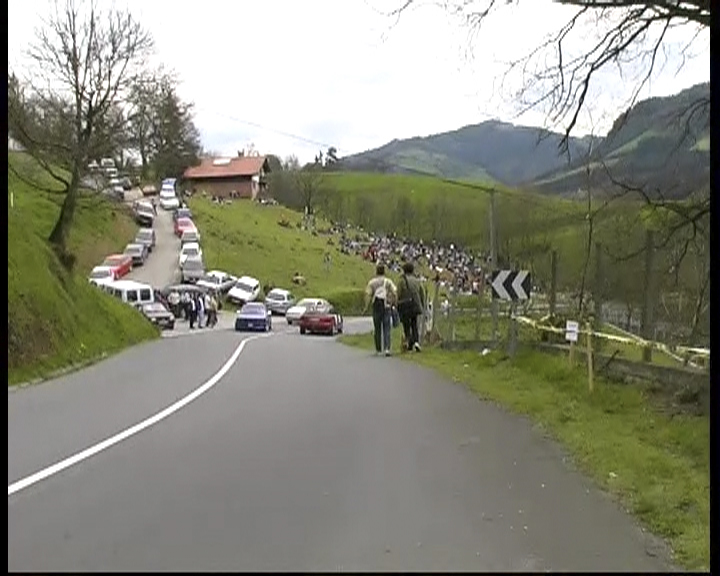
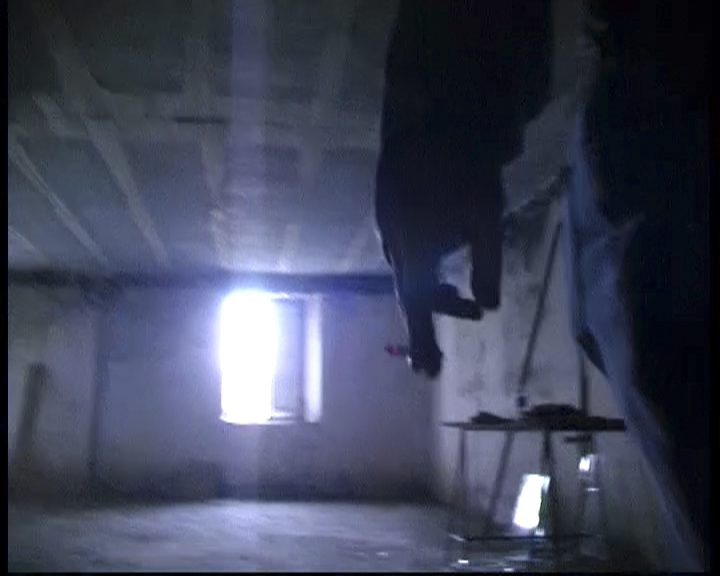
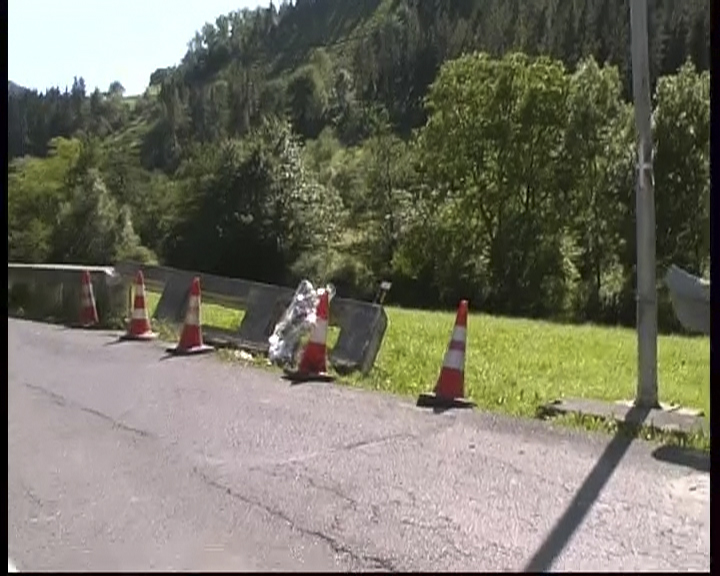
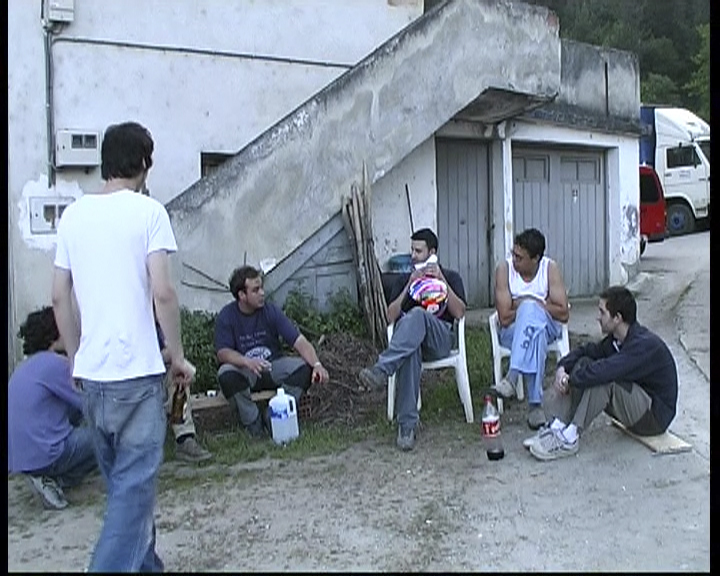
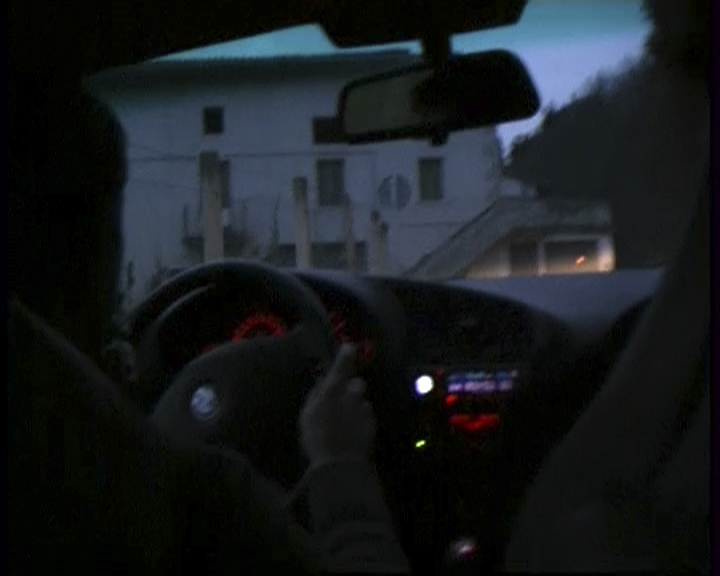
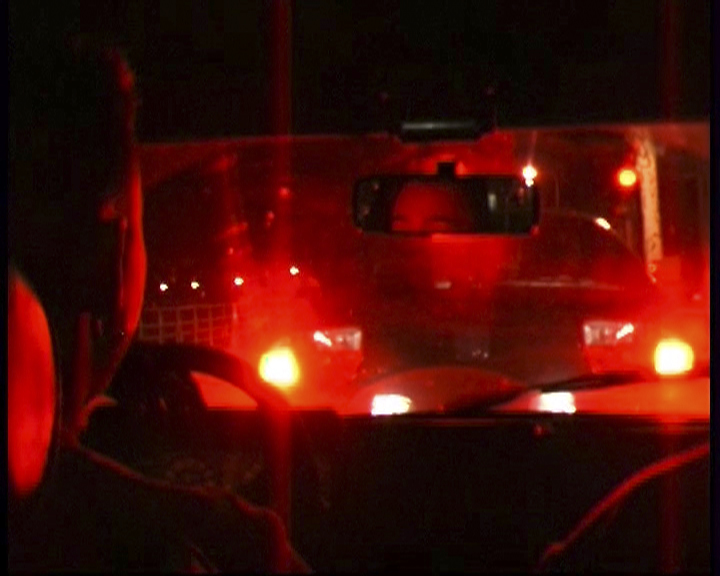
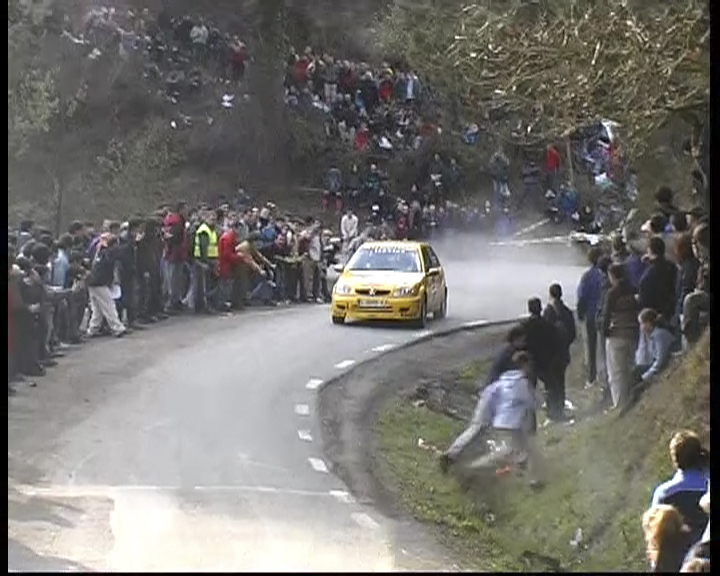
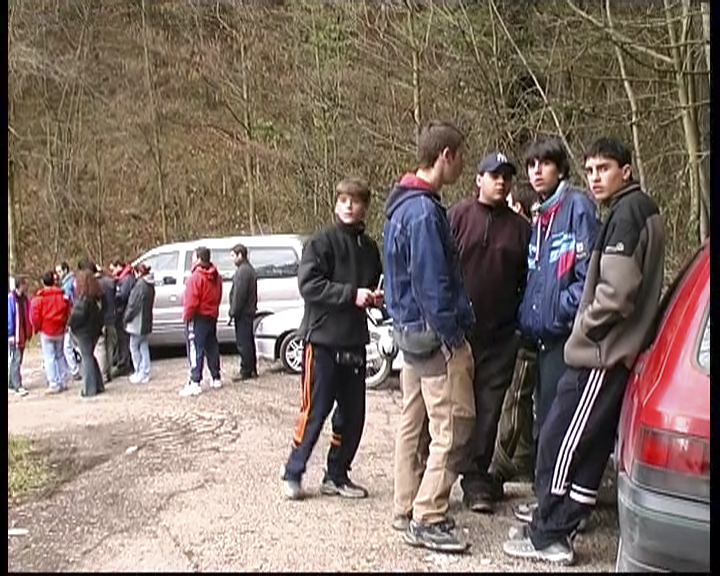
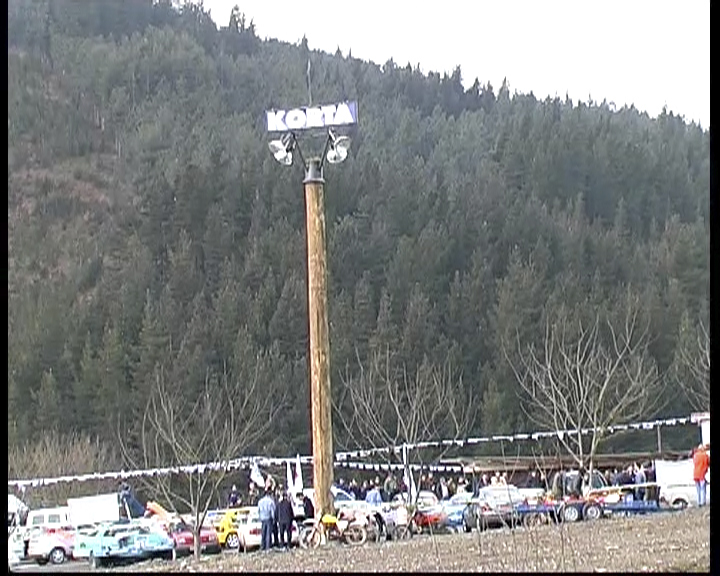
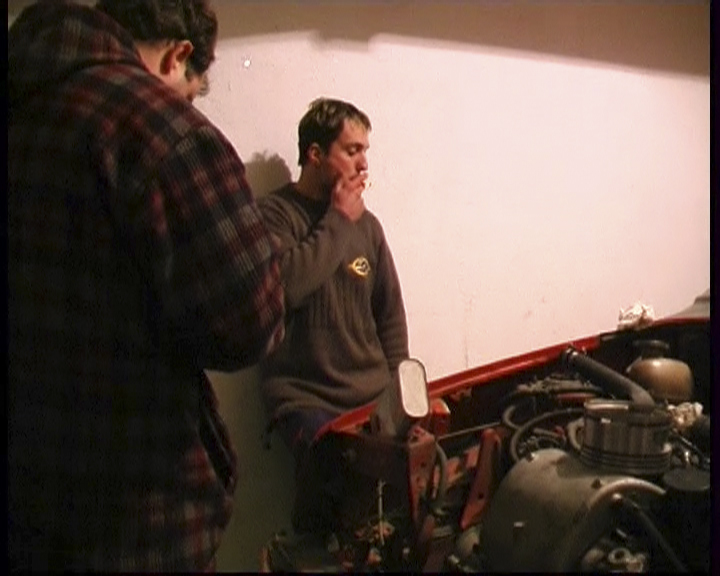
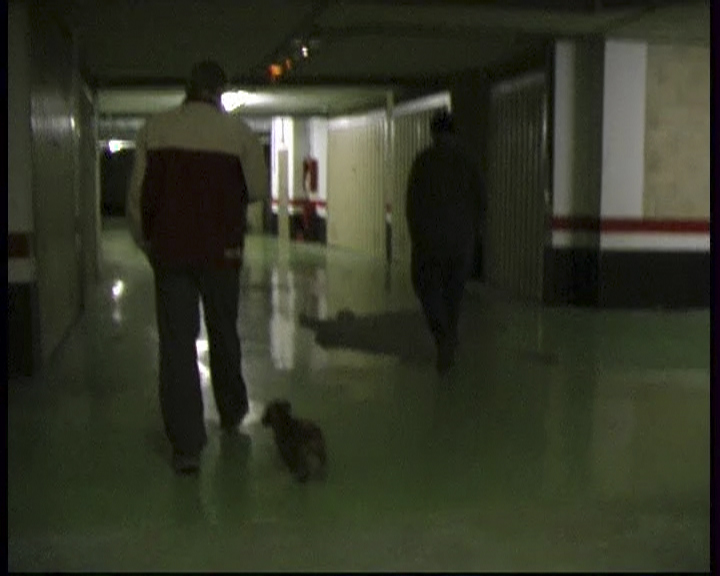
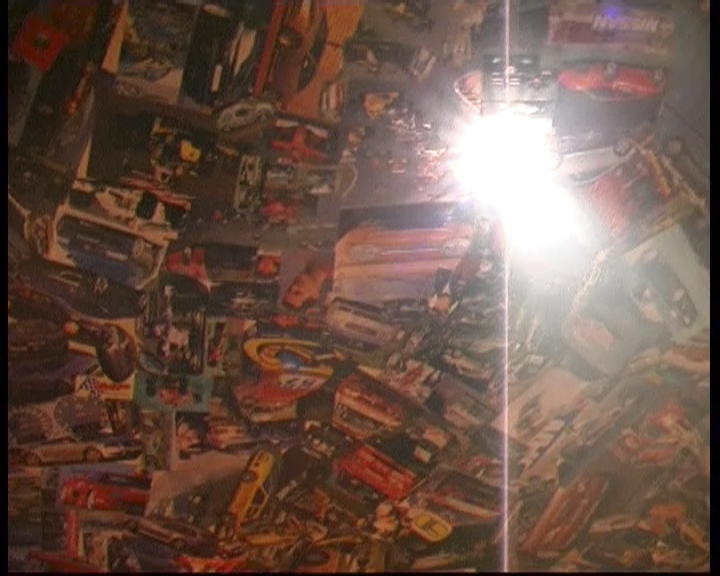
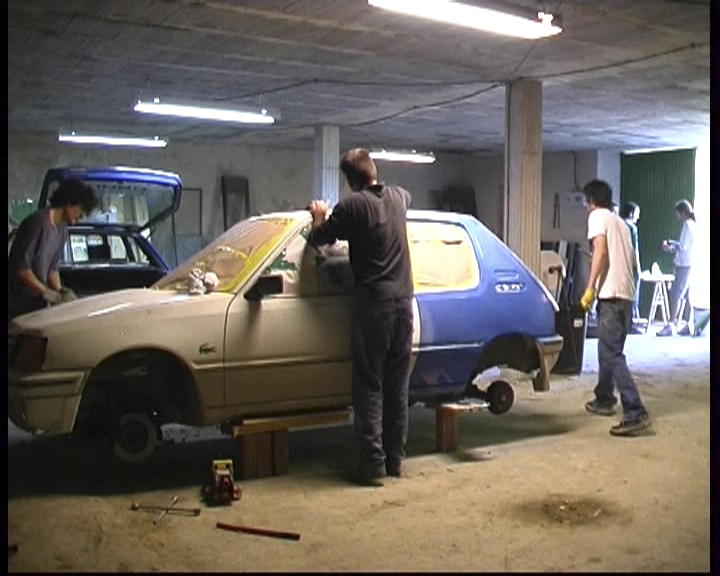
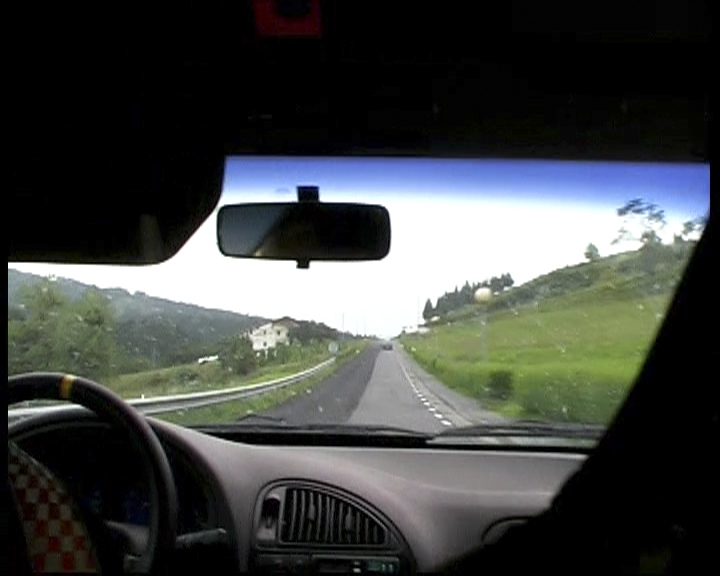
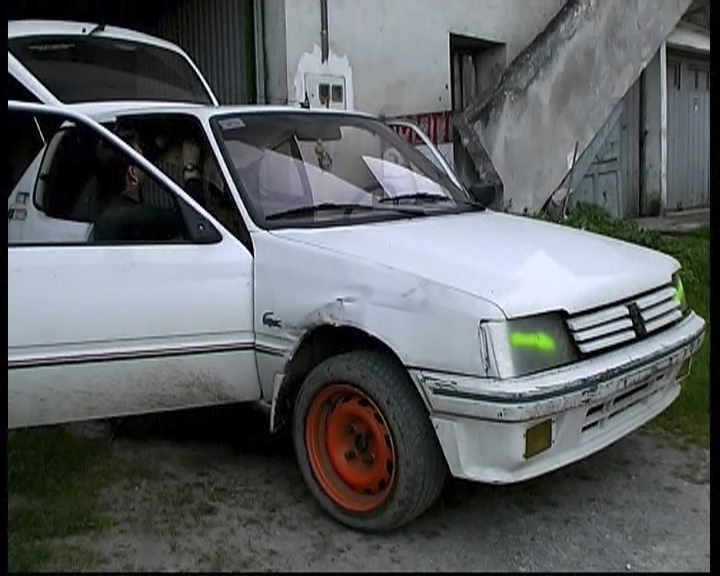
The protagonists in Goierri Konpeti, a group of young men, build their collective identity in the periphery by customising their cars, celebrating rallies and spending endless days driving at full speed. They communicate randomly alternating Basque and Spanish, drifting along whatever the situation asks for or carrying on in the language in which the first sentence of a conversation is spoken, which unconsciously establishes one language as dominant. The film’s subtitles translate this linguistic negotiation into a uniform English, never indicating the power play underlying the cultural cohabitation of the two languages. The video shows therefore its original attempt: to act as a visual artefact within the contemporary art sphere that may help introduce a highly codified peripheral reality. The simplification carried out for the benefit of English speakers reinforces Stilinović’s thesis suggesting that a worldwide exchange of the contemporary must happen in English. However, some peripheral narratives were more easily assimilated than others during this period. The fact that they were mediated by a perfect translation into English was not enough.
The authors of this work, Iñaki Garmendia and Asier Mendizabal, had obvious motives to be interested in making a documentary about a group of young men from Goierri, being the home region of both artists. This is an area that, in a way, was also immersed in its own normalisation processes at the time of the filming, marked —among other determinant aspects— by ETA’s ceasefire in 1998 and its interruption fourteen months later, in December 1999. The film, however, barely mentions these intentions, which hide behind a “methodology of the minimum possible distance”, as indicated by Miren Jaio in her review of the film En compañía de hombres (1993), published in Mugalari, the cultural supplement of the newspaper GARA.
The “embedded” camera crosses the valley in Arkaitz’s car, becoming invisible as everybody shares drinks, cigarettes and dinner; it captures the work of assembling and disassembling the pieces in the ground floor garage they rent in a baserri, filming the aimless comings and goings without cuts. However, as Miren Jaio points out in her text, it turns out that distance zero is not possible in this context. It becomes clear as we see the artists holding the little pet that accompanies the group at all times, designing the paintwork and patterns on one of the cars, and sharing unforeseen experiences in the desire to challenge the line demarcating the road across the well-known landscape.
Related bibliography
Catalogue of Iñaki Garmendia’s work published on the occasion of the Basque Government MMIV Gure Artea Awards. Including video stills from Izarra (2005); Red Light/Straight Edge (2005); Goierri Konpeti (2001); Harder, Better, Faster, Stronger (2004); Kolpez Kolpe (2003-2004); Repeater / Taja y sus amigos (2001); Kanala (1999-2005); Consequence Of You. Videos Cure / Psychic TV (1999); and Carles Guerra’s text ‘Traducciones Radicales’ on the artist’s work, in Spanish, Basque and English [p. 35-46].
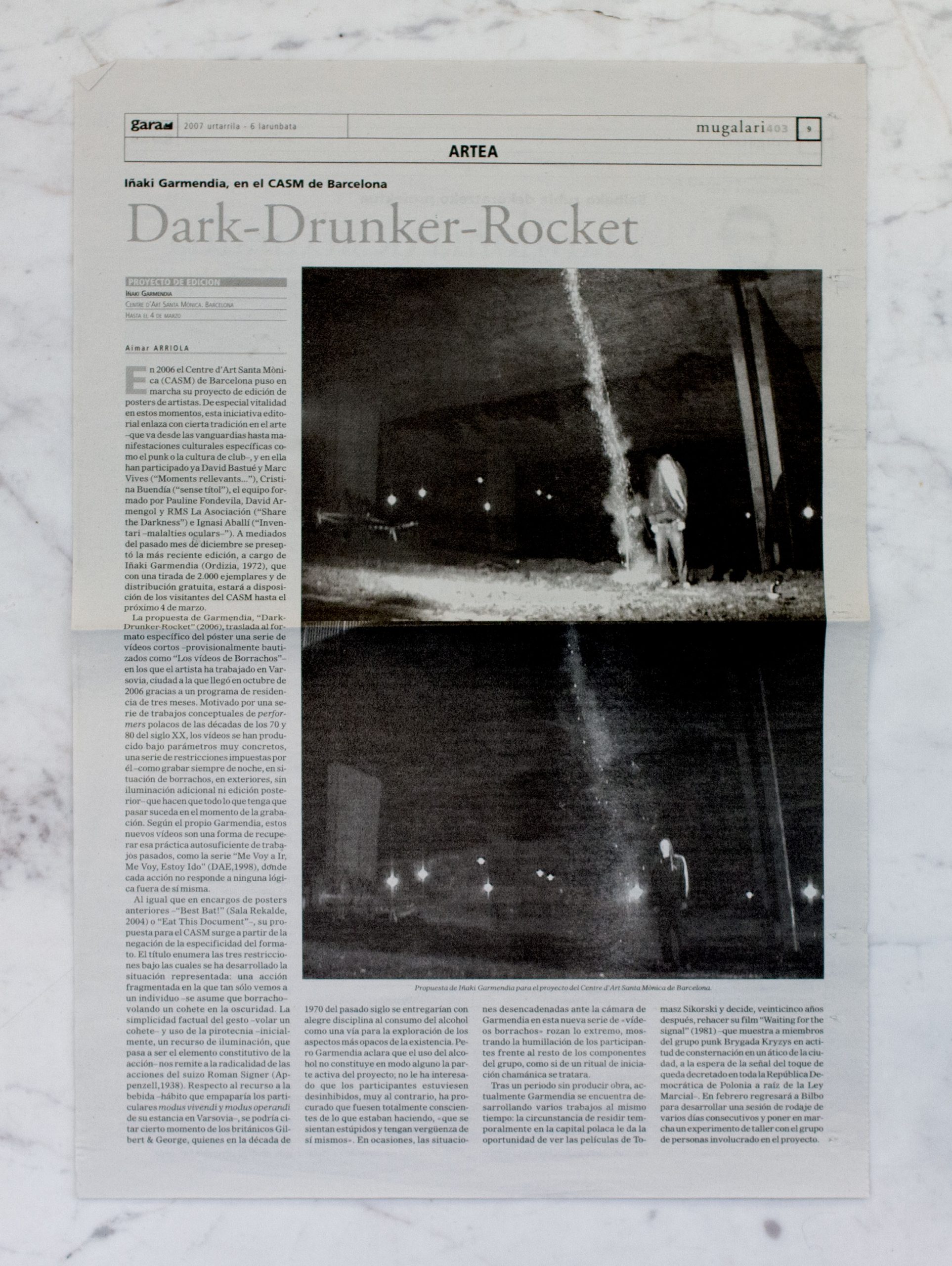
Artículo de Aimar Arriola sobre el proyecto de edición de posters de artistas del Centre d`Art Santa Mònica de Barcelona, para la que Iñaki Garmendia presenta Dark-Drunker-Rocket, que según el autor “traslada al formato específico del póster una serie de vídeos cortos –provisionalmente bautizados como ‘Los vídeos de borrachos’– en los que el artista ha trabajado en Varsovia.” Corresponde a la residencia que el artista realiza en 2006 en el Centre for Contemporary Art Ujazdowski Castle, Varsovia.
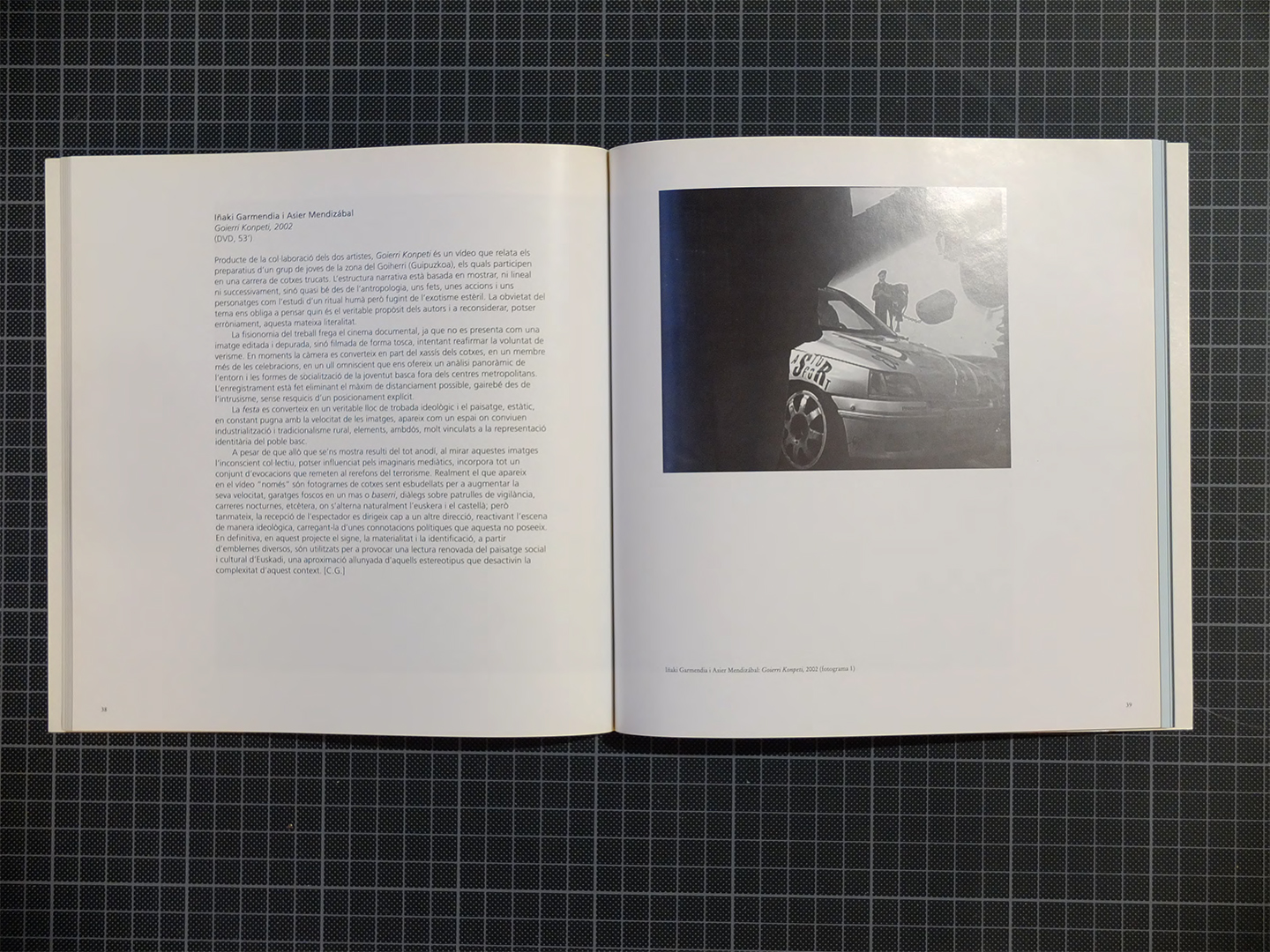
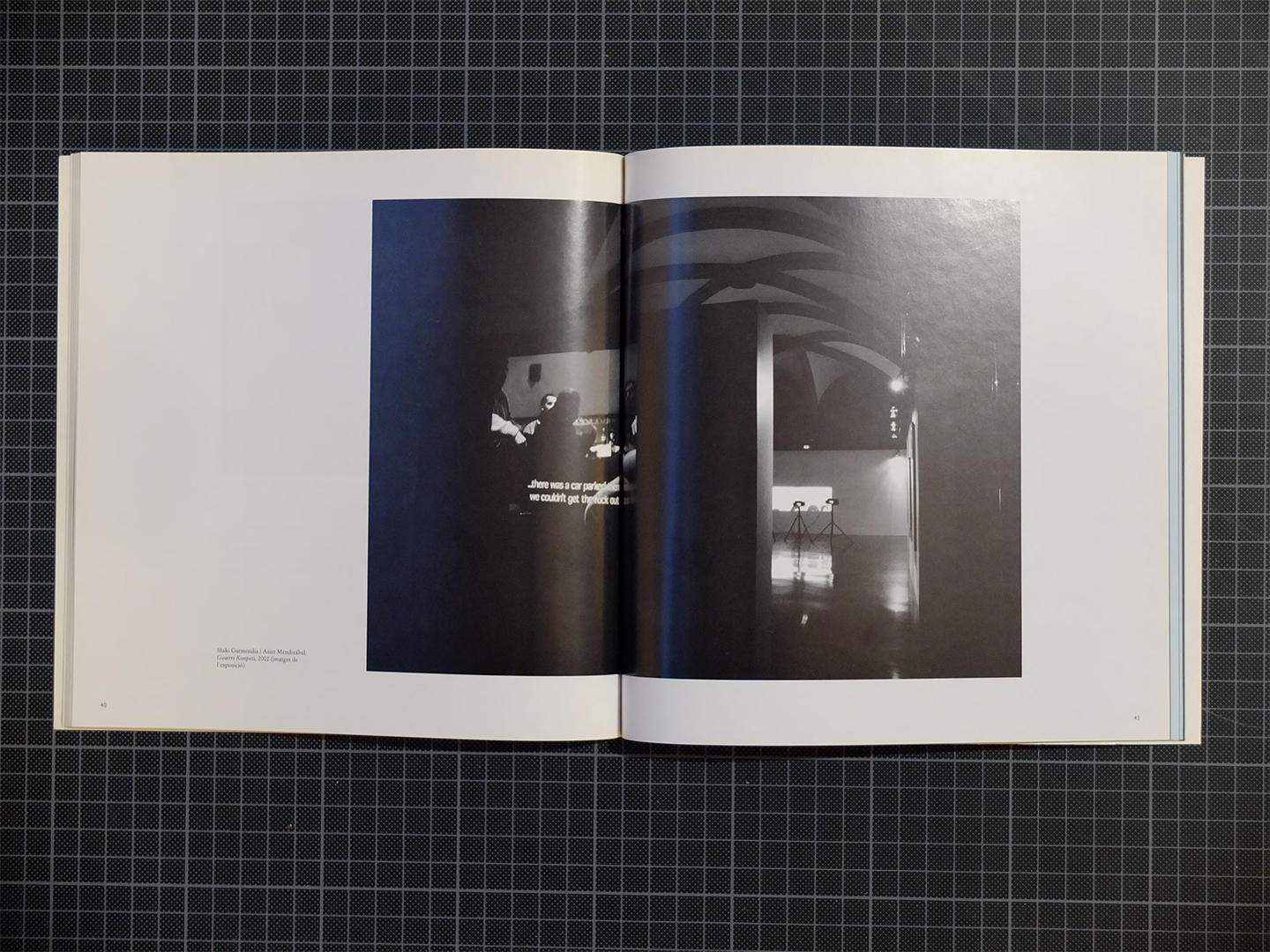
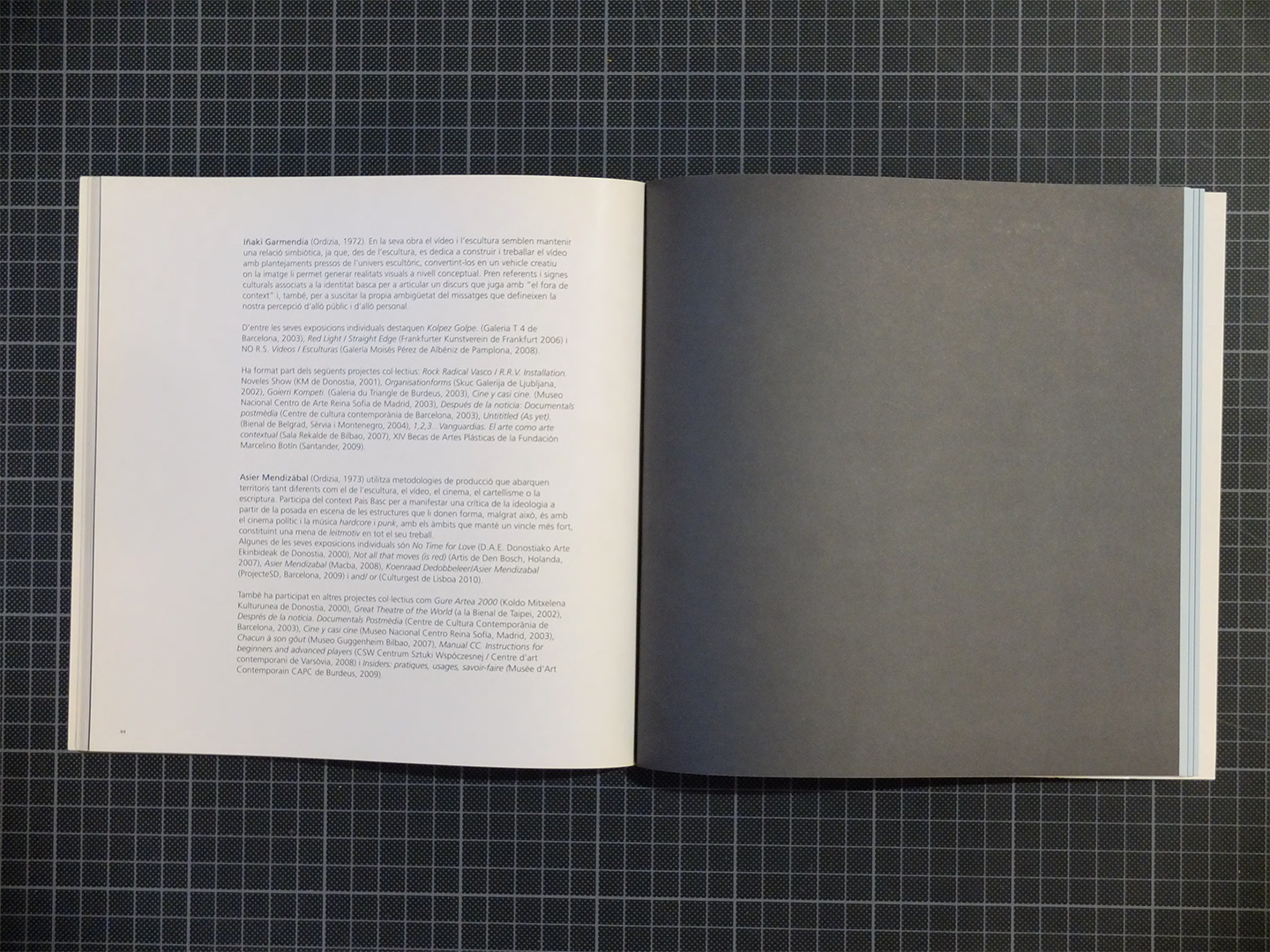
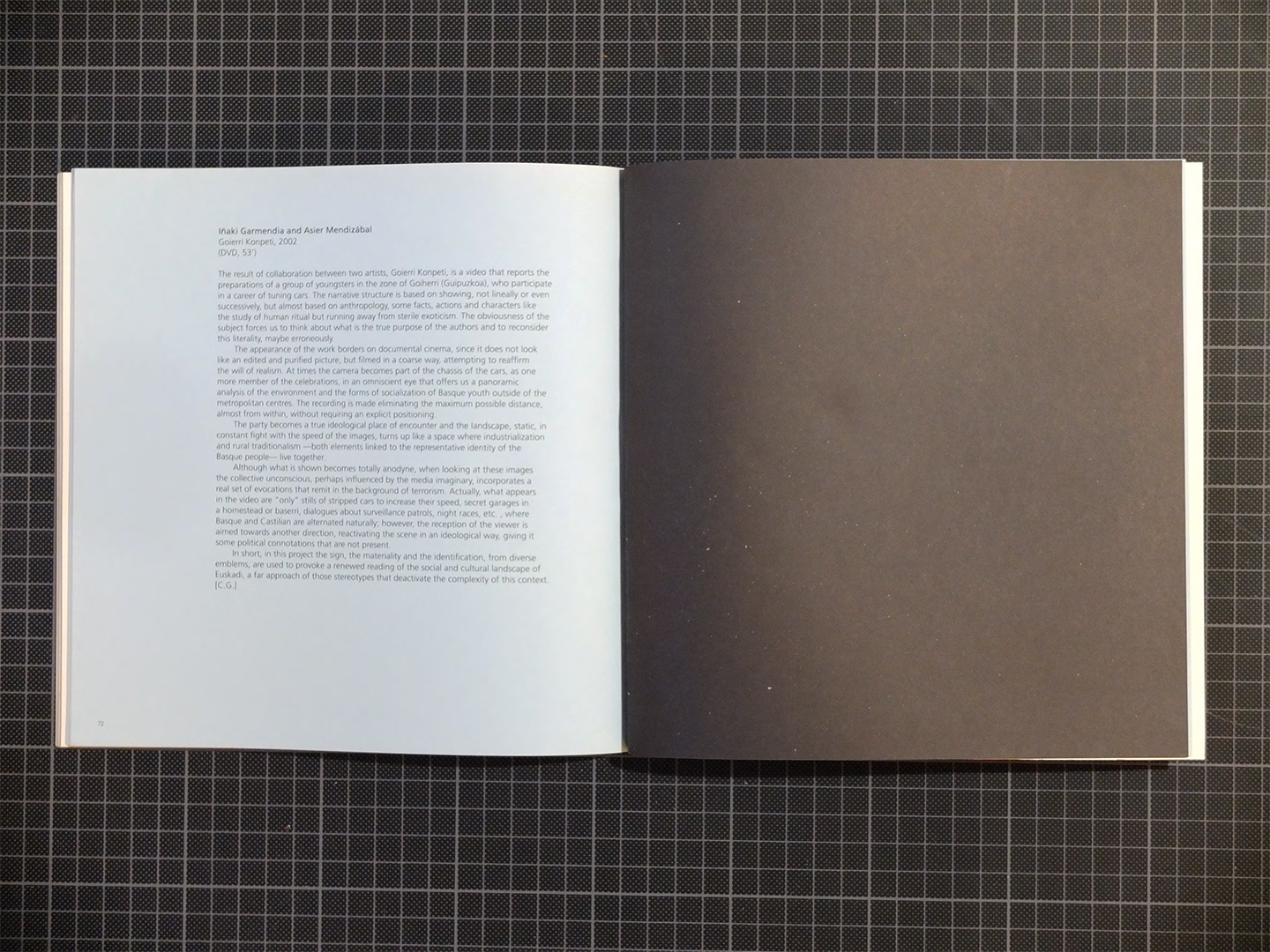
Exhibition catalogue for La condició de la imatge, Gothic Hall, IEI-Institut d’Estudis Ilerdencs, Lleida (17/12/2009-14/02/2010) with works by Carles Guerra, Vlad Nancă/Asier Mendizabal and Iñaki Garmendia. Includes still image and photo of screened work, Goierri Konpeti (2001) with Catalan text on the piece by curator Carlota Gómez.
Kolpez/Kolpe
2003
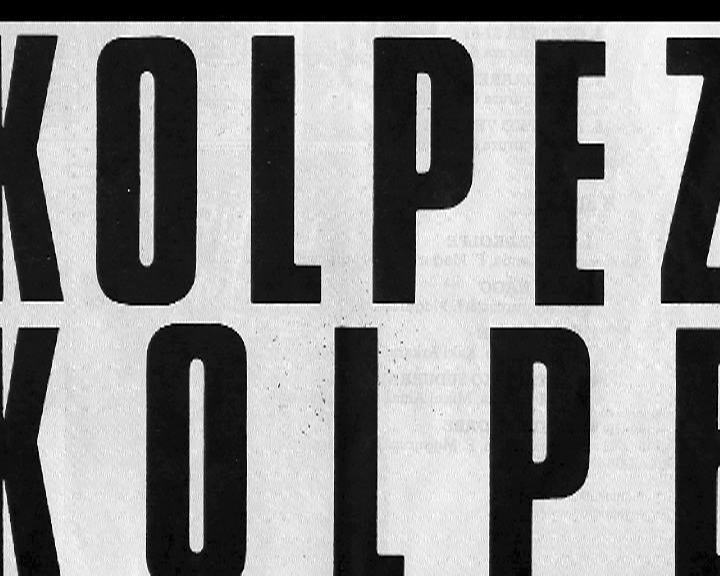
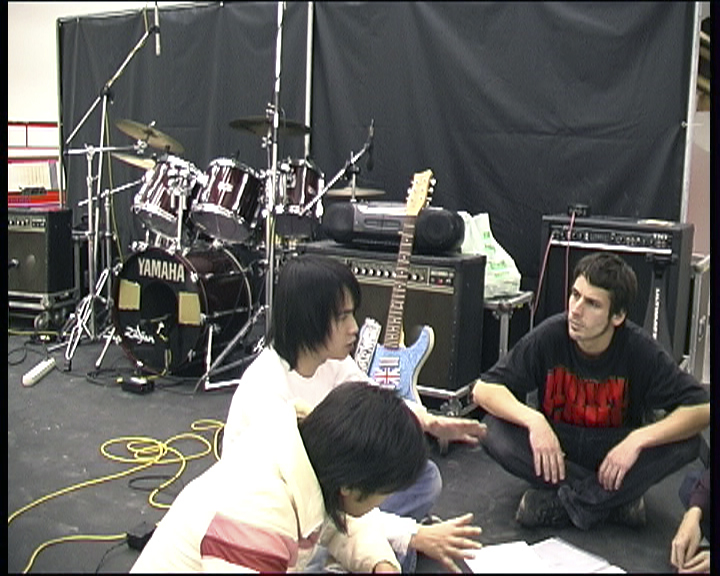
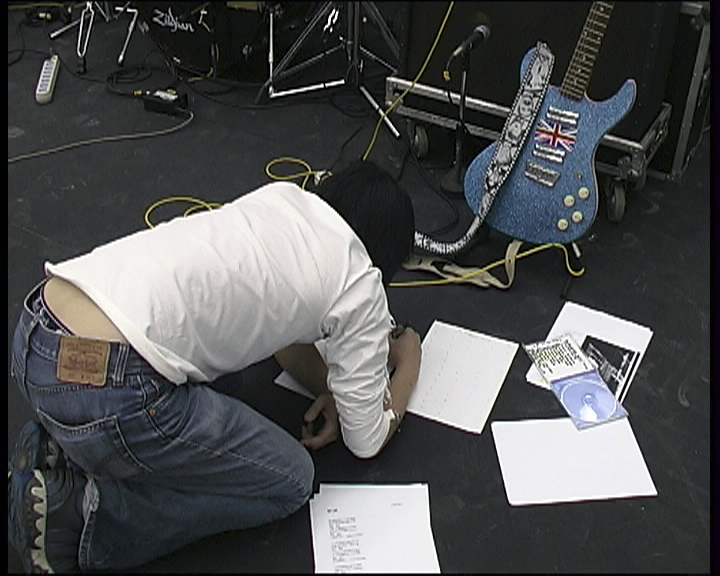
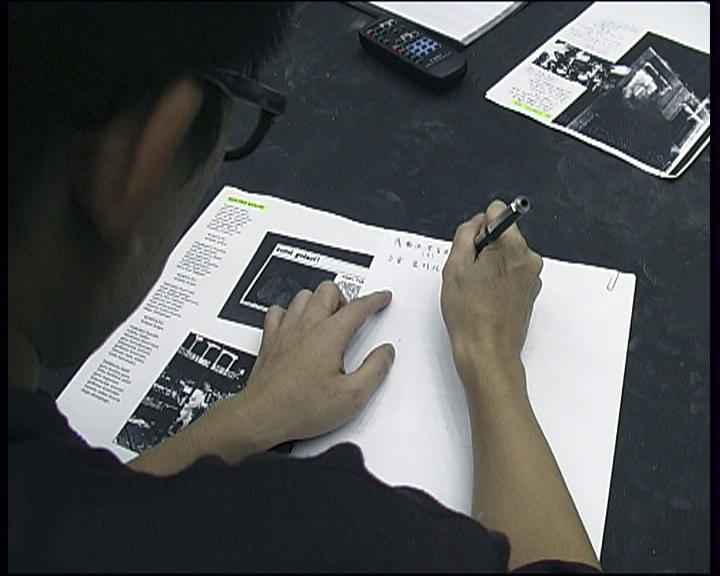
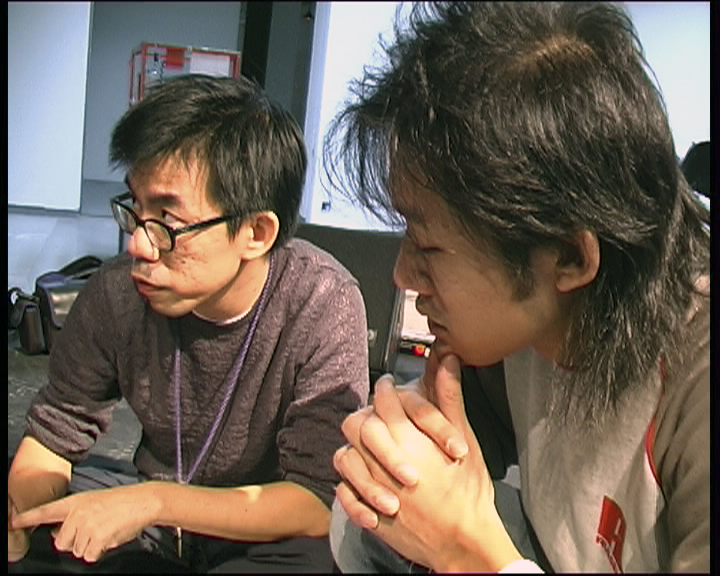
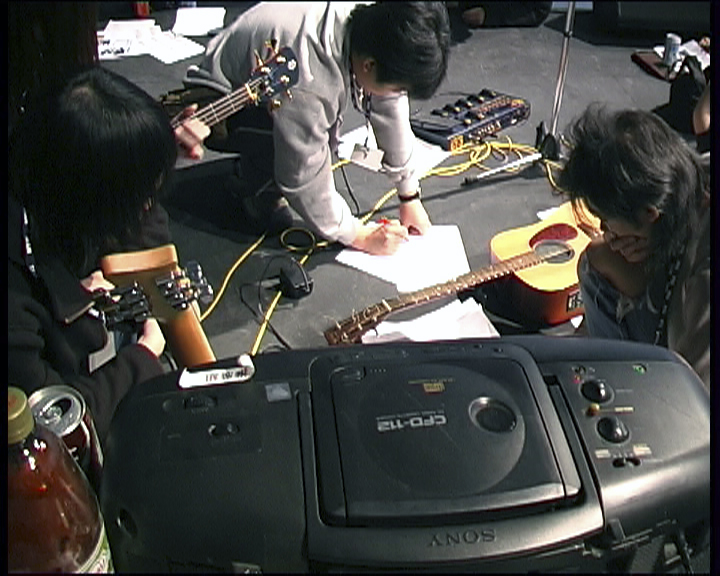
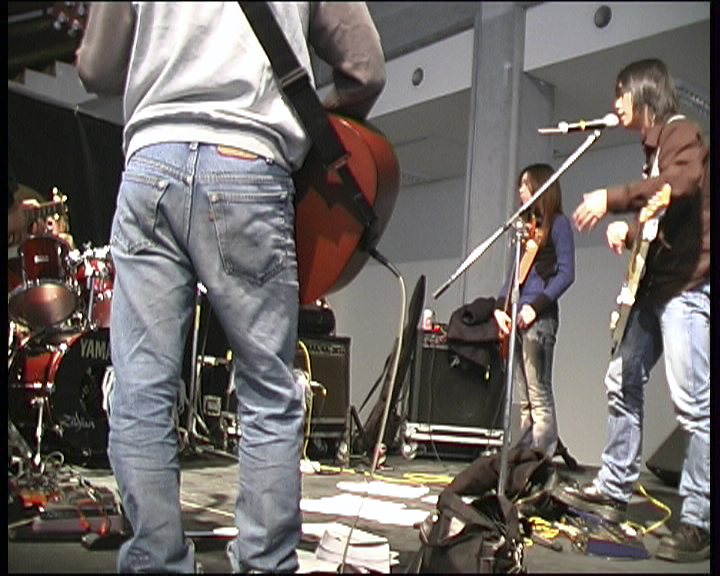
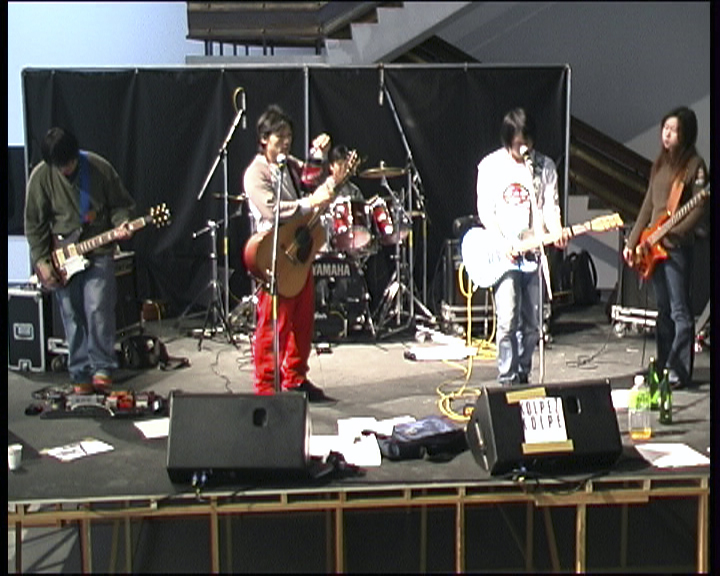
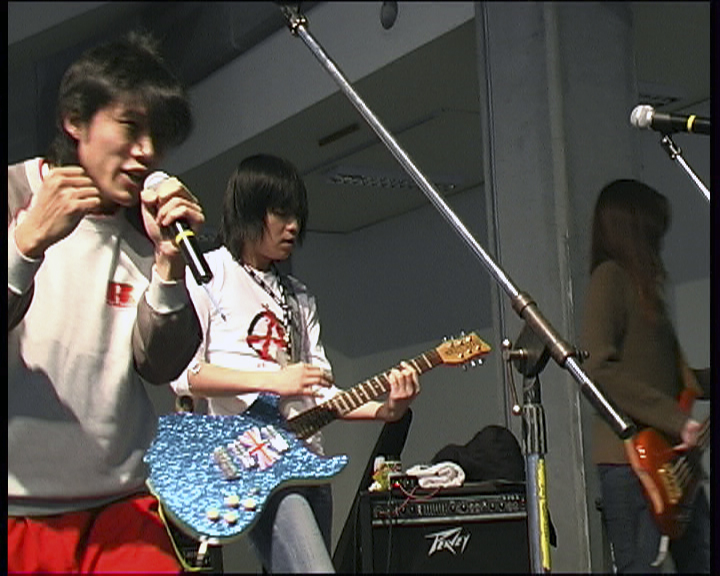
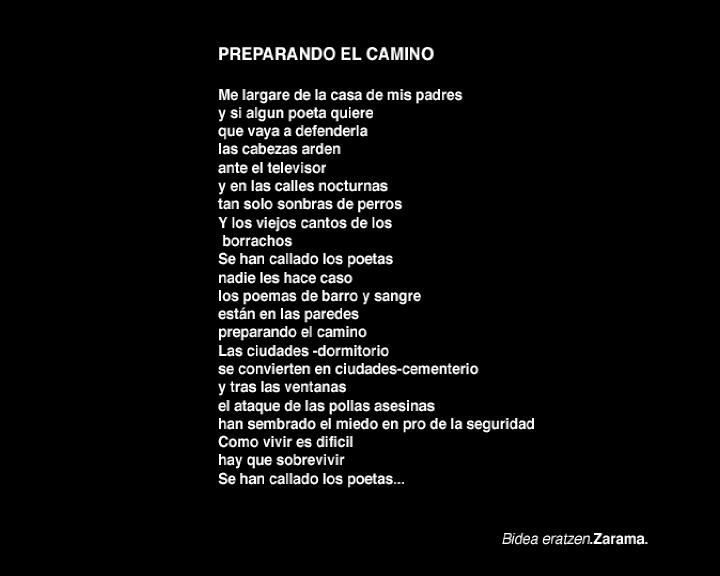
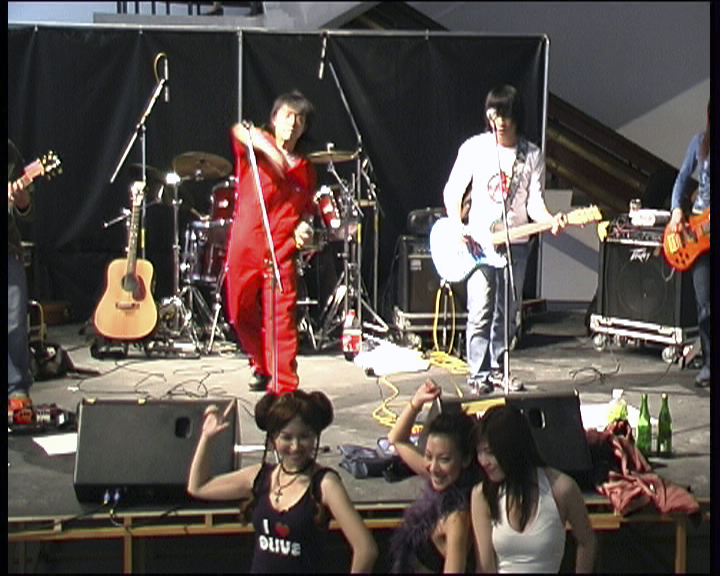
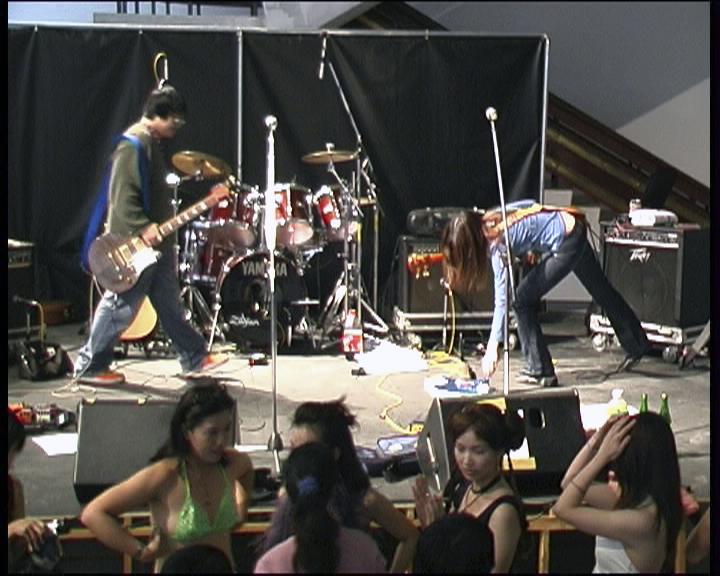
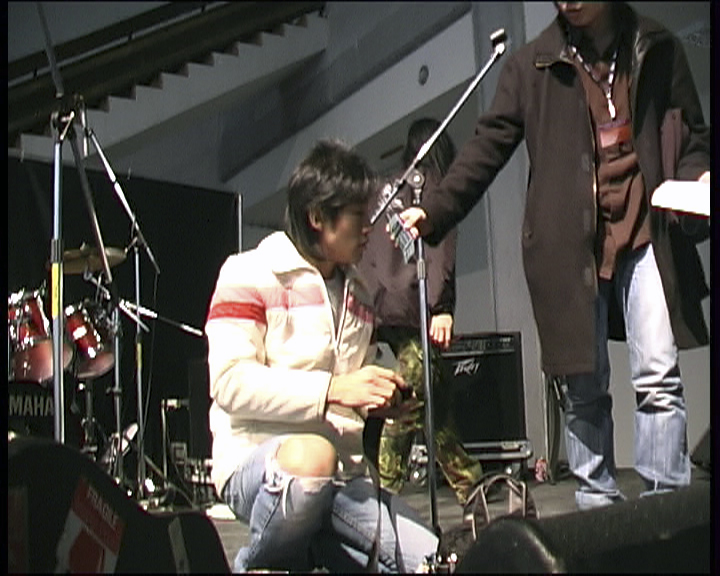
Single-channel video, with sound, colour
24’ 29’’
DV PAL (720 x 576)
November 2002. Members of the Taiwanese band Le petit nurse undergo five consecutive days of intensive rehearsals in order to learn the songs from the Basque Radical Rock scene’s punk repertoire. This “radical translation exercise”, as described by Carles Guerra in the catalogue of the Gure Artea award, which Garmendia received for this piece in 2003, takes place on a stage built specifically for this purpose and designed by the artist in a spacious exhibition room of the Taipei Fine Arts Museum, a venue of the 3rd Edition of The Taipei Biennial, titled Great Theatre Of The World (curated by Bartomeu Marí and Chia Chi Jason Wang).
Kolpez/Kolpe consolidates a filming style that Garmendia practiced in his previous works, while also inaugurating new interventions in the montage that would soon become his signature. On one hand, the shooting is articulated around a group of texts (songs by the bands Zarama, Kortatu and Eskorbuto) which the Taiwanese band members must internalise in a short period of time. On the other hand, the resulting film is assembled following a logic that brings together fragments of lived time during the filming, which are connected by fades to black and abrupt cuts. A “hatchet” editing that attempts to escape the documentary format which was ubiquitous in the art of the period.
The elusive nature of this work’s recording, nevertheless, facilitates the intersection of multiple temporalities: the recent past, spectrally present through the sound of the songs; the action’s present, which reinterprets said past from a different place and time —a present that becomes absent at times, due to the sound being taken off certain scenes—, and lastly, the time of the shooting echoing in the museum space during the days of the exhibition setup. The video even proposes a wider intertextual connection: the portrait of the spirit of a period mediated by the Basque Radical Rock scene as the remains of the Basque context’s paranormal reality, as Joseba Zulaika would call it. Next to it, a global image, a blue-glitter and Union Jack pastiche typical of the early 00s post-MTV generation.
The text emerges from the margins, at its own pace, following its own slow and incomplete logics of the exchange between copy and original. The image has its own cadence, marked by the unstable assimilation of a homogeneous time, constantly accelerating, as it seems, but which will actually soon be forgotten. This is even more evident now, almost 20 years since the making of Kolpez/Kolpe. In the light of the present —a present in which, as Mark Fisher said, the sense of future shock has disappeared—, this work demonstrates the sound repertoire from the 70s and 80s remains an icon, whereas the defiant insolence of some forms of artistic and exhibition production from the beginning of the 2000s has disappeared.
Related bibliography
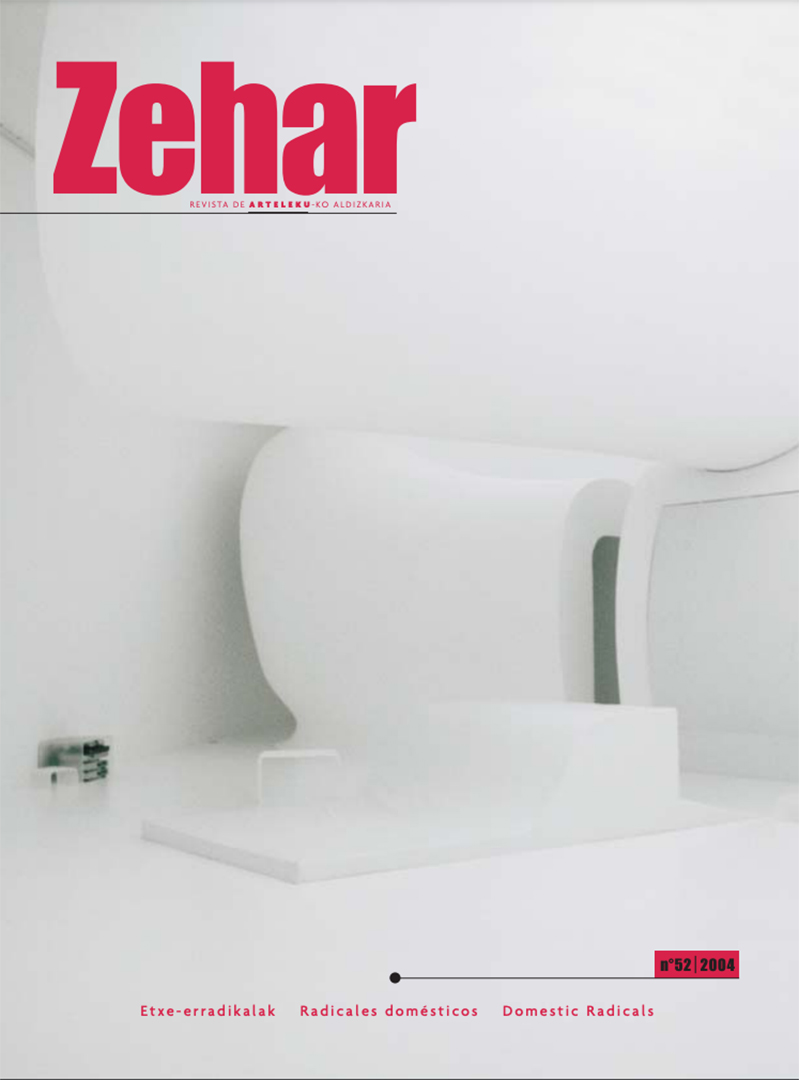
Critique by Carles Guerra of Garmendia’s exhibition Kolpez Kolpe, Galería_T4, Barcelona (19/11/2003-24/01/2004) in Zehar magazine, Arteleku. Guerra sees Kolpez Kolpe as “an exercise which puts Basque Radical Rock through an exercise of ventriloquism”, resulting in what might be called “a radical translation”. Download article.
Catalogue of Iñaki Garmendia’s work published on the occasion of the Basque Government MMIV Gure Artea Awards. Including video stills from Izarra (2005); Red Light/Straight Edge (2005); Goierri Konpeti (2001); Harder, Better, Faster, Stronger (2004); Kolpez Kolpe (2003-2004); Repeater / Taja y sus amigos (2001); Kanala (1999-2005); Consequence Of You. Videos Cure / Psychic TV (1999); and Carles Guerra’s text ‘Traducciones Radicales’ on the artist’s work, in Spanish, Basque and English [p. 35-46].
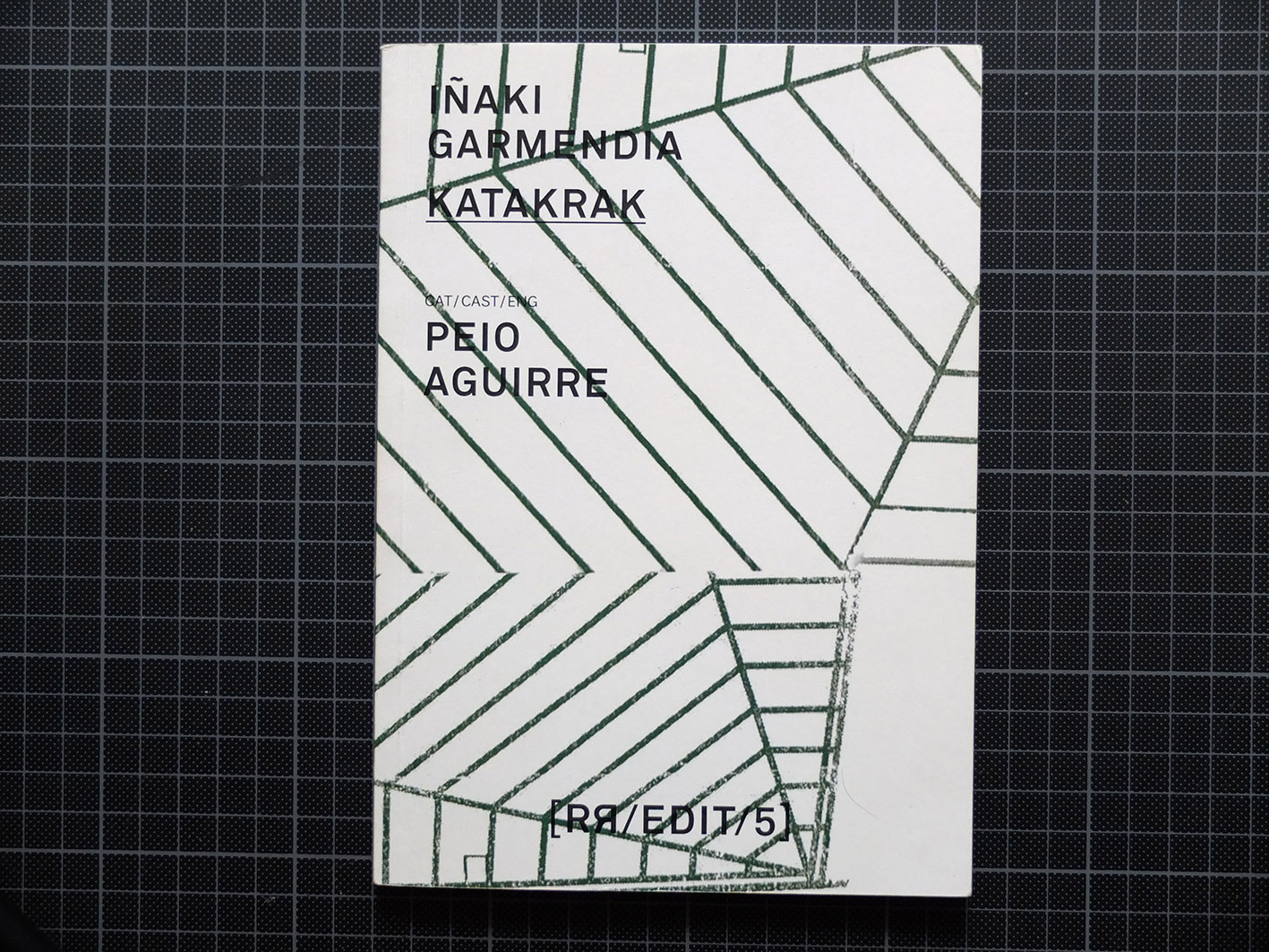
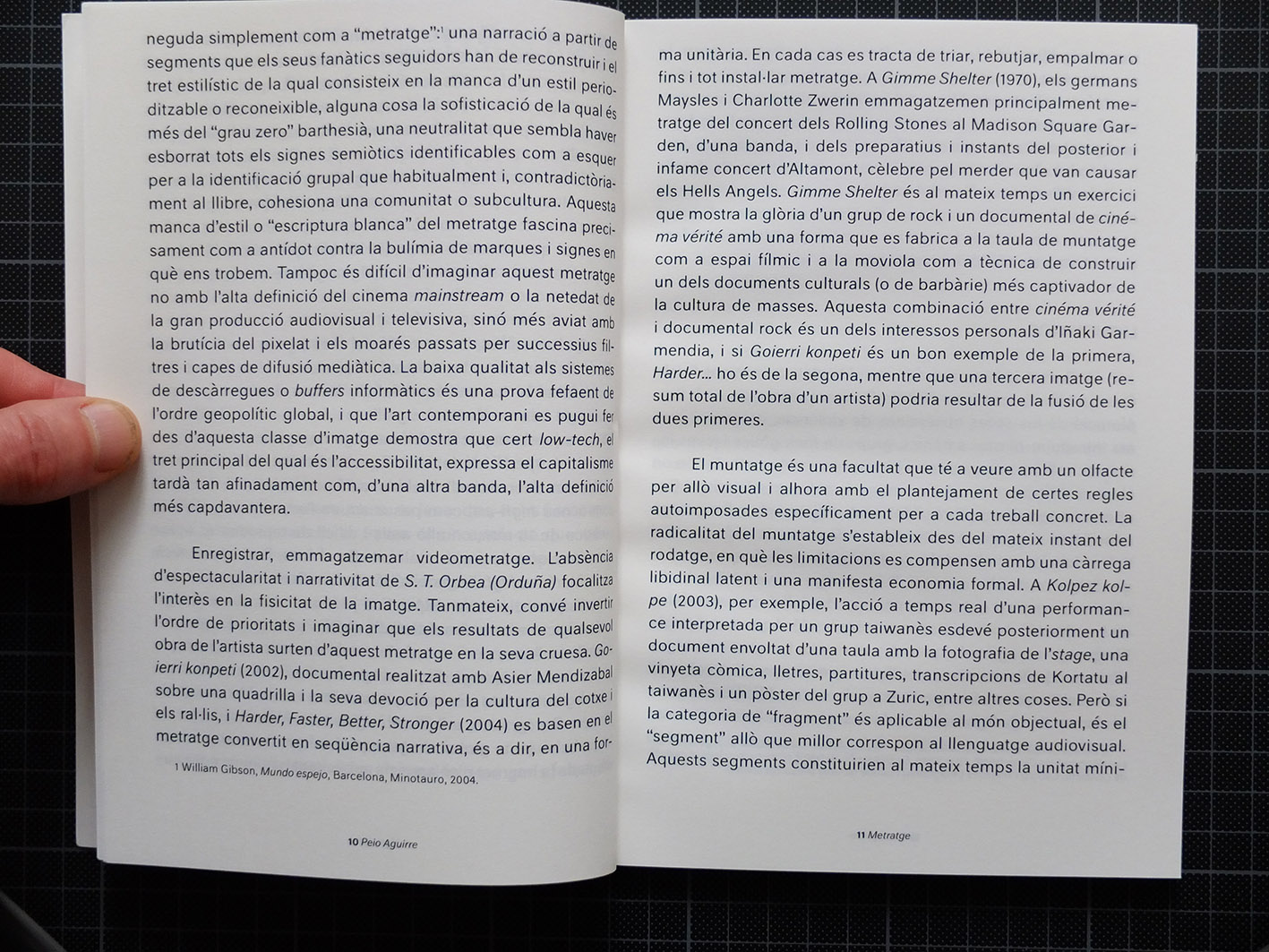
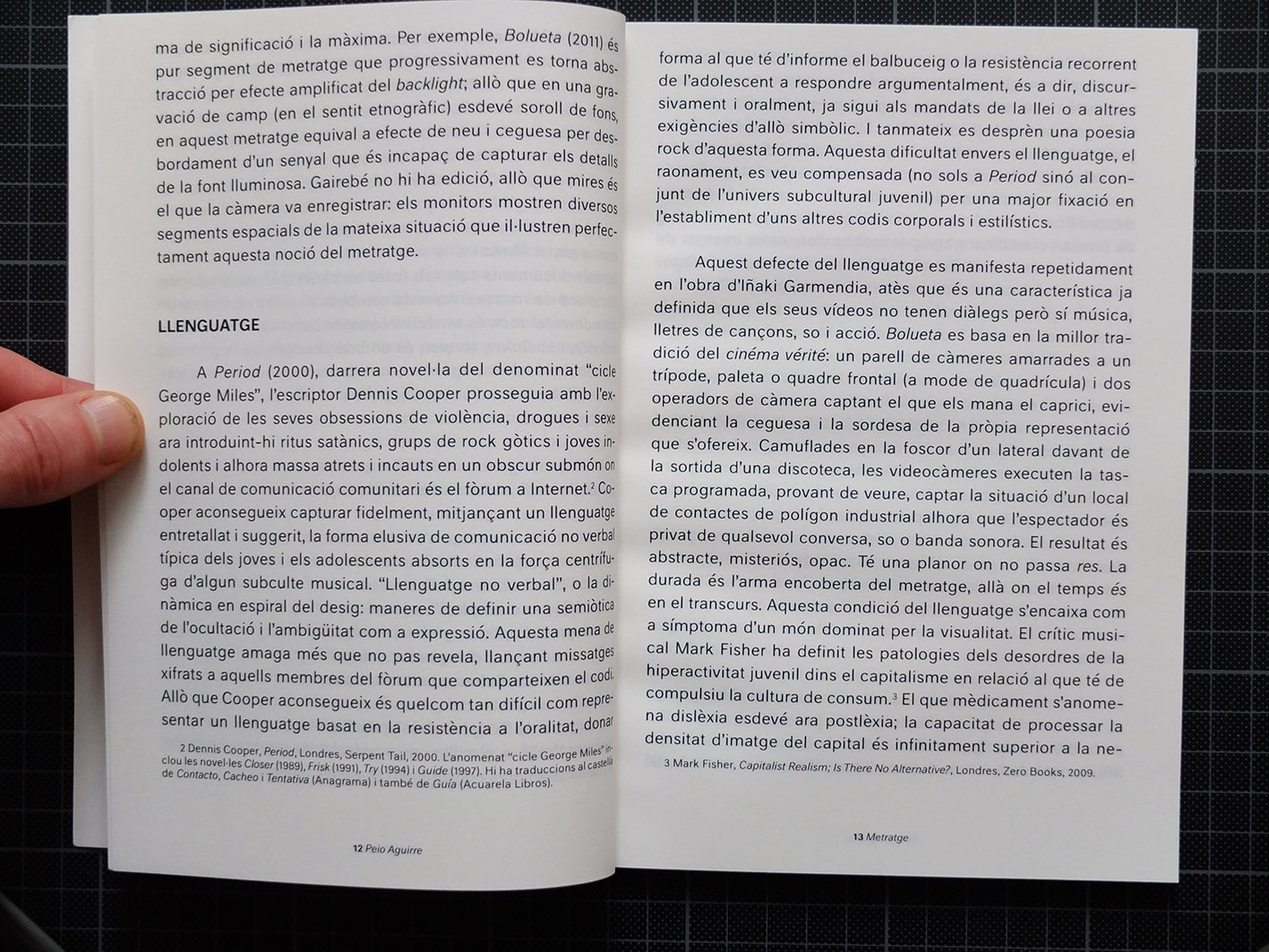
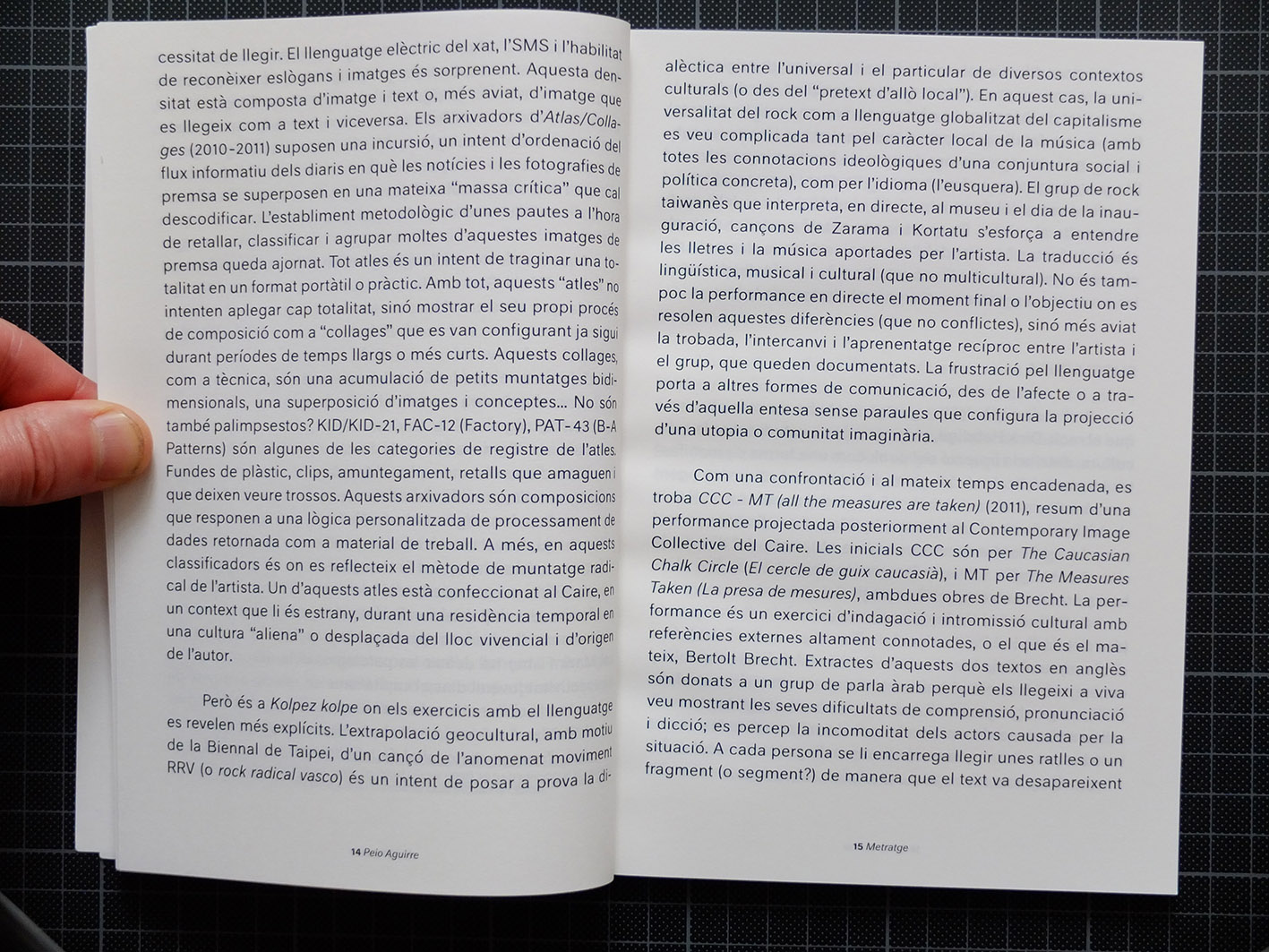
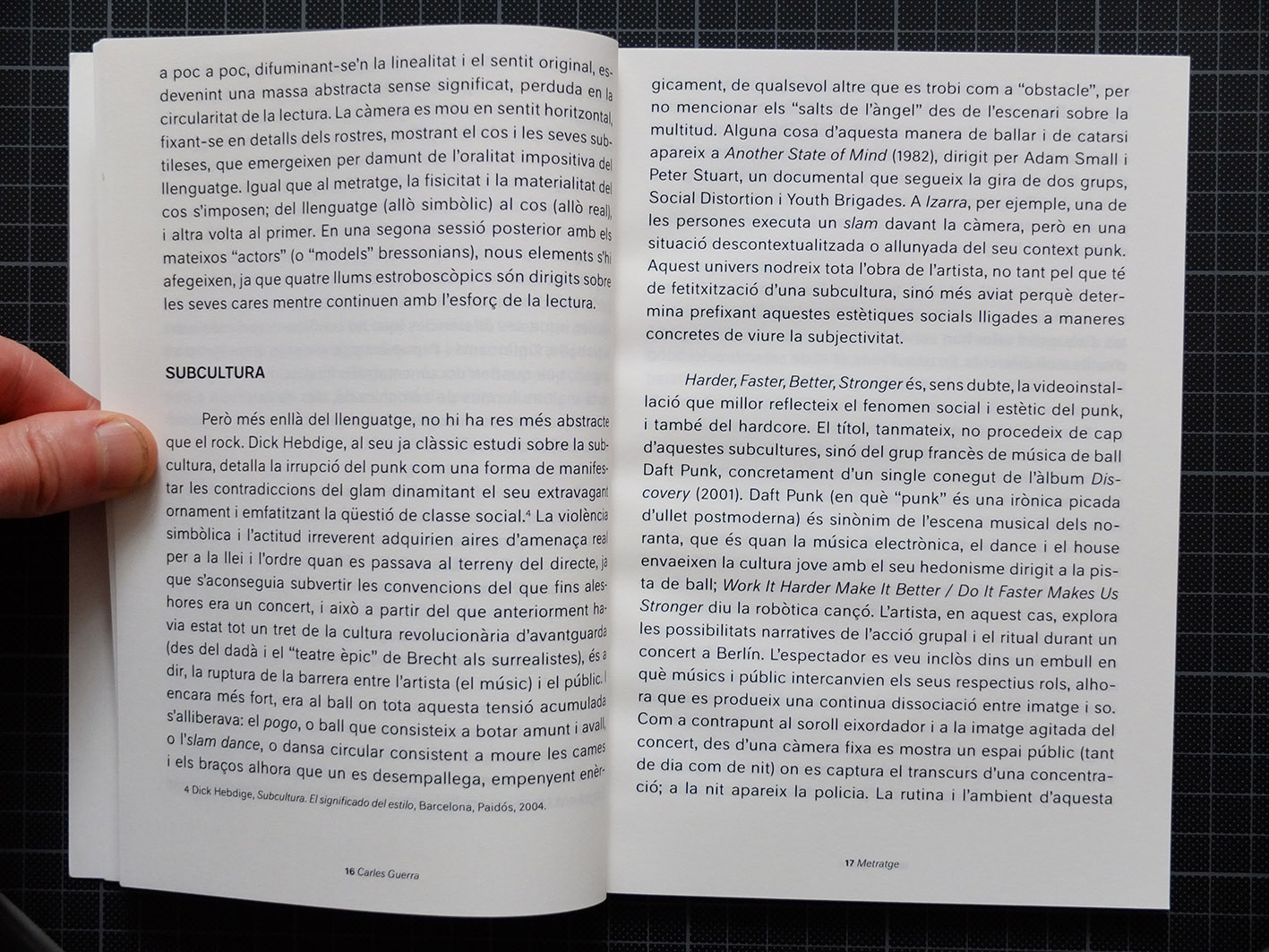
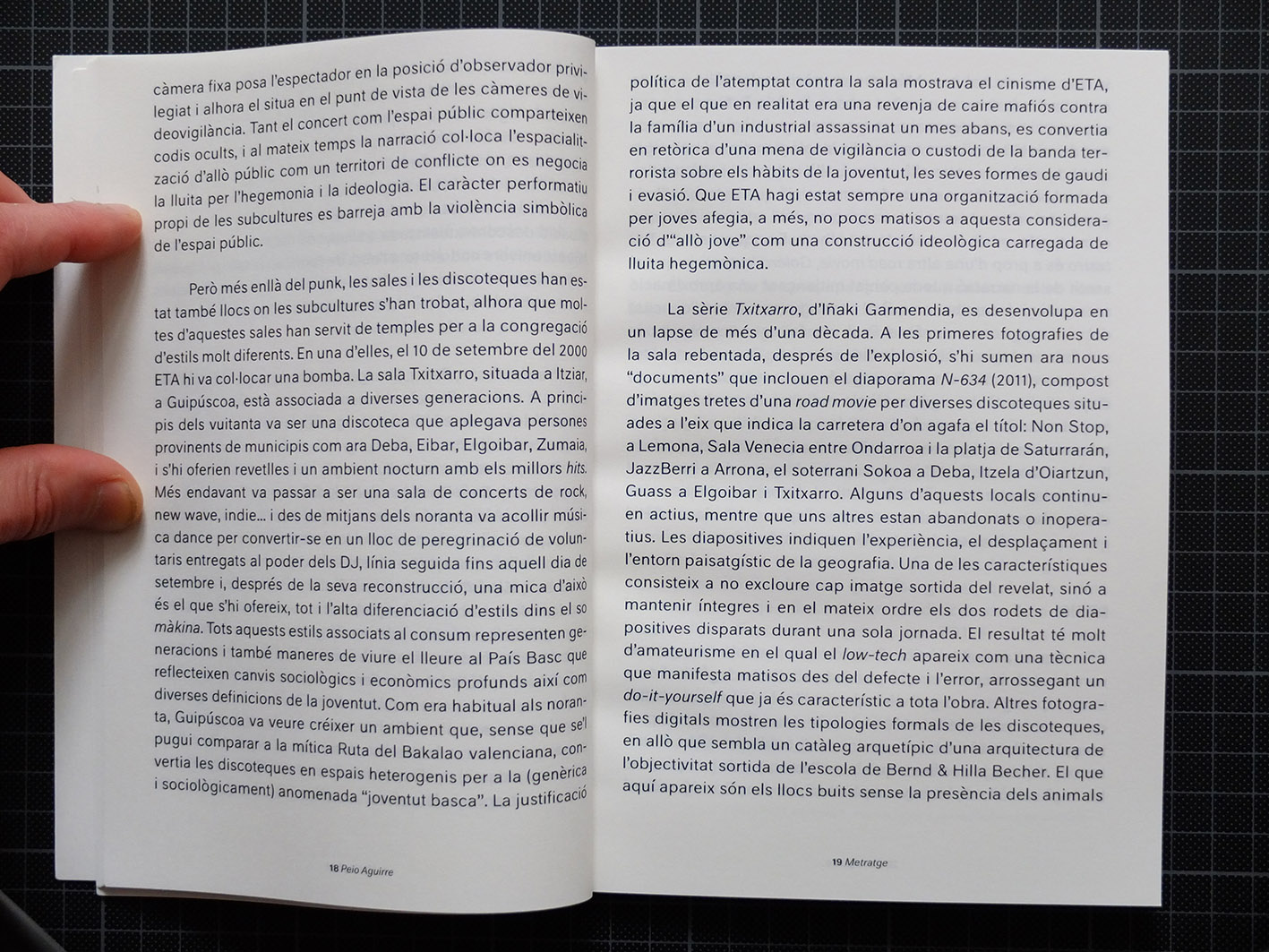
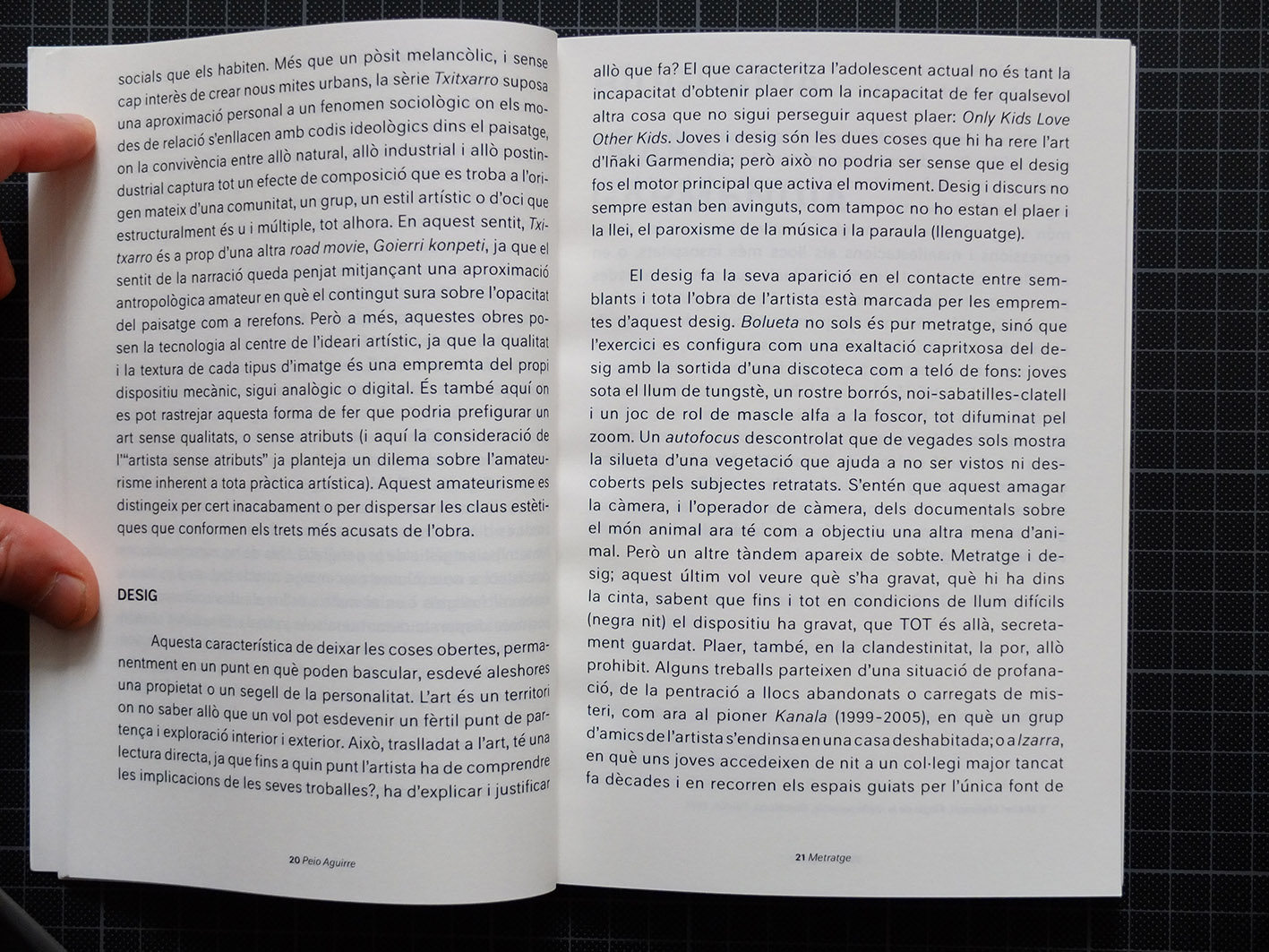
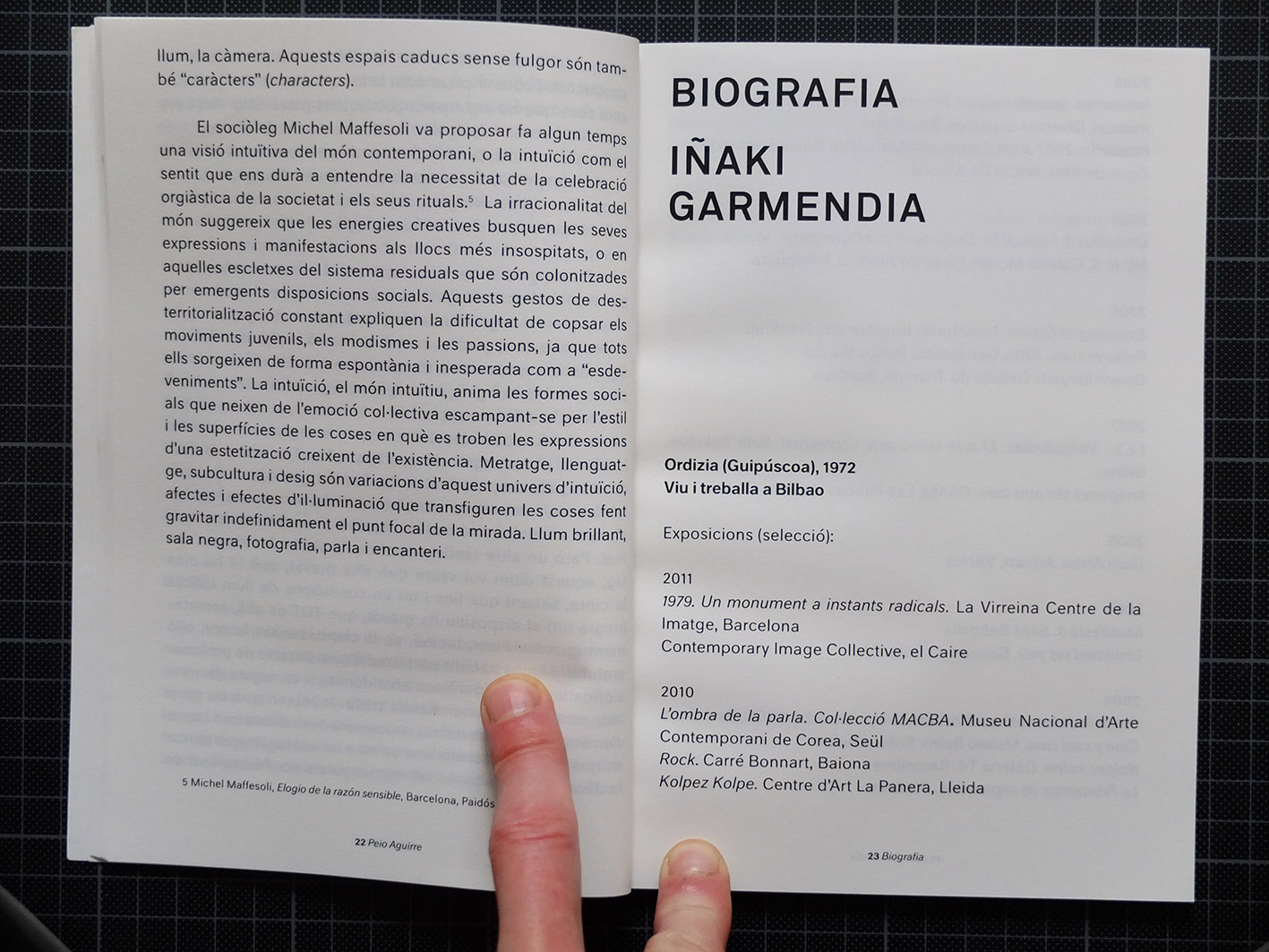
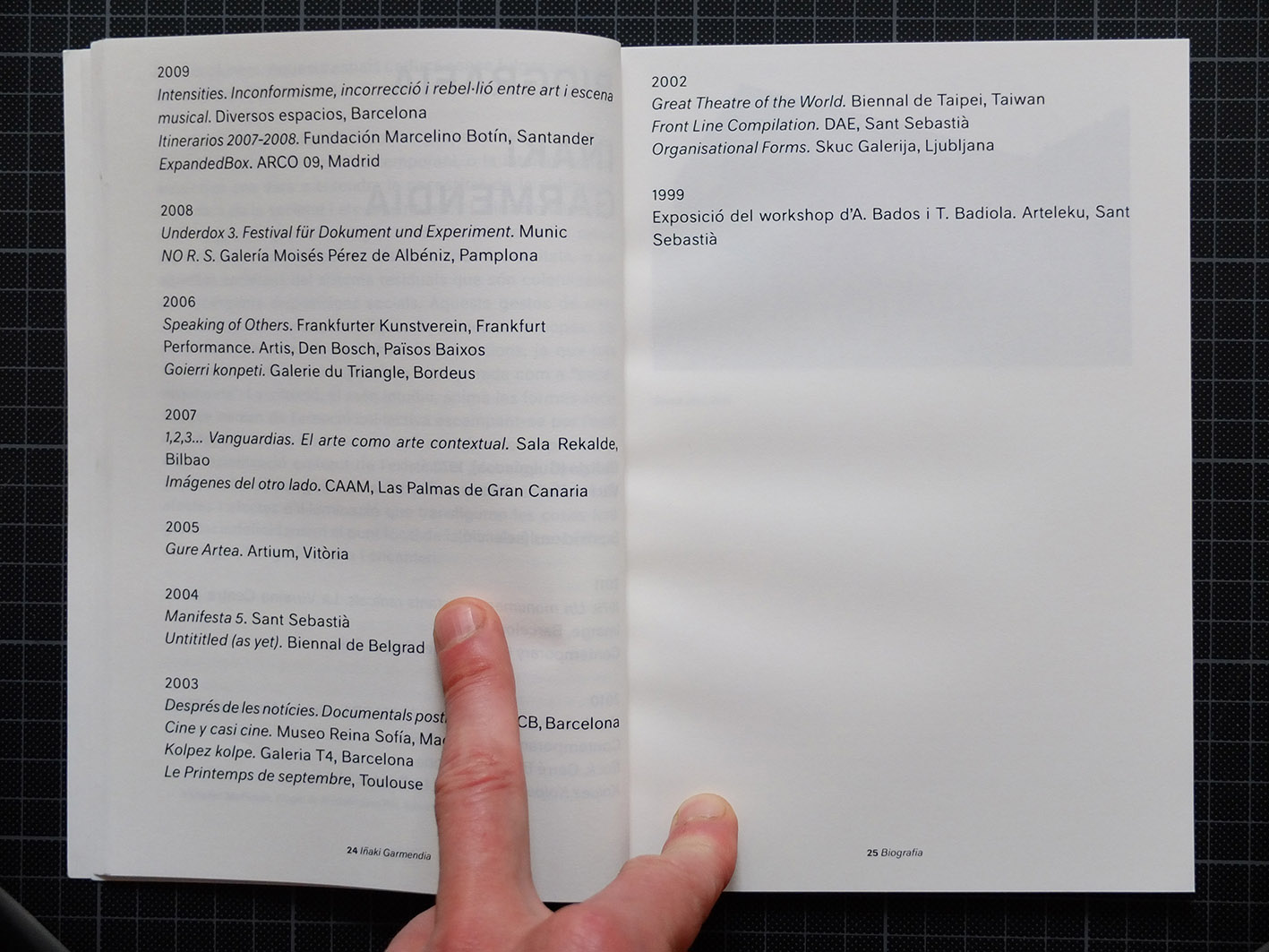
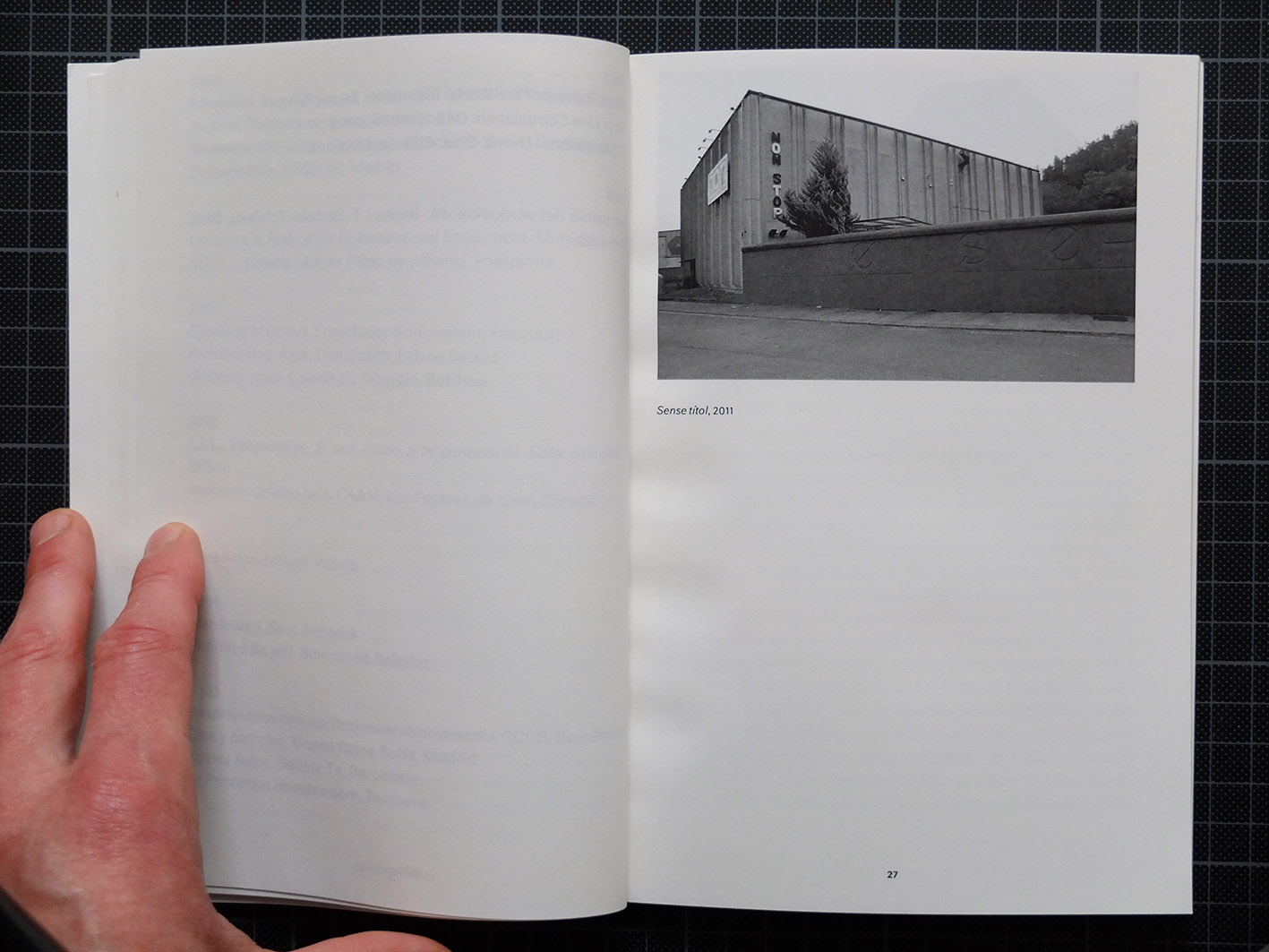
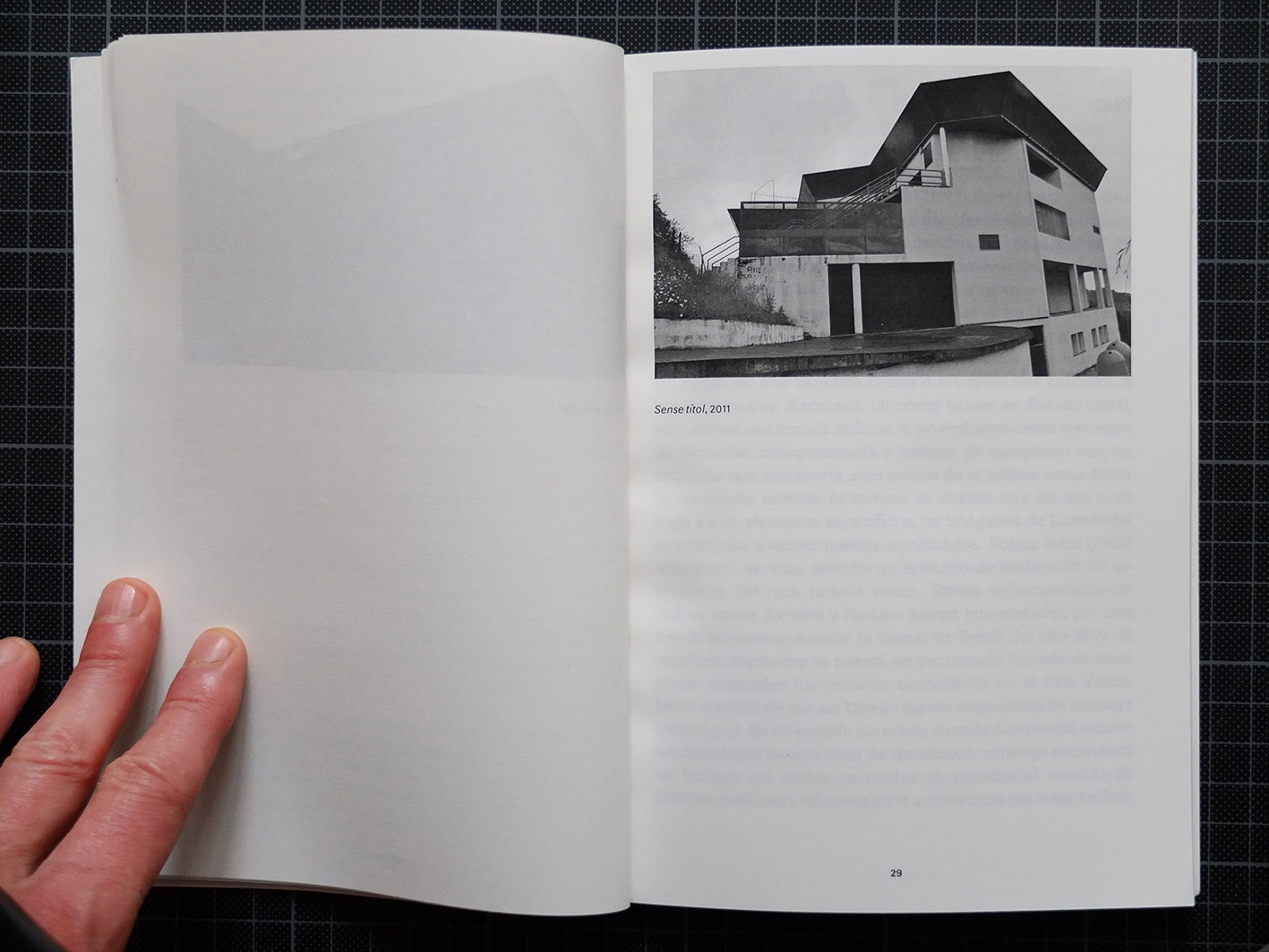
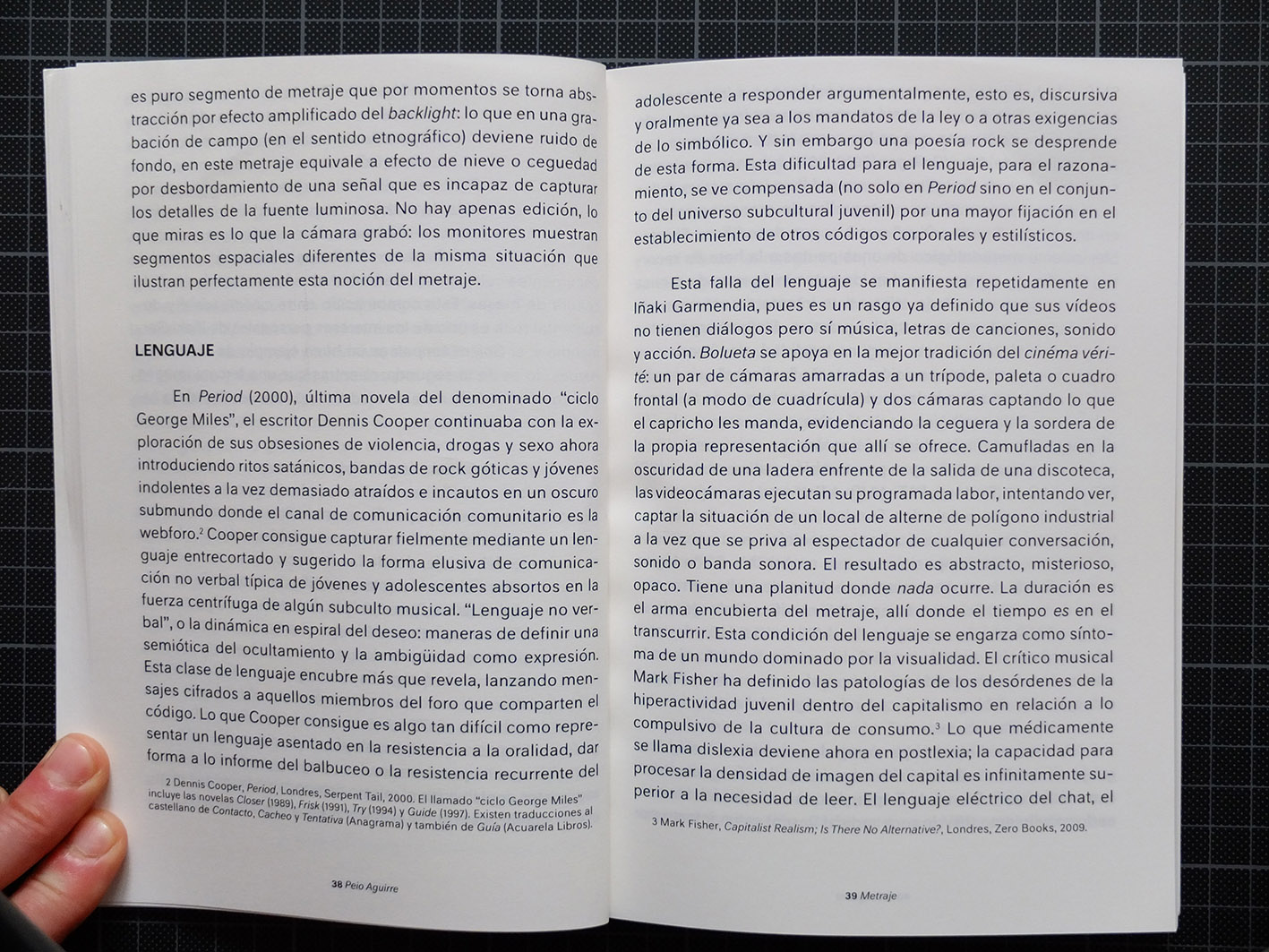
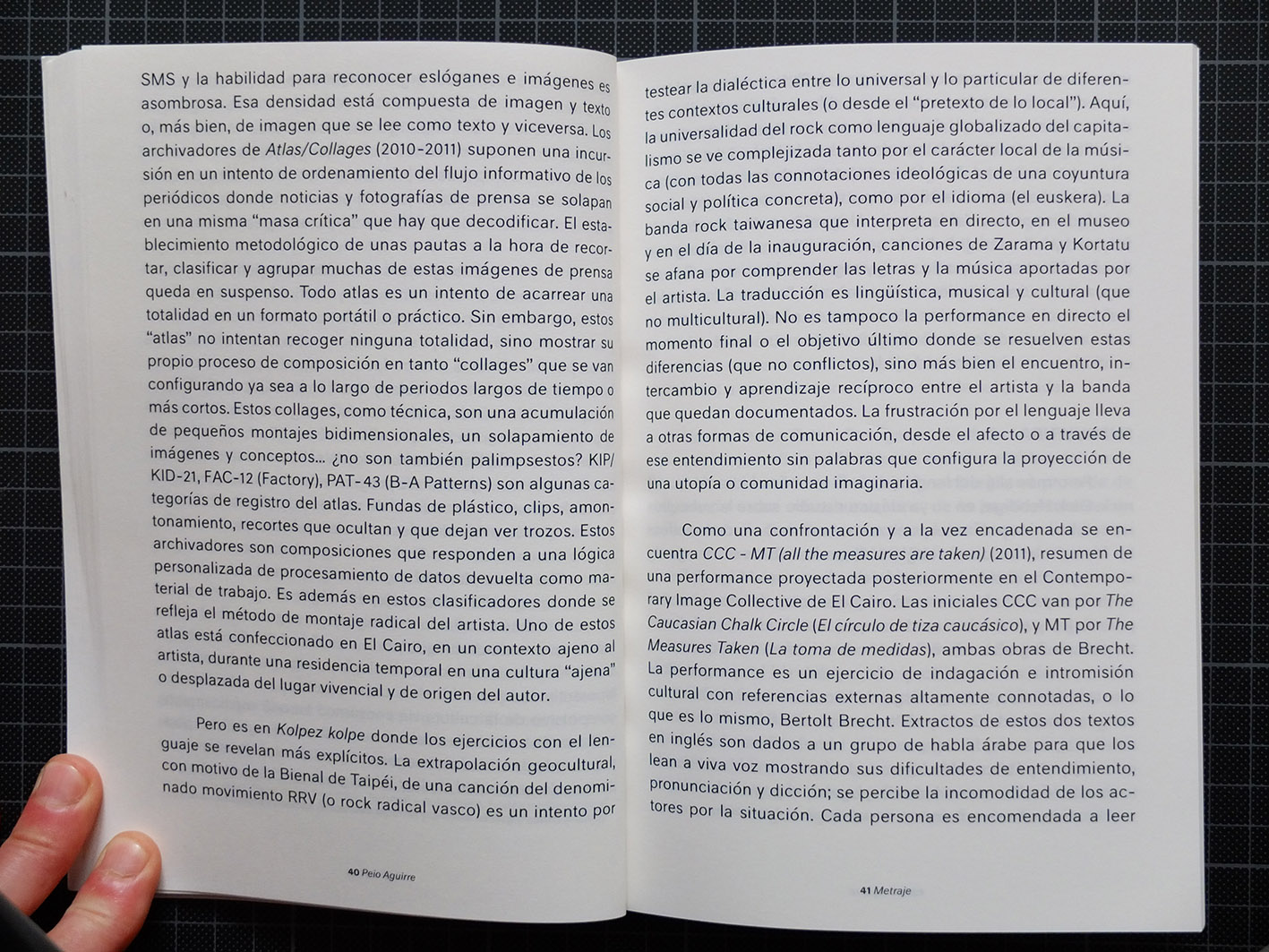
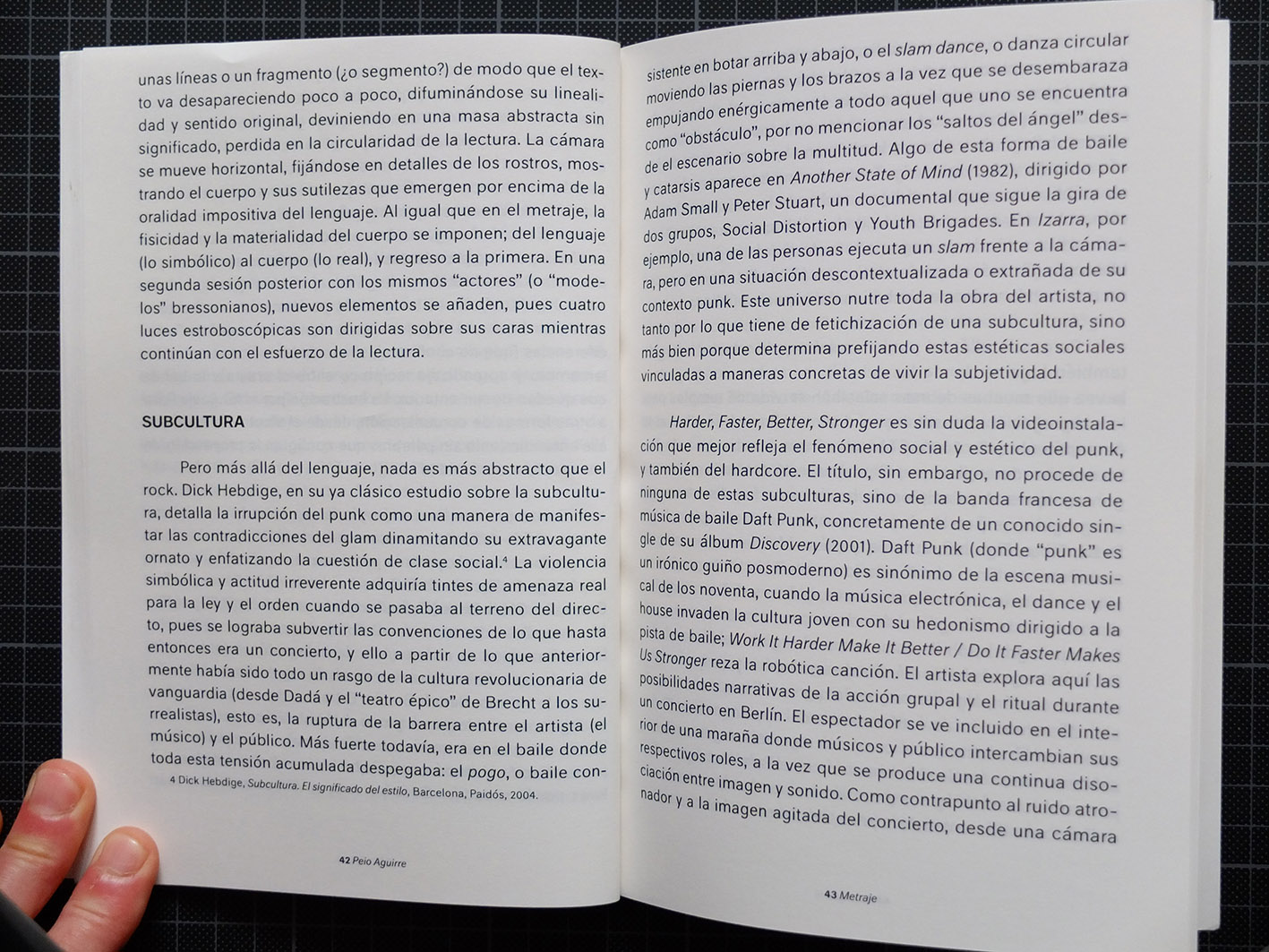
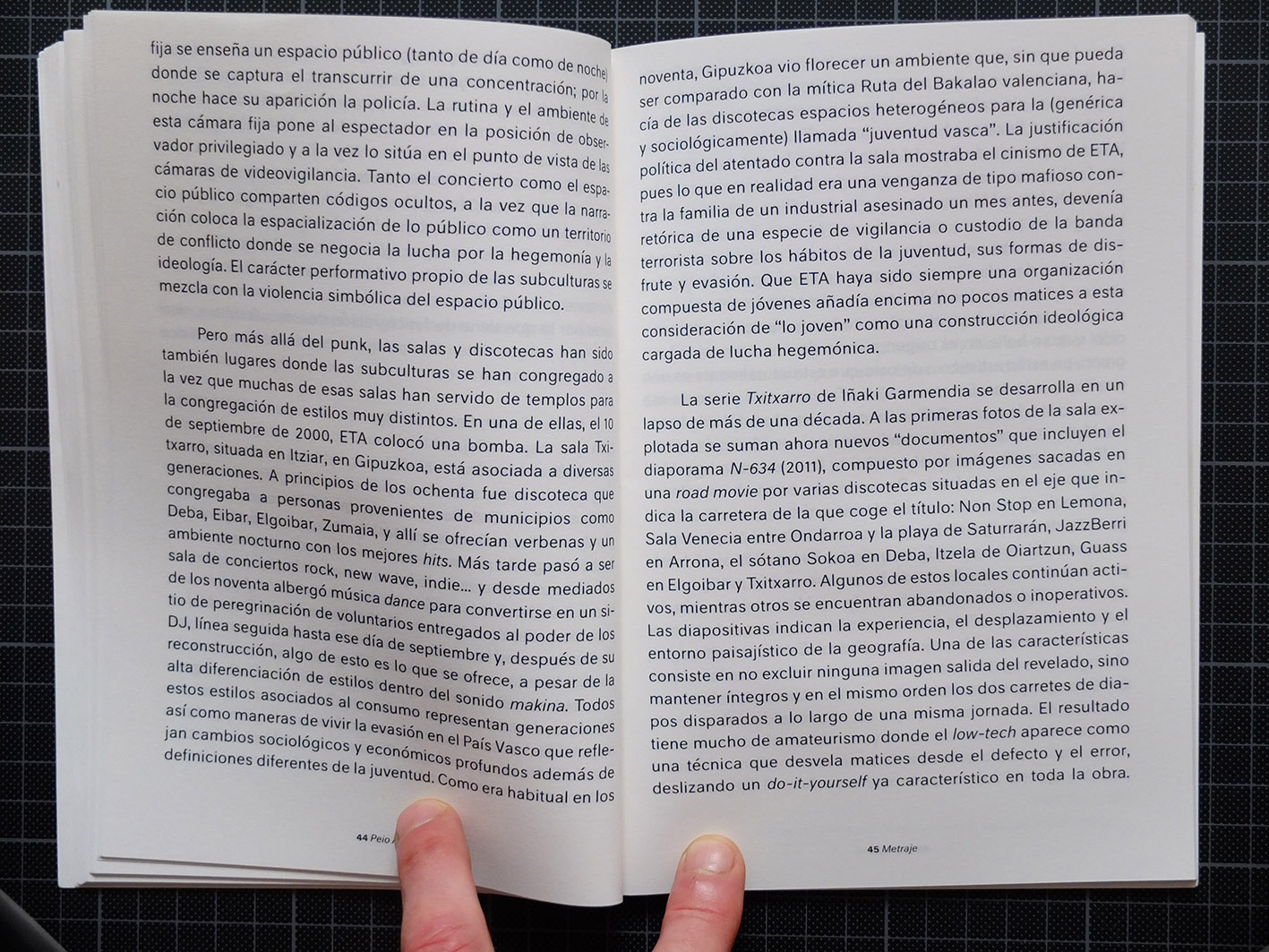
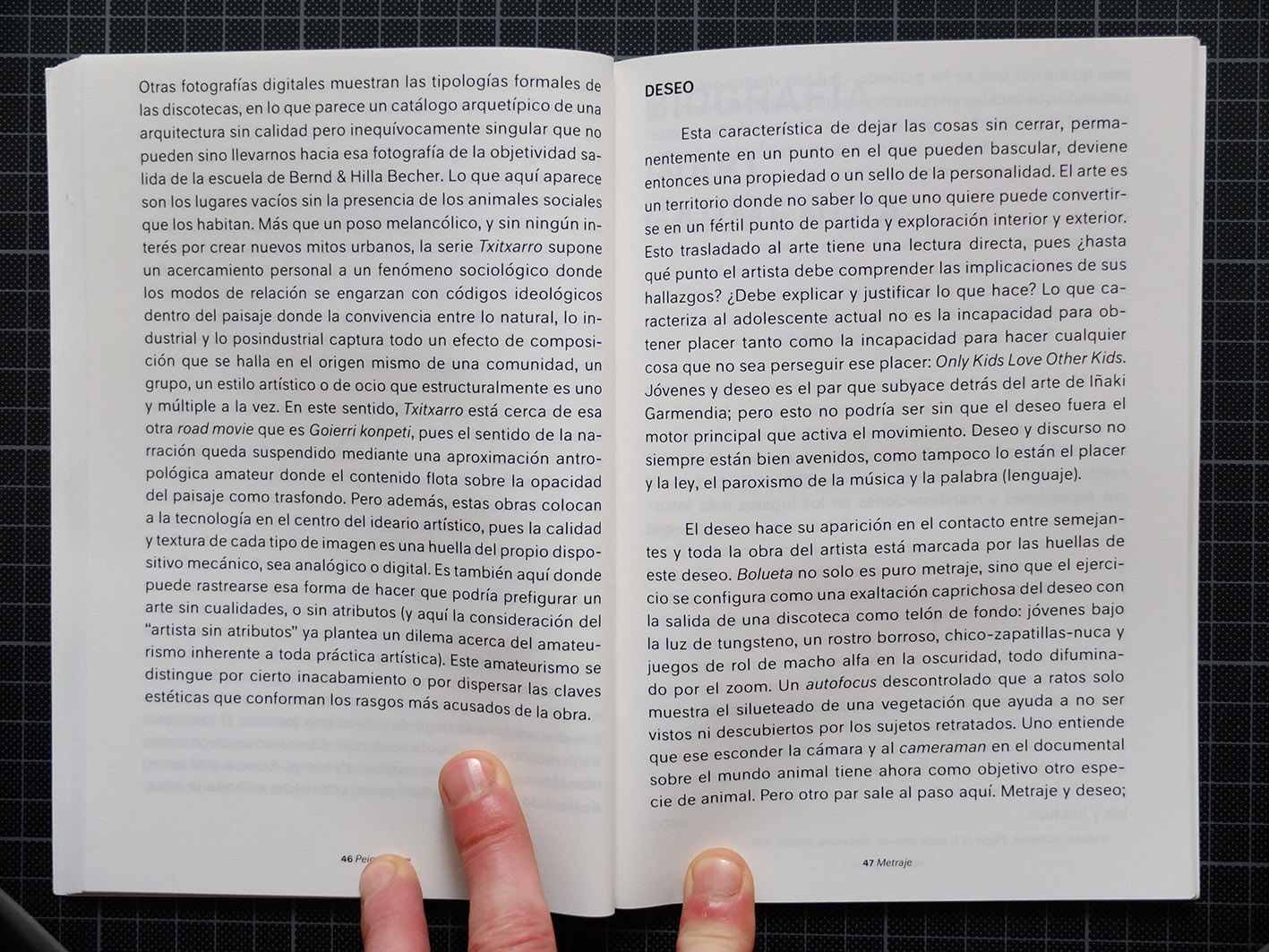
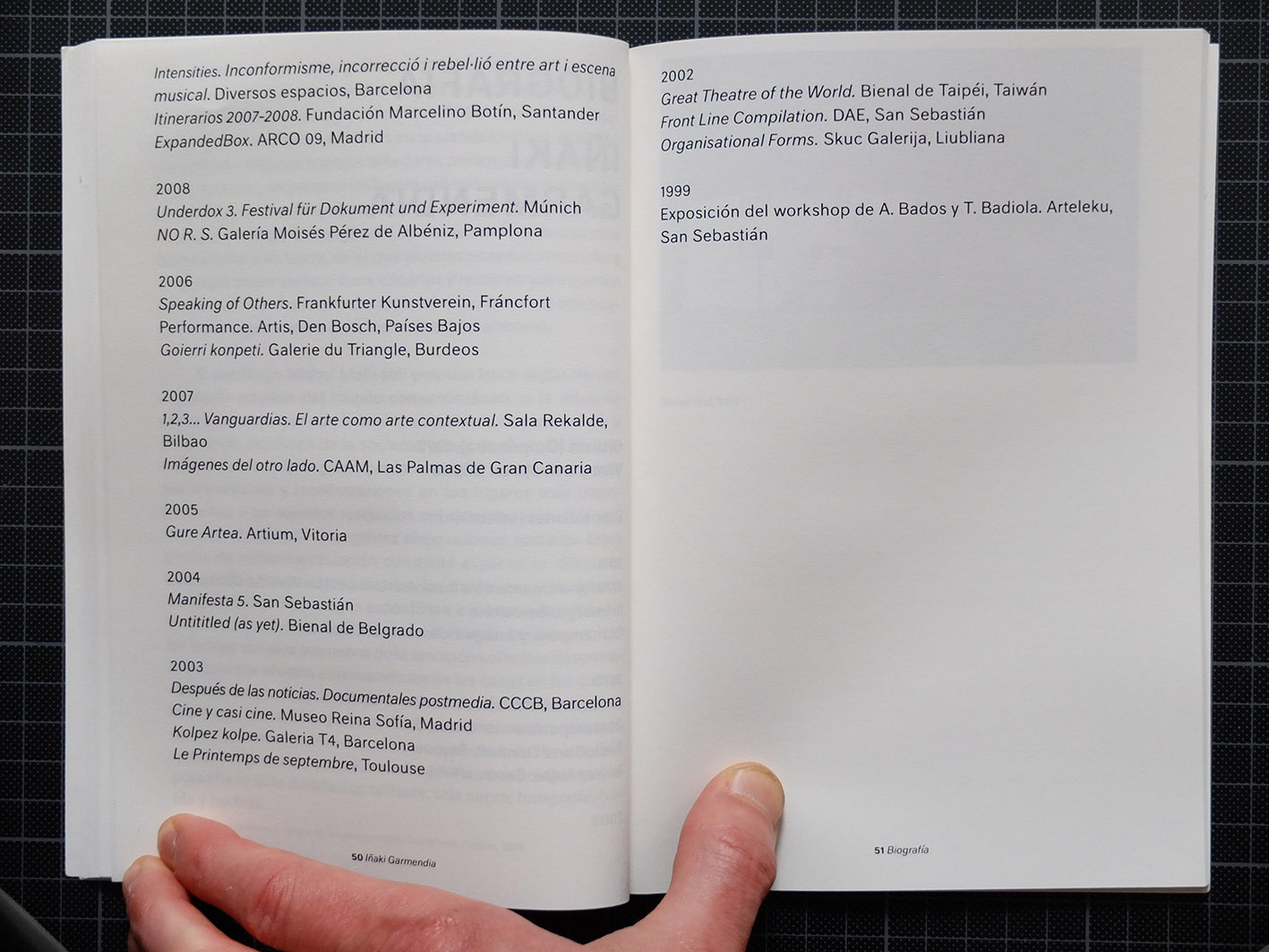
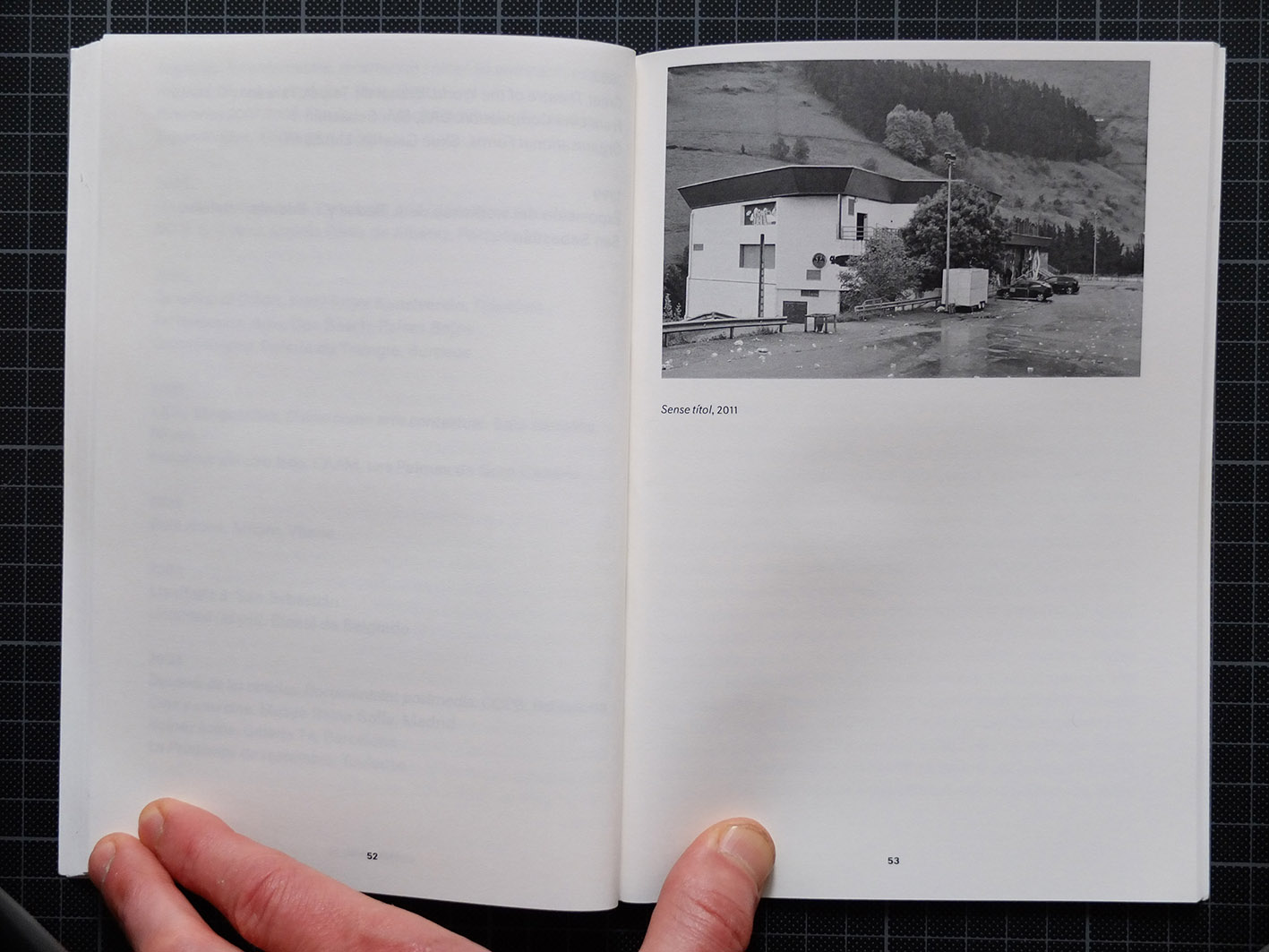
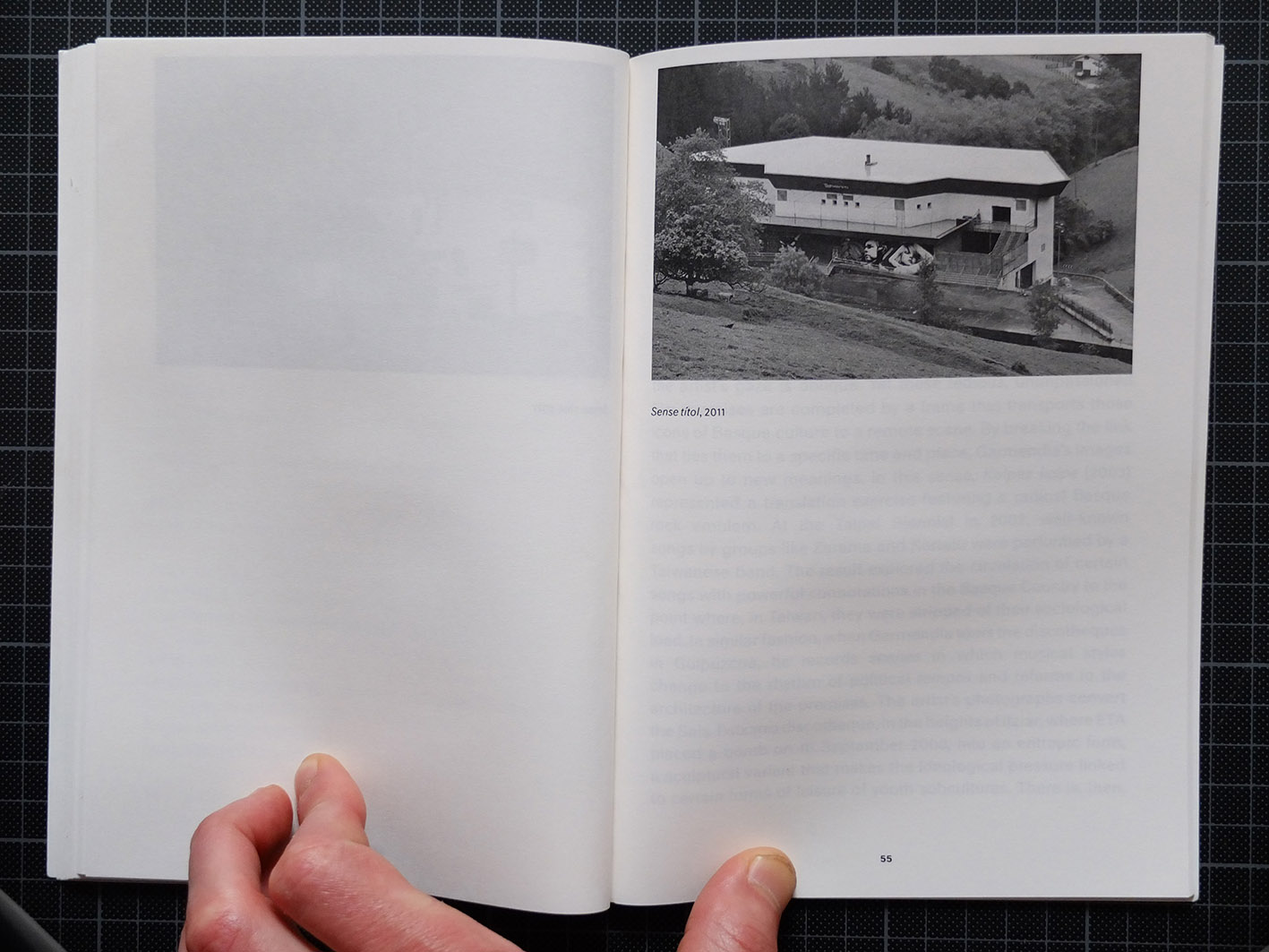
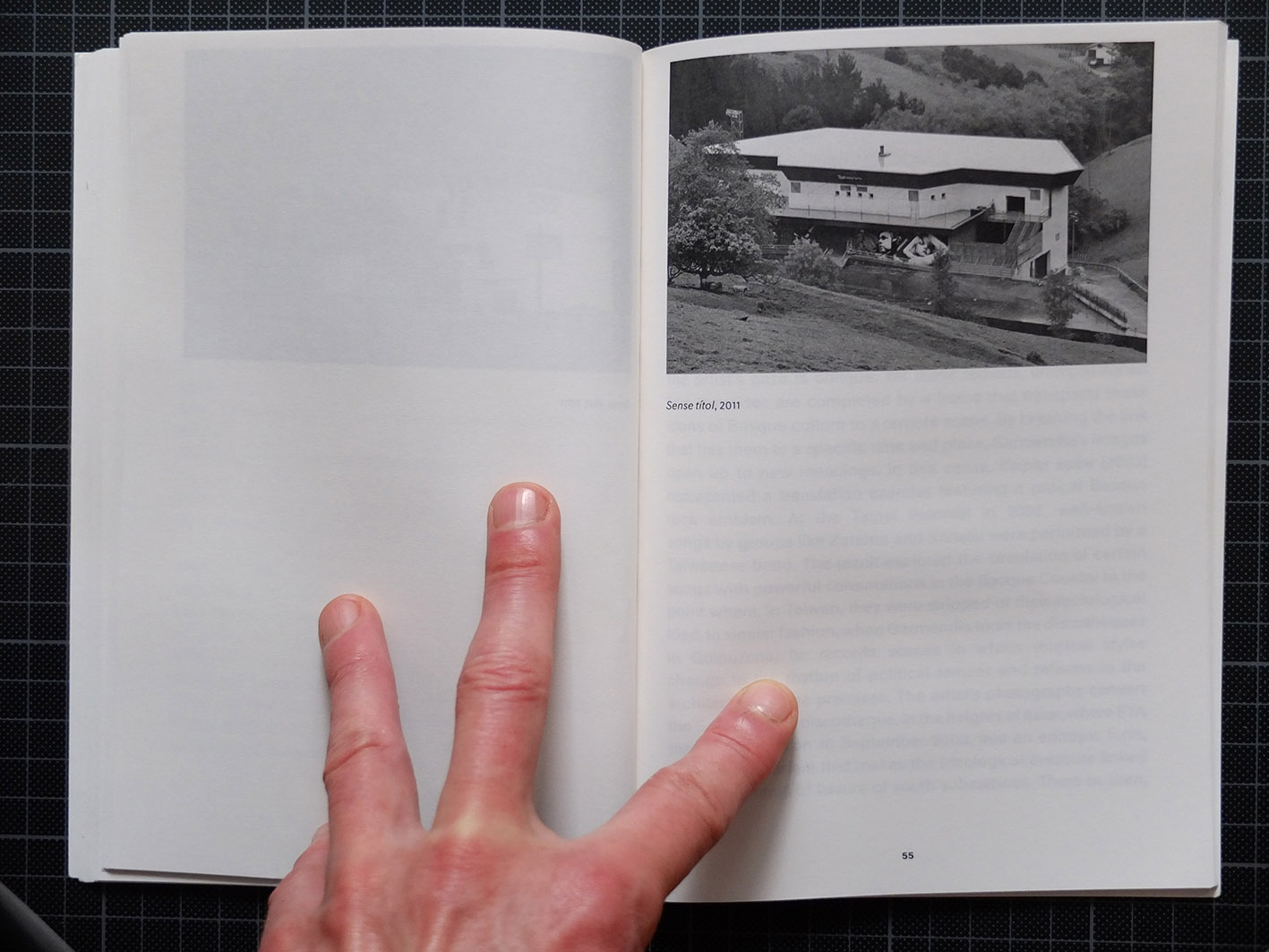
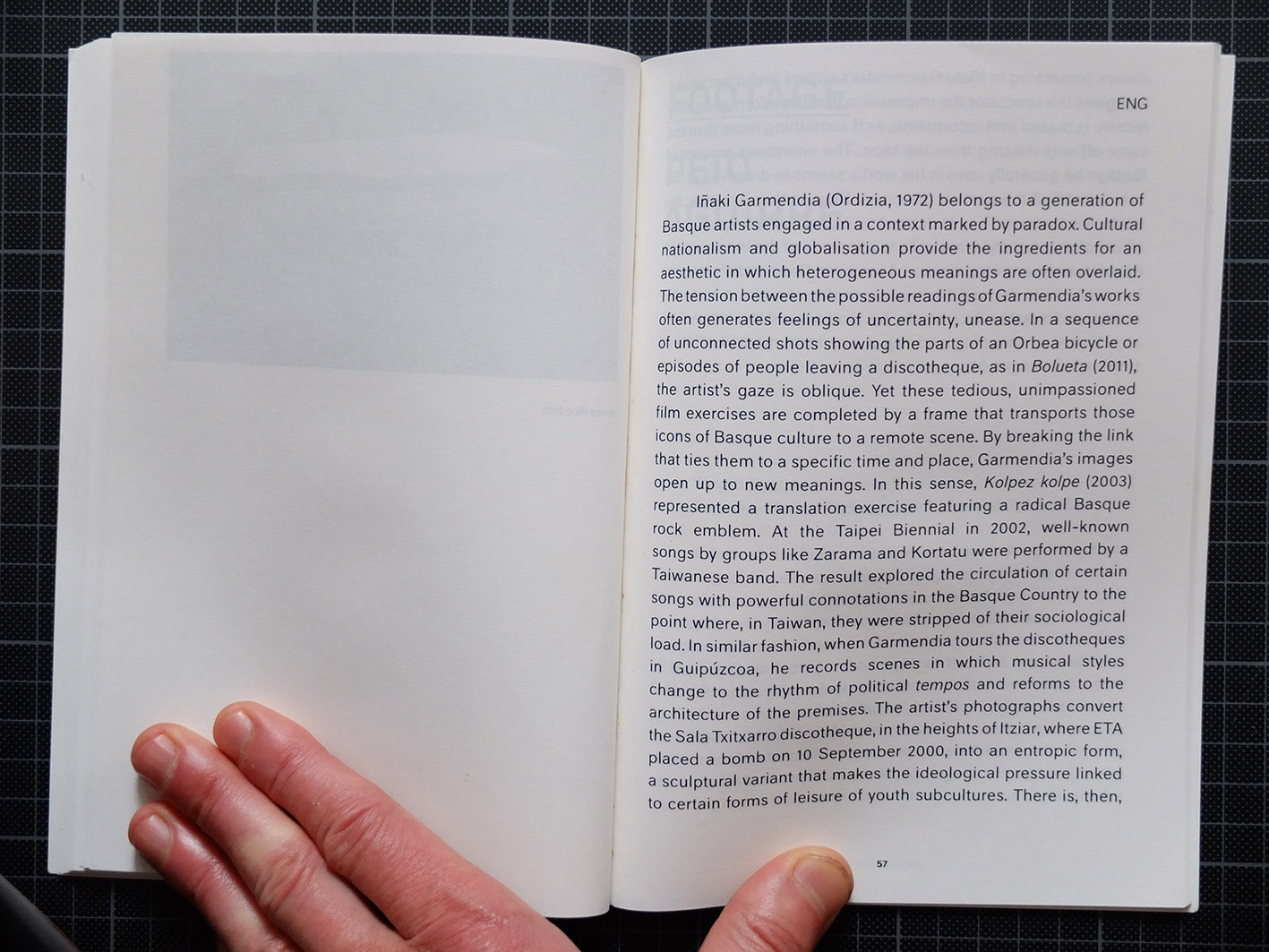
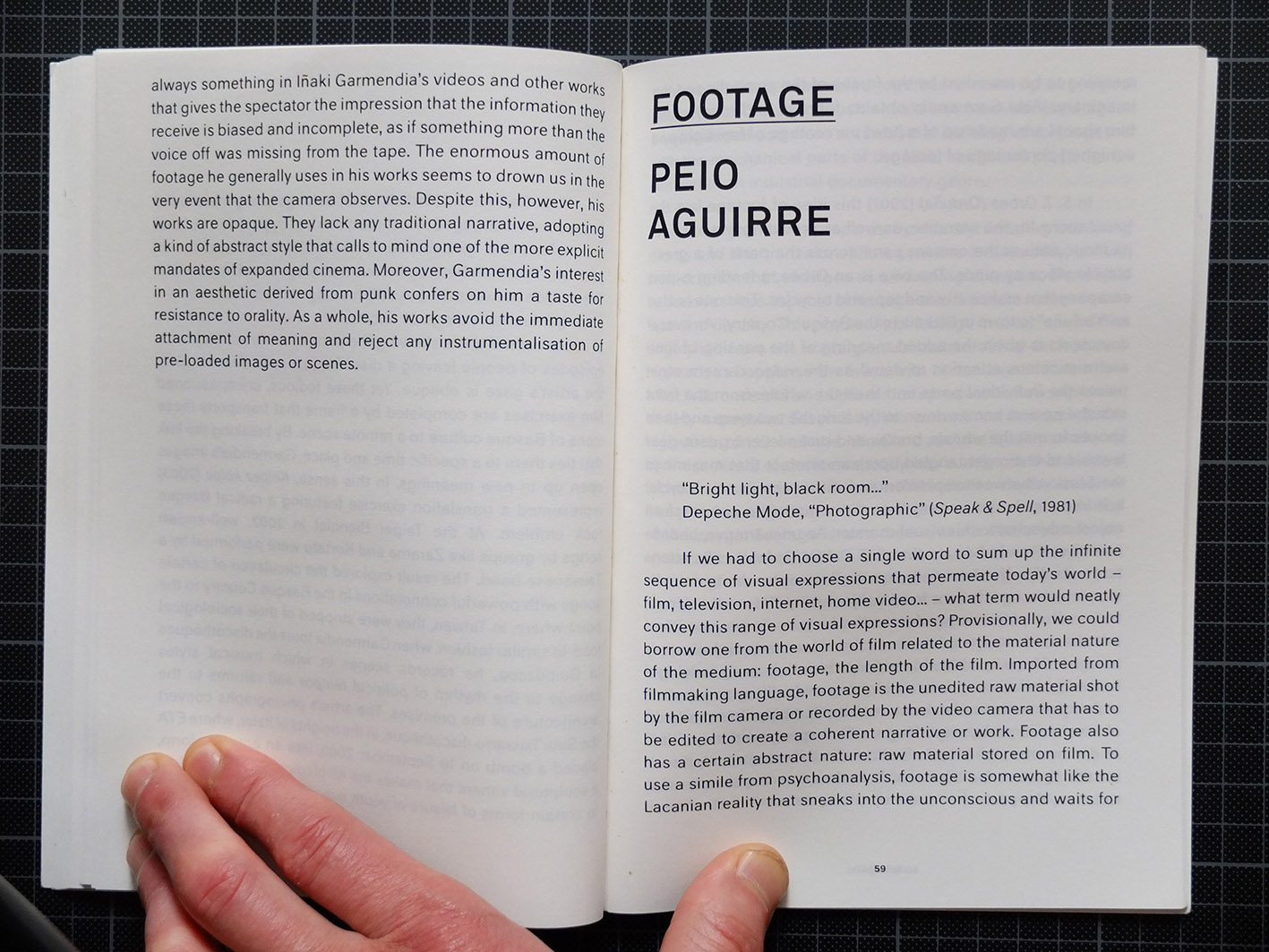
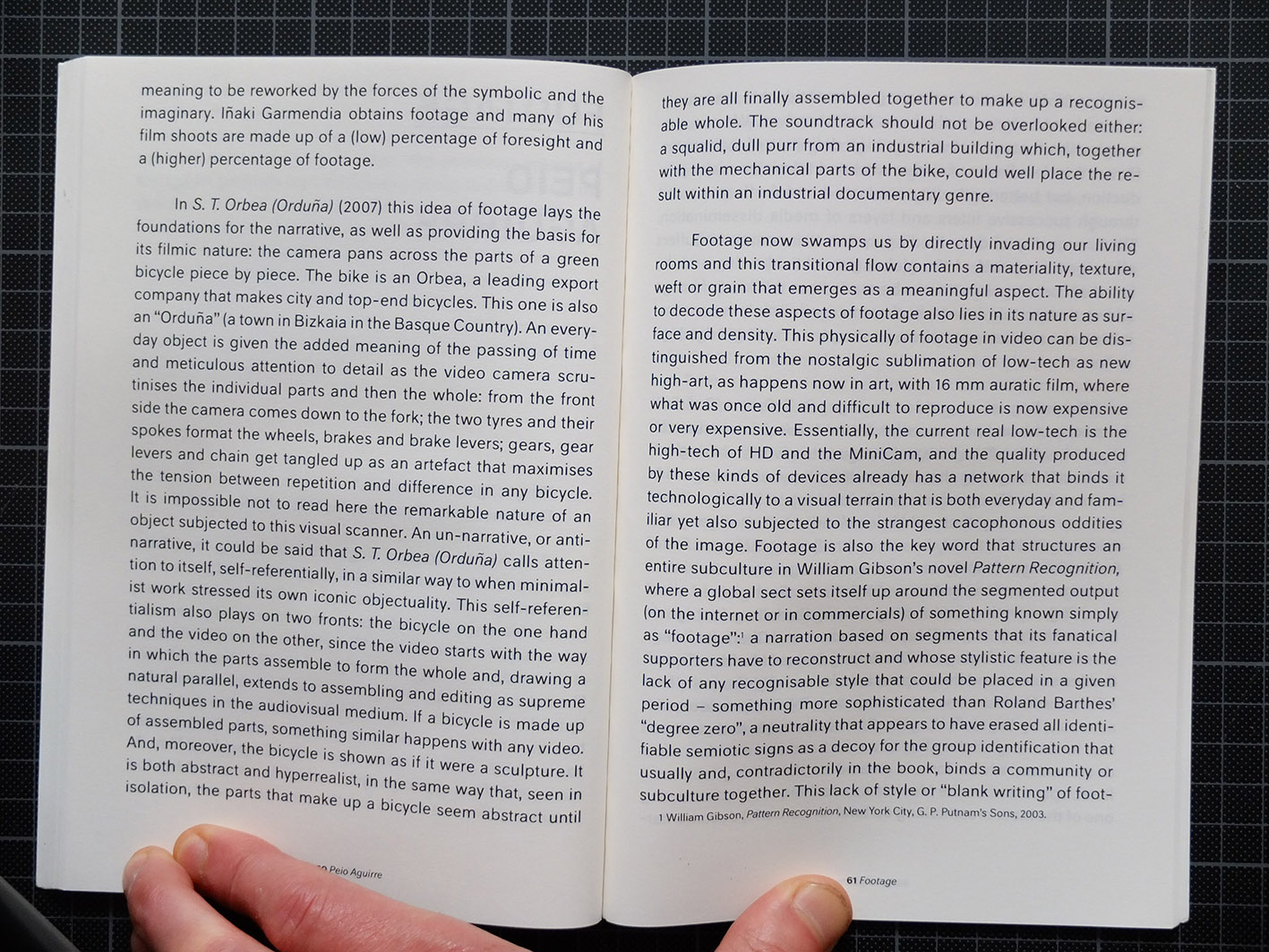
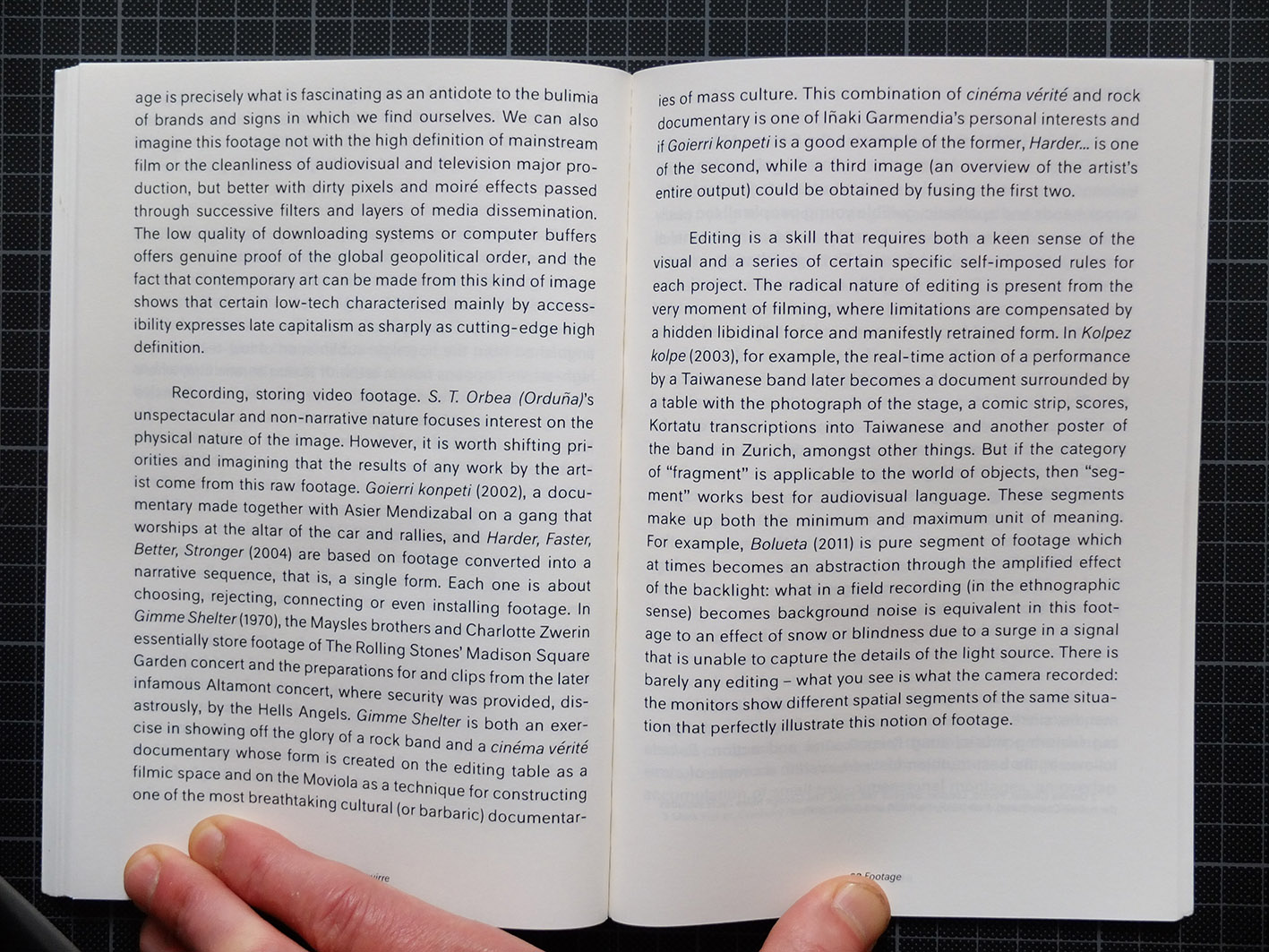
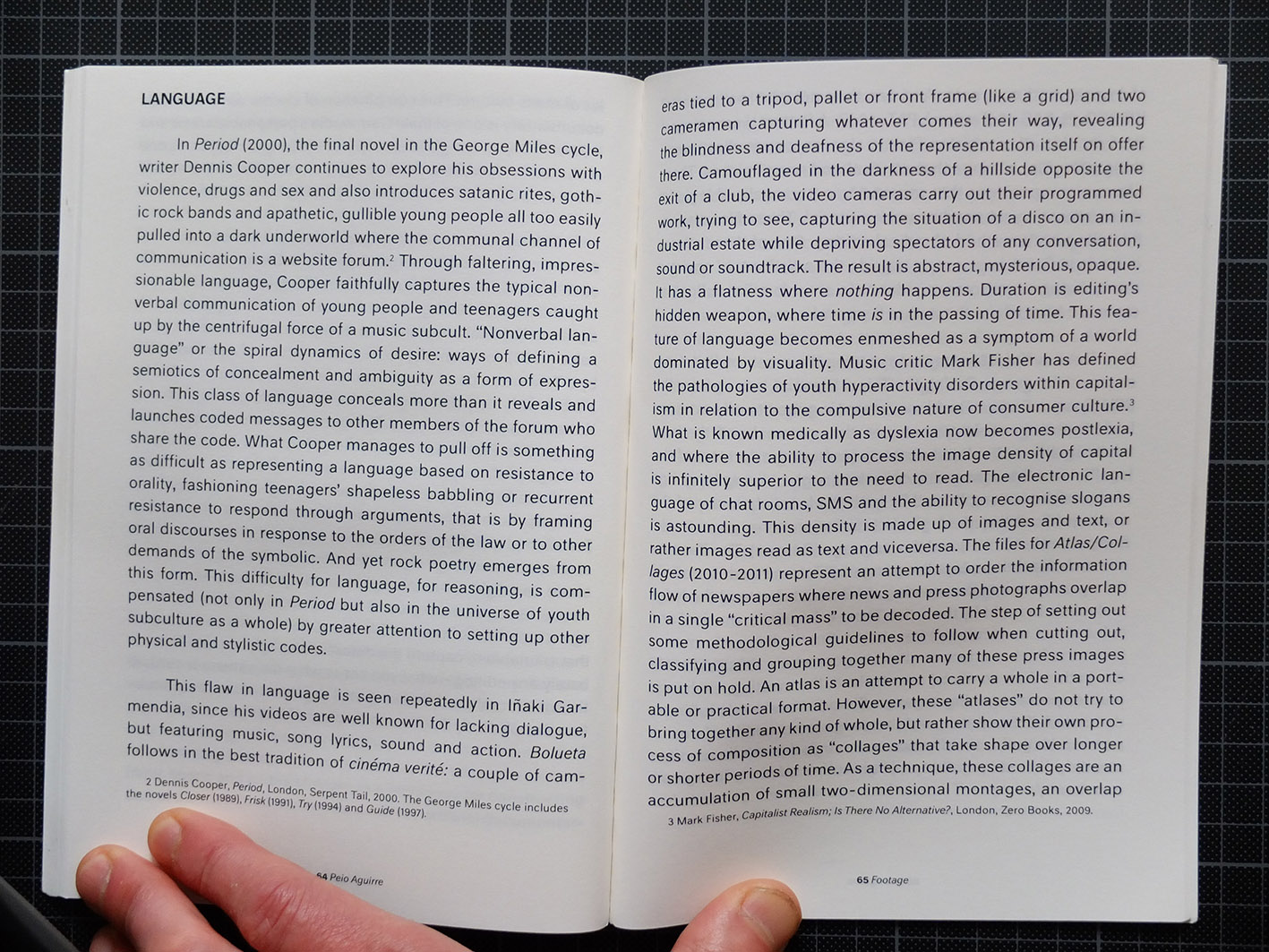
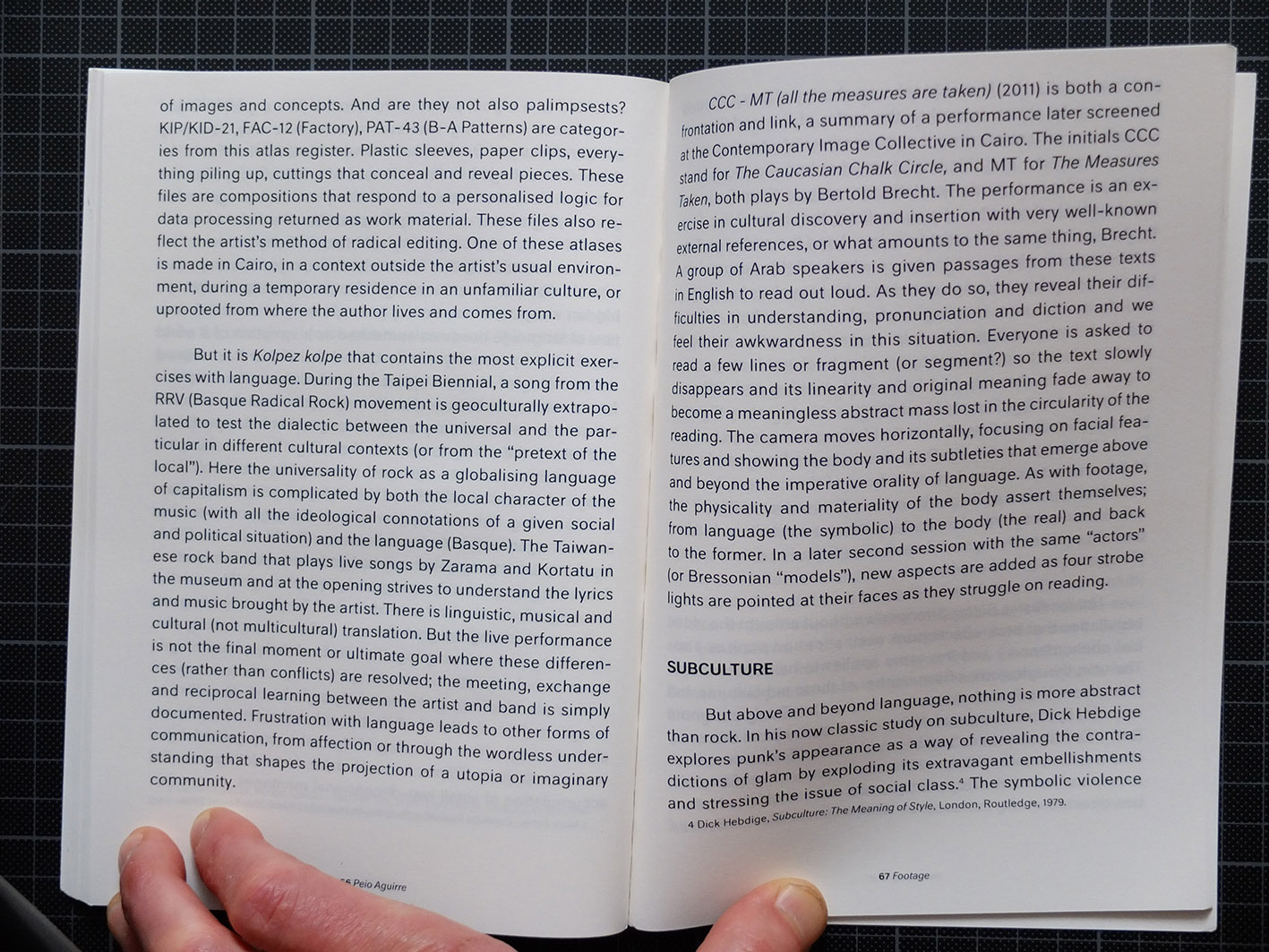
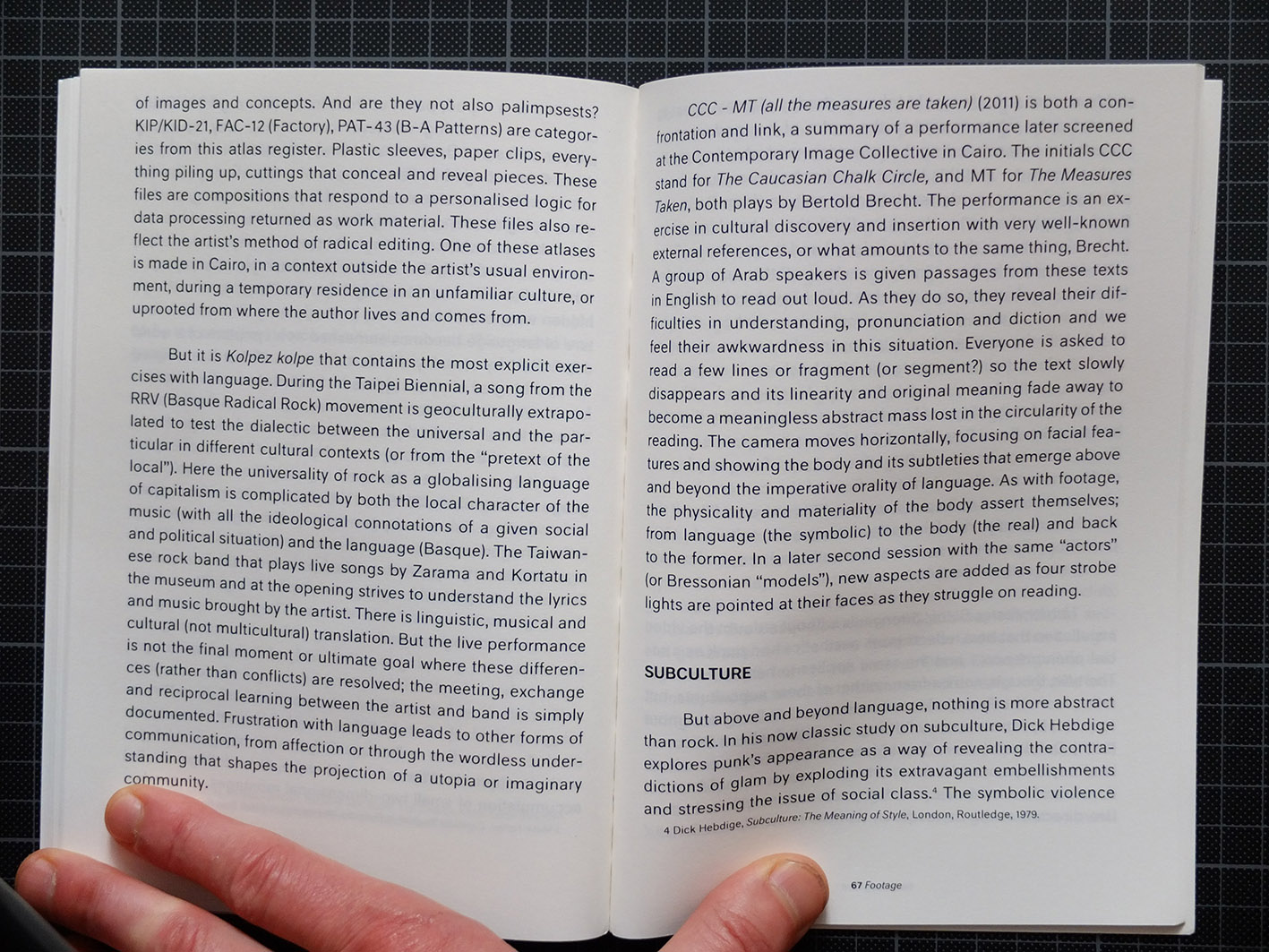
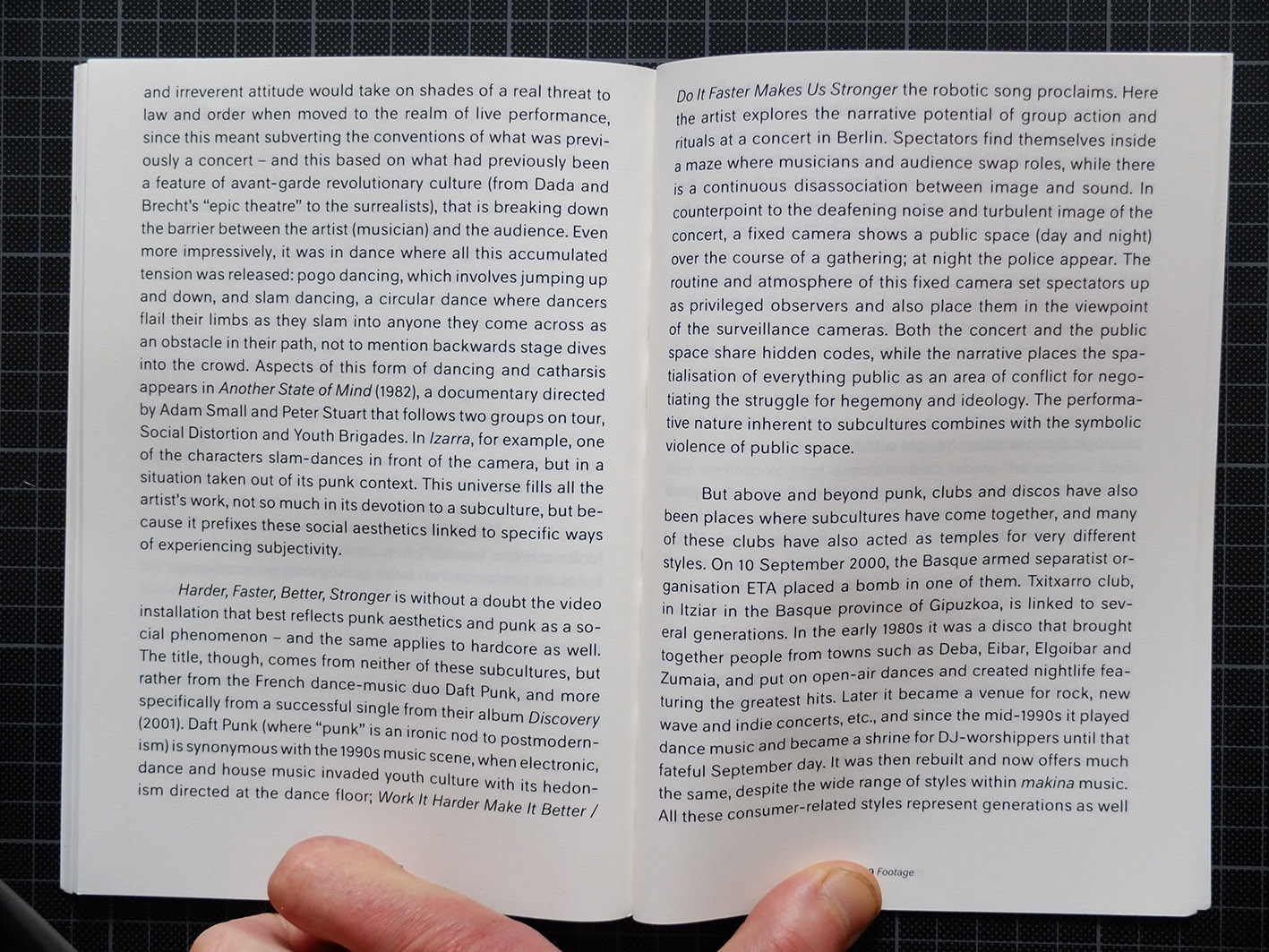
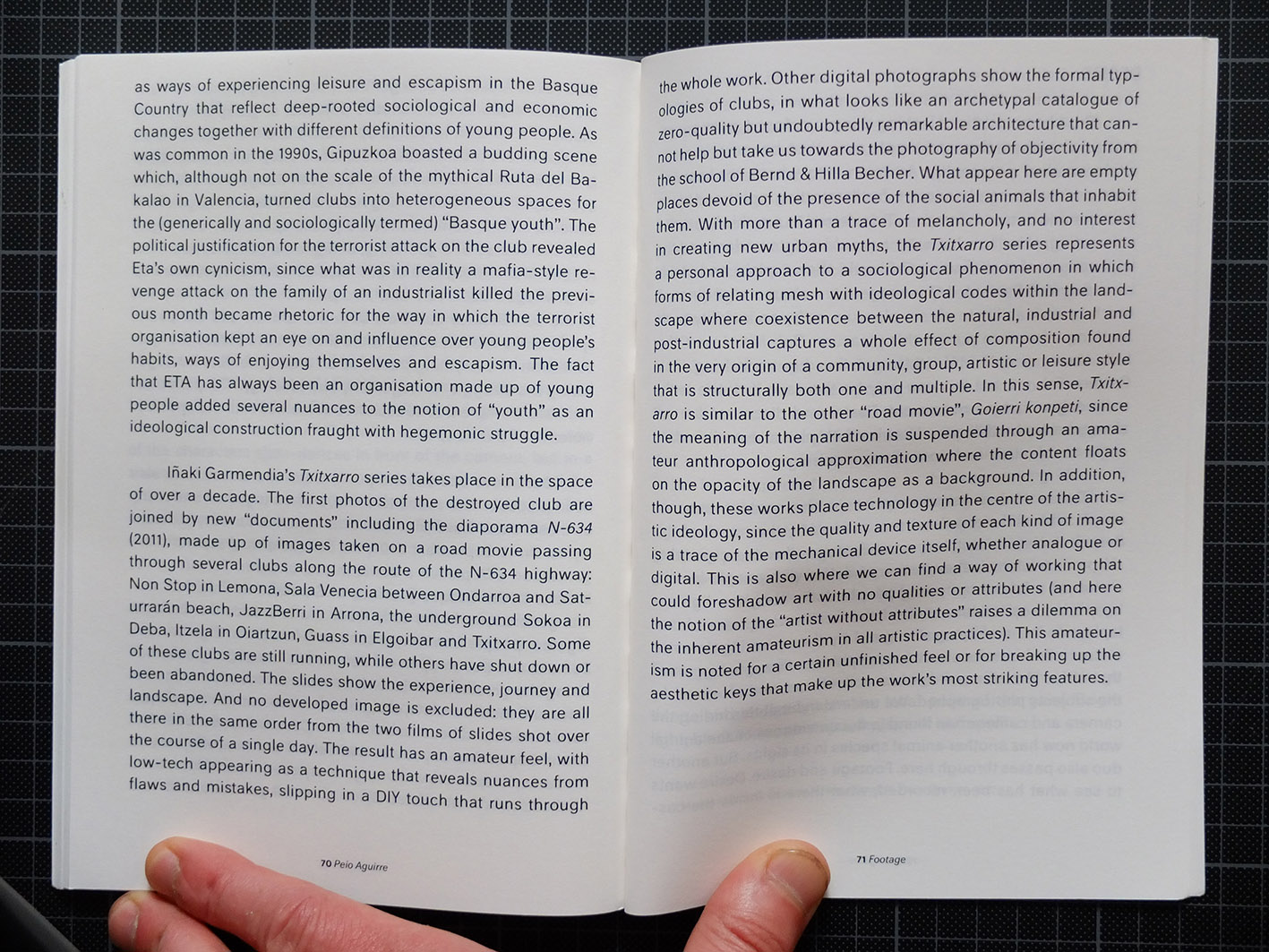
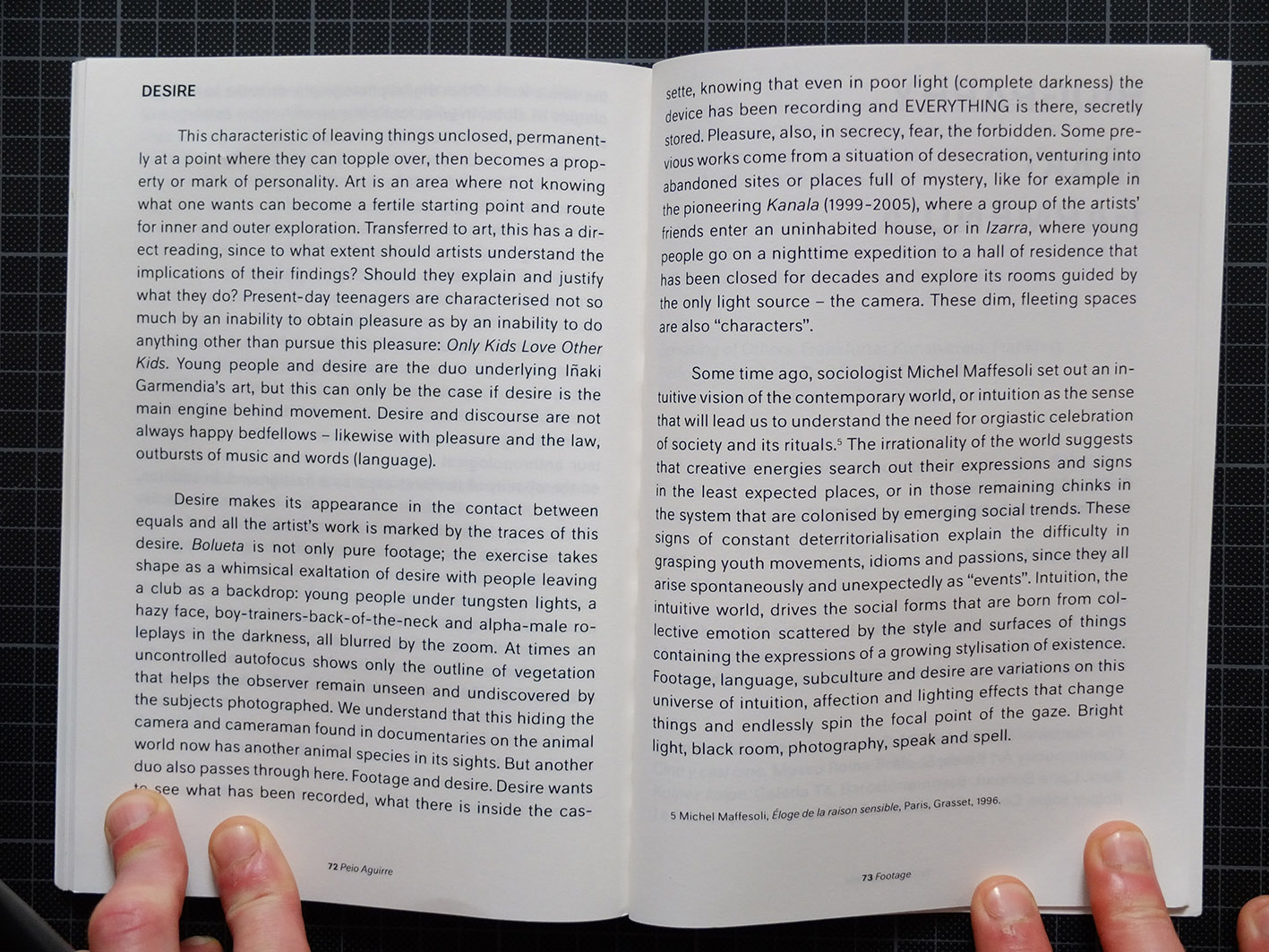
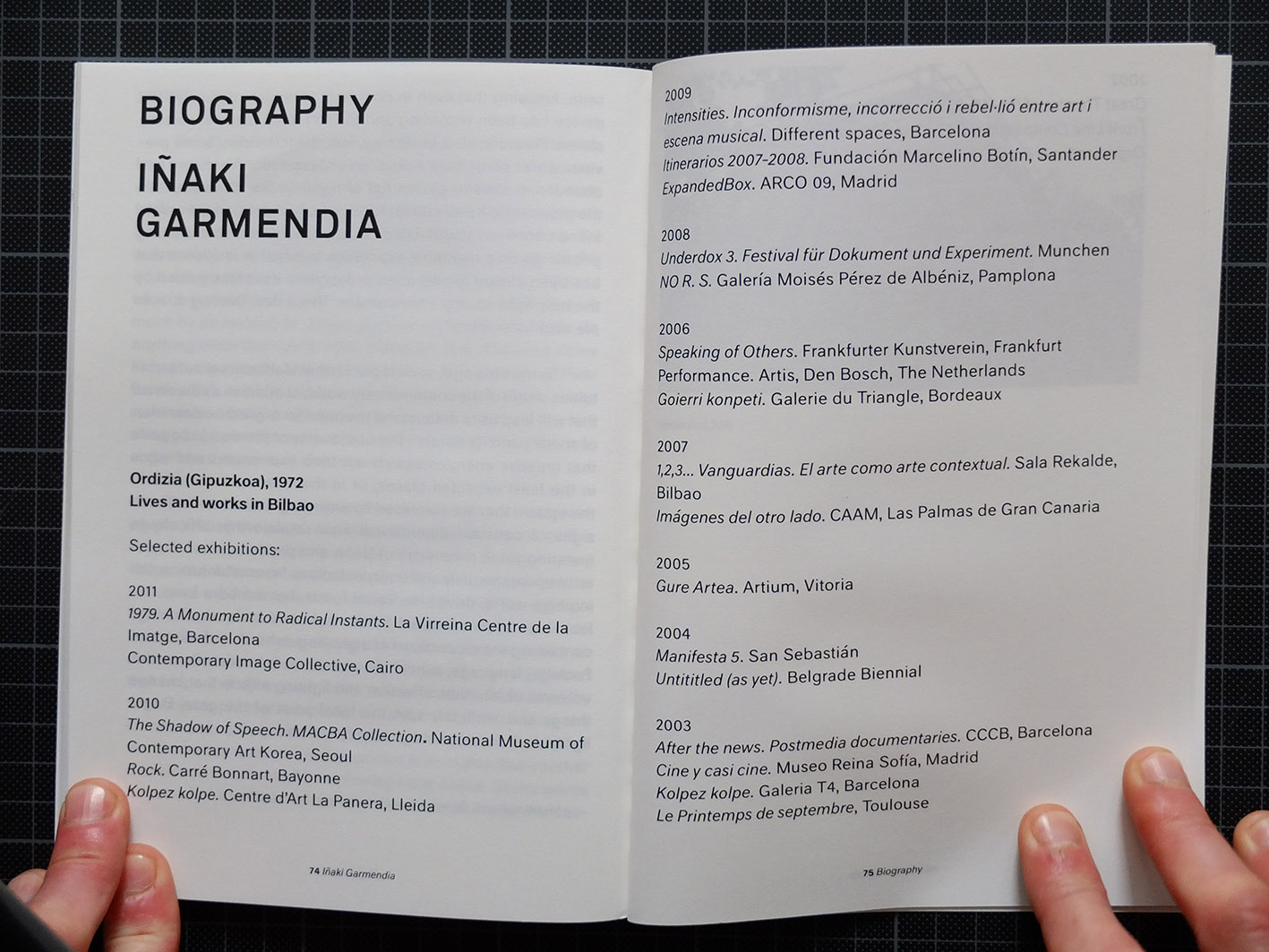
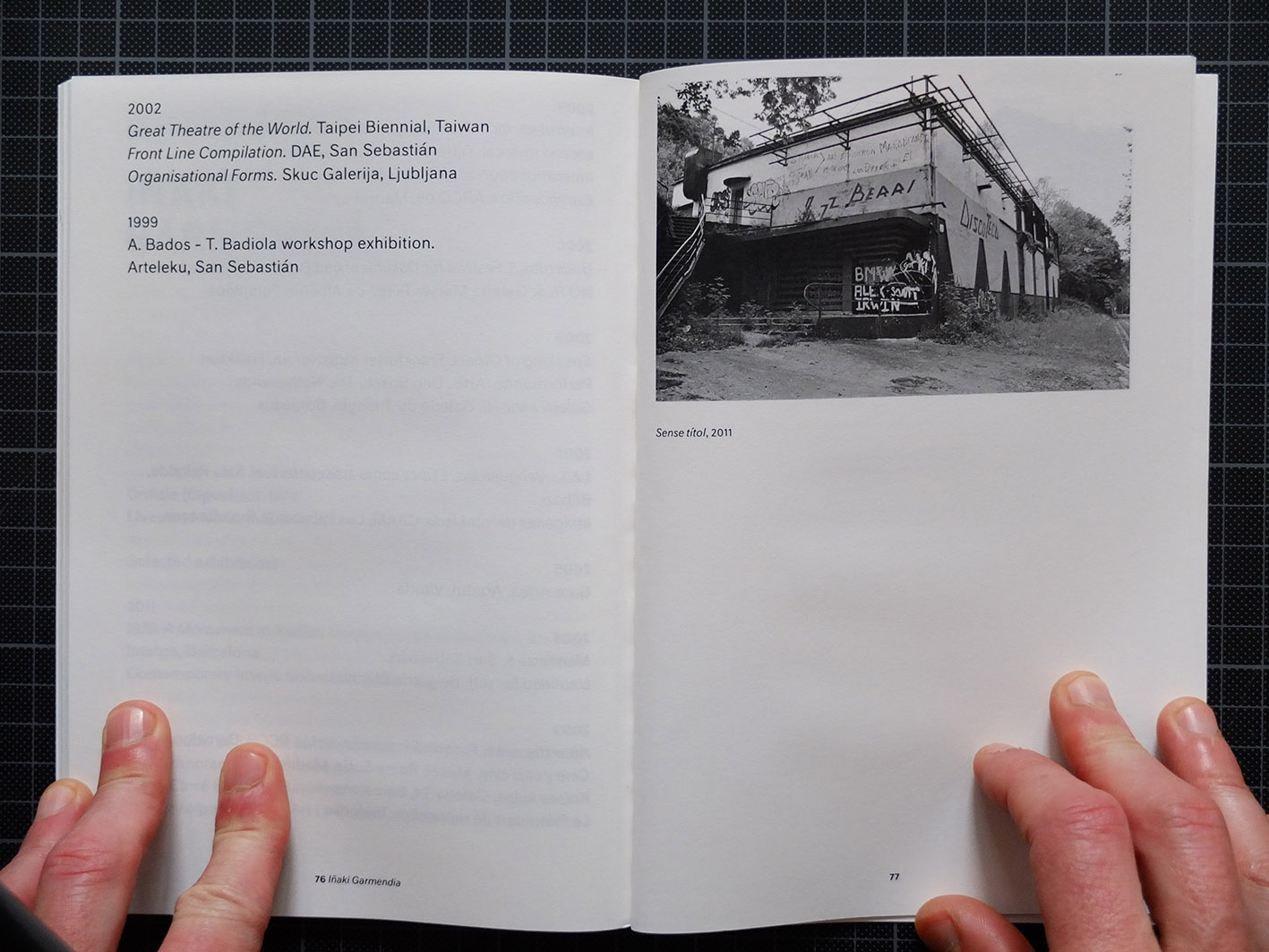
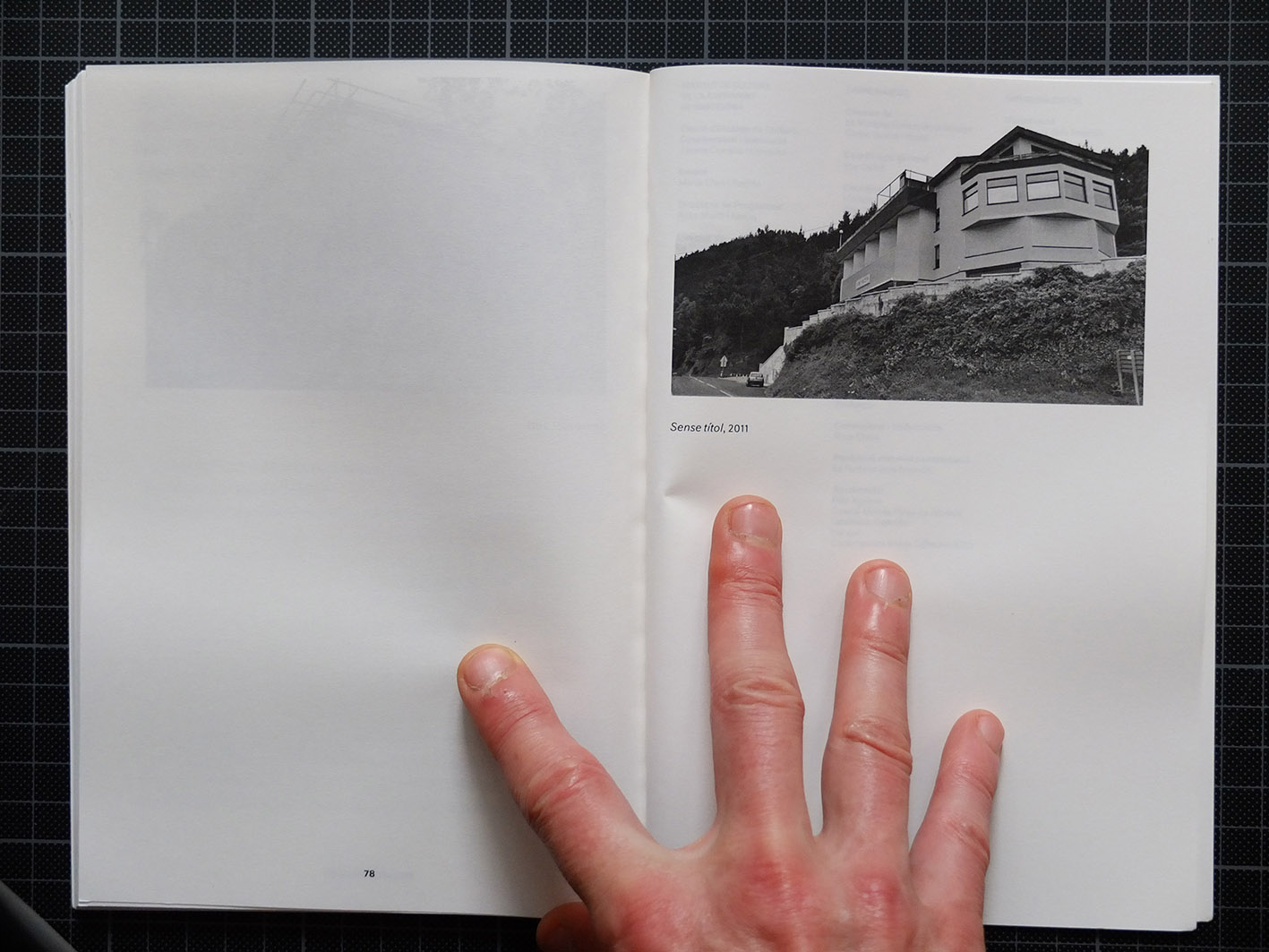
Catalogue of solo exhibition at Virreina Centre de la Imatge, Barcelona, titled Katakrak (14/07-02/10/2011) including “Metraje”, a text by Peio Aguirre, in Spanish, Catalan and English. The text basis its analysis of the artists work on videos such as S.T. (Orbea) (Orduña) (2007), Bolueta (2011), Kolpez Kolpe (2003), Harder, Faster, Better, Stronger (2004), and series such as Txitxarro (2000). With black and white images and brief artist bio.
Unpublished dialogue between Leire Vergara and Iñaki Garmendia for Garmendia. Maneros Zabala. Salaberria. Proceso y método, Guggenheim Bilbao (31/10/2013-16/02/2014). The artist answers questions on his work process, the importance of the script, interrelationships between different works, text/image correspondence, and tensions between subject and object.
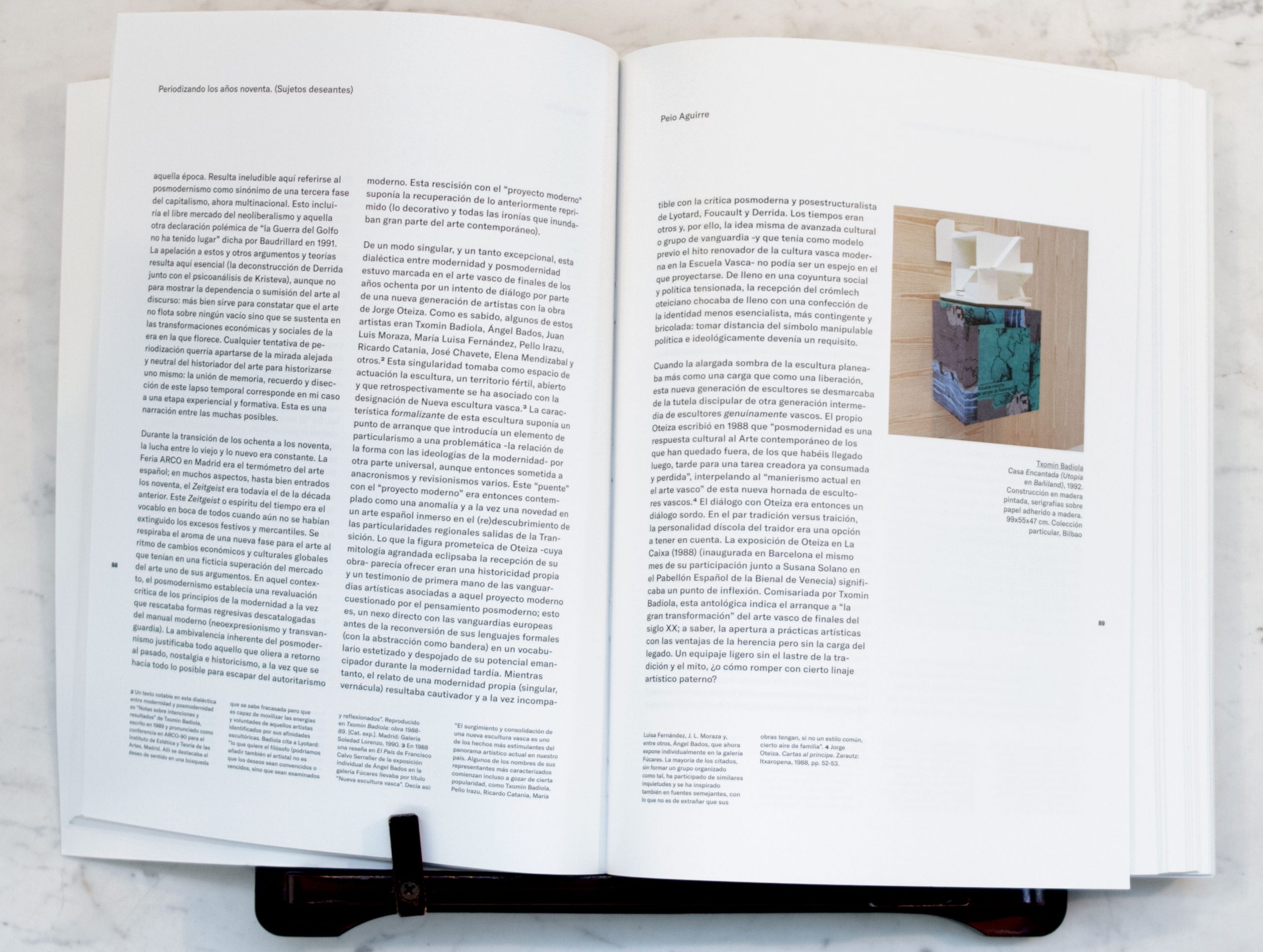
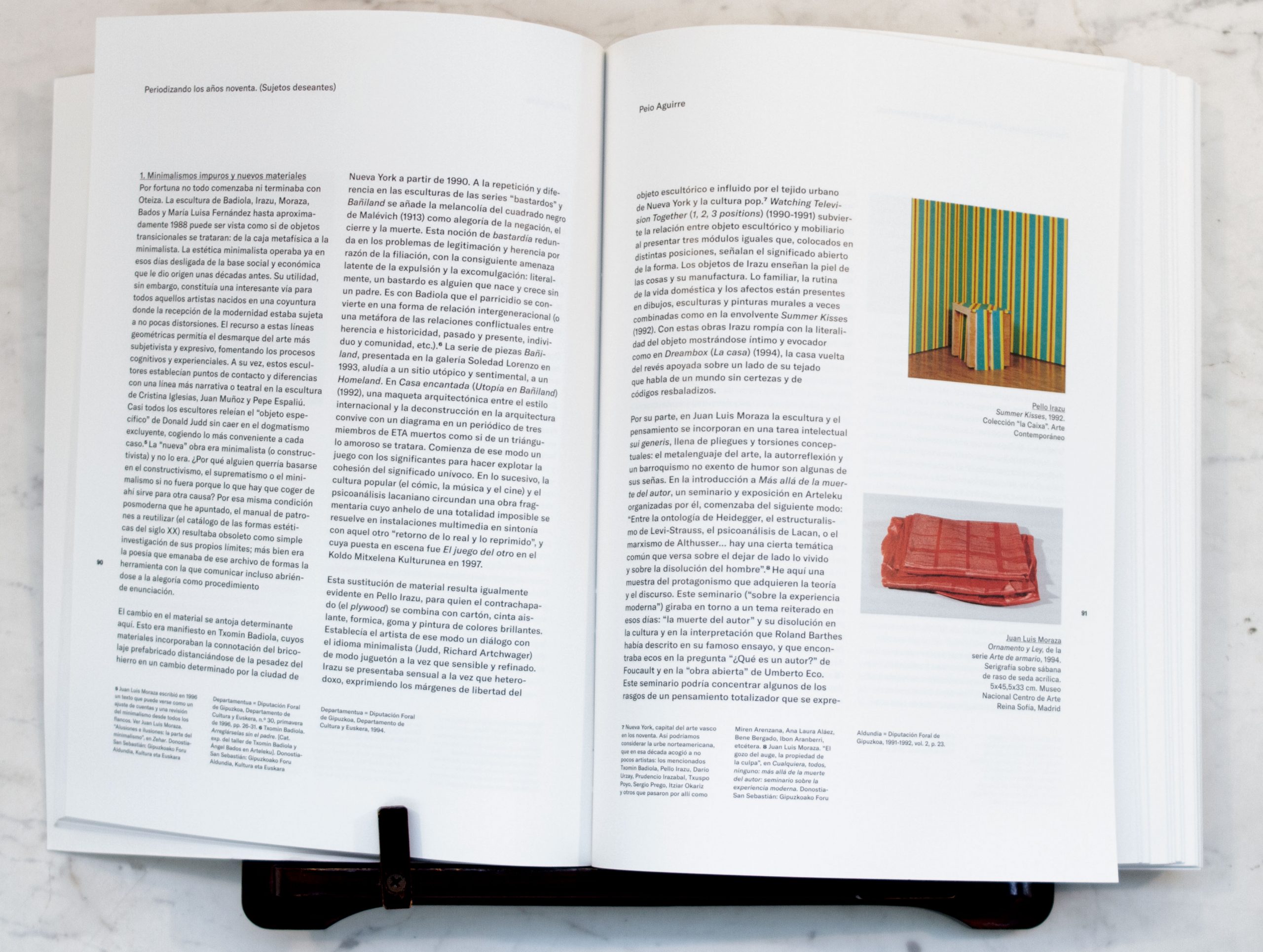
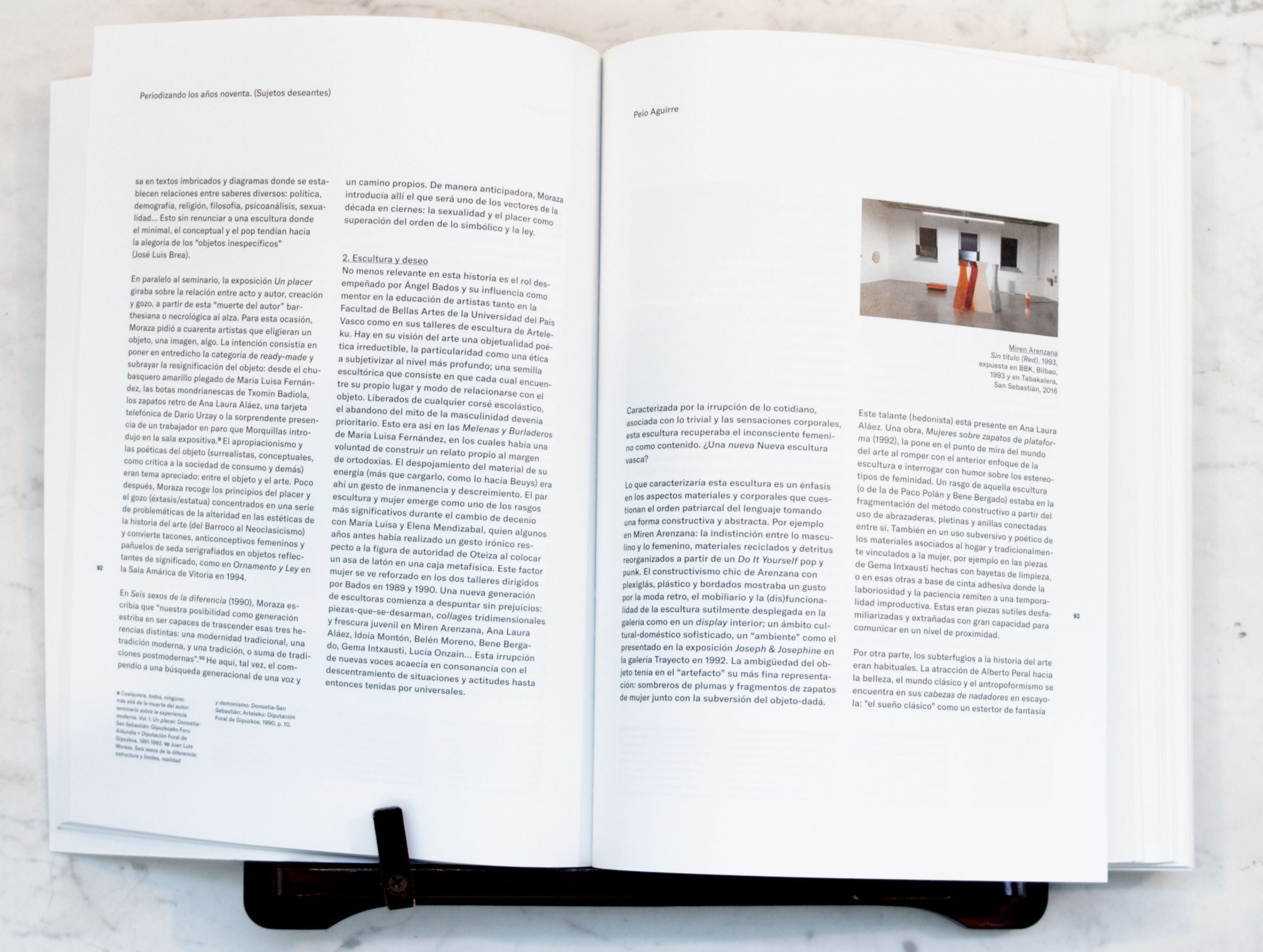
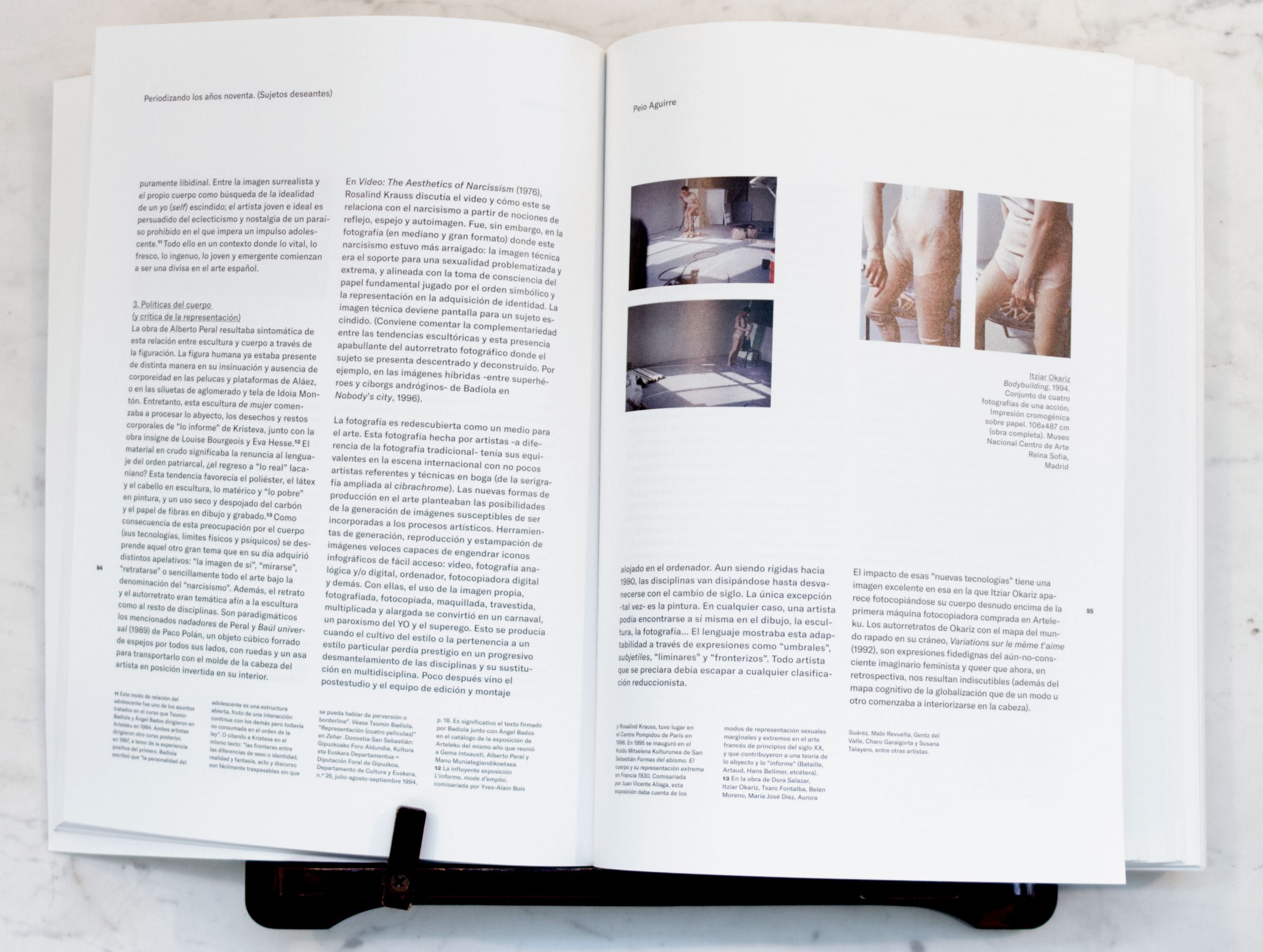
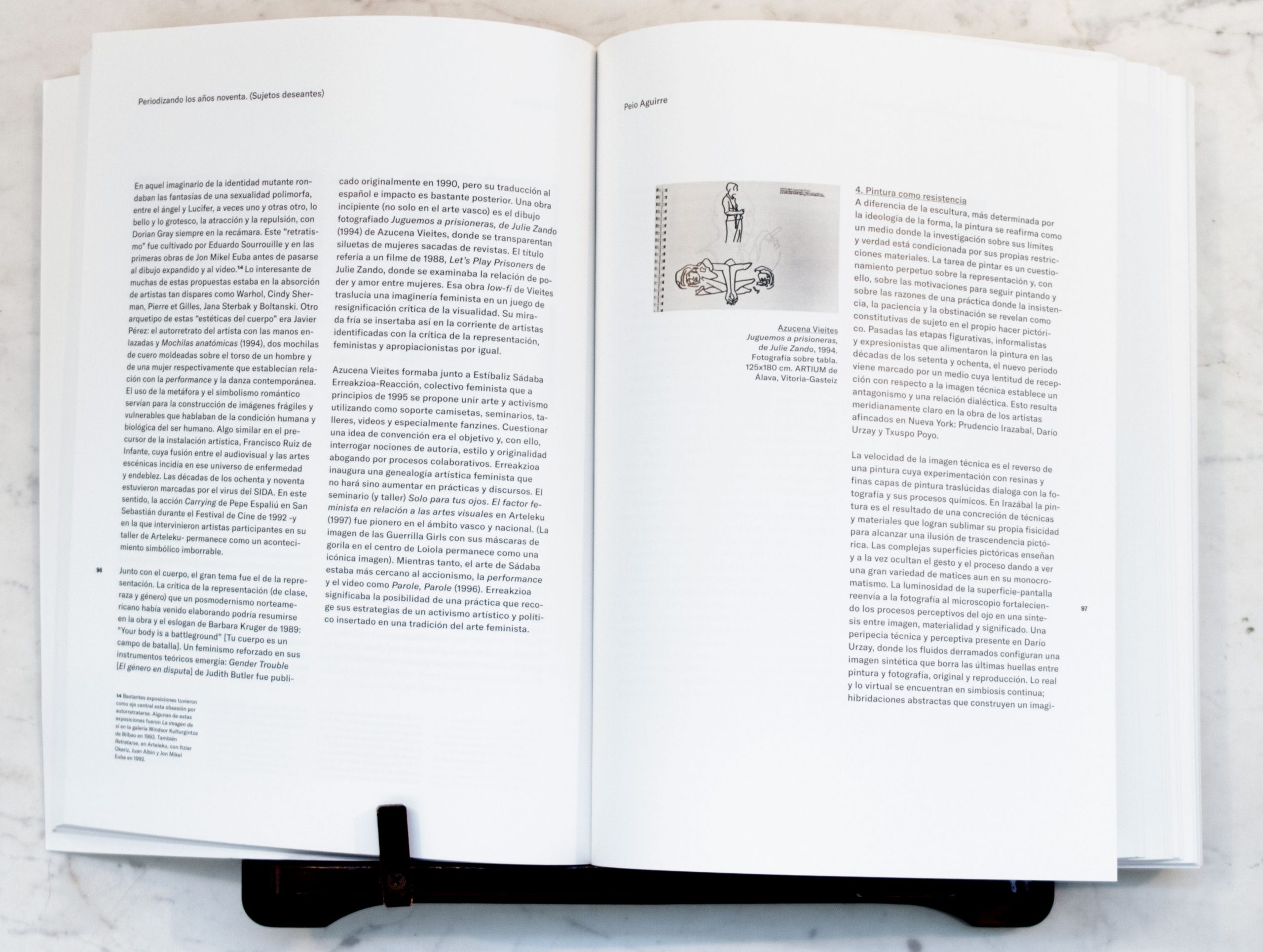
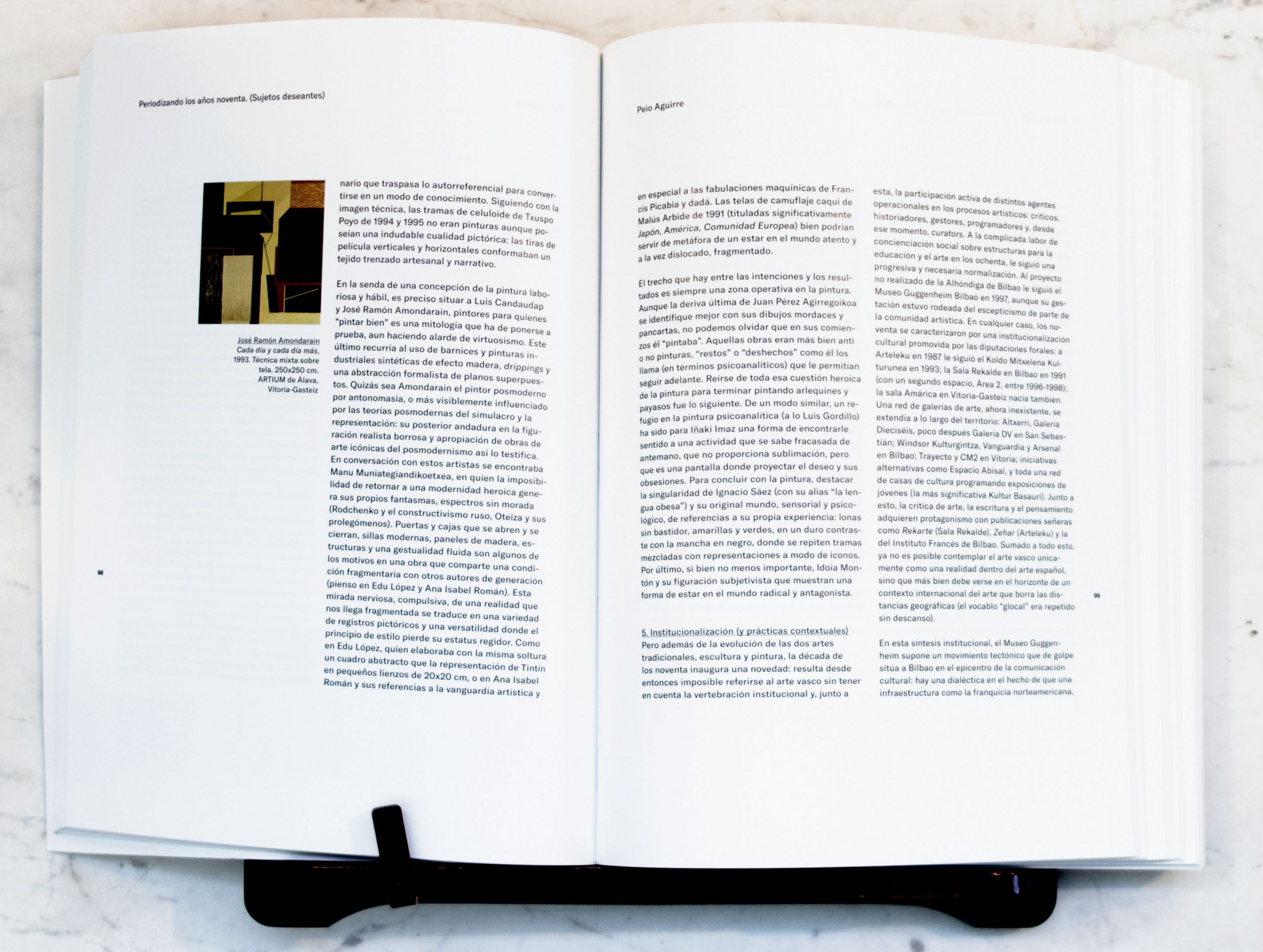
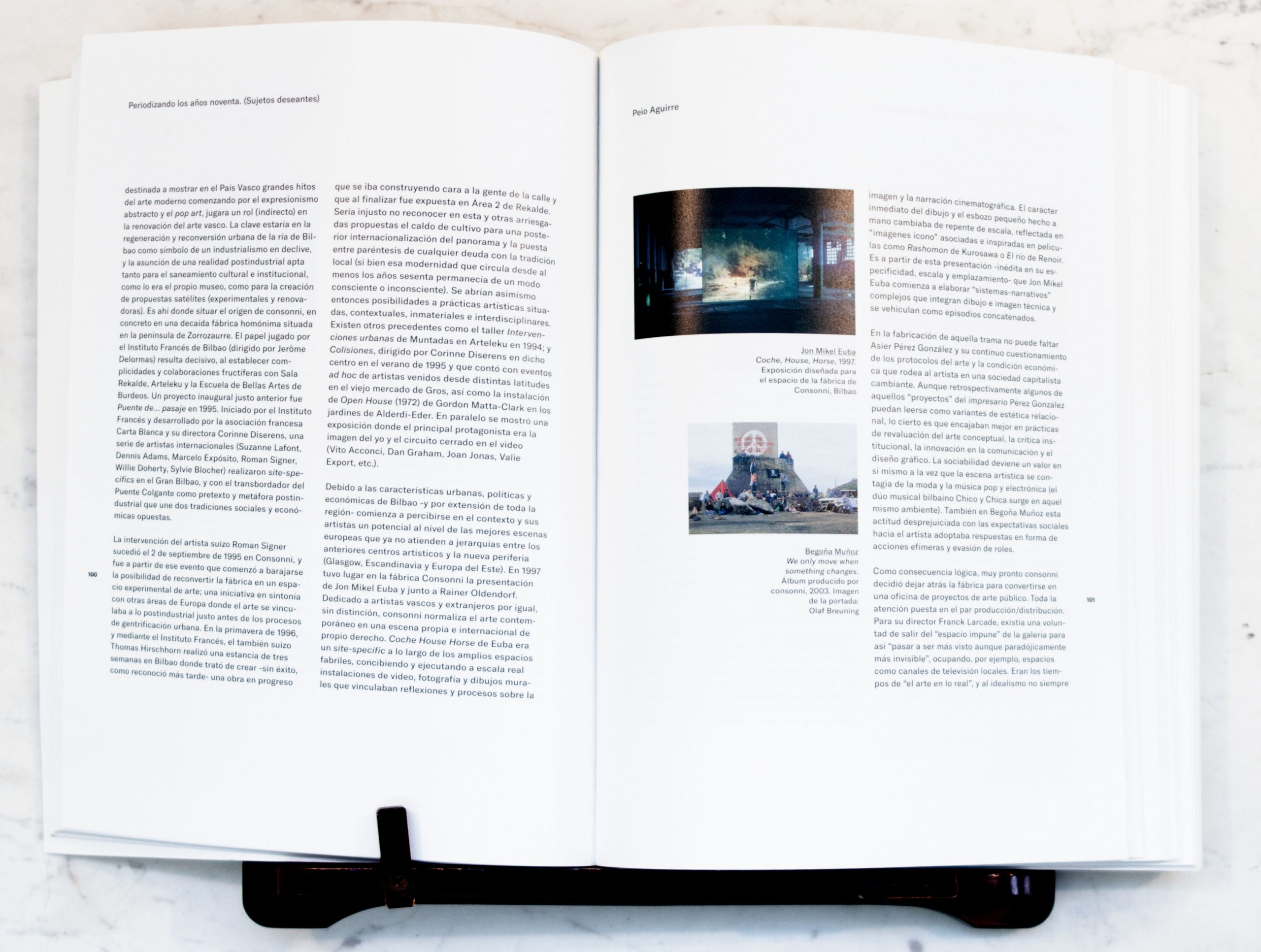
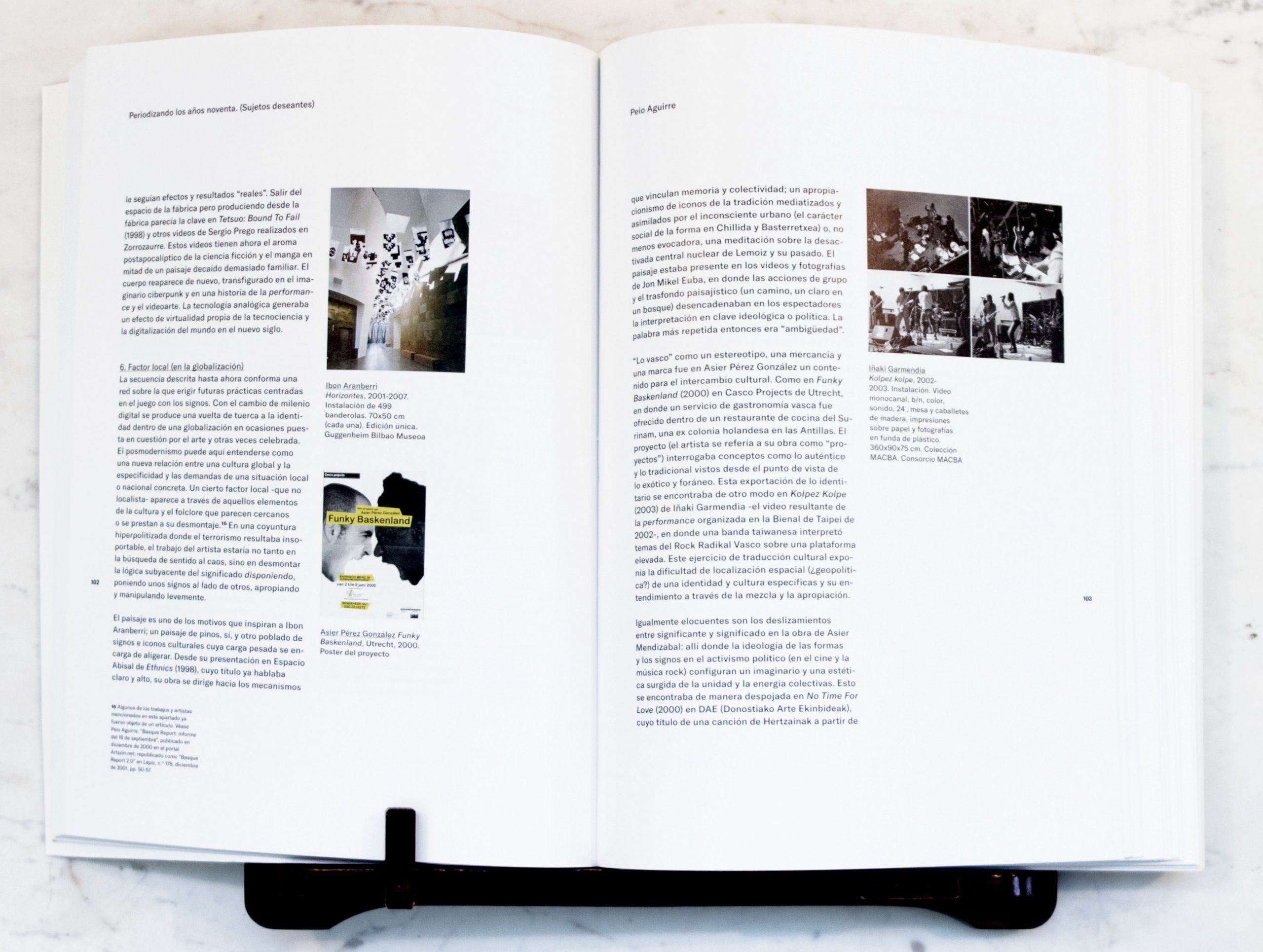
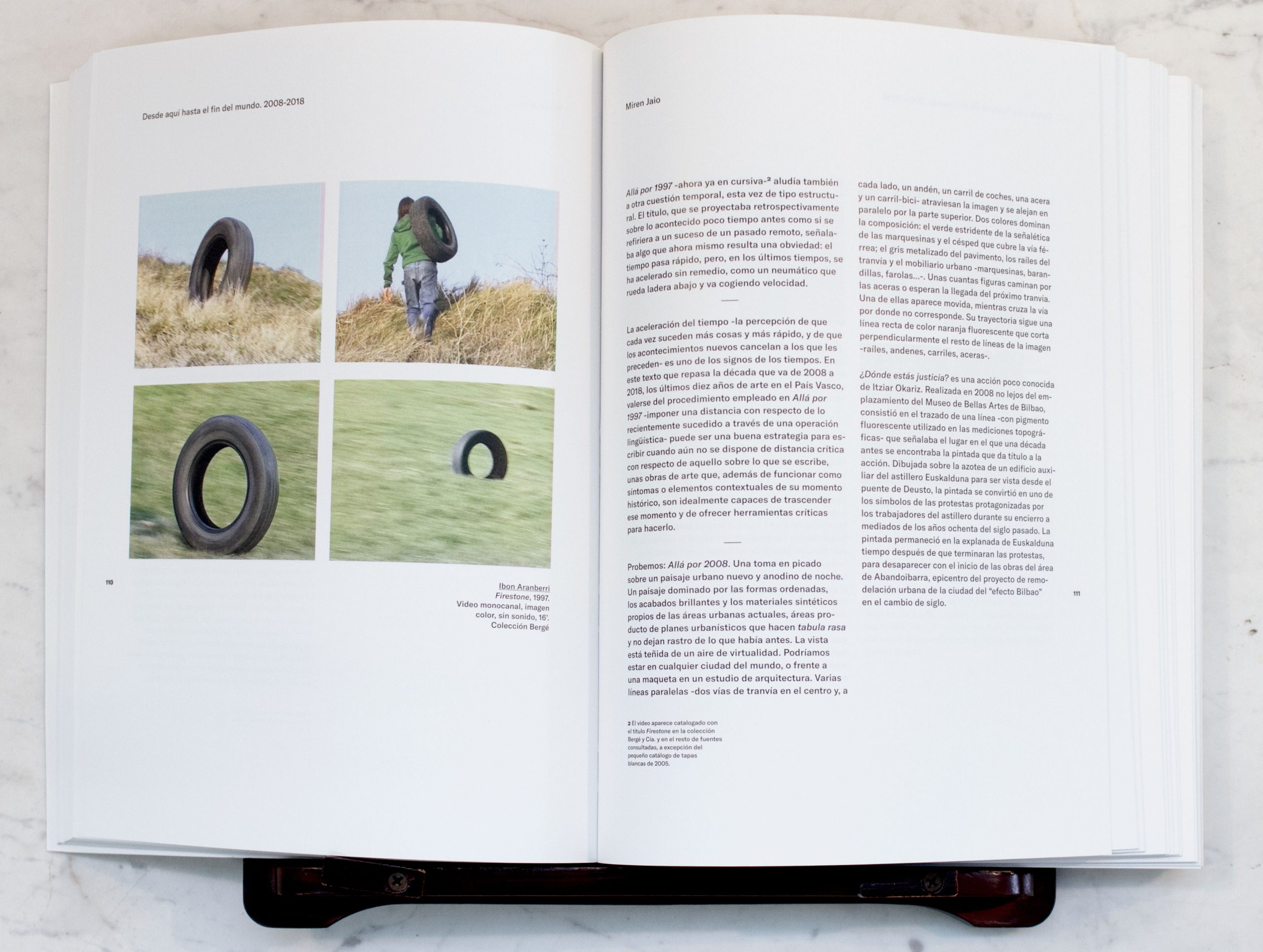
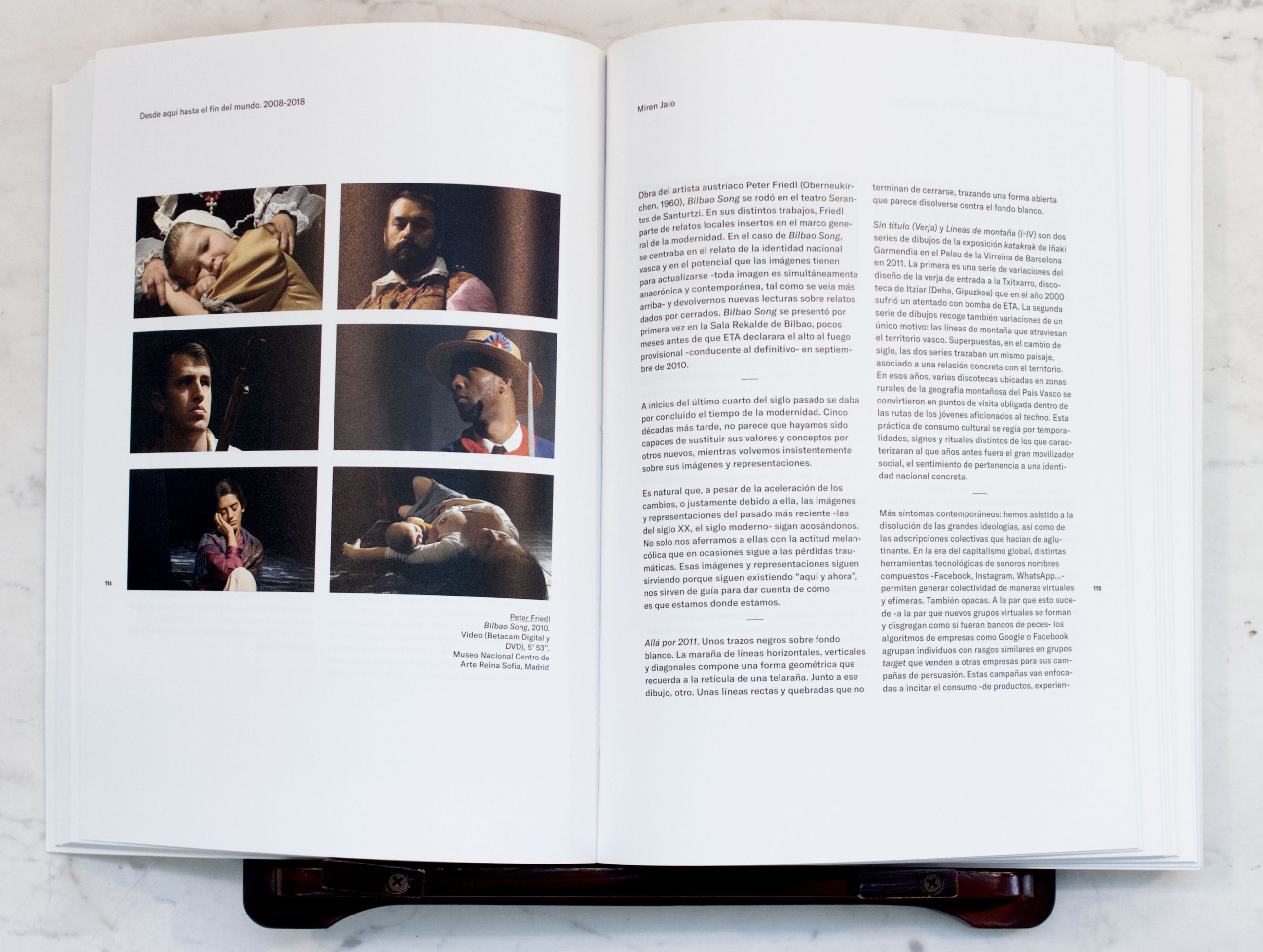
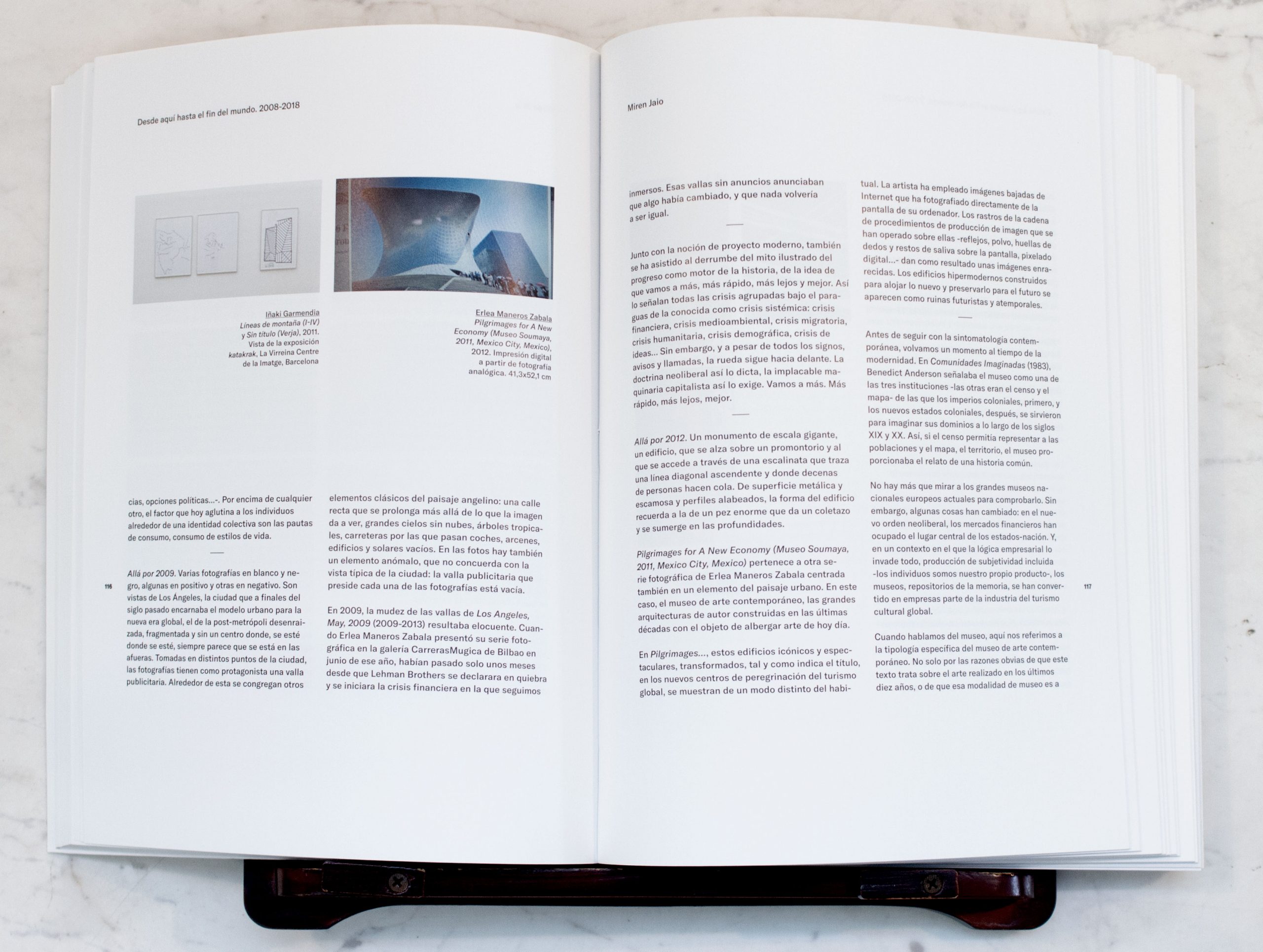
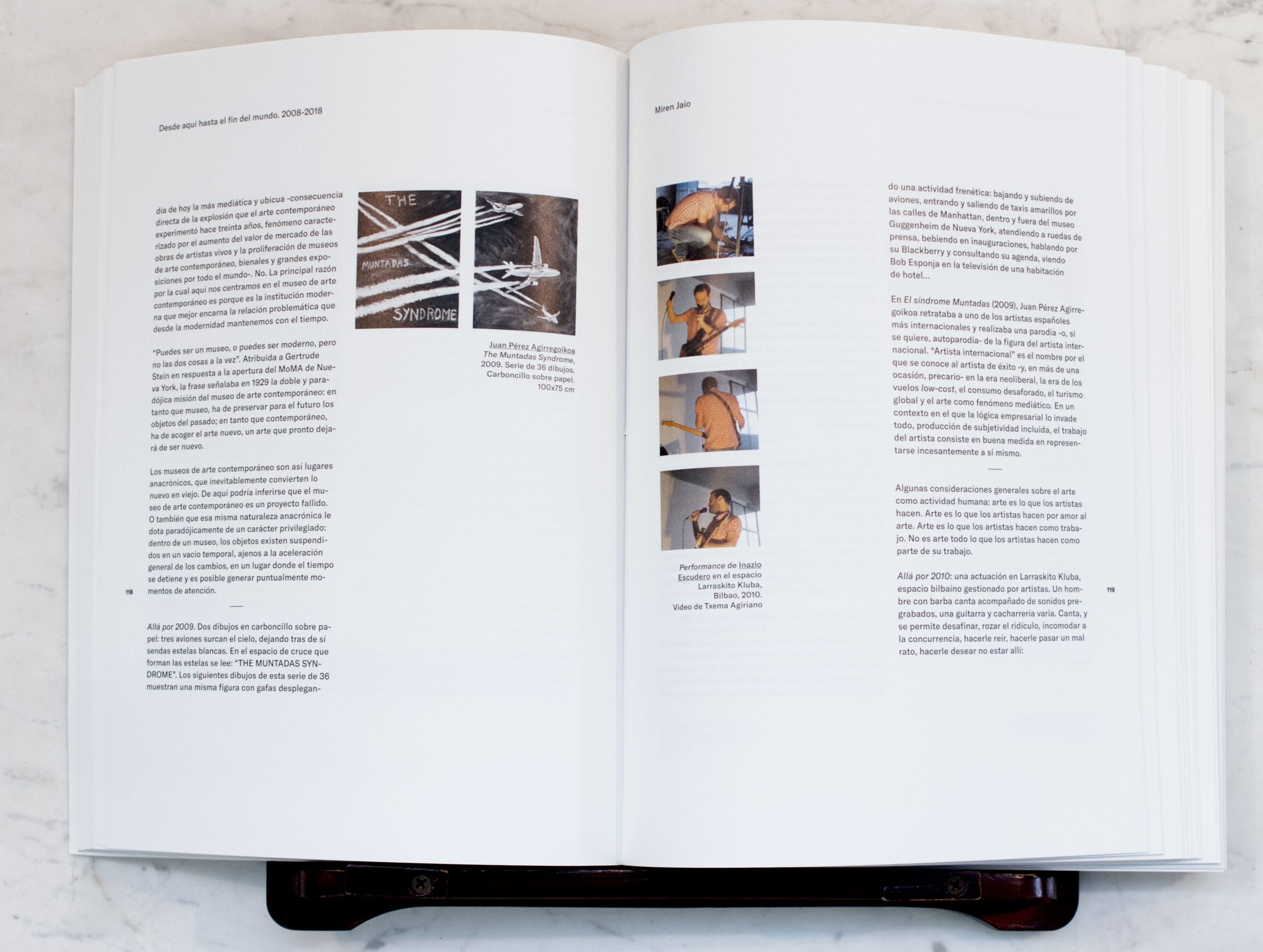
Exhibition catalogue for Después del 68, Bilbao Fine Arts Museum (7/11/2018-28/04/2019), a revision of art practices in the Basque Country over the past 50 years via a selection of approximately 150 pieces, curated Miguel Zugaza, Miriam Alzuri and Begoña González. Includes still from Garmendia’s S.T. Orbea (2007), one of the selected works [p. 231]. Kolpez kolpe (2002-2003) is cited, with image, in Peio Aguirre’s article “Periodizando los años noventa. Sujetos deseantes” [p. 103]; and Miren Jaio, in the chapter “Desde aquí hasta el fin del mundo. 2008-2018” speaks of Garmendia’s exhibition Katakrak, Palacio de la Virreina, Barcelona (2011), and includes a view of the works Líneas de montaña (I-IV) and Sin título (verja) [pp. 115-116]. The cover of the exhibition catalogue for Garmendia; Maneros Zabala; Salaberria. Proceso y método, Guggenheim Museum Bilbao (2013) is also reproduced [p. 281]. A chronology by Mikel Onandia includes references to Garmendia’s principal exhibitions and projects [pp. 400, 421, 428, 440, 443, 445, 451, 465, 469, 472, 476, 478, 479, 481, 482, 483, 487, 499, 503 y 505].
Harder, Faster, Better, Stronger
2004
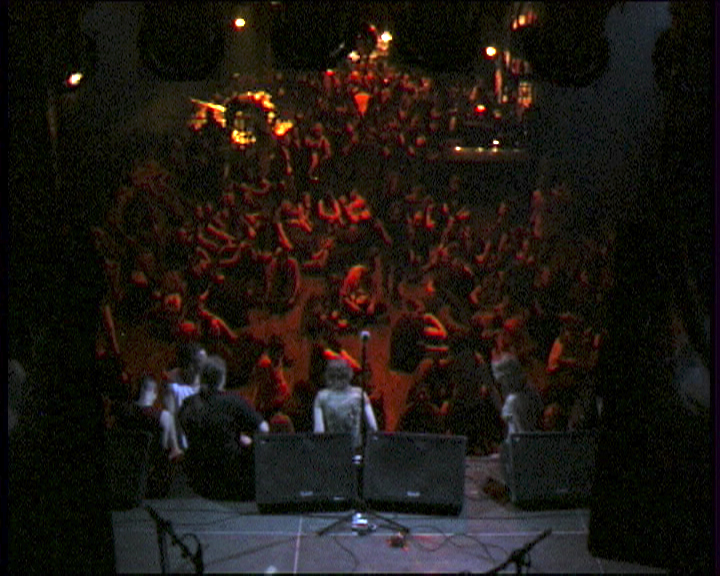
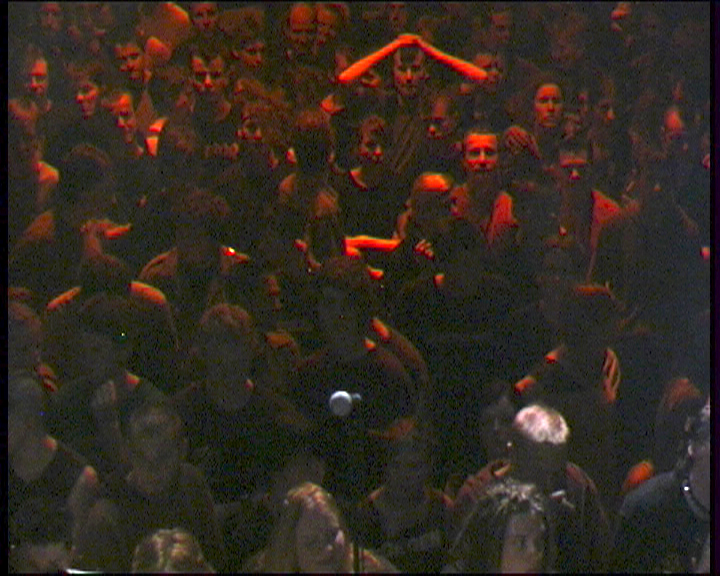
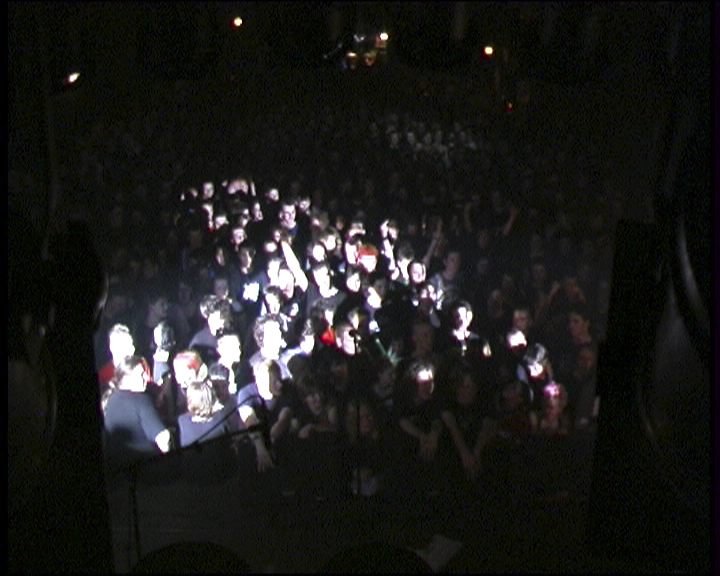
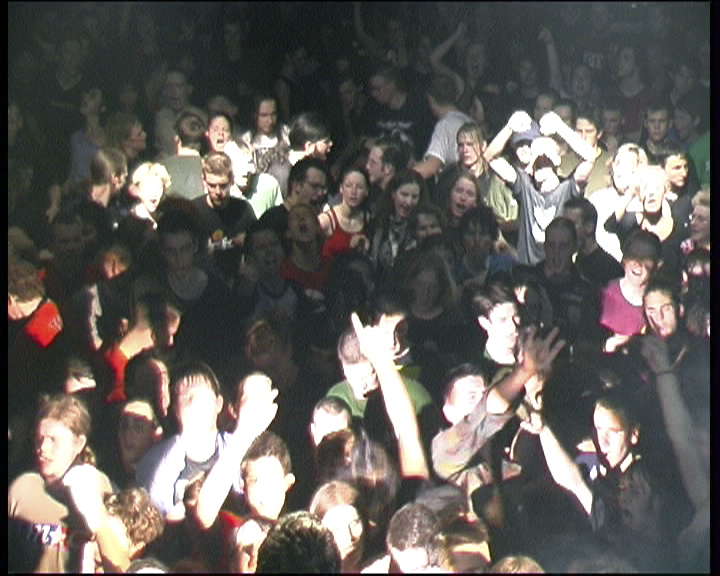
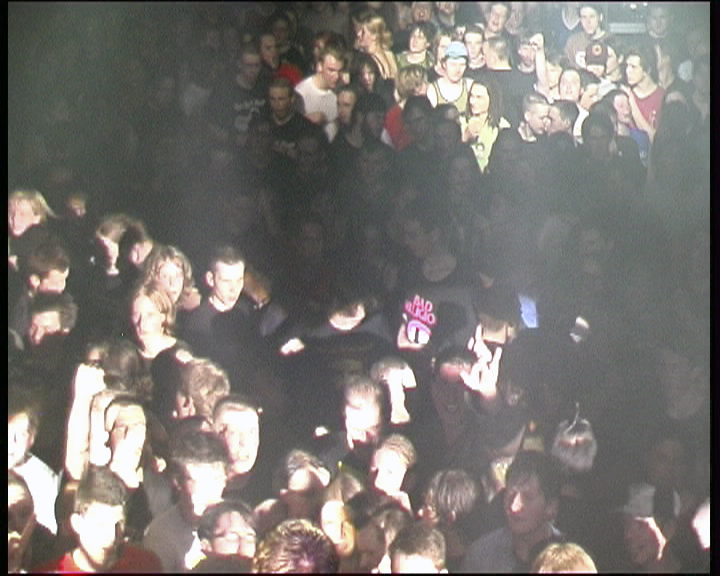
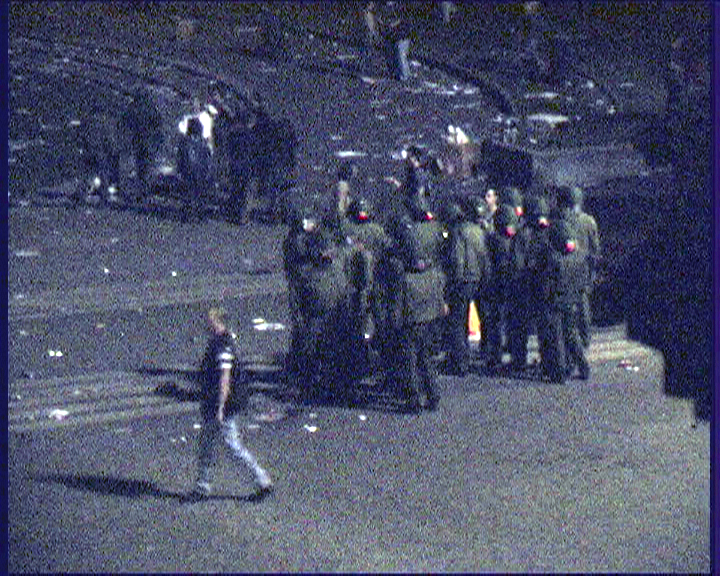
Two-channel video, with sound, colour
16’ 30’’
DV PAL (720 x 576)
Two night scenes light up a room in the old Ziriza factory in Pasaia Trintxerpe, one of the spaces hosting Manifesta 5 in Donostia-San Sebastián. They belong to the installation entitled Harder, Faster, Better, Stronger, which premiered in the context of this European biennial.
The installation joined two images together via a soft montage, in search, perhaps, of a less affirmative, more essay-like assembly of images, as noted by Harun Farocki. Mark Leckey’s Fiorucci Made Me Hardcore (1999) was being screened in the same building, on the floor above. A compilation of moving gestures, a collage of images accounting for an atomized social choreography by the collective erosion that the Thatcher era would leave behind. In the soft montage of my memory, traces and images of both works mix in a sort of visual archeology which, in those days, appeared already in decay.
The scenes composing the single-channel version of this piece were recorded in Berlin on the night of May 1st, 2004, in the clamour of the riots that had been taking the streets of the great metropolises from the end of the 90s to the beginning of the 00s. These protests were not only a way to raise awareness of the rejection of globalisation, but also a symptom of the progressive deterritorialization of power and the masses.
In one of the scenes, a mass of bodies sits and waits for the start of a concert of the punk band Terrorgruppe. The camera has been placed at the back before the concert, in centre stage and somewhat elevated. Once the concert begins, the camera is right at the front, also centred. One of the microphones, installed before the appearance of the band, indicates the central position of the takes. The room fills up, the camera remains static, capturing the lights bathing the gathering of bodies. In the other scene, we can see a field at night, with the remains of plastic cups and other rubbish, as well as police officers and a few arrests, small groups of people leaving. As the footage continues, we see the dancing mass, mostly male, as if it were its inherent form, a complete entity, moving in perfect sync, especially when the sound and the image match. When the sound is off, the distance increases and the illusion of this uncracked reality disappears. The raw image makes us more aware of the device structuring the scene. In parallel, the field keeps emptying out as the night draws on and police presence grows.
In the context of this night-time filming, a collection of images came up, which were taken as random portraits prior to the show. The camera infiltrated the crowd in order to access a more fragmented gaze. The resulting close-ups break from the notion of mass to pause at the style details on which this generation constructs its identity. These images were used in the cover of the book Only Kids Love Other Kids and the poster Orain bihotzak inoiz baino gehiago daude sutan for the exhibition Beste Bat! (a retrospective account of the Basque Radical Rock Movement) (2004) curated by Miren Jaio and Fito Rodríguez at Sala Rekalde (Bilbao).
Related bibliography
Catalogue of Iñaki Garmendia’s work published on the occasion of the Basque Government MMIV Gure Artea Awards. Including video stills from Izarra (2005); Red Light/Straight Edge (2005); Goierri Konpeti (2001); Harder, Better, Faster, Stronger (2004); Kolpez Kolpe (2003-2004); Repeater / Taja y sus amigos (2001); Kanala (1999-2005); Consequence Of You. Videos Cure / Psychic TV (1999); and Carles Guerra’s text ‘Traducciones Radicales’ on the artist’s work, in Spanish, Basque and English [p. 35-46].
Catalogue of solo exhibition at Virreina Centre de la Imatge, Barcelona, titled Katakrak (14/07-02/10/2011) including “Metraje”, a text by Peio Aguirre, in Spanish, Catalan and English. The text basis its analysis of the artists work on videos such as S.T. (Orbea) (Orduña) (2007), Bolueta (2011), Kolpez Kolpe (2003), Harder, Faster, Better, Stronger (2004), and series such as Txitxarro (2000). With black and white images and brief artist bio.
Izarra
2005
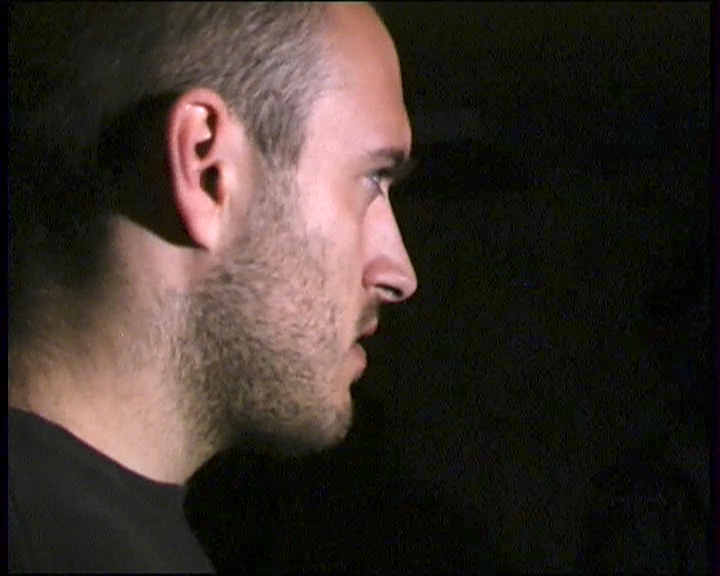
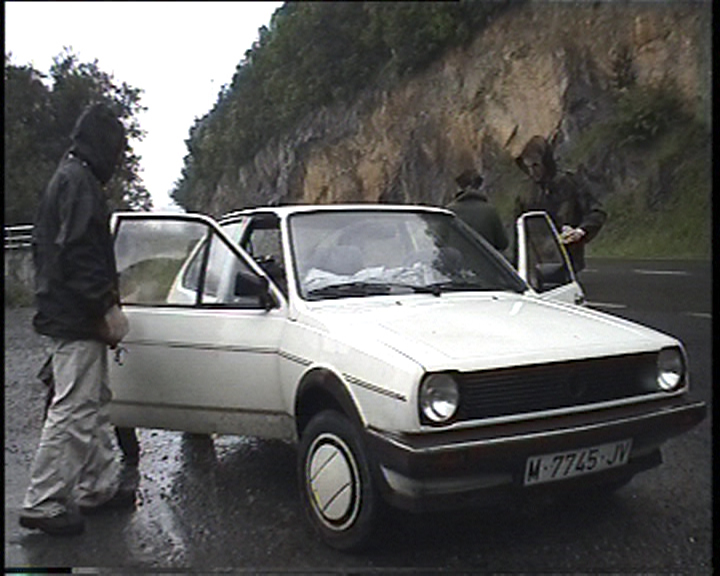
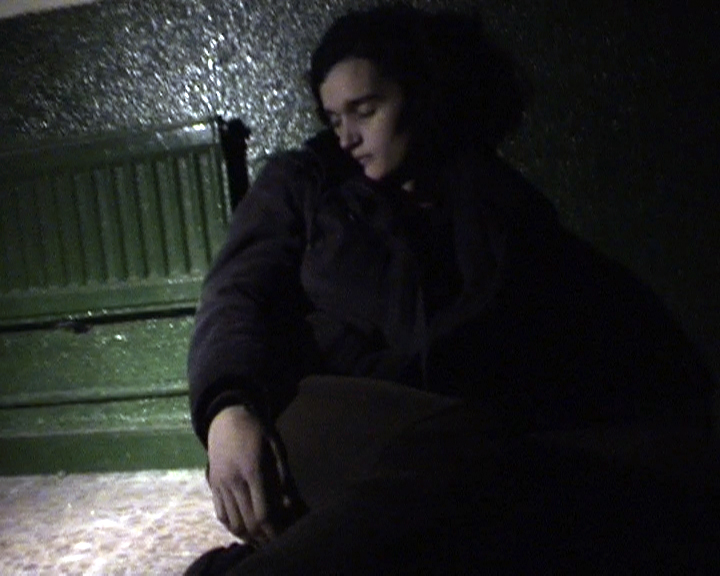
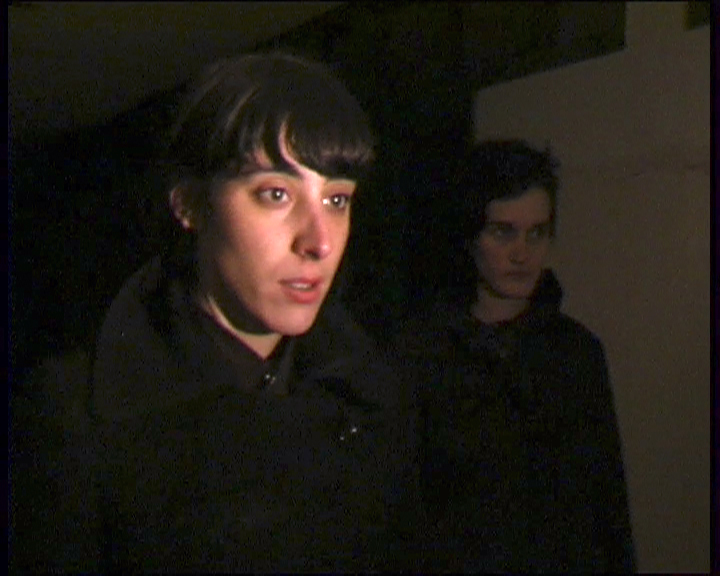
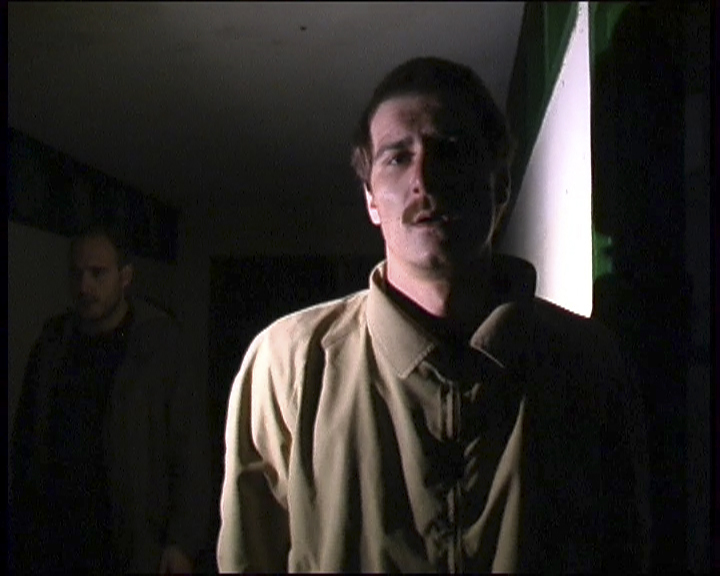
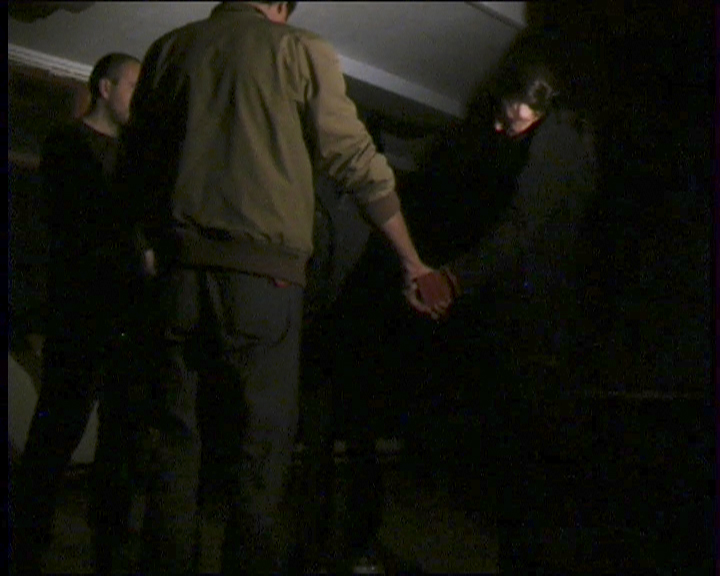
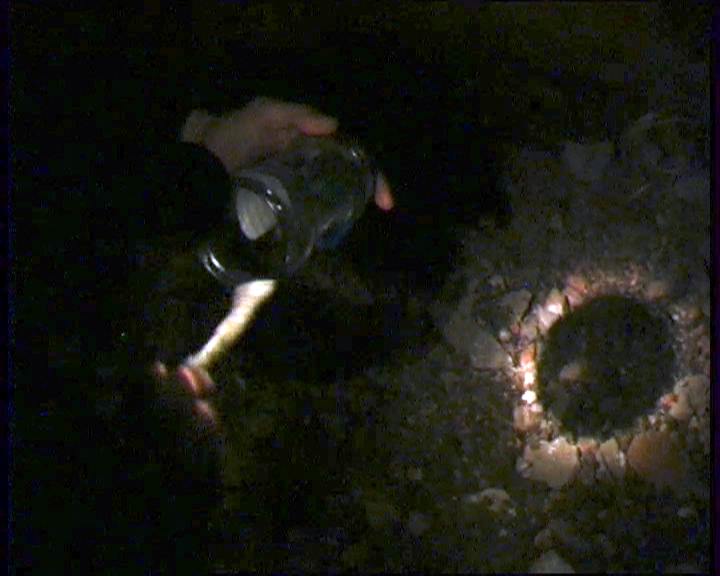
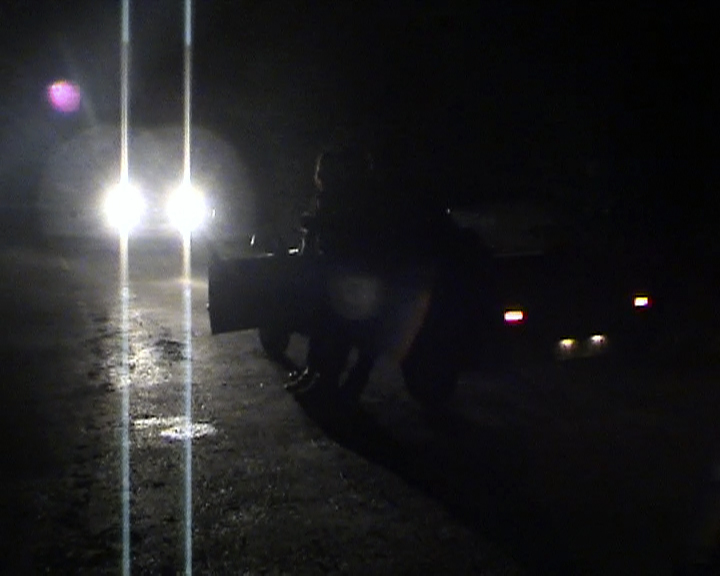
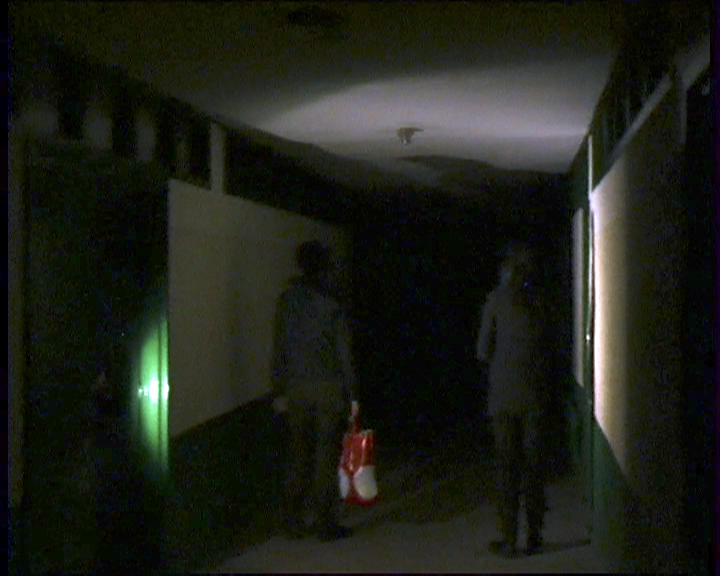
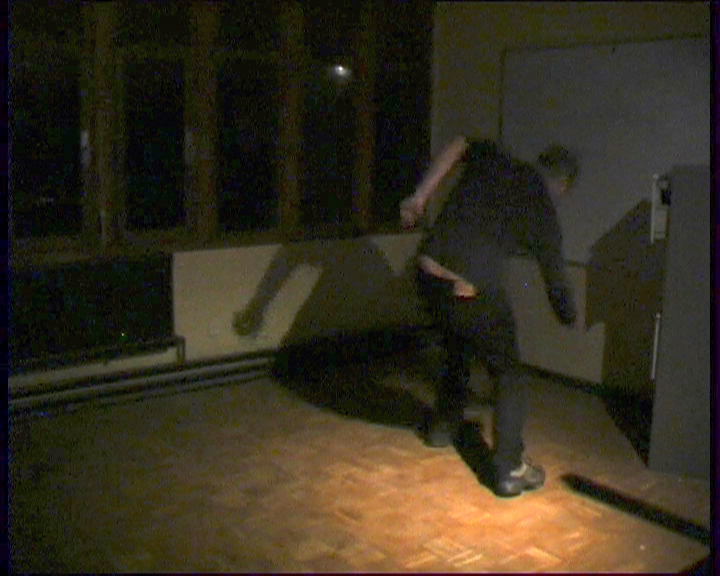
Single-channel video, with sound, colour
18’ 53’’
DV PAL (720 x 576)
A group video. On this occasion, the instructions are directed at the camera. The spotlight’s white brightness intensifies the shadows on bodies that remain almost static against the darkness of the violated space. The building, an old school for the elite, is abandoned. The opacity and inaction create a strange sensation of otherworldly sluggishness. Once again, the video features Nadia alongside some other people. Some images return from previous works; others burst in from someone else’s footage. An intersecting grammar of self-referential and external elements indicates the way in which culture modifies the life of groups. A scene taken from Adam Small and Peter Stuart’s documentary Another State of Mind (1984) is synthetically reinterpreted. Repetition and difference. A body reproduces the gestural codes of slam dance, a collective form derived from the hardcore scene, as a kind of ephemeral rewriting on the floor of one of the classrooms. The image suggests the link between subculture and class culture, while also evidencing a structure of meaning of its own.
Izarra premiered alongside Red Light/Straight Edge in the individual presentation of the Gure Artea Prize as part of the exhibition Iñaki Garmendia, Ibon Aranberri, Azucena Vieites, Artium, Vitoria-Gasteiz (2004).
Related bibliography
Catalogue of Iñaki Garmendia’s work published on the occasion of the Basque Government MMIV Gure Artea Awards. Including video stills from Izarra (2005); Red Light/Straight Edge (2005); Goierri Konpeti (2001); Harder, Better, Faster, Stronger (2004); Kolpez Kolpe (2003-2004); Repeater / Taja y sus amigos (2001); Kanala (1999-2005); Consequence Of You. Videos Cure / Psychic TV (1999); and Carles Guerra’s text ‘Traducciones Radicales’ on the artist’s work, in Spanish, Basque and English [p. 35-46].
Red Light/Straight Edge
2006
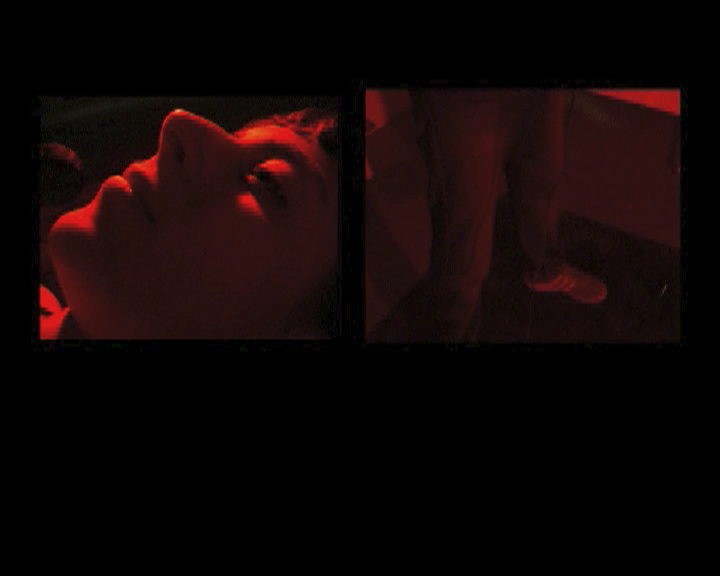
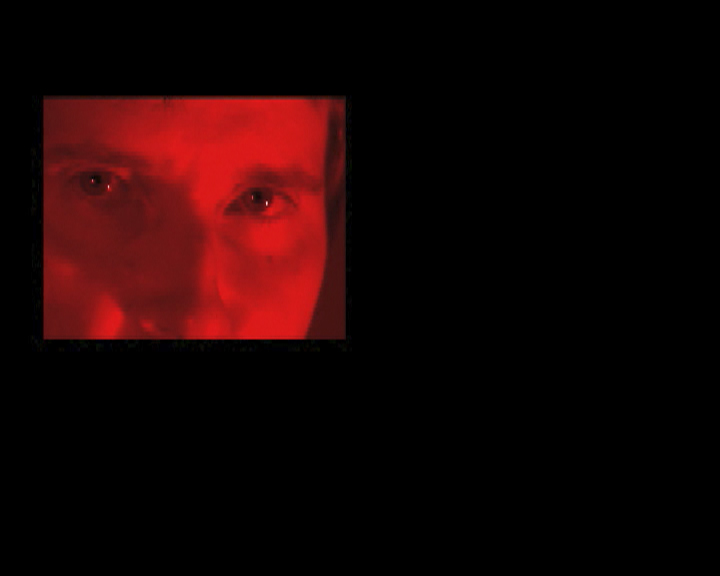
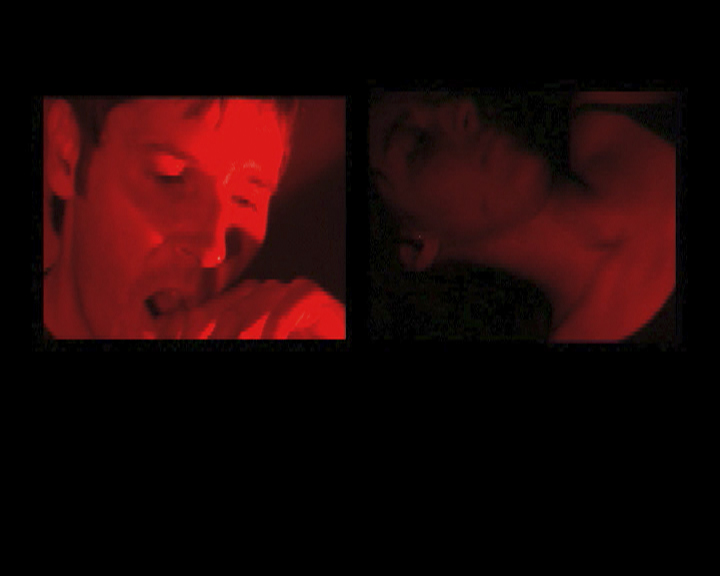
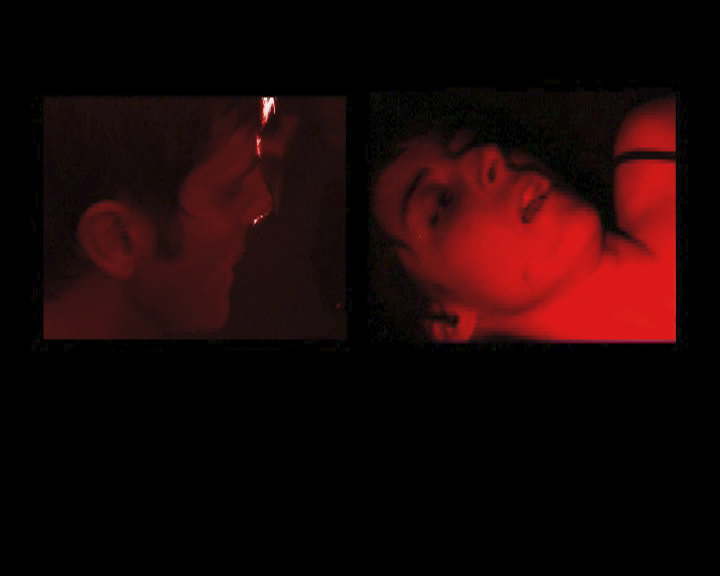
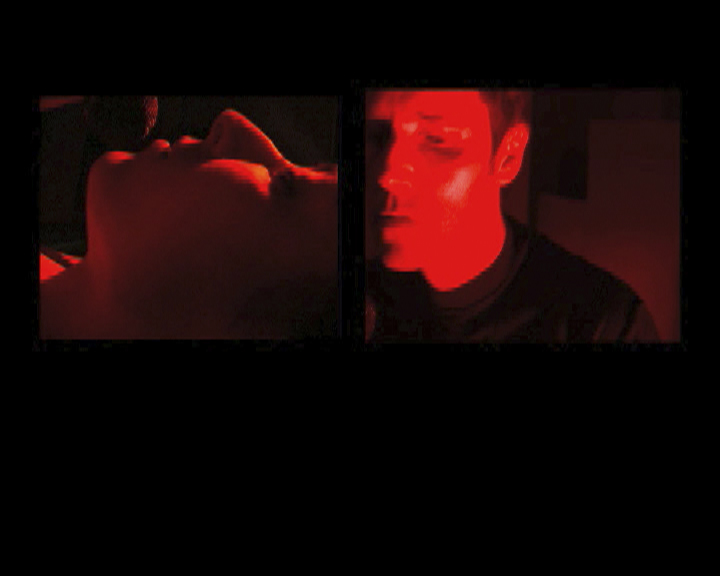
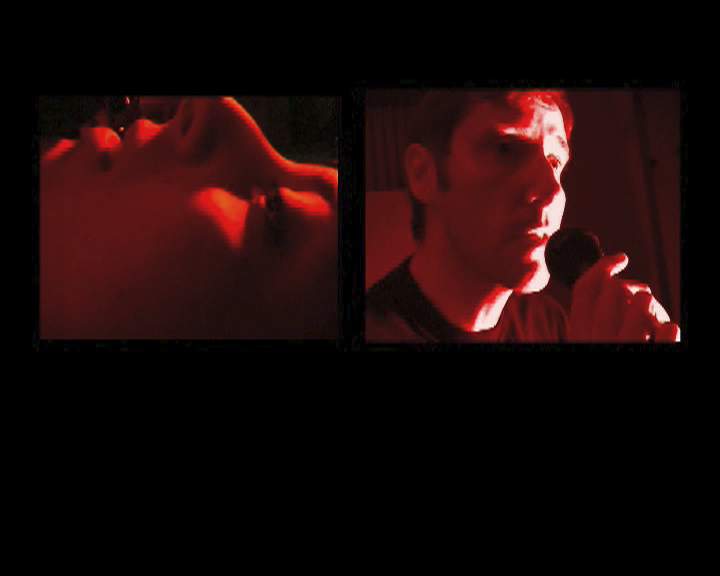
Two-channel video, with sound, colour
6’ 29’’
DV PAL (720 x 576)
Two studio scenes, confronted once again in a two-channel projection. Two professional lead vocalists (Nadia and Josetxo) attempt to memorise two songs: Red Light by Siouxsie and The Banshees and Straight Edge by Minor Threat. The atmosphere is bathed in red light. The camera, too close to the performers, takes their acting to its limit as it breaks apart the conventional visual grammar of music videos. In this case, the shot-reverse shot has been replaced by a soft montage of two sequences filmed separately. An unexpected way of joining fragments á la Bresson, also a strategy á la Godard; that is, allowing the presence of the non different within the different.
Here, too, sound and image are not always in sync, undoing the submission of images to text within the cinematic narrative. The literalness of the red colour on the bodies is intensified, whilst the rhythmic sound of the photographic camera shutter, together with the electric whipping of the flashing light in the original Siouxsie and The Banshees music video, has been replaced by a silence that strips down this operation of visual transcription. The camera becomes a brazen voyeur on Nadia’s body. Josetxo offers us the text devoid of Barthes’s pleasure, resistance and ritual, as forms of confronting the hierarchical existence of culture.
Related bibliography
Catalogue of Iñaki Garmendia’s work published on the occasion of the Basque Government MMIV Gure Artea Awards. Including video stills from Izarra (2005); Red Light/Straight Edge (2005); Goierri Konpeti (2001); Harder, Better, Faster, Stronger (2004); Kolpez Kolpe (2003-2004); Repeater / Taja y sus amigos (2001); Kanala (1999-2005); Consequence Of You. Videos Cure / Psychic TV (1999); and Carles Guerra’s text ‘Traducciones Radicales’ on the artist’s work, in Spanish, Basque and English [p. 35-46].
S/T Orbea (Orduña)
2007
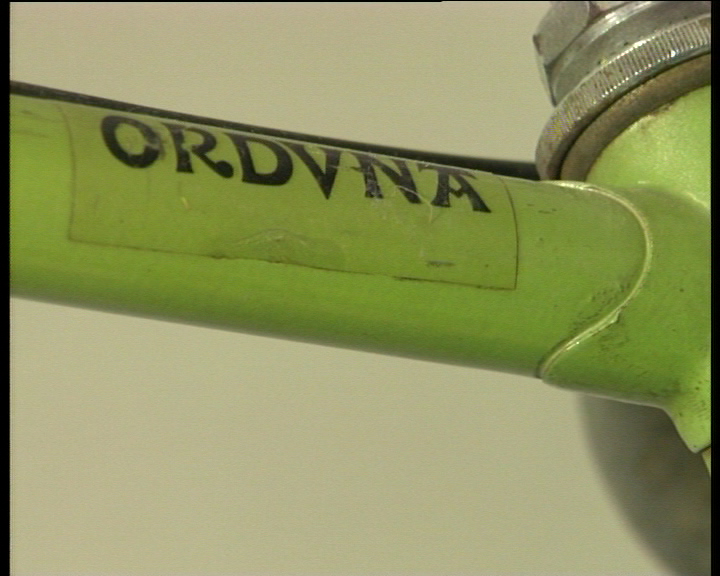
Single-channel video, with sound, colour
DV PAL (720 x 576)
40’ 58’’
A 40-minute lab video devoted to recording a manufactured object: an Orduña model racing bicycle, produced by the Basque company Orbea during the 70s and 80s. This work explores the specificity of the object by applying a structural, let’s call it materialistic, type of approach. The process avoids a narrative, focusing instead on using the technical features of the camera, which transforms the filming into a formal operation. For this, the artist uses a macro lens. Through it he reduces the distance to the object examined to a minimum, creating a dialogue between its presence, the time of its filmic exposure and the moving image. The latter moves forward down a chain of sequences in which parts of the bicycle occupy almost the entire frame, which grants it certain monumentality. A long series of close-ups carefully studies every detail before drawing away to reveal the whole in some wider shots. The image fluctuates between the abstract and the figurative.
In S/T Orbea the historical narrative has no place, there is only room for the phenomenological aspects produced in the encounter with the object. The sound contributes to this reverie effect. Lacking space for external narratives, image destroys the possibility of text. The camera recreates the pleasure produced by gazing at the assembly of the elements that make up the nature of this technological object.
Related bibliography
Catalogue of solo exhibition at Virreina Centre de la Imatge, Barcelona, titled Katakrak (14/07-02/10/2011) including “Metraje”, a text by Peio Aguirre, in Spanish, Catalan and English. The text basis its analysis of the artists work on videos such as S.T. (Orbea) (Orduña) (2007), Bolueta (2011), Kolpez Kolpe (2003), Harder, Faster, Better, Stronger (2004), and series such as Txitxarro (2000). With black and white images and brief artist bio.
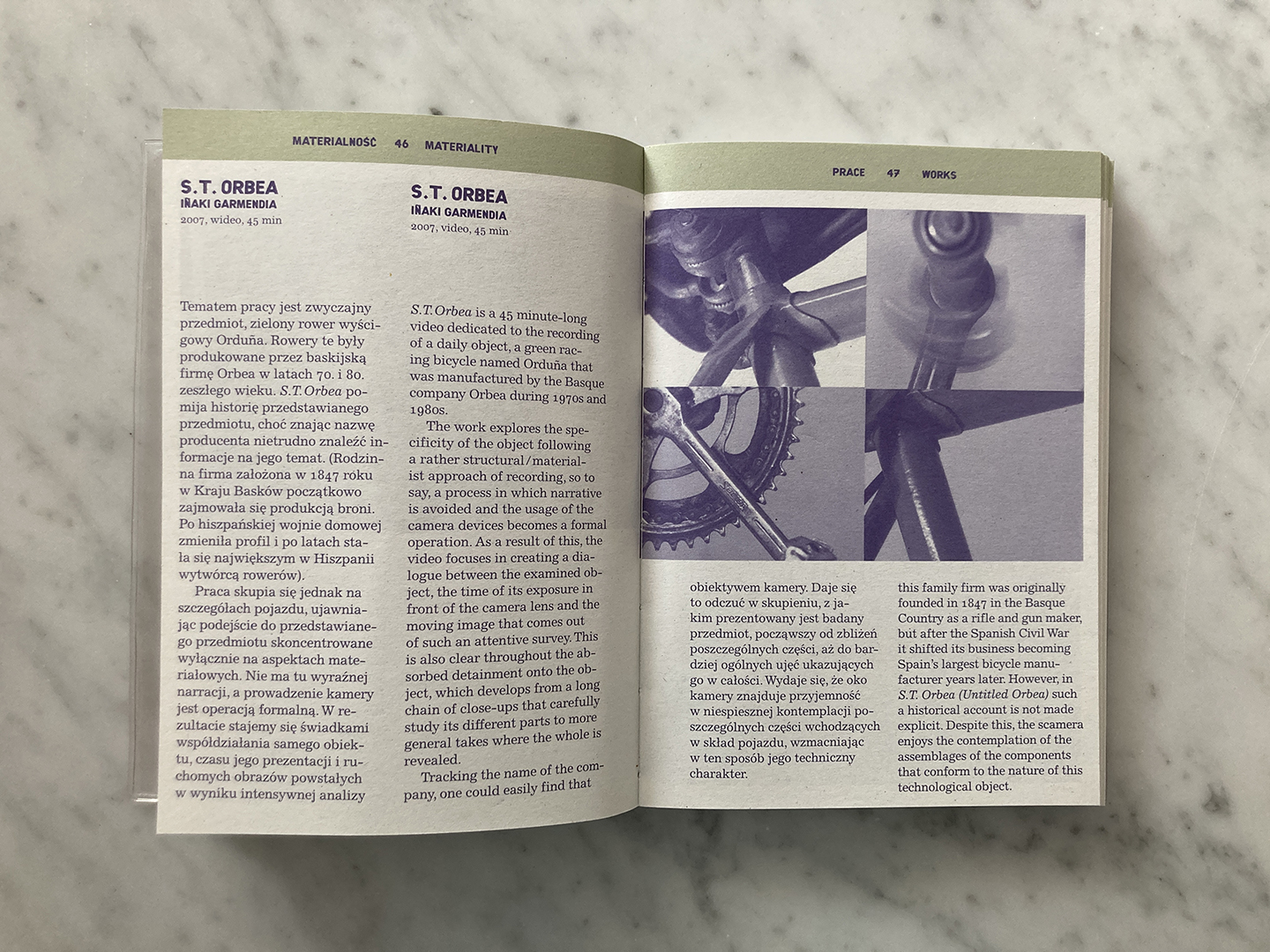
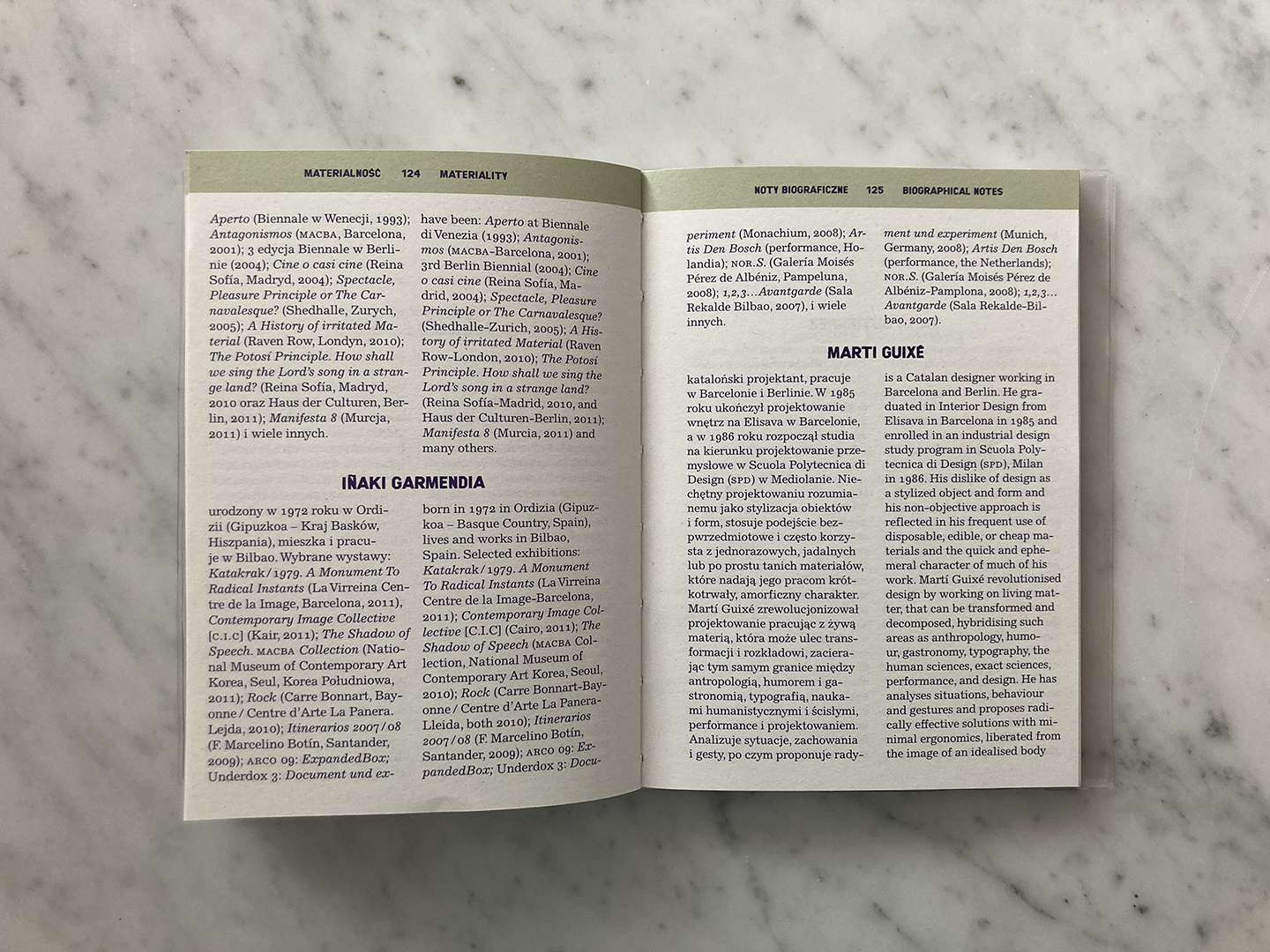
Bilingual Polish/English catalogue for Materiality, Hall 90B de Gdansk (Polonia) (25/05-30/09/2012) part of the Alternativa 2012 cycle of exhibitions, curated by Aneta Szylak, Arne Hendriks, Inés Moreira and Leire Vergara, including around 30 international artists. Includes exhibition map, introductions by curators and images of Garmendia’s video S.T. Orbea (2007), claiming that “The work explores the specifity of the object following a rather structural/materials approach of recording, so to say, a process in which narrative is avoided and the usage of the camera becomes a formal operation” [p. 47]. Also including brief artist bio [p. 125].
Unpublished dialogue between Leire Vergara and Iñaki Garmendia for Garmendia. Maneros Zabala. Salaberria. Proceso y método, Guggenheim Bilbao (31/10/2013-16/02/2014). The artist answers questions on his work process, the importance of the script, interrelationships between different works, text/image correspondence, and tensions between subject and object.
Exhibition catalogue for Después del 68, Bilbao Fine Arts Museum (7/11/2018-28/04/2019), a revision of art practices in the Basque Country over the past 50 years via a selection of approximately 150 pieces, curated Miguel Zugaza, Miriam Alzuri and Begoña González. Includes still from Garmendia’s S.T. Orbea (2007), one of the selected works [p. 231]. Kolpez kolpe (2002-2003) is cited, with image, in Peio Aguirre’s article “Periodizando los años noventa. Sujetos deseantes” [p. 103]; and Miren Jaio, in the chapter “Desde aquí hasta el fin del mundo. 2008-2018” speaks of Garmendia’s exhibition Katakrak, Palacio de la Virreina, Barcelona (2011), and includes a view of the works Líneas de montaña (I-IV) and Sin título (verja) [pp. 115-116]. The cover of the exhibition catalogue for Garmendia; Maneros Zabala; Salaberria. Proceso y método, Guggenheim Museum Bilbao (2013) is also reproduced [p. 281]. A chronology by Mikel Onandia includes references to Garmendia’s principal exhibitions and projects [pp. 400, 421, 428, 440, 443, 445, 451, 465, 469, 472, 476, 478, 479, 481, 482, 483, 487, 499, 503 y 505].
No R.S. (99 Red Love Balloons)
2007 - 2008
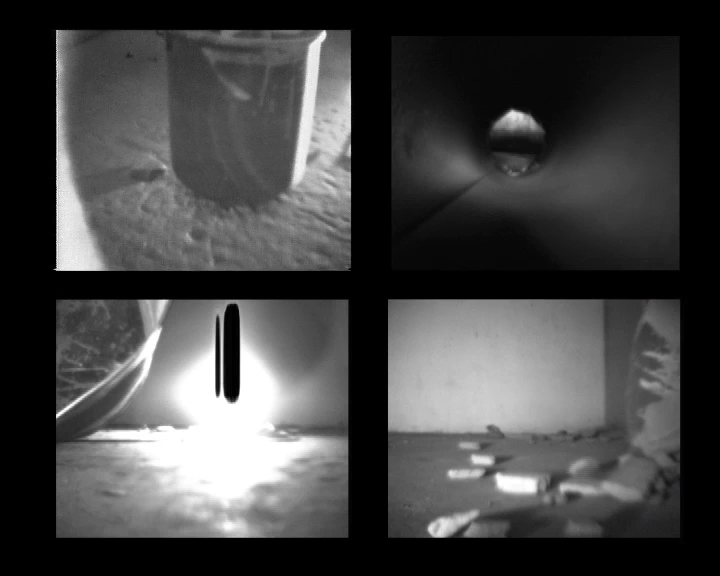
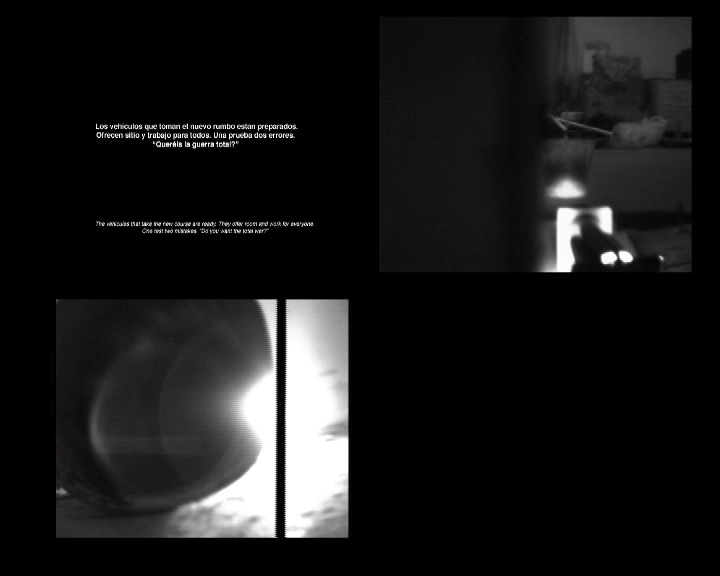
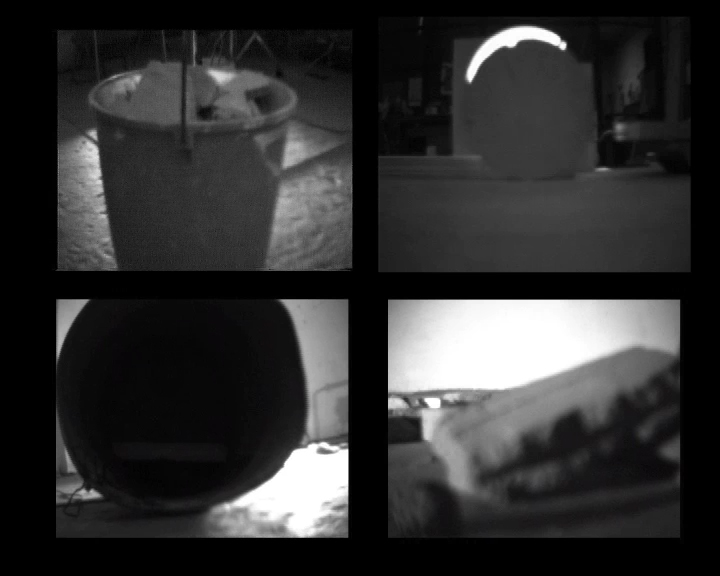
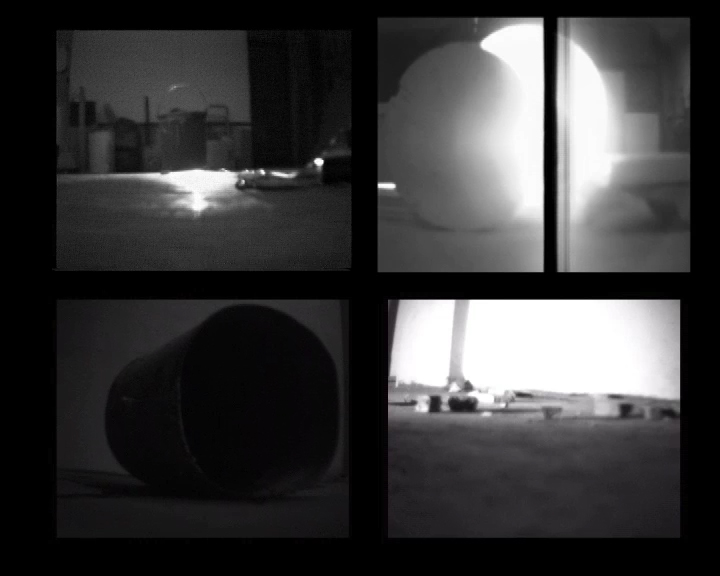
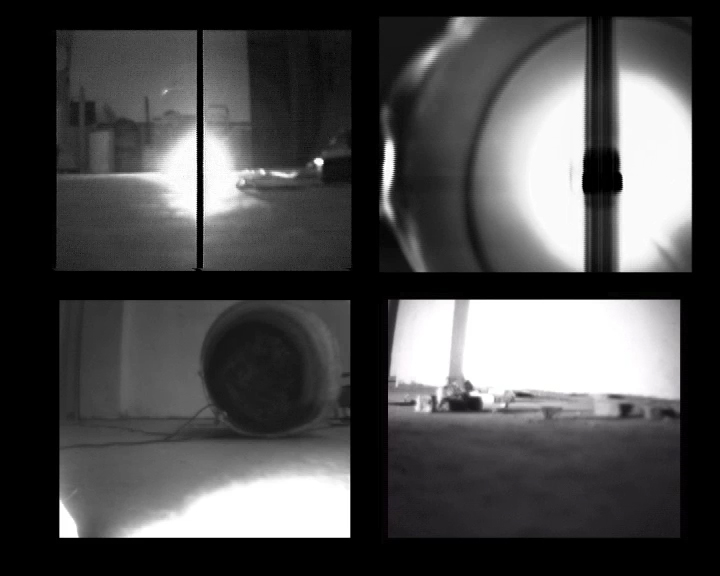
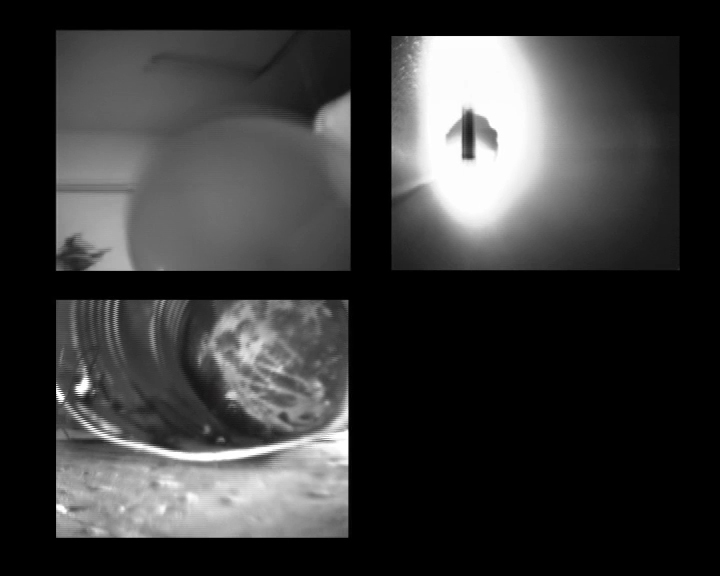
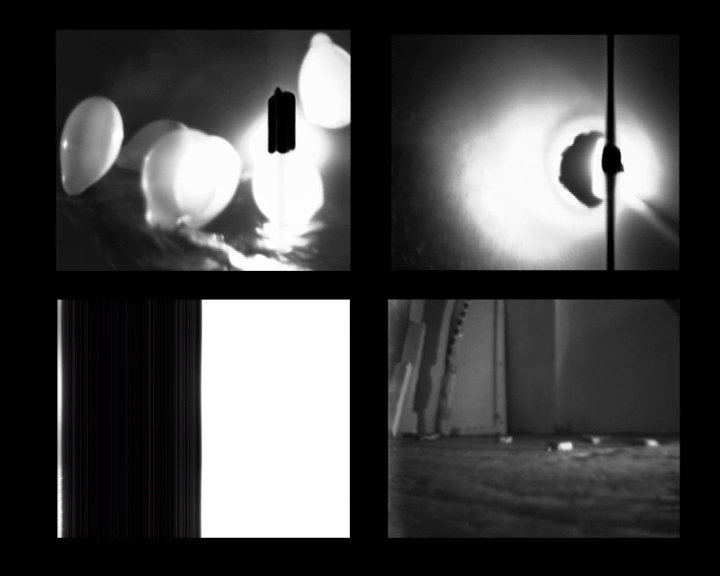
Four-channel video, with sound, colour
5'58''
DV PAL (720 x 576)
A series of lab videos make up this four channel work produced in a studio setting in which certain objects are the protagonists. These “black videos”, as the artist also calls them, were recorded with a Tyco toy camera purchased in 1997. The use of this camera in this context can be read as a reference to the faktura of films (such as Living Inside, 1989, or If Every Girl Had a Diary, 1990) shot by Sadie Benning with a Fisher Price PXL-2000 camera that her father, James Benning, gave her as a Christmas present when she was 15 years old. Unlike the Fisher Price camera, the Tyco does not use tape, and therefore Iñaki uses a beta video recorder to preserve footage. The editing takes place, once again, during the recording, by using the camera’s on/off button.
The coarse texture of the black and white image in Sadie’s and Iñaki’s videos accounts for an exploration via the medium of film that emerges from the intersection between narrative experimentation, performance, and cinematic syntax. The Tyco records image only, lacking a microphone. During the filming the same jack plug is used for the video and audio inputs, which produces a series of sonic interferences as the camera moves. The sound generated comes from the feedback at its contact with different elements. The camera functions as an electric guitar, albeit a soundless one. On the other hand, the capture of light is also restricted, since its performance is limited in terms of how it responds to darkness or to an excess of light, generating a visual error that translates as the appearance of a black band. Finally, the result is a sort of haphazard composition between sound, image, and the elements.
The first video in the series, 99 Red Love Balloons, was exhibited integrally on a monitor in the exhibition 1, 2, 3… Vanguardias: Cine/arte entre el experimento y el archivo curated by Łukasz Ronduda, Florian Zeyfang and myself at Sala Rekalde in 2007-2008. Almost simultaneously, NO R.S. (99 Red Love Balloons) was presented as a complete series in 2008 at Moisés Pérez de Albéniz Gallery (Pamplona). In the catalogue for the exhibition 1, 2, 3… Vanguardias, Iñaki intervened on the pages with images taken from the recording and also from a perforated photocopy containing Robert Morris’s text “A Method for Sorting Cows” (1967), a scanned image showing also its own faktura, originated in this case in the wear due to the use of this studio document. The reference to Morris’s piece, a set of instructions for an impossible action, offers points of connection with the epic tension of Iñaki’s videos as they attempt to capture a sublime image produced by the balloons bursting. However, as the title suggests, these blasts are not comparable to the explosions shot by Roman Signer.
CCC/MT (All the measures are taken)
2011
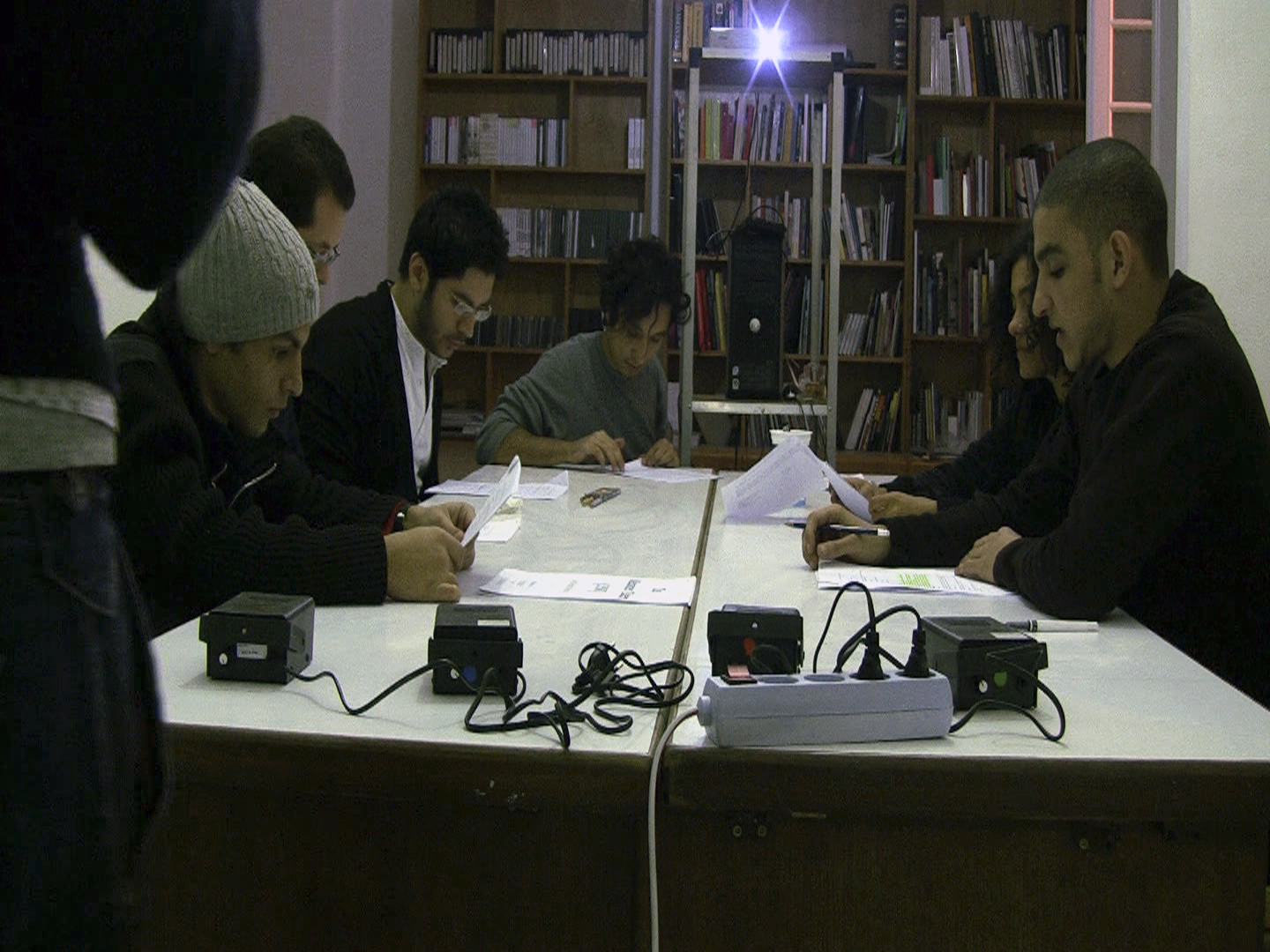
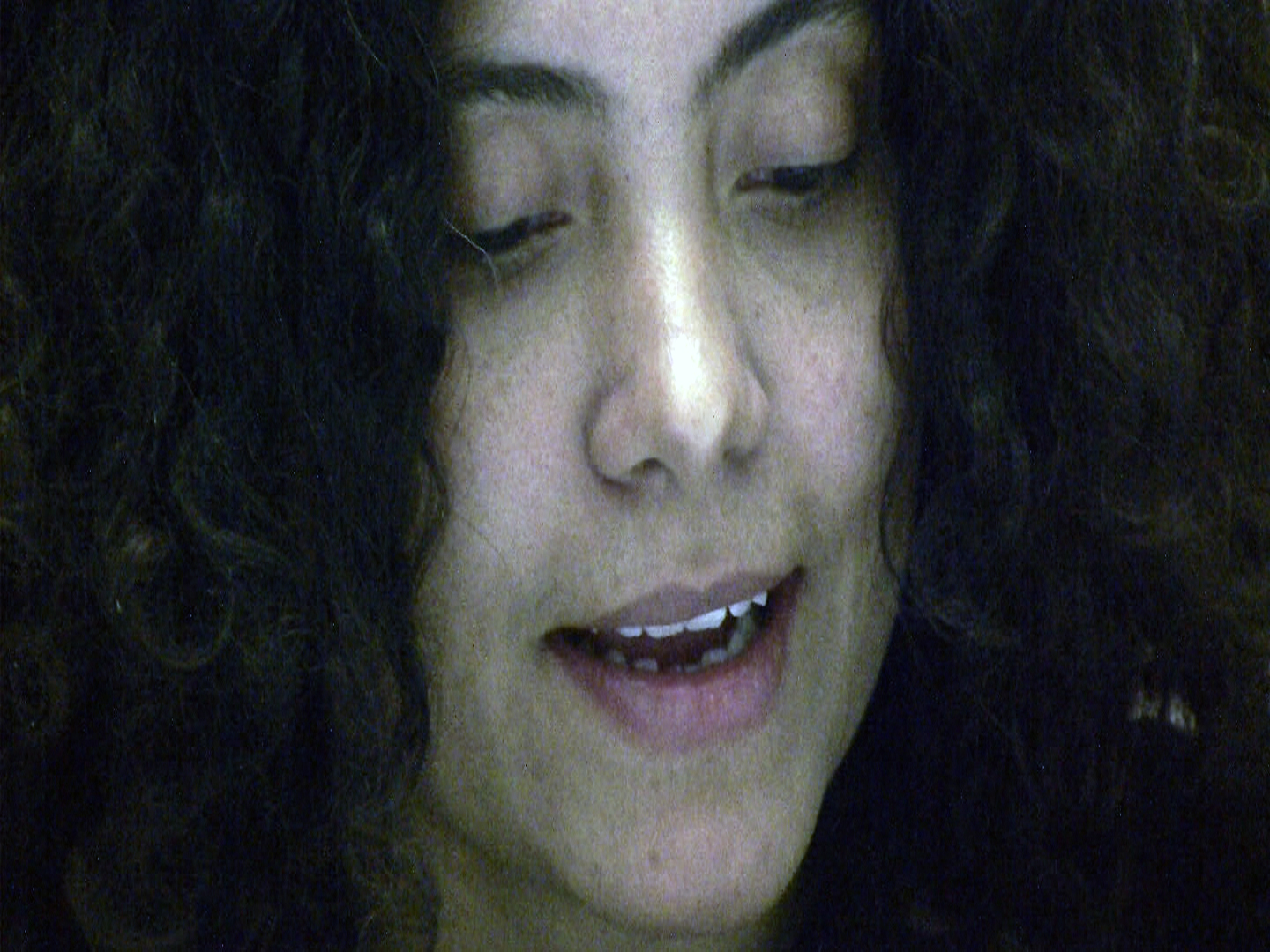
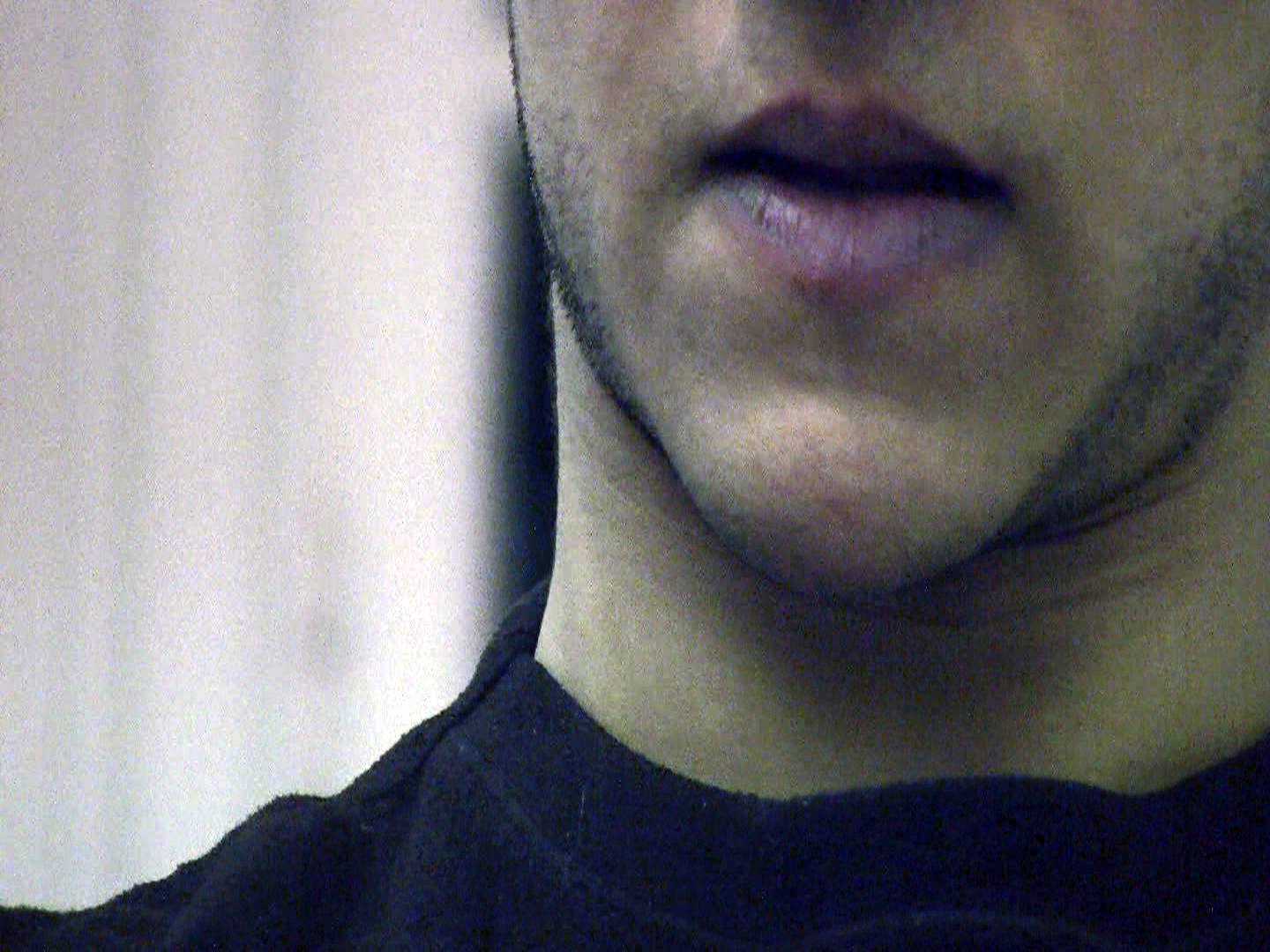
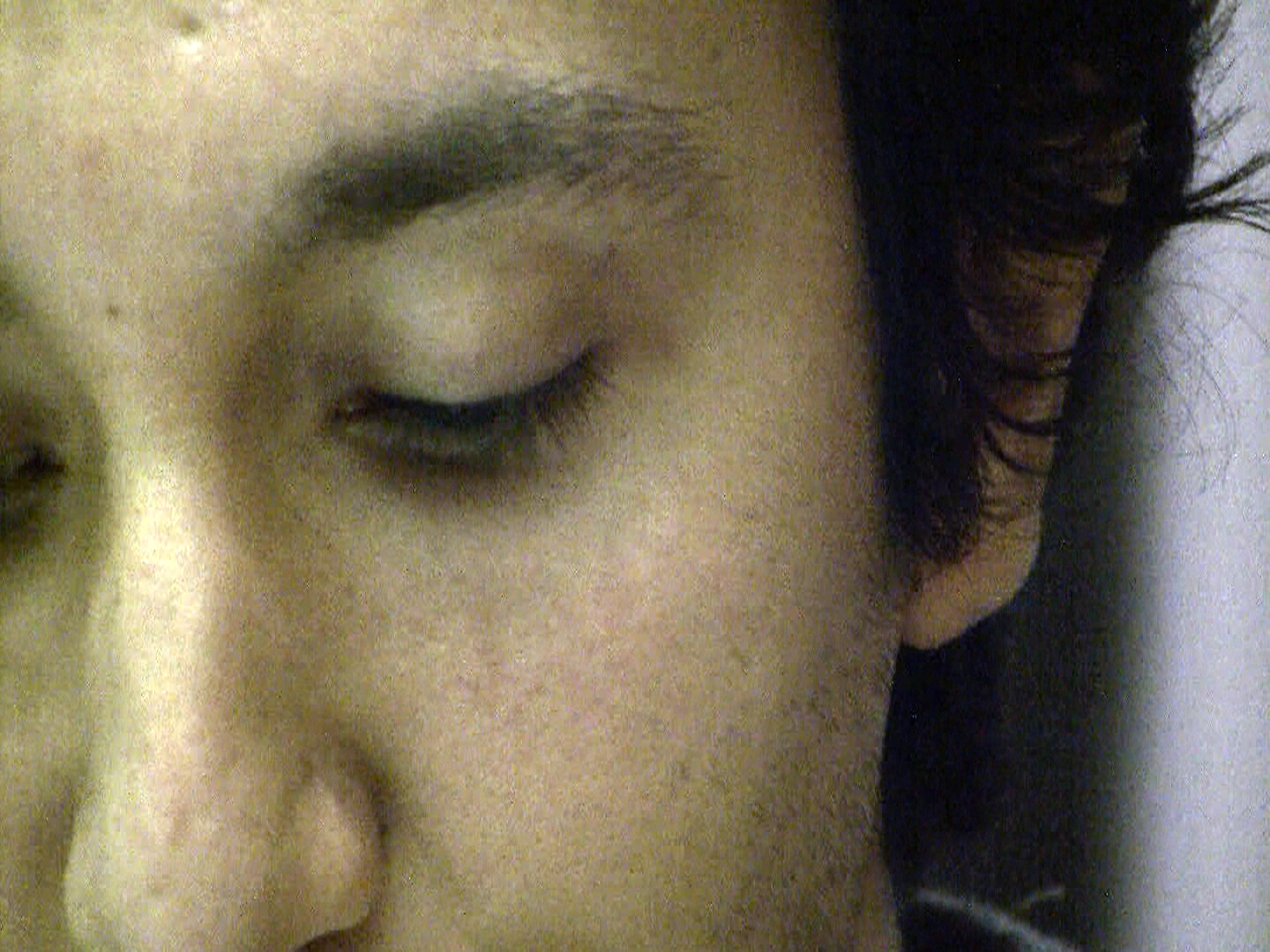
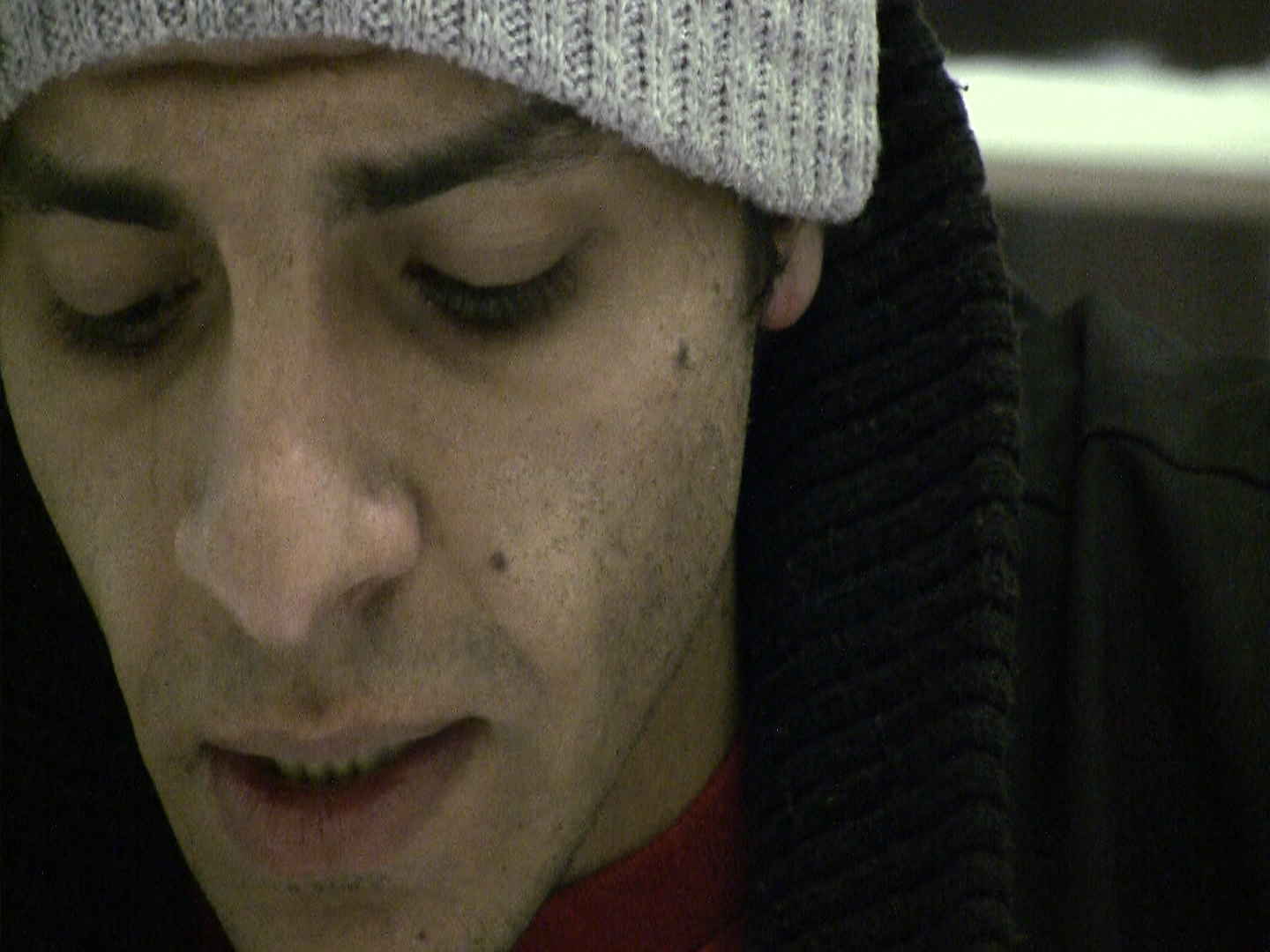

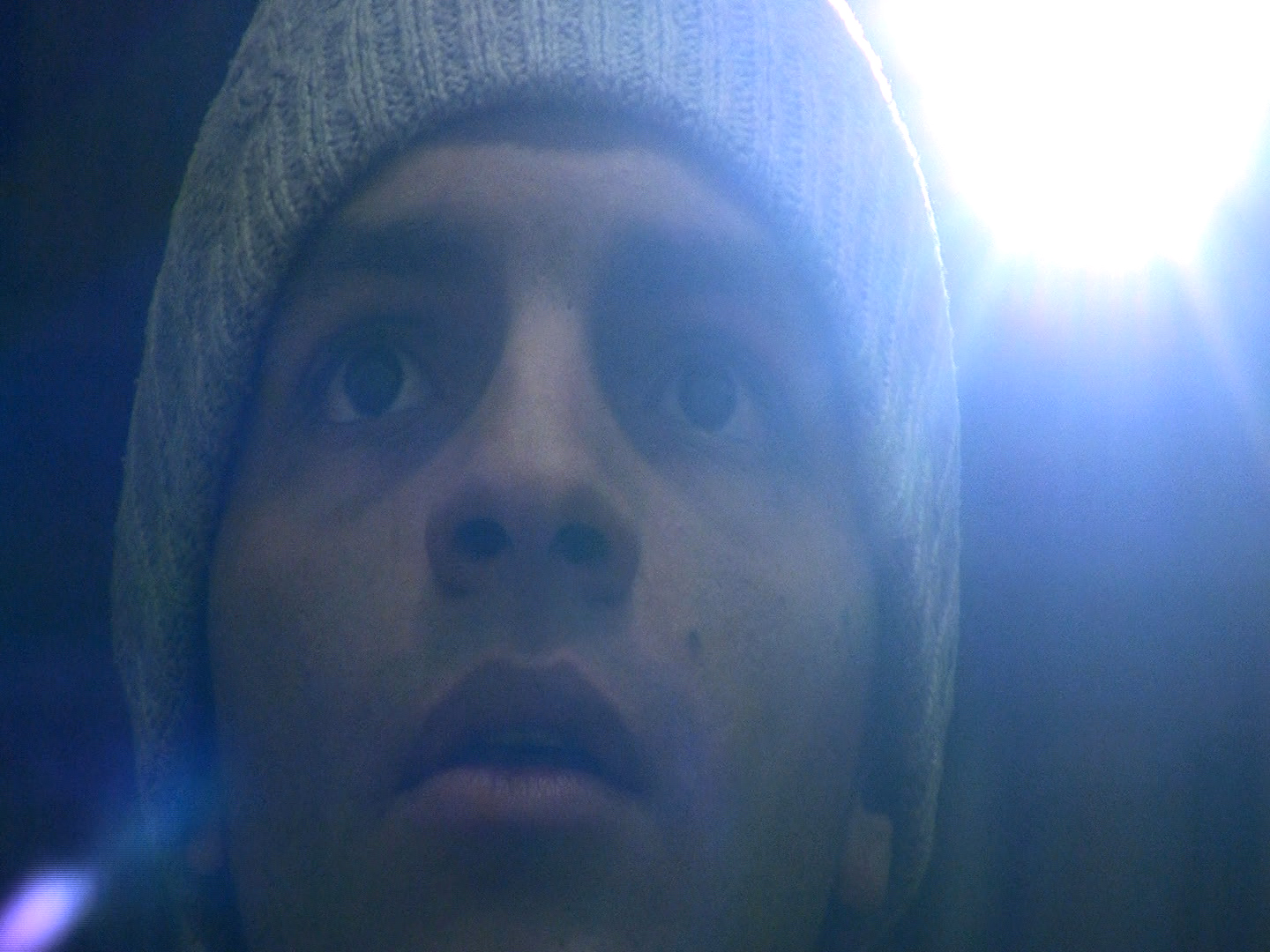
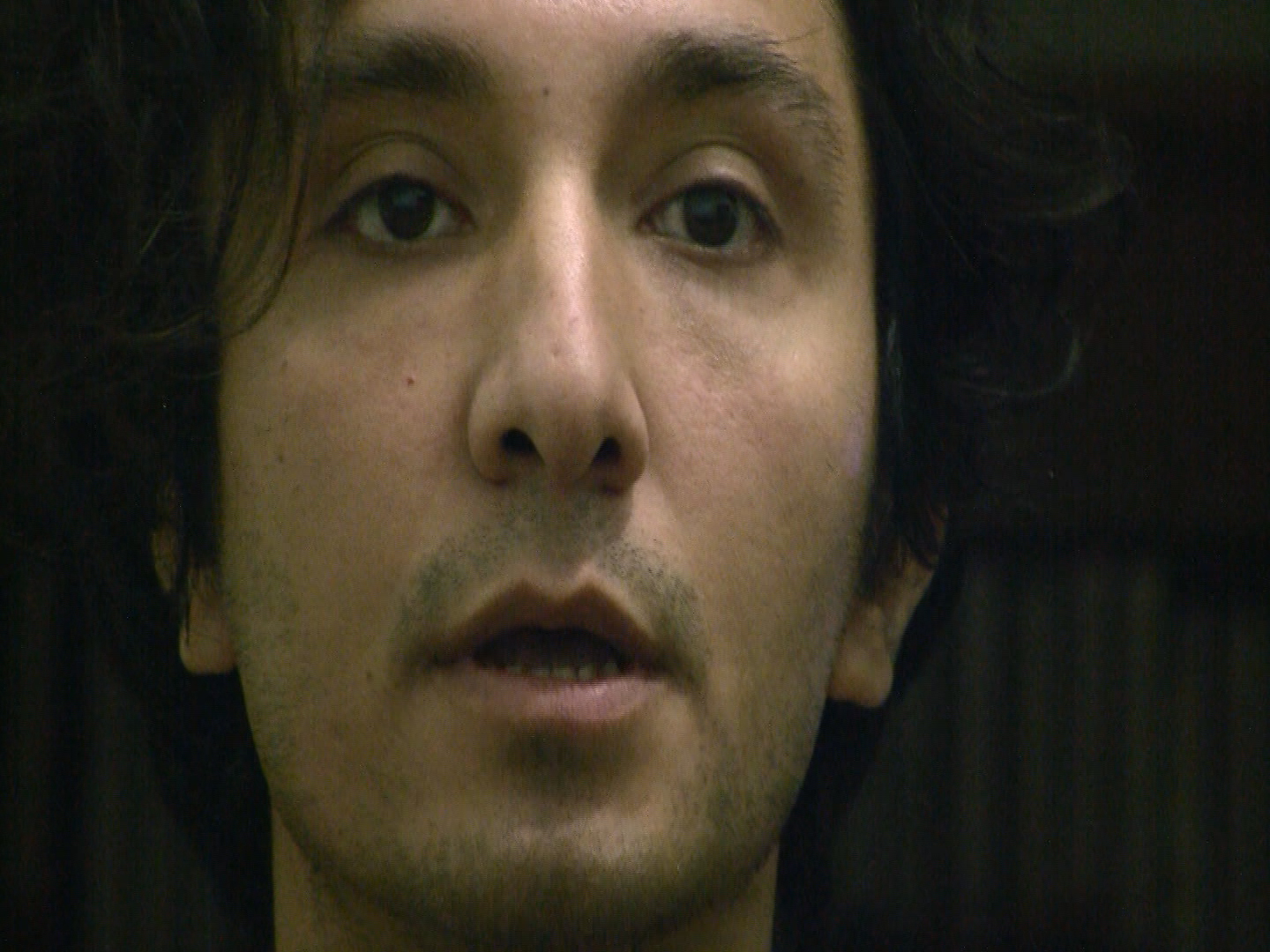
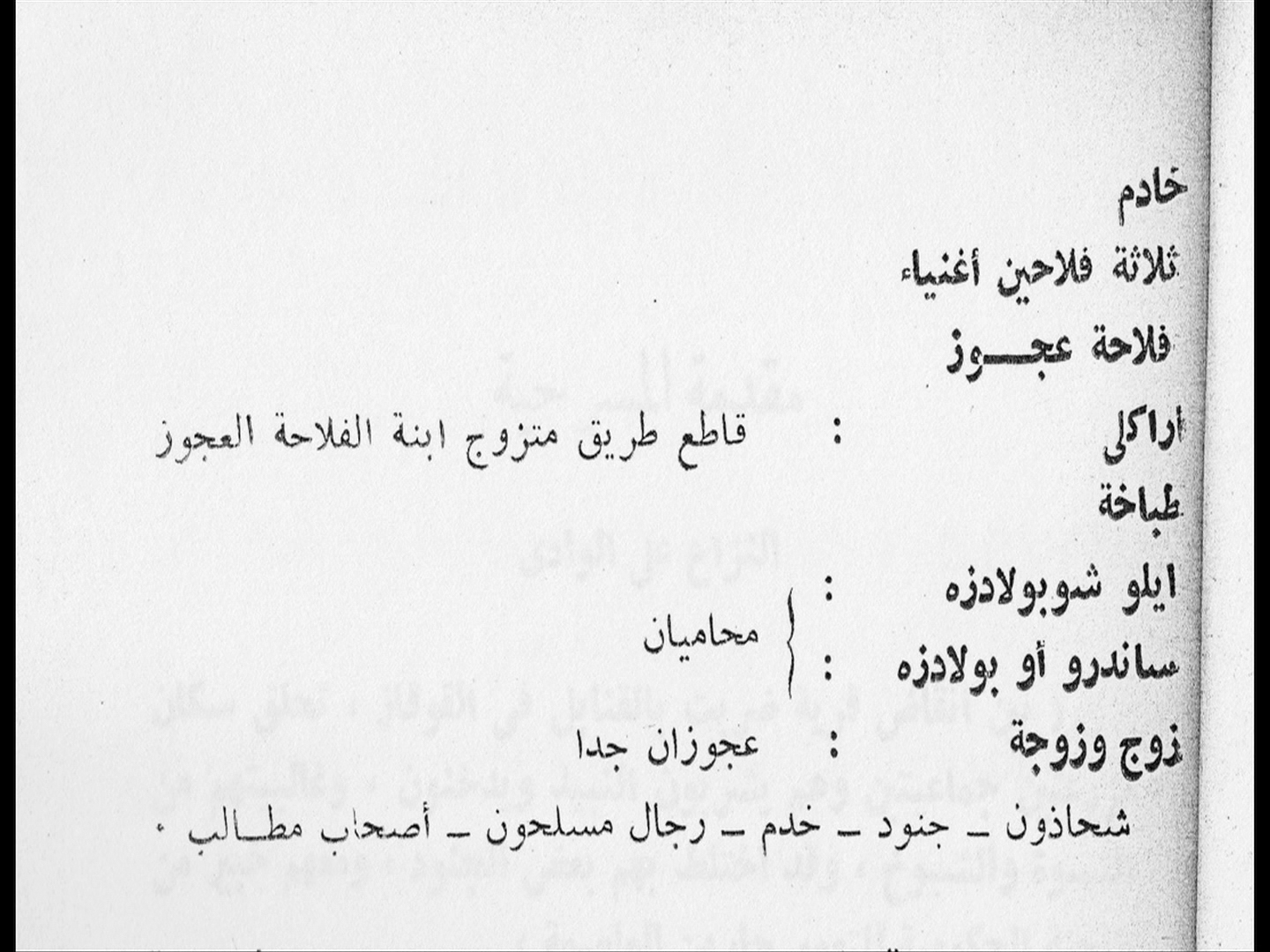
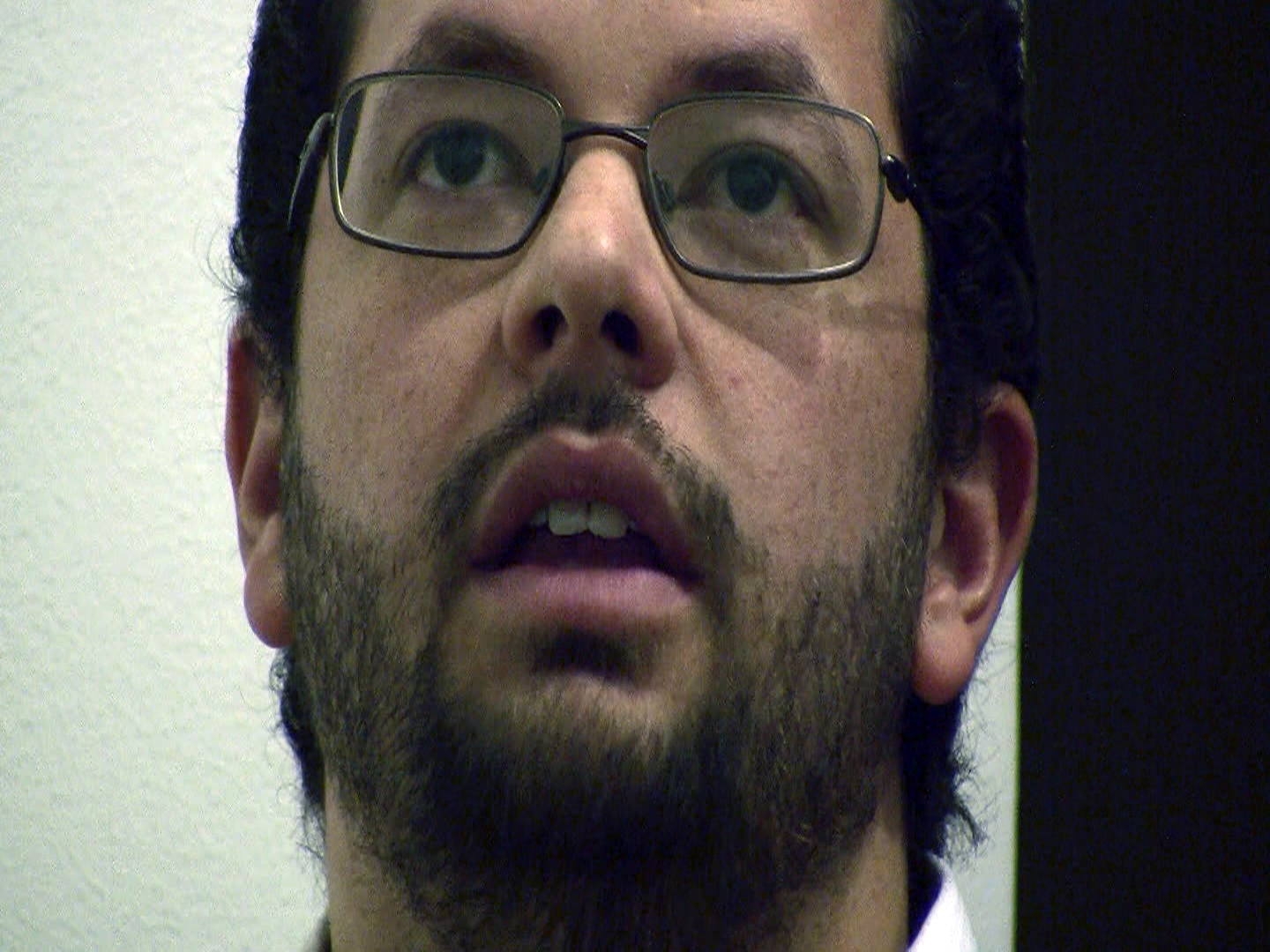
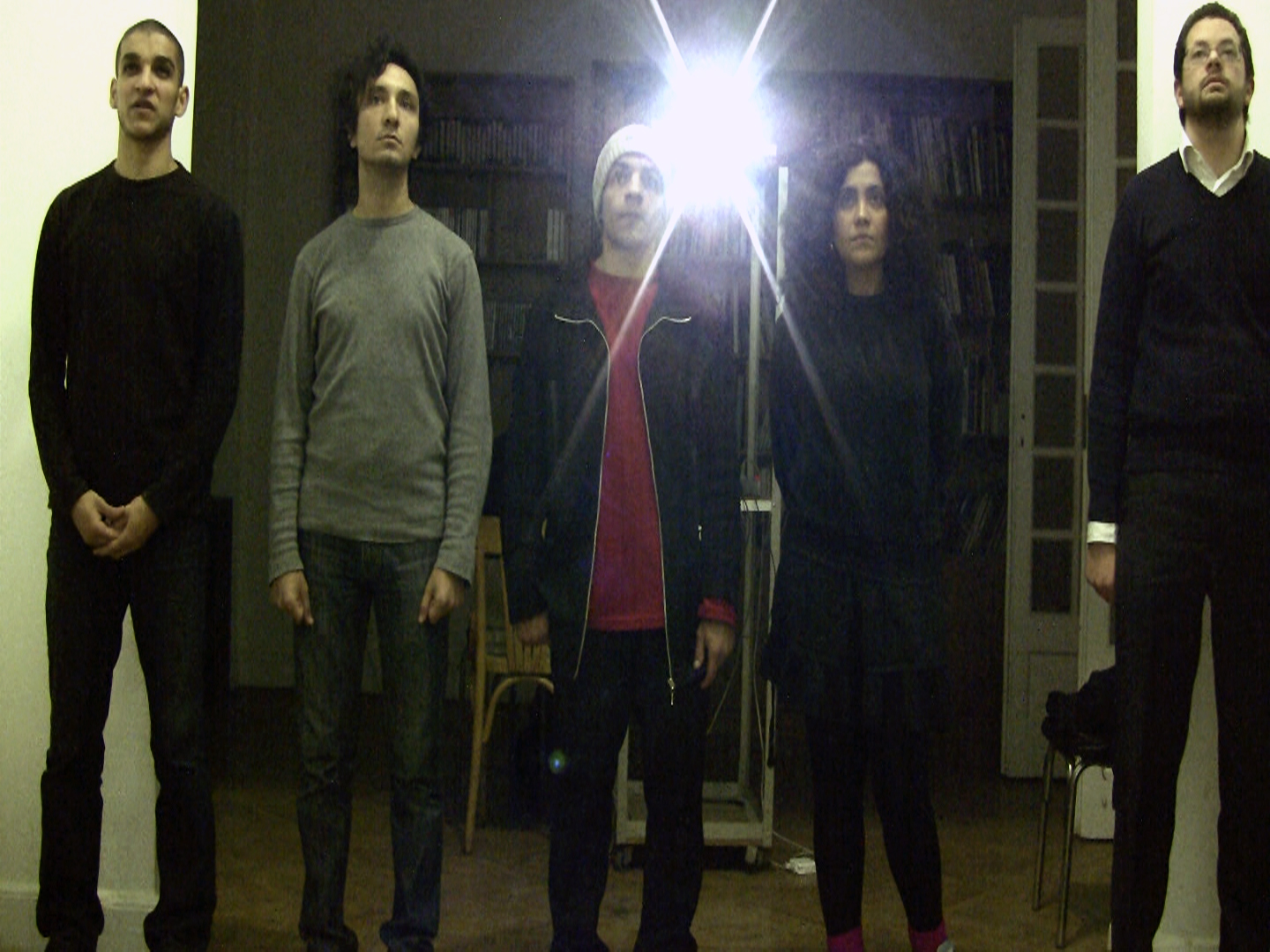



Single-channel video, with sound, colour
25’18’’
HD Video (1920 x 1080)
Cairo, 2011. This timely video was recorded in the C.I.C. (Contemporary Image Collective) Library a week before the Youth Revolution —also referred to as the White Revolution—. CCC/MT is structured as a script-performance using parts from the prologues to two plays by Bertolt Brecht: The Caucasian Chalk Circle, an epic written between 1944 and 1945, during the author’s exile in the United States, and The Measures Taken, a didactic piece written between 1929 and 1930.
This piece confronts us, once again, with the dual relationship between two artefacts that were not necessarily previously related. In this case, the artefacts are prologues to two plays written by the same author, but very distant in time. The preface to a play normally offers context, displaying the author’s position and the text’s didactic intentions. At times, it filters other, more mundane references, which have the ultimate effect of provoking life to break in, affecting the reception of the art form. In this work by Iñaki it is not possible to neutralise the interruption of art by life, nor to identify the assertive Bretch from the doubtful one, the young convinced Bretch from the acclaimed one who doubts himself.
A group of six young people, with Arab as their mother tongue, read aloud the prologues to the aforementioned plays in English. The reading flows as a didactic process of internalisation, in which misunderstandings and spelling mistakes occur. Time functions as a material condition of production, undoing this incorporation process. On one hand, the chronology is inverted: CCC is presented before MT —a work published over a decade earlier. On the other, the action also flows backwards, since the texts are increasingly reduced with each reading, constantly becoming simpler until they lose their meaning, thus slowly complicating the internalisation process. The reading is broken down further with each take. Witnessing this disintegration, we clearly sense a circular timeline. The action seems depleted within this circularity. The city, the traffic, the sirens ring repetitively in the background from the beginning of the recording. Towards the end of the video, the dynamic sound of the street deafens this feeling of exhaustion.
Related bibliography
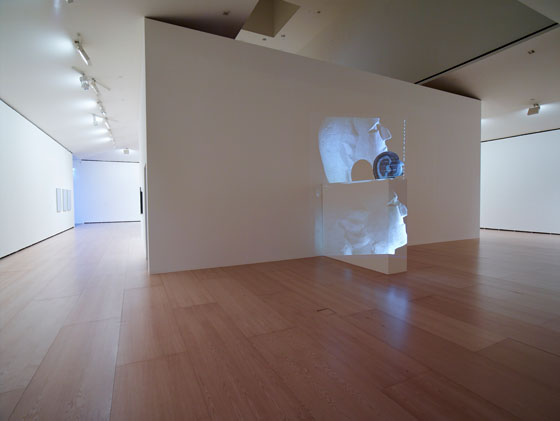
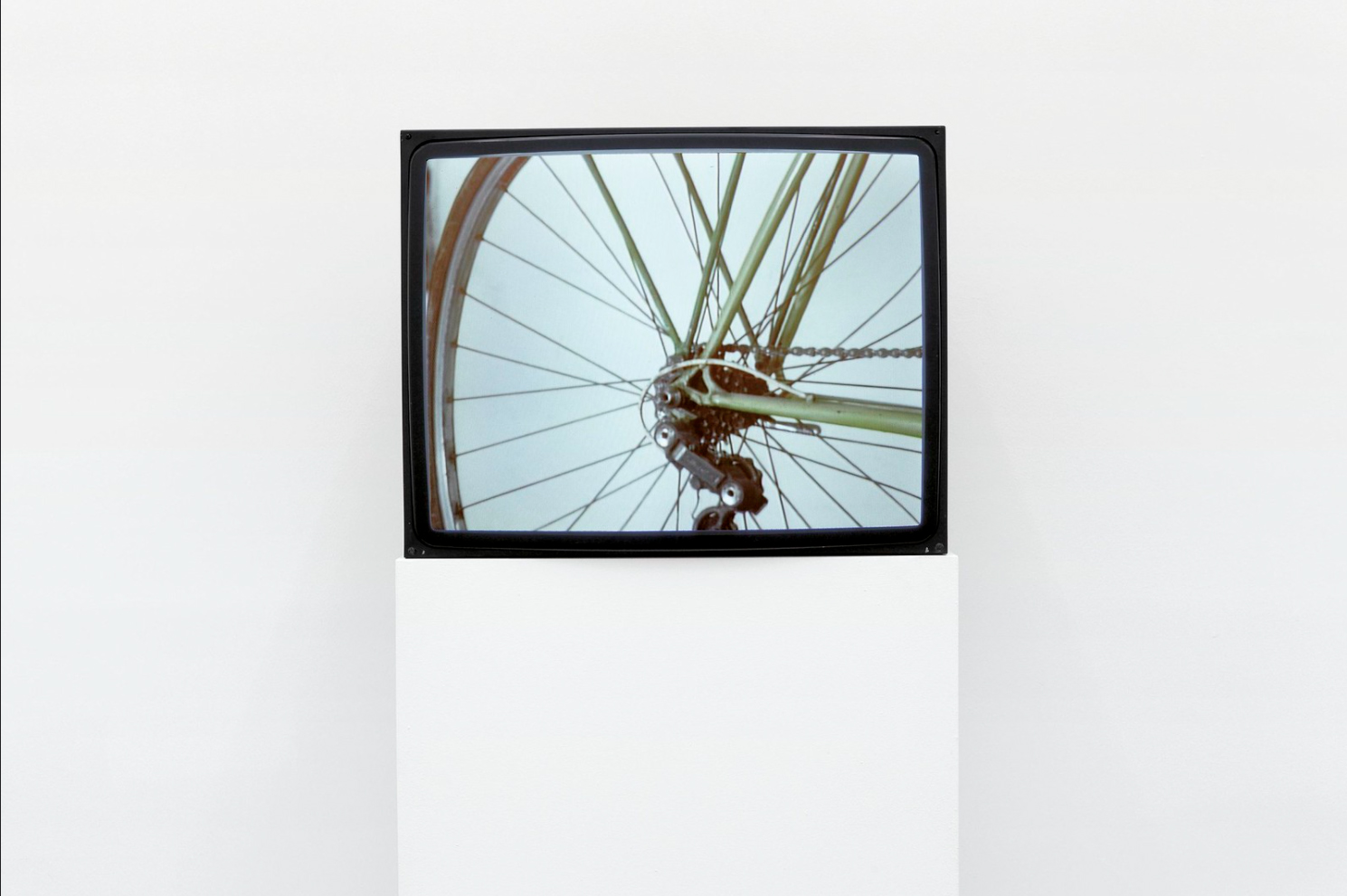
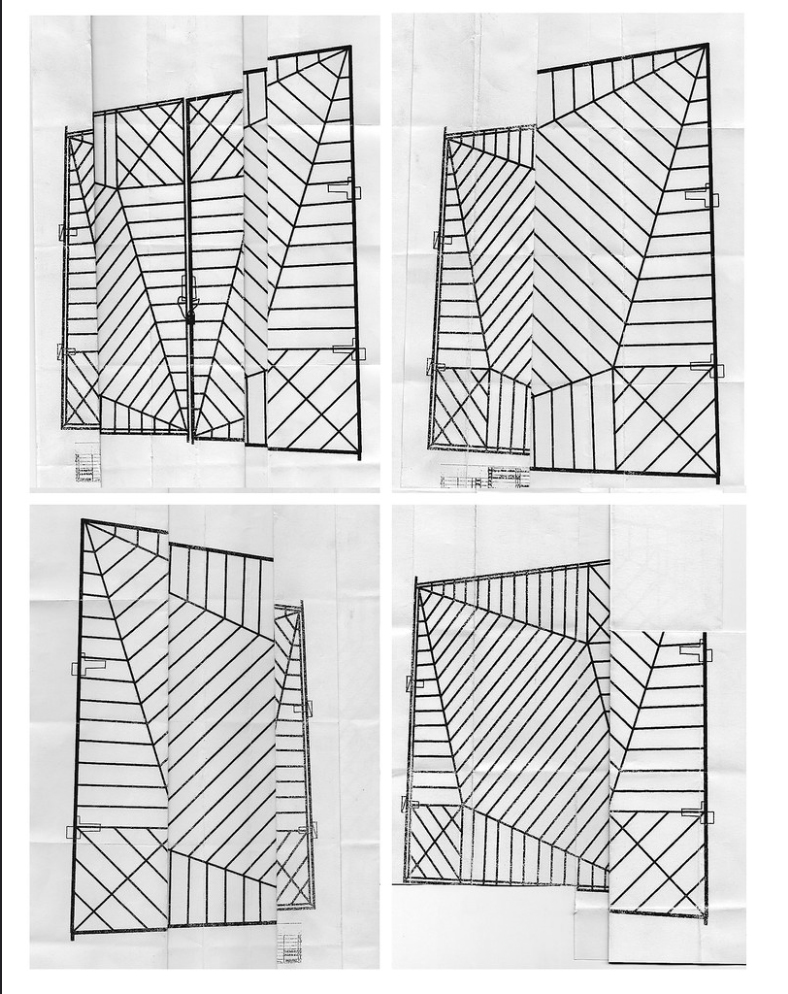
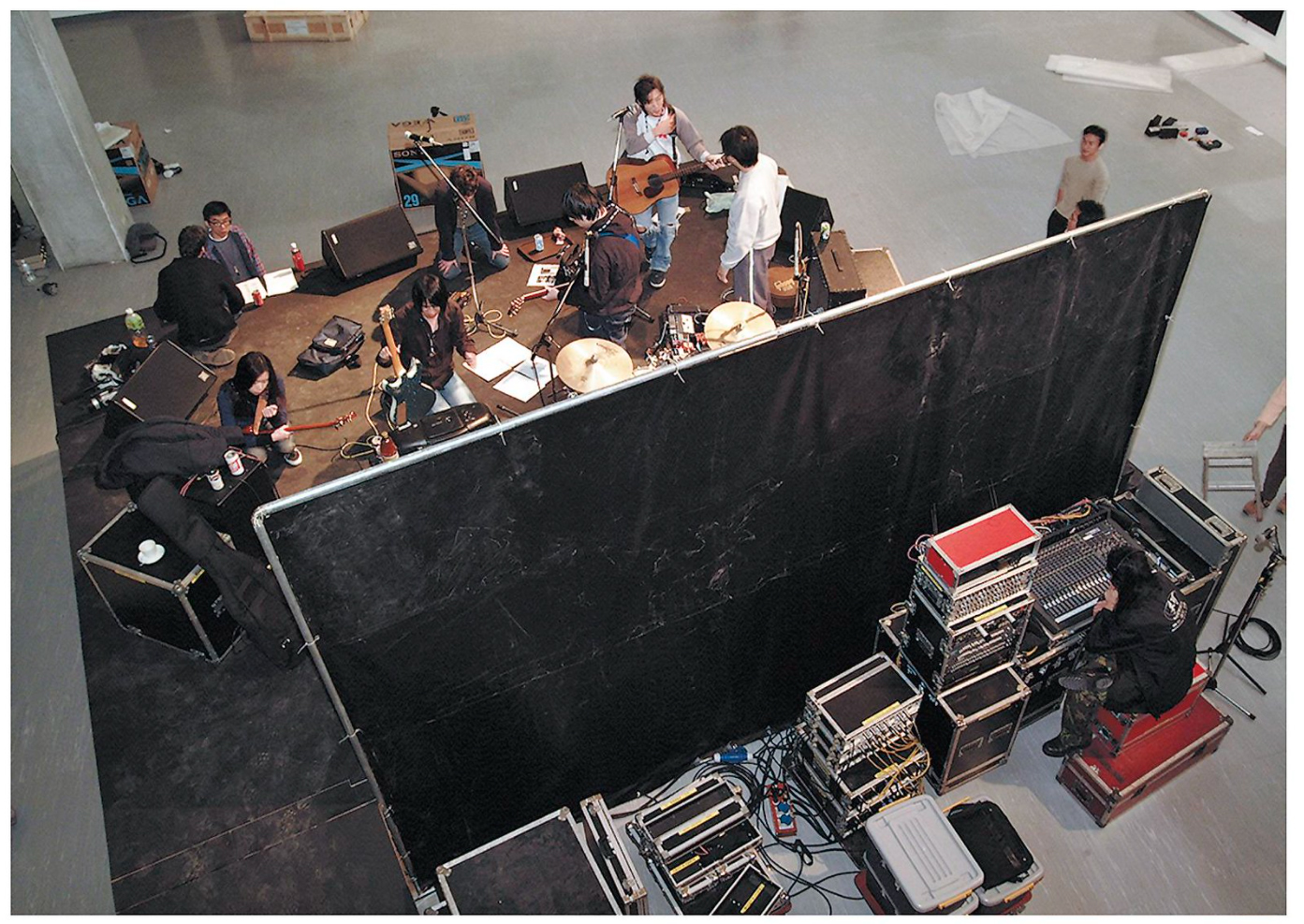
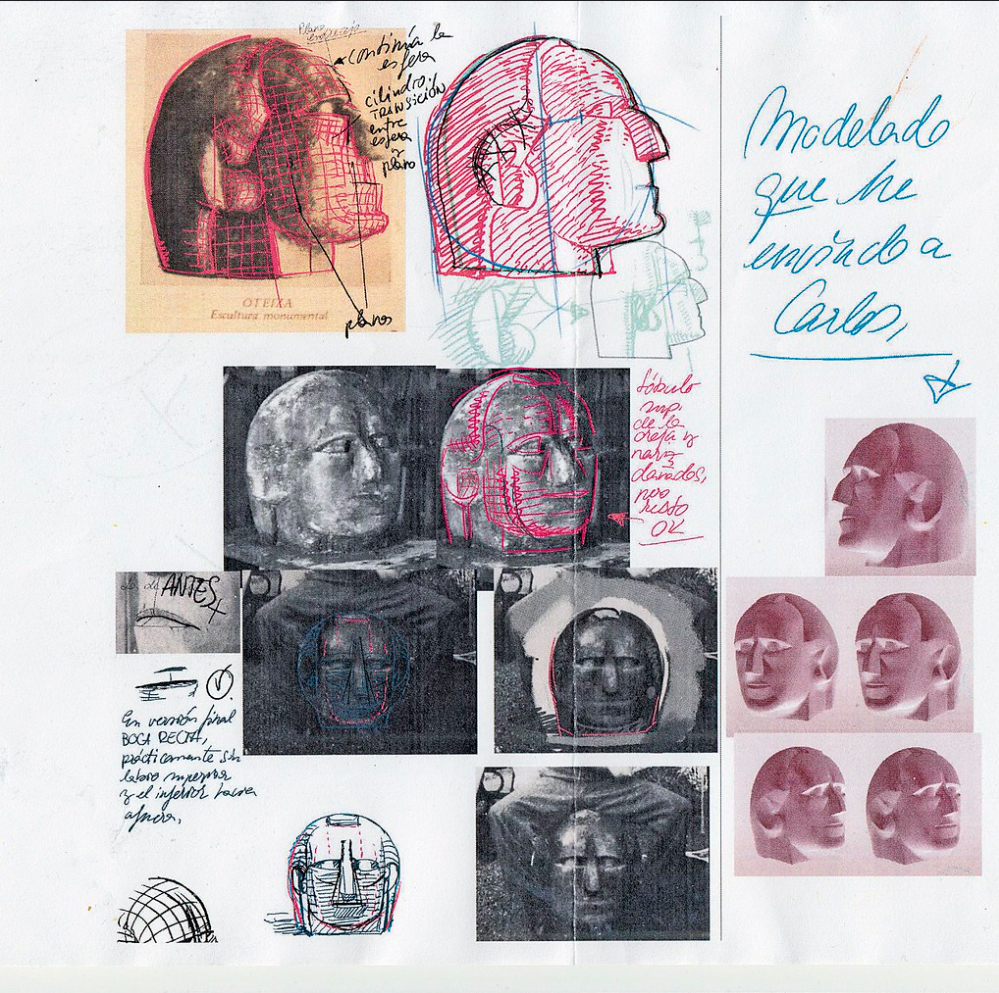
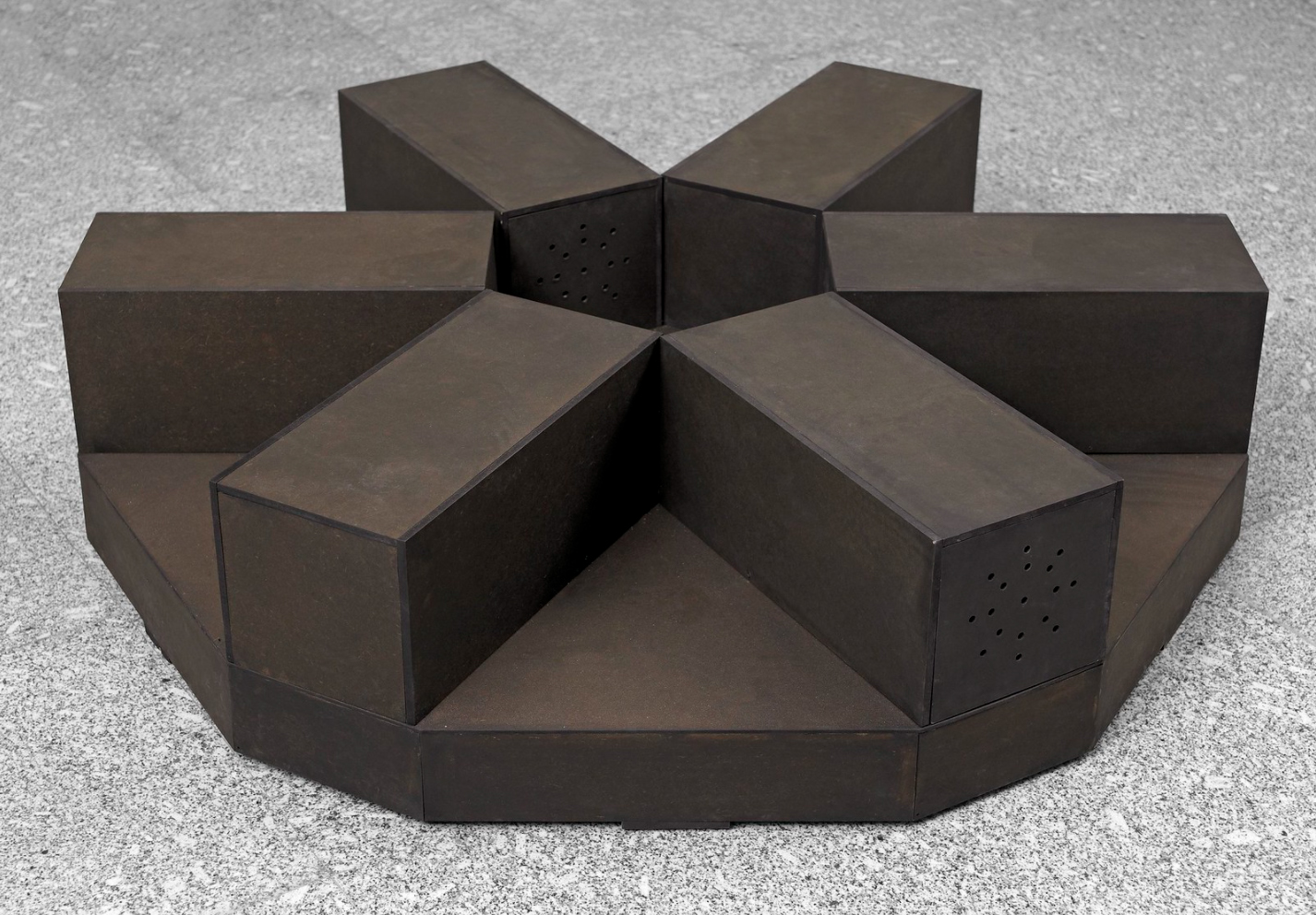
Exhibition images courtesy of Guggenheim Bilbao.
Bolueta
2011
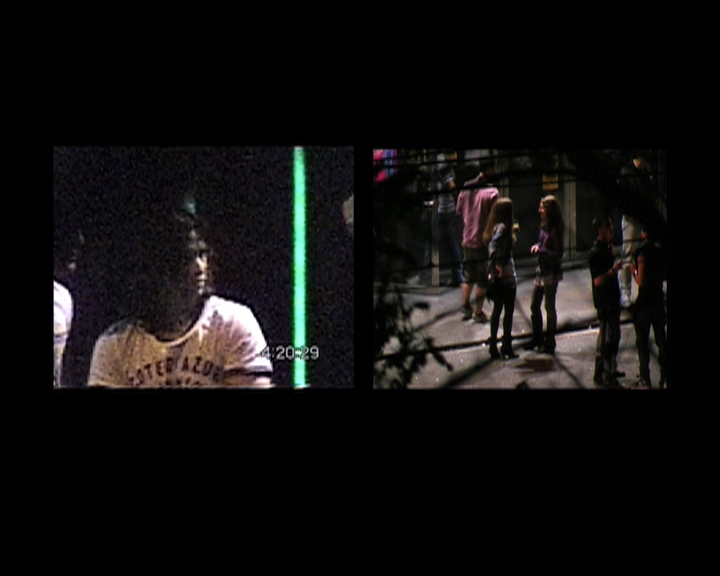
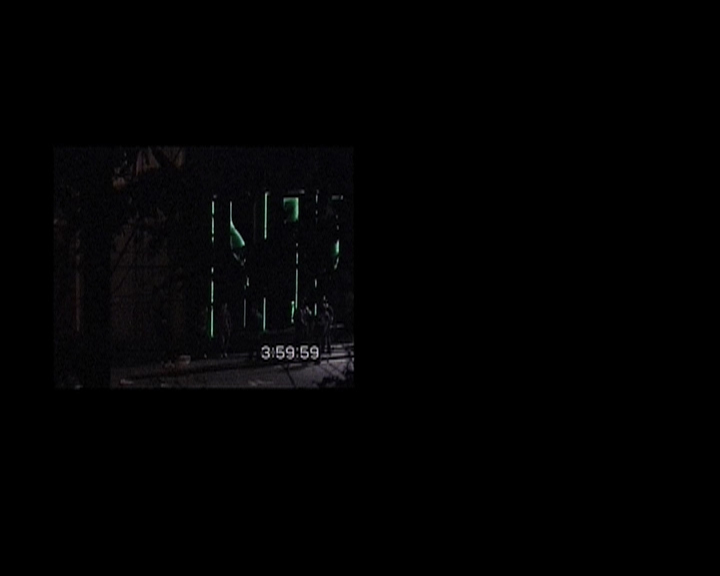
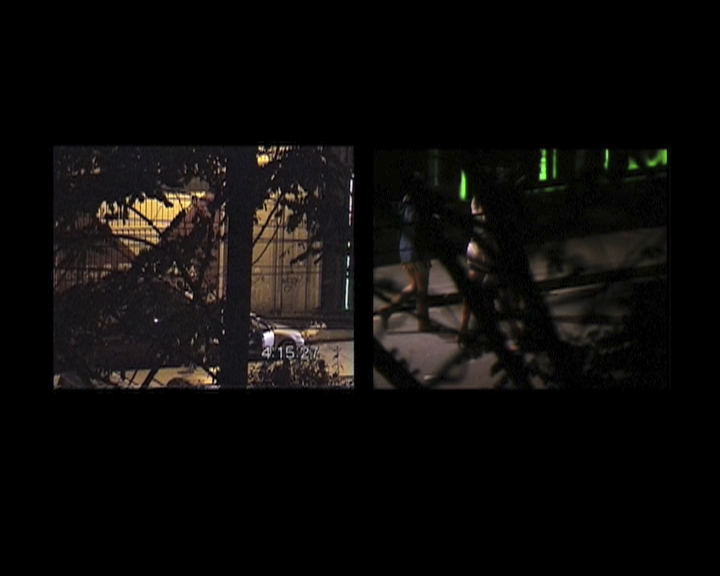
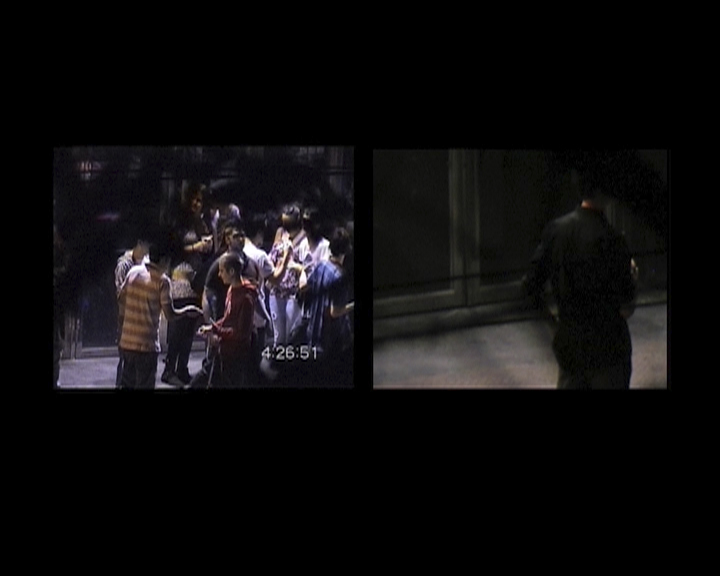
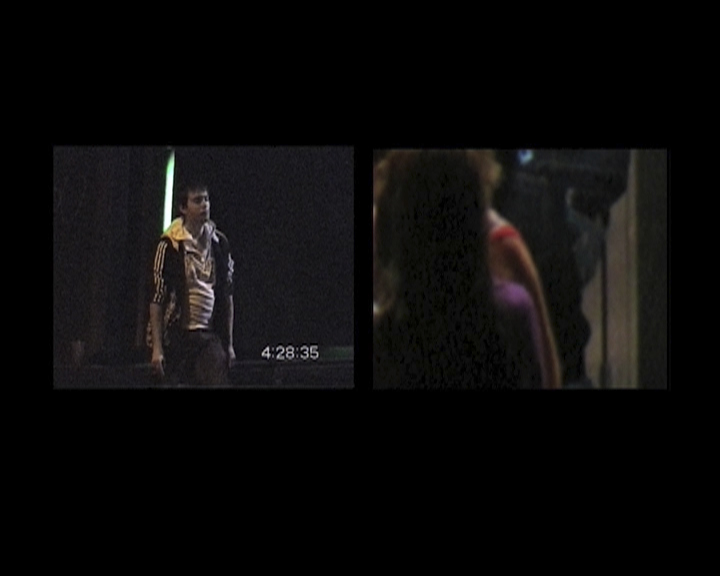
Two-channel video, with sound, colour
24’20’’
DV PAL (720 x 576)
Bolueta. A two-channel nighttime video. A field recording made up of footage simultaneously captured by two cameras that record the events unfolding in a specific area; namely, the entrance to a renowned Bilbao night club. A time sequence, from 4:00 to 4:55 AM, marked by the camera counter visible on the lower-right corner in the projection on the left-hand side. As the footage plays out, we realise that the action portrayed does not match the time on video, having been altered by almost imperceptible cuts that ultimately reduce it by half. This structural form warns us about the representational frame to which we are subjected as voyeur-spectators; meaning, that the anthropological quality of the recording device is not offered as a means to posit any kind of truth. On the contrary—all the elements that make up the device indicate that the images actually seek to bind us in the rules of a whimsical game of tag.
Bolueta/. Both cameras are concealed far from where the action takes place, as if they wanted to protect themselves with the maximum possible distance for a better extraction. One of the cameras, a High 8, shows the time and a series of grainy zoom-ins. The texture of the captured portraits is analogic. The other camera, which is digital, can be more precise in accessing the target; however, its sharpness seems more artificial, due perhaps to its colour saturation. We are introduced to two recent recording methods from different time contexts and which are now exhibited in comparison, as if they were the remains of a nascent visual archaeology. Led by a homoerotic gaze, a game takes place between the images, recruiting involuntary actors as it unfolds, take after take.
Bolueta/Front 242. The night club’s electronic music bathes the images in the background as the night draws on. The music sounds more like prerecorded noise, an effect caused by the distance at which the cameras are placed.The sound distancing makes the music work as a sort of quotation over the images, revealing once again the collective construction of subculture as a possible act of ambiguous resistance. Nevertheless, we are hardly able to build a new mythological style out of the digital faktura of the images of the present; their nature navigates instead within an order of rejection/assimilation.
Related bibliography
Catalogue of solo exhibition at Virreina Centre de la Imatge, Barcelona, titled Katakrak (14/07-02/10/2011) including “Metraje”, a text by Peio Aguirre, in Spanish, Catalan and English. The text basis its analysis of the artists work on videos such as S.T. (Orbea) (Orduña) (2007), Bolueta (2011), Kolpez Kolpe (2003), Harder, Faster, Better, Stronger (2004), and series such as Txitxarro (2000). With black and white images and brief artist bio.
Bozo
1997 – 2013


Single-channel video, with sound, colour
16’ 30’’
HD Video (1920 x 1080)
Recently, in relation to some moving images, I was thinking about the English term live images [imágenes en vivo], which could be translated into Spanish as “living images”. Do images have a life of their own? And if so, what is it that gives them life, the recording, the editing, the viewing? Do images have will?
Bozo was recorded in 1997, but it was not exhibited until 2013, when it appeared for the first time as part of a solo exhibition in theMoisés Pérez de Albéniz Gallery, in Madrid. The delay between shooting and editing spans a little over fifteen years. The shooting was done in 1997, in the context of the Arteleku Workshop taught by Txomin Badiola and Ángel Bados. The recording took place in the studio space that the artist occupied during this period. The filming developed as a whimsical, childish game on a precariously constructed stage, a sort of dark room —or zulo— which could be accessed via an unstable ladder.
Bozo is a “black video” —this is the name Iñaki has given to the videos filmed with the same Tyco camera he used for No R.S. 99 Red Love Balloons—, but in this case bodies, not objects, are featured. A set of genitals has been transferred to a cast, which has then been reproduced in latex. The result appears strapped to a harness. We see a male body against the wall. It shows itself to be potentially penetrable, dismantling the position of representation of the cis man, according to Paul B. Preciado, as that of the natural and universal penetrator. The artist gives instructions to carry out the action, wearing a latex mask. The warm, mutual understanding between those present clashes with the crudeness of the images, making evident that the action is focused on constructing the scene.
In 2013, these brief sequences were put together on rectangular bands composing a triptych in the now standard 16:9 format. The editing is not linear, but arithmetic, and in it the strips are taken as the space for the horizontal representation of each of the bodies in scene (one of which is located behind the camera). The black and white clips move forward through the sections of the triptych while occasional accidents occur—a fade to blue, for instance, which takes us out of the foggy materiality of the Tyco image and brings out the traces of previous recordings on the VHS to which the original images were transferred. The final edit is the result of passing from one image format to another, of the visual encounter between two temporalities—1997 and 2013. Is the Rectum Straight?, Eve Kosofsky Sedwick wondered in 1993. Is the timeline between two dates straight, too? In Bozo, the time of the images is one which we are unable to access.
Related bibliography
Unpublished dialogue between Leire Vergara and Iñaki Garmendia for Garmendia. Maneros Zabala. Salaberria. Proceso y método, Guggenheim Bilbao (31/10/2013-16/02/2014). The artist answers questions on his work process, the importance of the script, interrelationships between different works, text/image correspondence, and tensions between subject and object.
Bomber
2013



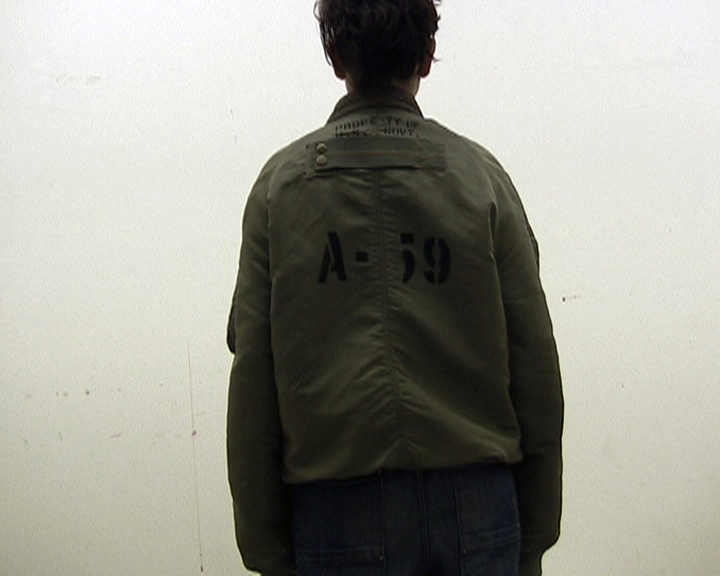
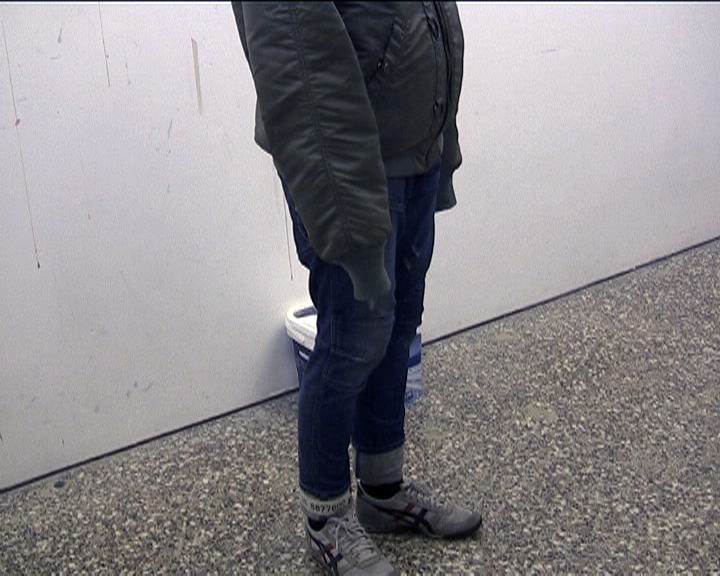
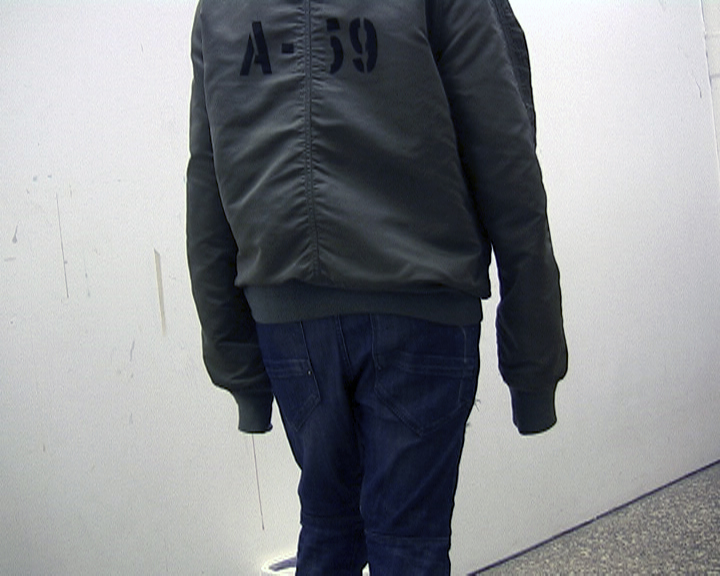
Single-channel video, with sound, colour
32’15’’
DV PAL (720 x 576)
6 years after S/T Orbea (2007), Iñaki used the same technique to structure this 30-minute video. In Bomber, the camera runs its lens in long takes over the soft volume of a military bomber jacket. Once again, the macro lens touches the smooth surface of the object—in this case, a textile piece. The use of the close-up, in constant motion, produces a tactile vision as defined by Alois Riegl, materialising a haptic perception. A few minutes in, we recognise the jacket as belonging to Itziar, once we hear her answering to a series of instructions given to her by Iñaki. Itziar is wearing the jacket while it is being filmed. We discover it once the camera draws away for a bare, straightforward display of the garment on her body. The resulting image is more undefined than S/T Orbea, but equally iconic.
In the background, a young girl is speaking with someone in English. Her aural presence blends into a repetitive electronic melody, all of which leads us to understand the footage as a lived time. As we run our eyes over the jacket’s surface, the printed text on the clothing is gradually revealed; first, as a fragmented image; later, as writing printed on the textile surface. The bomber suggests different signifiers that may or may not be activated. In this piece, however, it is presented as a raw material capable of binding collective existences together.
Related bibliography
Unpublished dialogue between Leire Vergara and Iñaki Garmendia for Garmendia. Maneros Zabala. Salaberria. Proceso y método, Guggenheim Bilbao (31/10/2013-16/02/2014). The artist answers questions on his work process, the importance of the script, interrelationships between different works, text/image correspondence, and tensions between subject and object.
Riten
2013
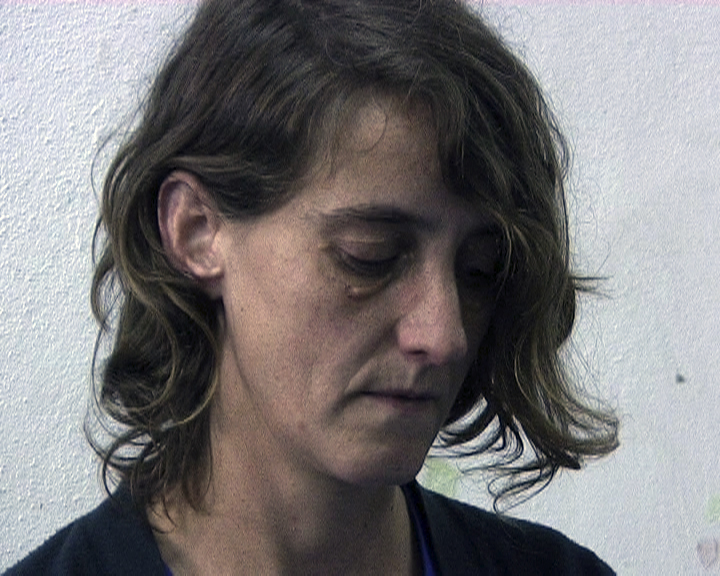
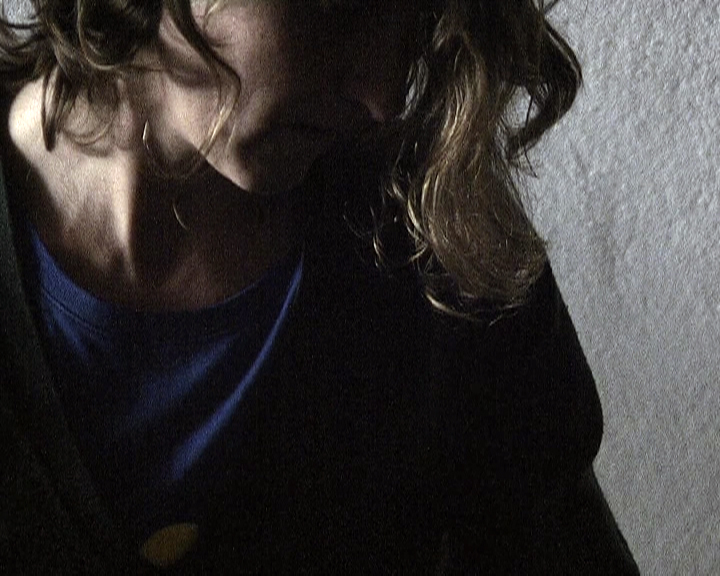
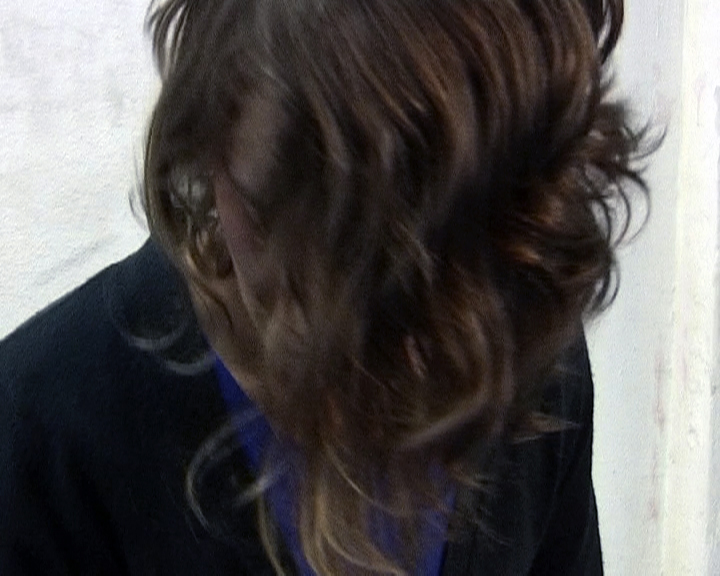
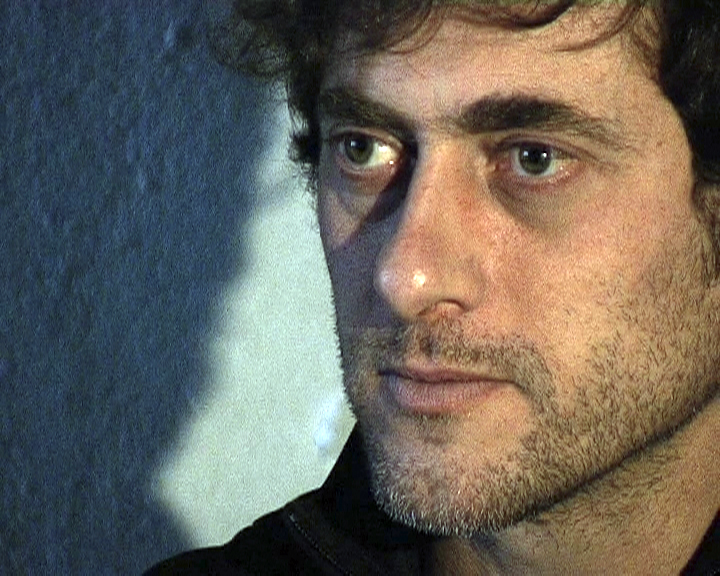
Two-channel video, with sound, colour
45’59’’
DV PAL (720 x 576)
A video of a couple. Two scenes reappear, assembled in a two-channel projection. A piece in which text is introduced, once again, as the symptom of a problem.
“What is a fake image?”, wonders Patricia, the young activist from Le Gai Savoir, in the empty television set where Godard’s film is being shot, as the May 68 protesters take to the streets. “That place where image and sound (seem) real,” she answers to herself. In Speaking about Godard, Kaya Silverman parts from this scene to speculate about the Barthesian degree zero of images and sounds. In the scene, the actors speak but do not listen to one another, which stifles the images in a fugue-like movement.
Riten’s proposal is to delve into the relationship between image and sound. To that end, it departs from the narrative standards of classical editing, seeking to distance itself from the forms of representation behind the assembly of sequences. Let’s apply it to Riten: 1 + 2. Miriam + Unai. Two actors read out a transcription of the dialogues in Bergman’s The Rite, filmed in 1969. The camera frames Miriam’s face, then Unai’s, and so on, which prevents us from seeing them looking at each other. We can only sense the scene in its entirety by the sound we hear off-screen, which we assume to be diegetic. There is no clear order and, at times, the dialogue seems fluid. At other times, it becomes abstract and numerical.
The images in the film are muted by the pressure of diction, the extras compensate for this absence by their efforts to defer the encounter between image and text.
The text being read aloud by Miriam and Unai is an SRT file with the film’s Spanish subtitles and time codes. The images of the film are silenced by the pressure of diction, the actors compensate for that absence by their effort to defer the encounter between image and text. The time of exposure in front of the camera expands like an endless wait. In this formless time, the actors themselves become images, the reflection of an action that attempts neither to be true nor false.
Police/Car
2013


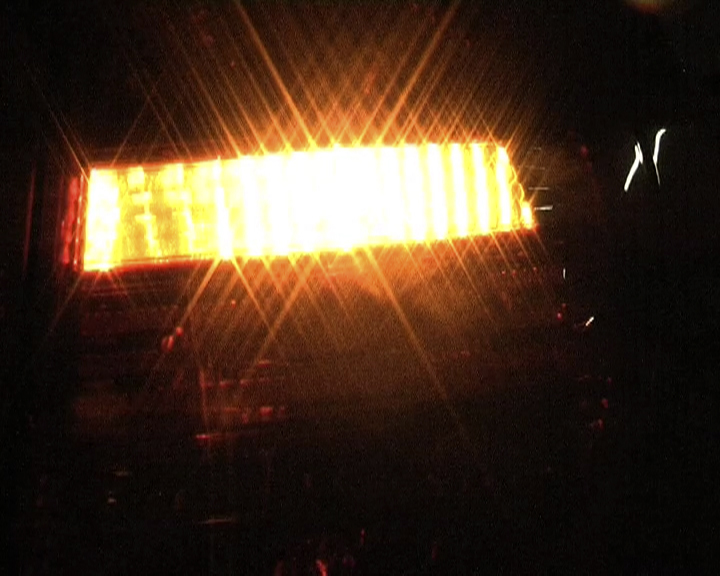

Two-channel video, with sound, colour
23’ 47’’
DV PAL (720 x 576)
This work was first presented in 2013 as an installation at the Moisés Pérez de Albéniz Gallery in Madrid. A sculptural setting organises the space by assembling the sequences in a nonlinear way. One of these sequences displays the front view of a car’s position lights flashing in the dark. None of its distinctive features are perceived until the end of the recording, where its colour and number plate are revealed. The video, which plays in a loop, begins with a short clip in black and white that reads:
31
POLICE
CAR
The fragment is taken from John Cale’s minimalist film Police Car, included in the 1966 Fluxfilm Anthology. The sequences following this clip replicate Cale’s filming of a car’s indicator lights in the dark. Iñaki’s transcription should be understood as the reproduction of a choreography, in which the video camera goes over the different takes, replicating the positions of the 8 mm camera that were used in the film. The resulting image has nothing to do with Cale’s, –its visual effect is quite different—. The original was recorded on celluloid, in black and white, without a soundtrack, while the replica was recorded on video, in colour, and with background noise. The installation is completed by a second, longer sequence, in which the same white car (followed by a red one) is subjected to a thorough filmic examination similar to the one deployed in ST/Orbea and Bomber.
White Light/Red Light. Flashes that could perhaps be read as spectres of the intrahistory of subculture.
Mayor fatal (Un esqueleto y misiles aka-47 en el Banco de España de Bilbao)
2014
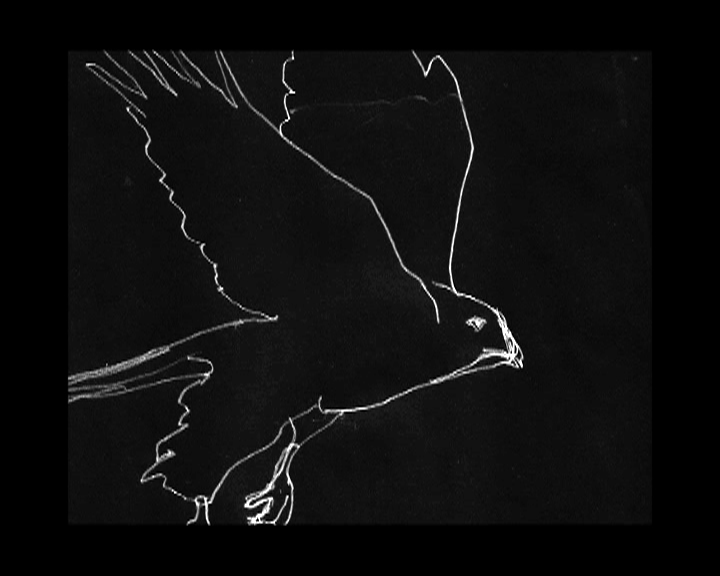
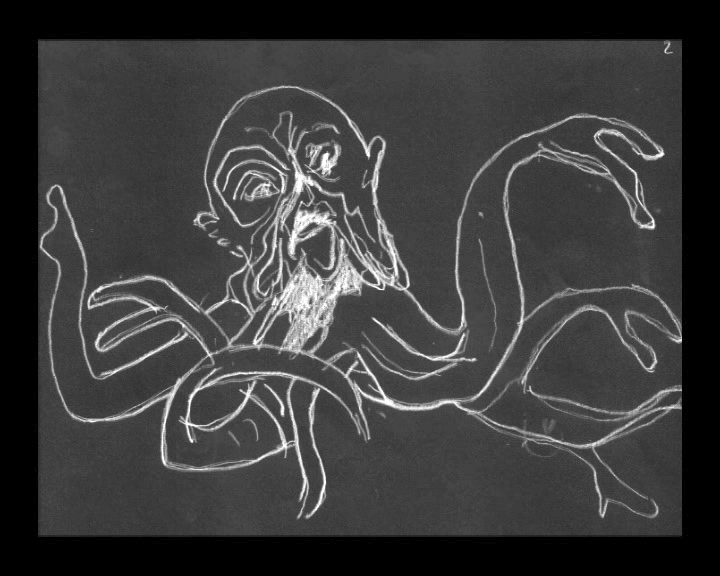
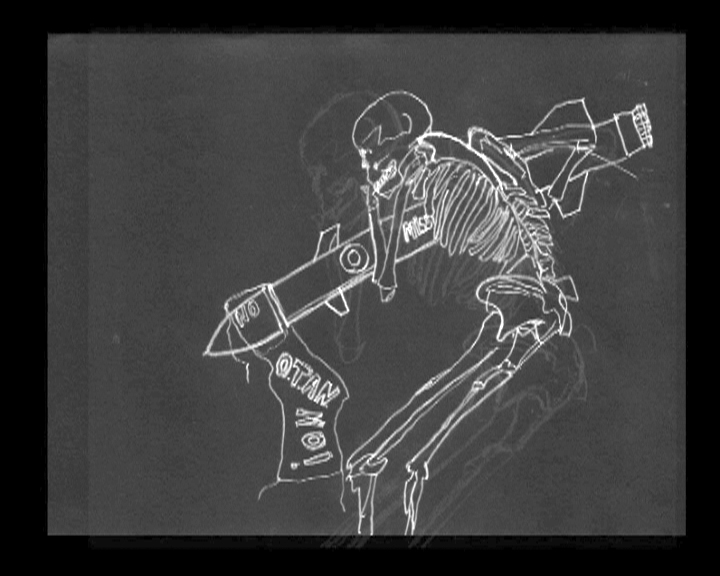
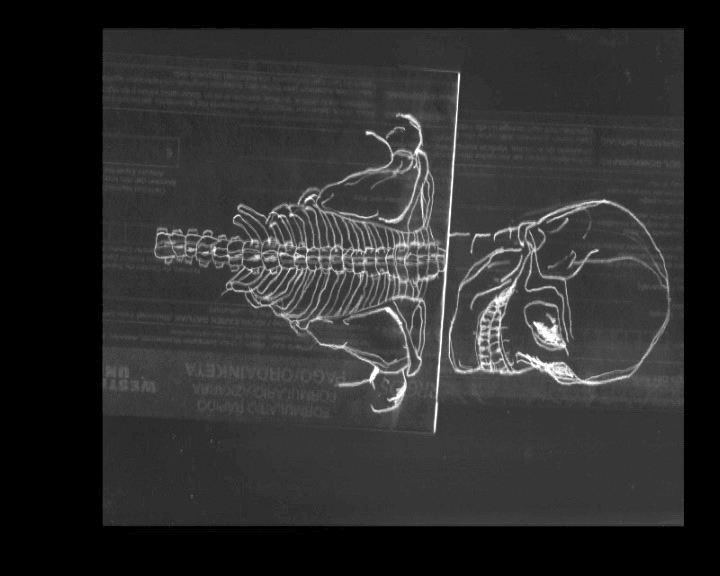
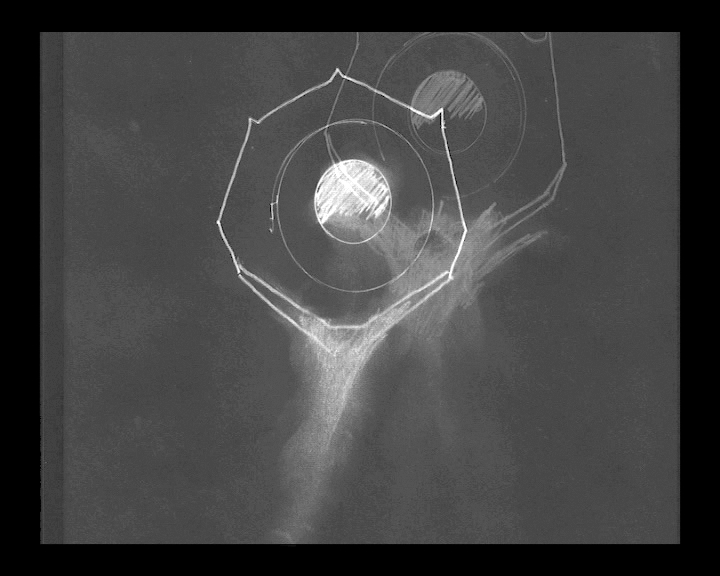
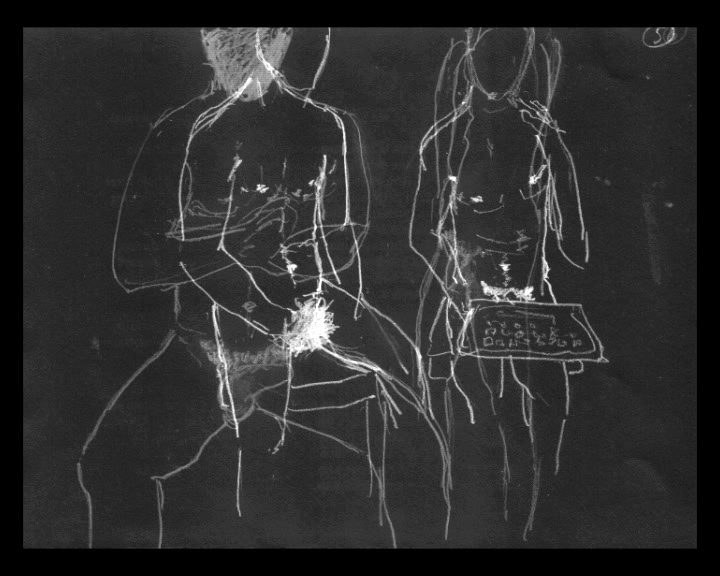
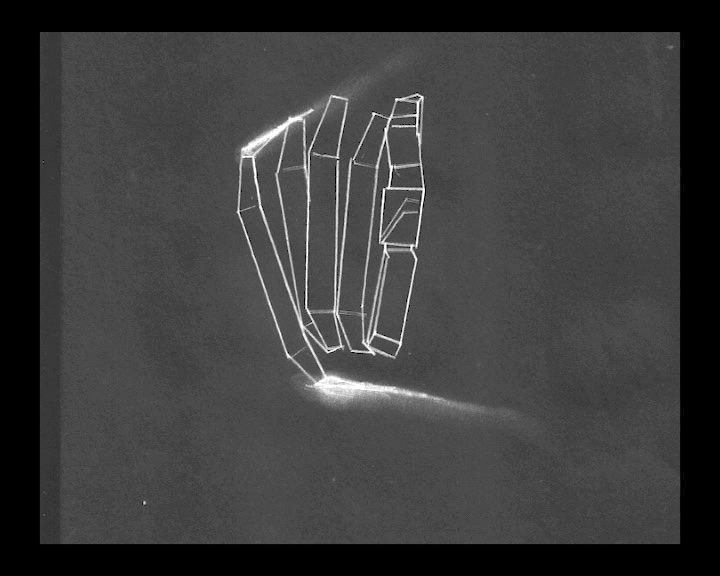
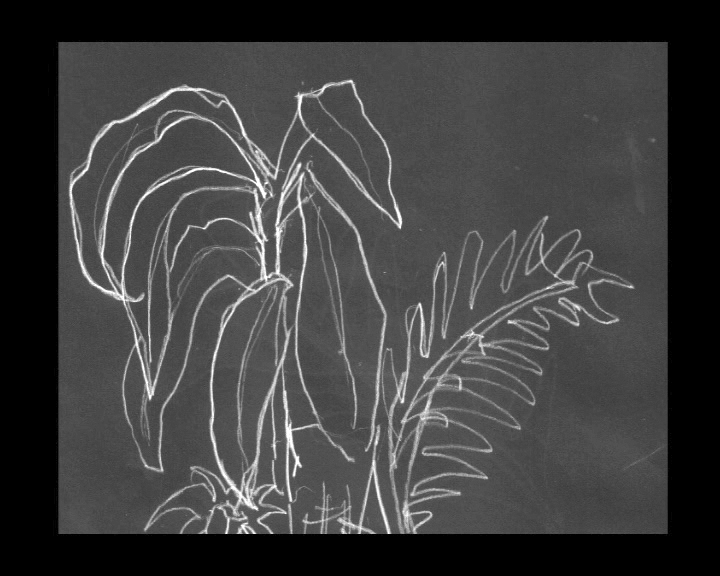
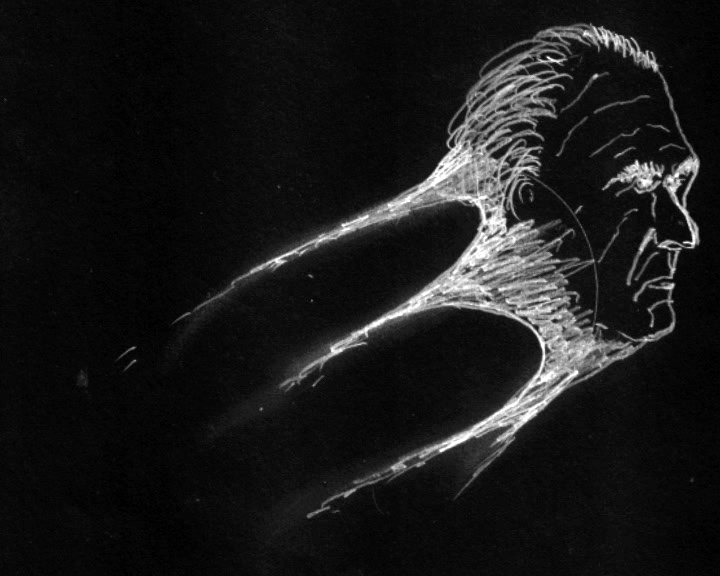
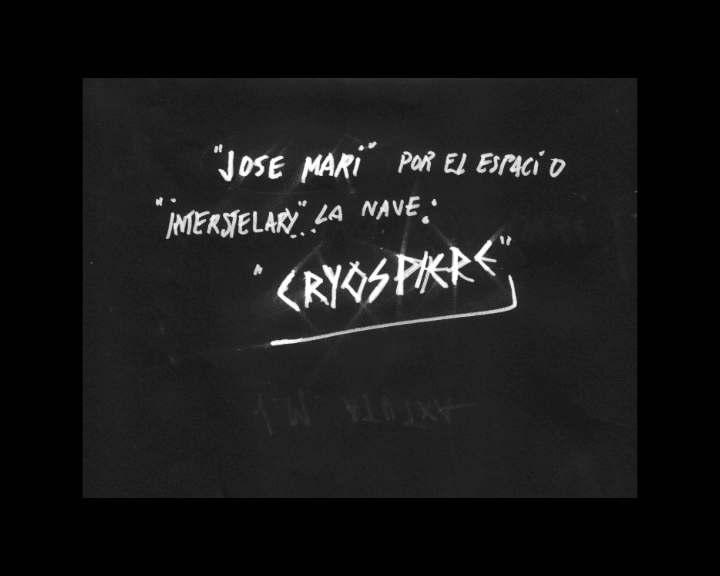
Single-channel video, silent, black & white
4’ 38’’
DV PAL (720 x 576)
Garmendia’s first animated video. A collection of drawings takes cinematic shape during the editing process. The time that passes between each image is longer than what is stipulated by the conventional language of cinematic animation. His use of negatives, inverting the black on white of the original drawings, creates a disorienting, reverie-like effect. Together, it reveals the ecology of the assembly behind this piece.
Form becomes blurry: a surrealist still life, a site-specific exercise too, stemming from an invitation to exhibit at Okela artspace (Bilbao) and, as a response to the idea of history, a small homage to science fiction as a strategy to alter the logic in which the past is read. Several plotlines intertwine without a lineal chronological order. When the sequences meet they leave behind traces of latent individual and collective lived experiences, related to the moment in which the artist came to Bilbao to study Fine Arts. The film summons some images from the past, making them return, ghost-like. The most recognisable among them bring us back to the eviction of the Gaztetxe on Banco de España street, in Bilbao’s old town, in November 1992. New residues are created, such as a piece by Robert Smithson turned into a spaceship. The futuristic atmosphere invites the elements to indistinctly inhabit this intergalactic set: a skeleton, an AK-47 missile, the police chief, the emeritus king, a great octopus. Together they navigate through the footage.
The black surface contributes no more details on the context of these references, which might lead us to think about the problem of the survival of an image. The kinetic illusion that makes them appear and disappear equally disorients any attempt at representing the present, the past, and the future.
Arkaka Tri-Stan
2021


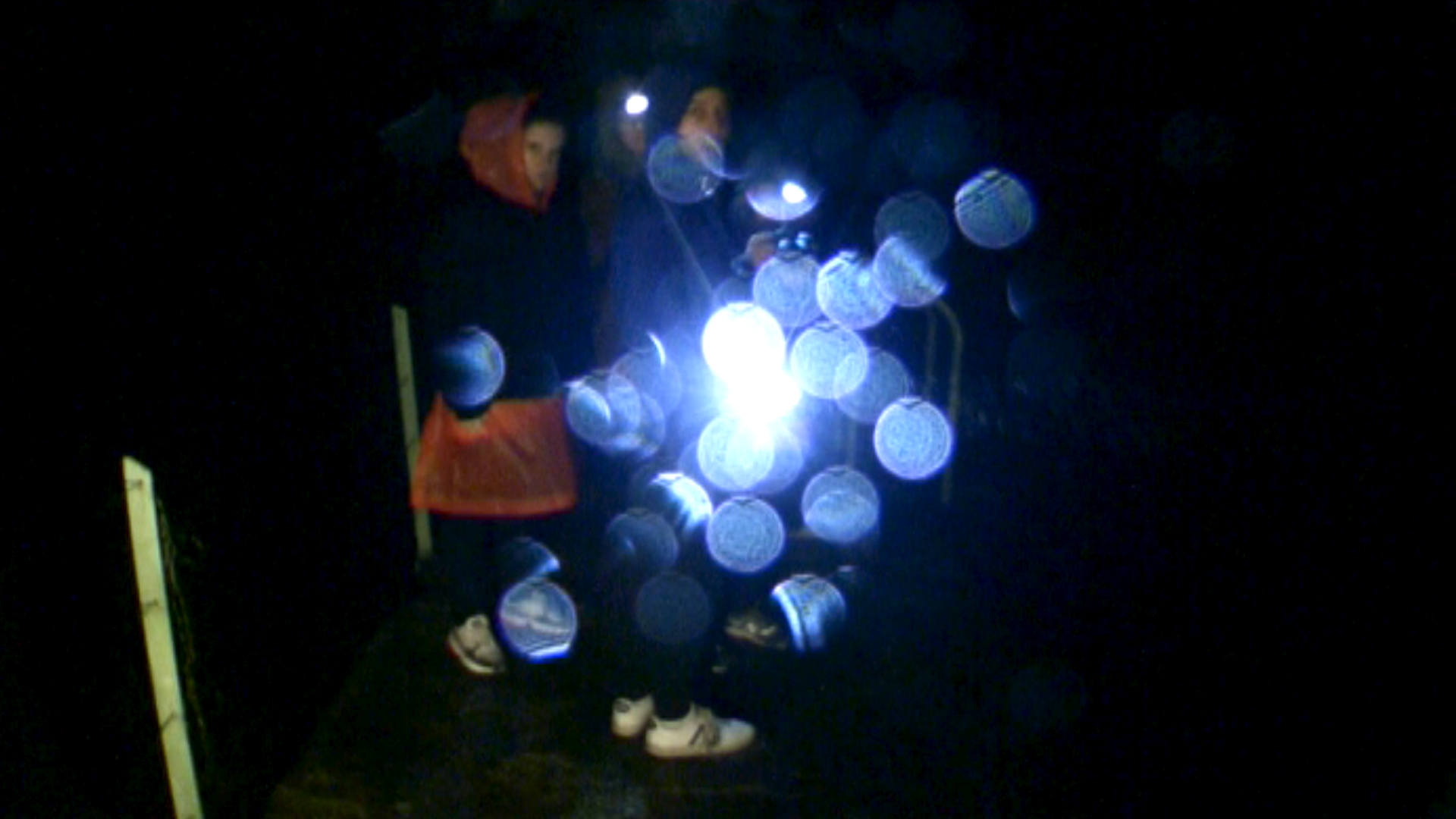


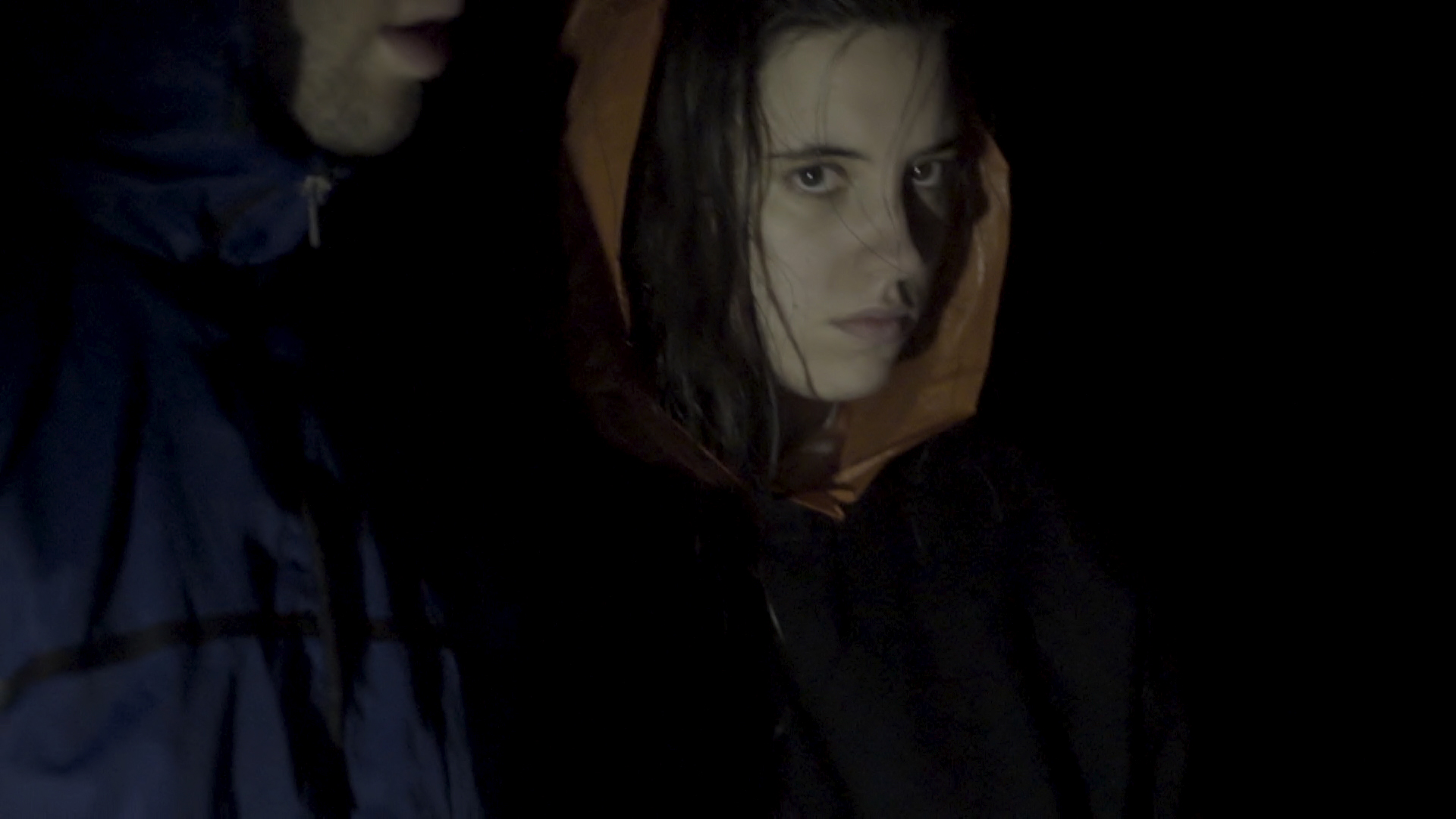

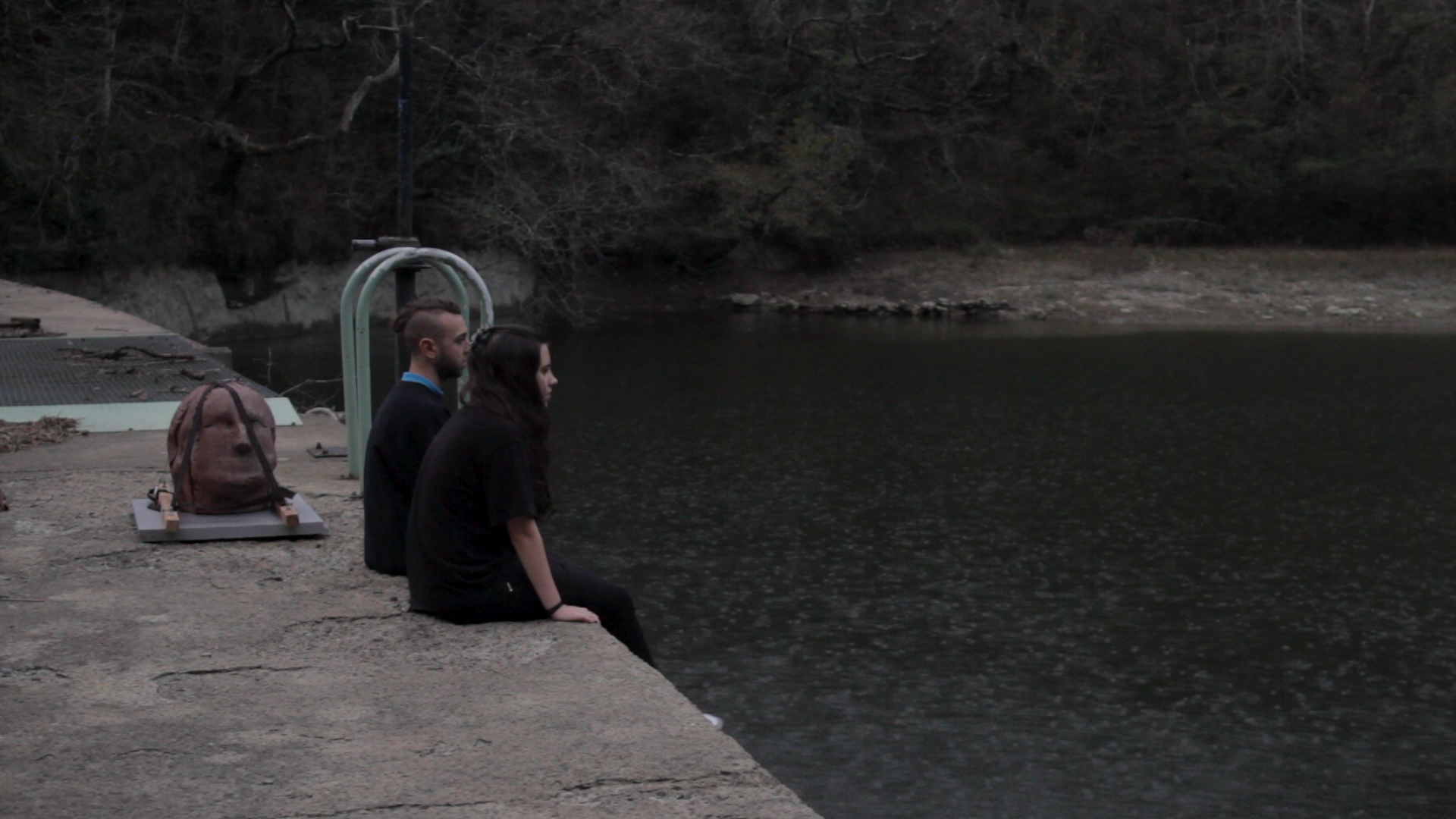
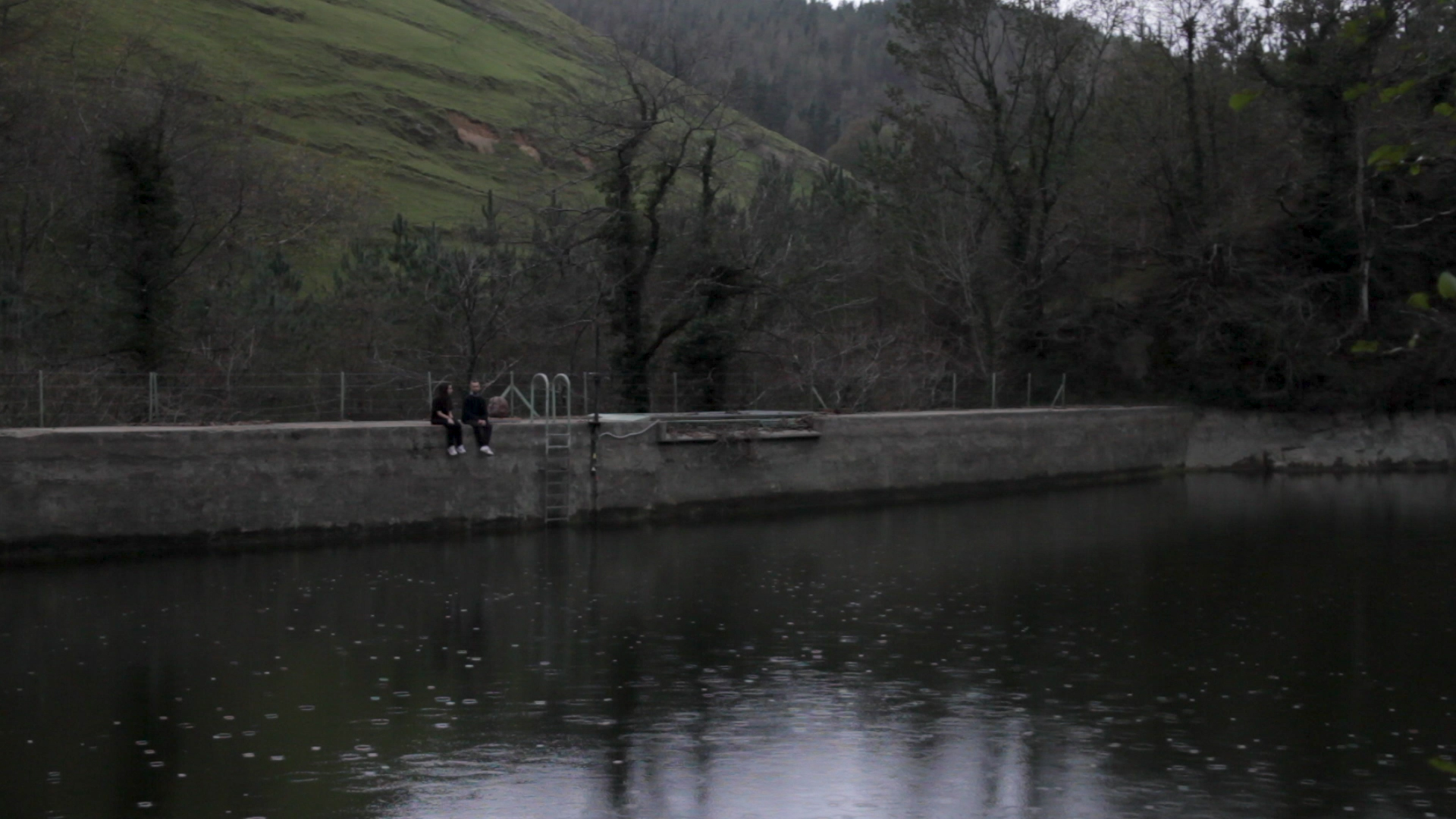
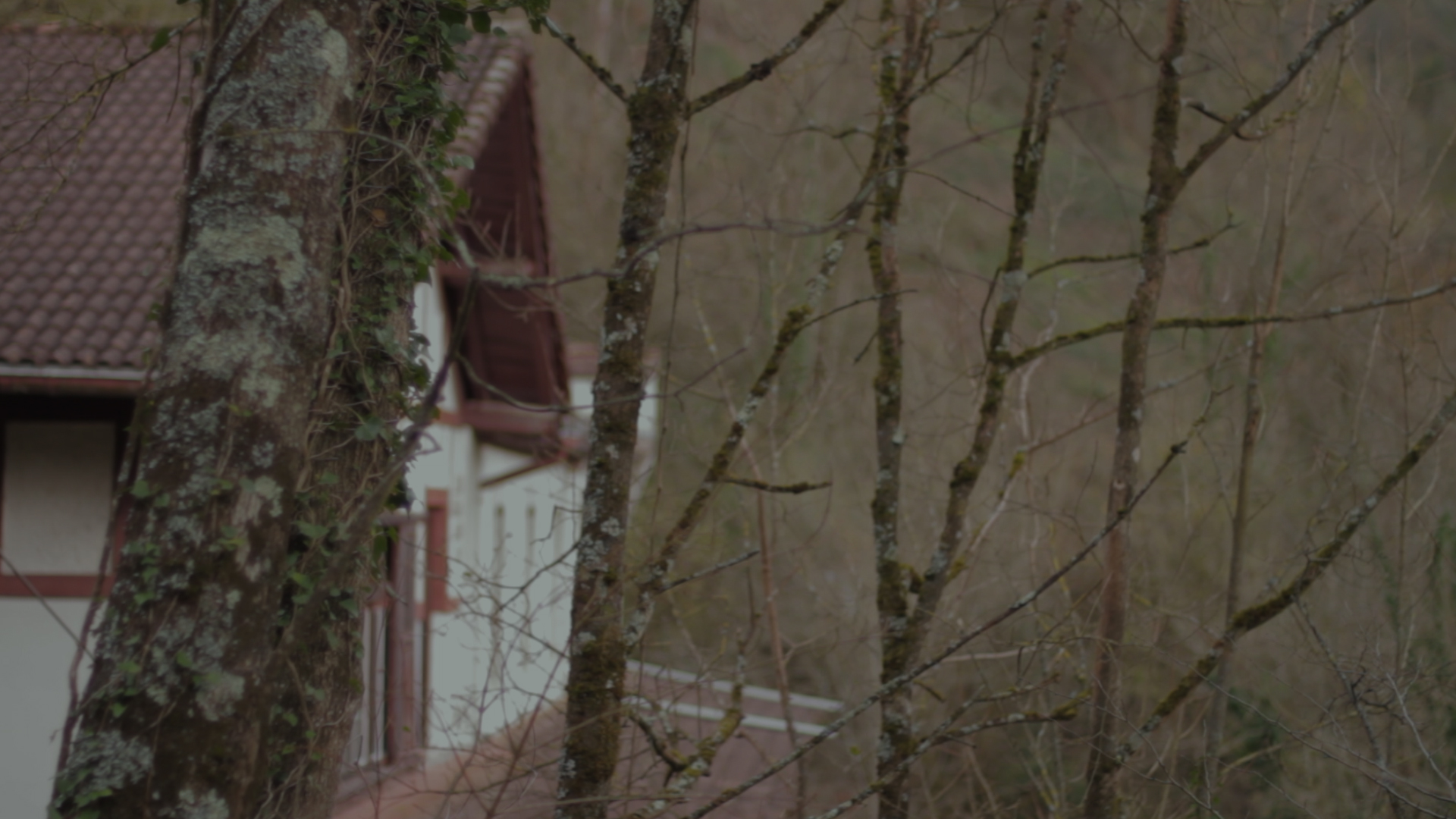
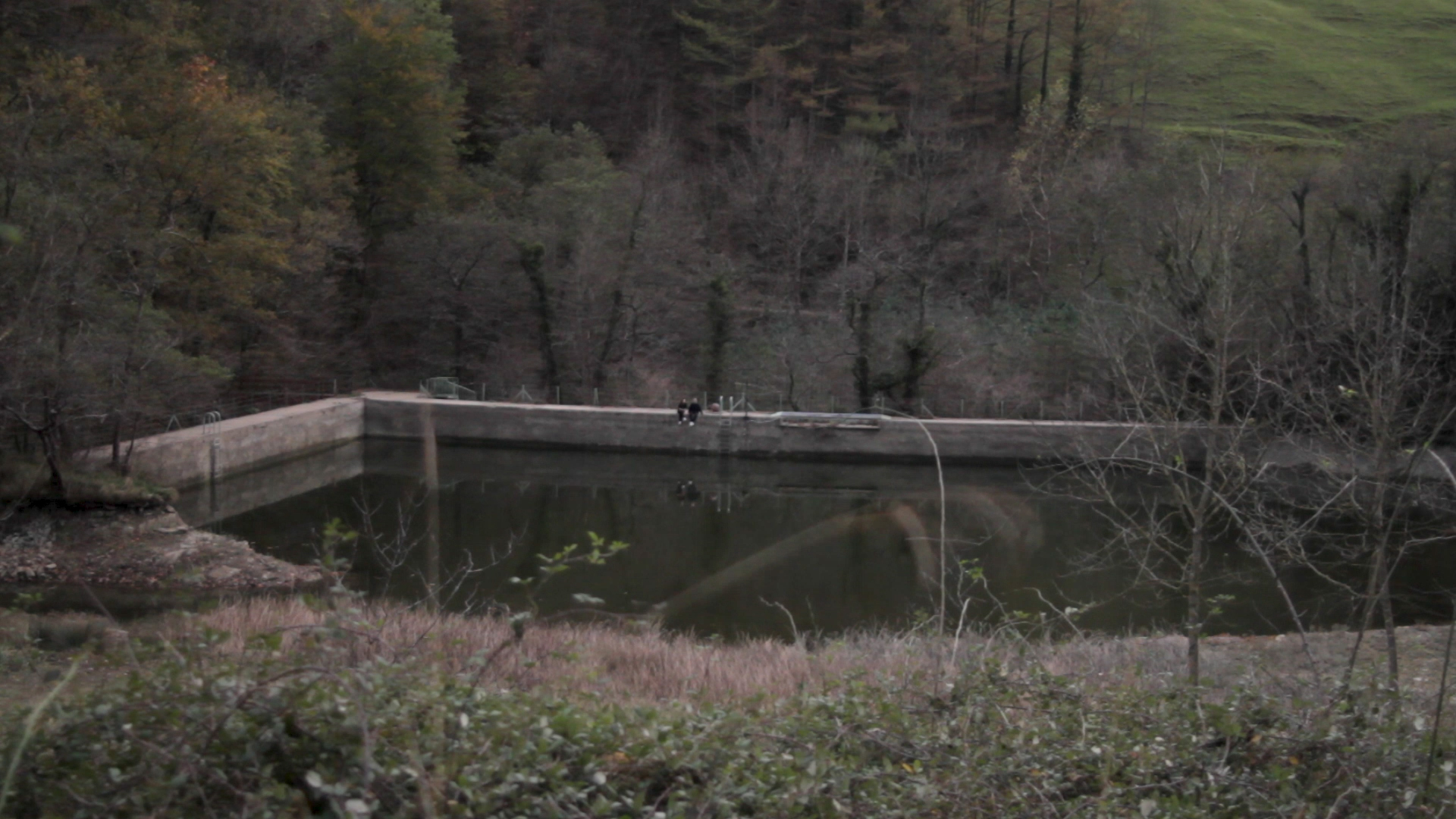
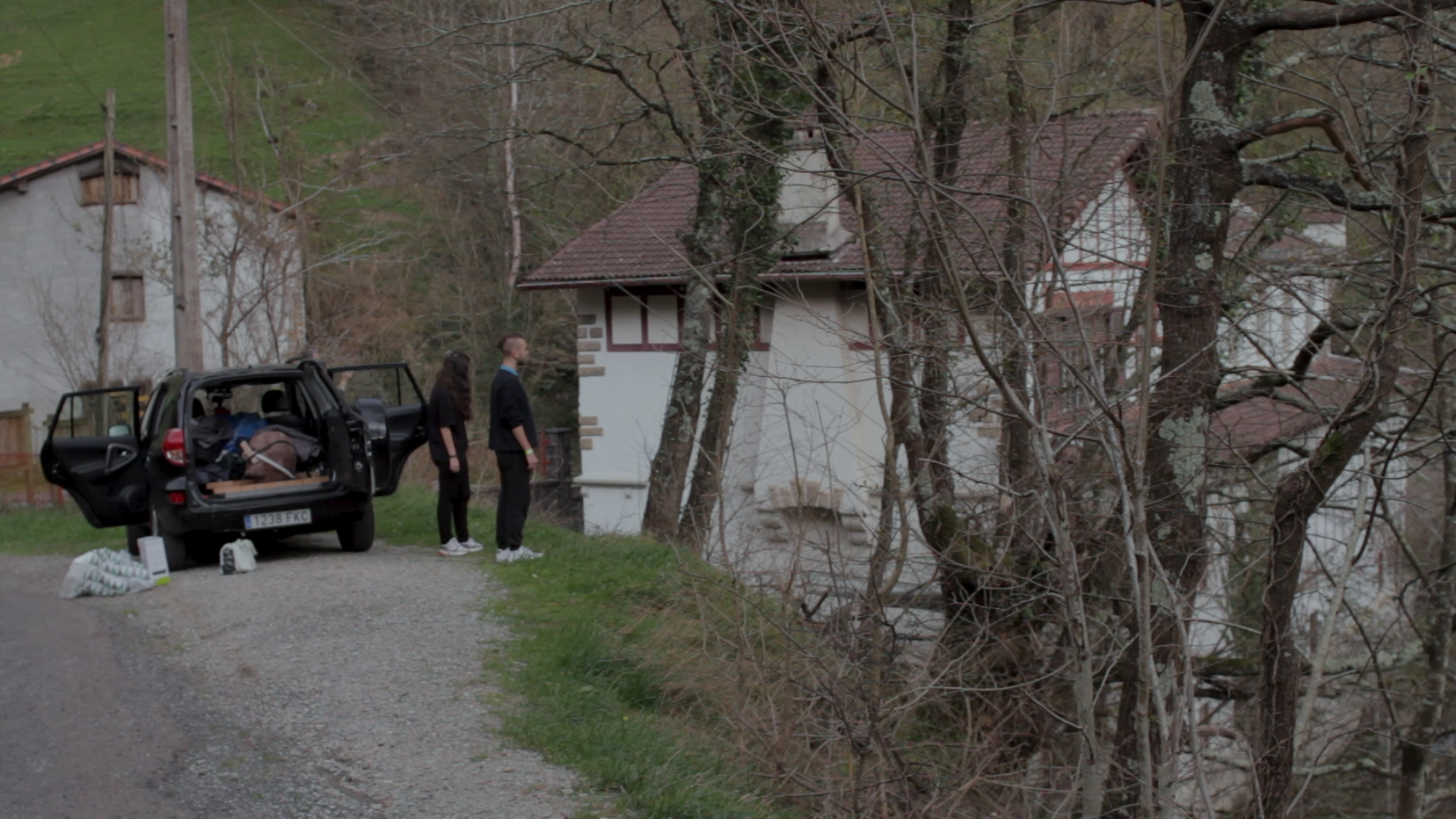
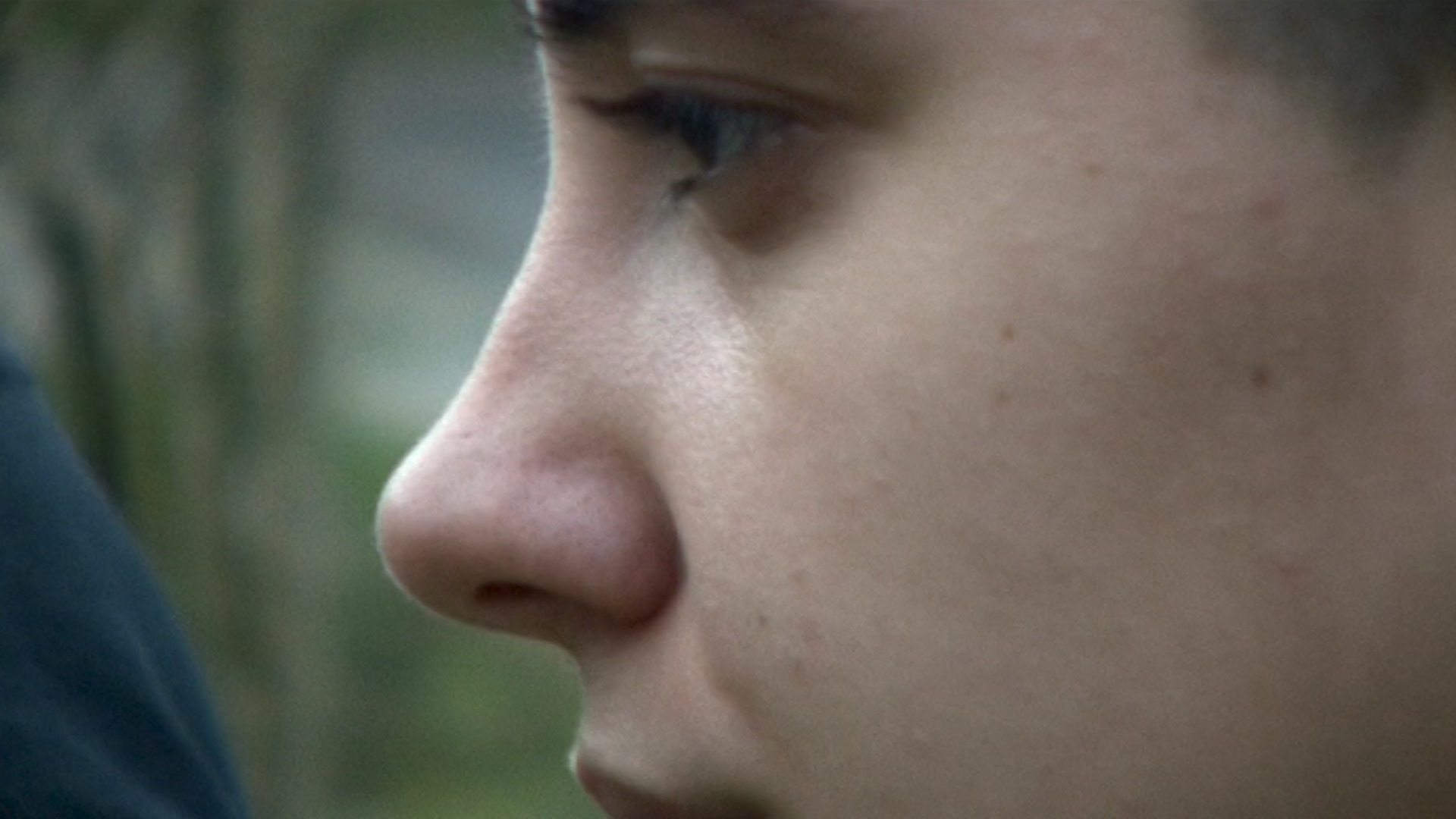
Single-channel video, with sound, colour
17'51''
HD Video (1920 x 1080)
DIVE OF THE HEAD OF «JS» IN THE ARKAKA DAM. We have left Bilbao in Ainara’s car, an hour and a half drive to go and the same back, we go to Zaldibia in Goierri; you can’t – there are restrictions, with perimeter closure etc. All with a pass – I have not seen it, mine: the paper – and a 4-hour work contract. Home by ten. Inside the car (we are picking them up on the way, Ainara drives while Usue checks if we have forgotten something). I knew “their” names when I wrote with a pen on the tape that I recorded: “ARKAKA-PRESA: ANDER Y MIREIA, 2-11-2020”. Just a month ago. In the trunk we carry: two cameras, three halogen flashlights (two of them front lights to guide us at night), 25 meters of 20mm transparent tube, a neoprene diver, an inflatable crocodile (with a pump) and JS’s head. (..) We left the car parked next to the central, so as not to be seen, that was the plan; it’s still daytime. Then Ander and Mireia carry the equipment to the edge of the dam that is hidden from the road. It’s six o’clock and we hear a car leaving the plant, two workers are leaving. Head stays in the car until dark (one hour left)
Iñaki Garmendia
Related bibliography
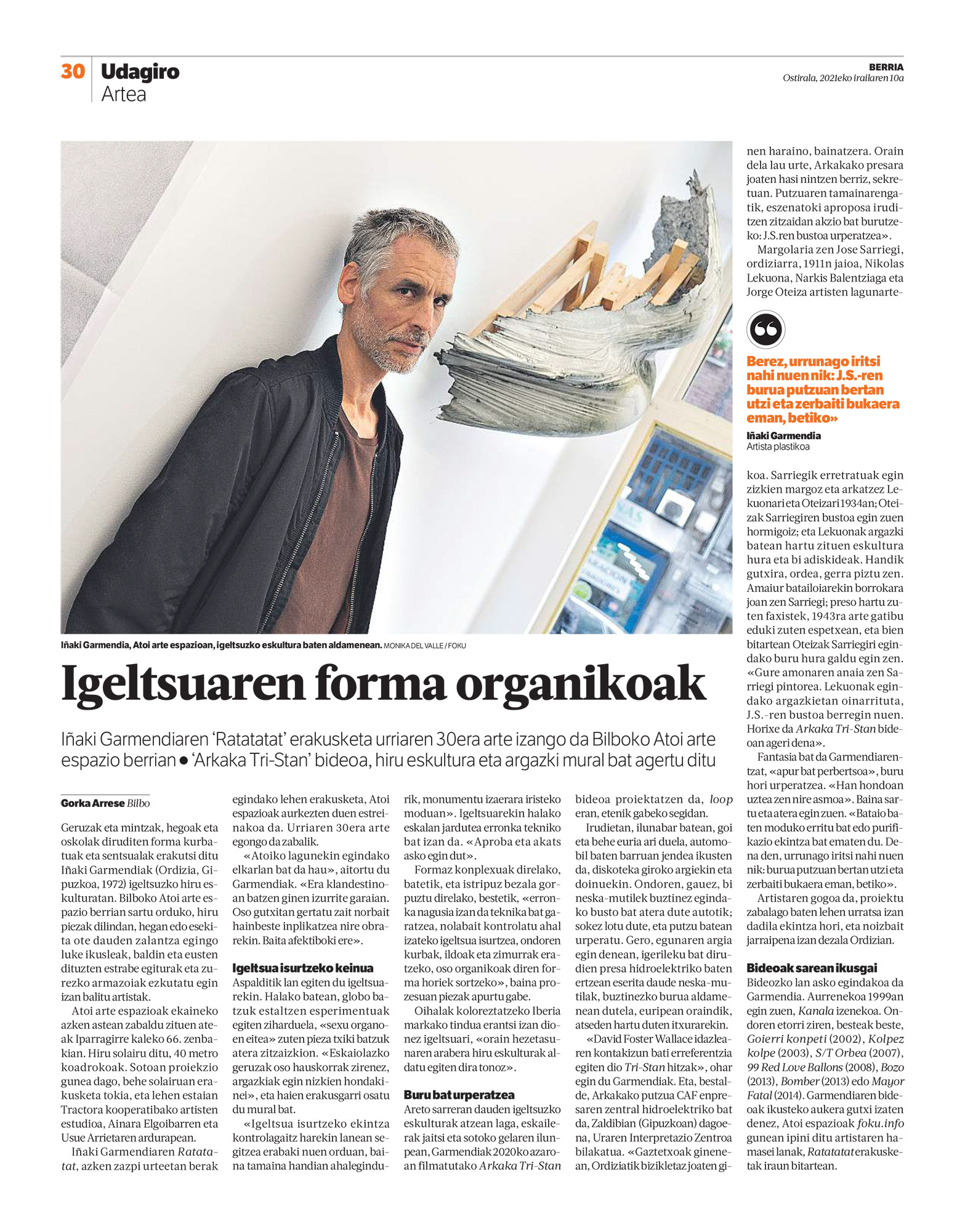
Review of Iñaki Garmendia´s “Ratatatat” solo show at Atoi by Gorka Arrese
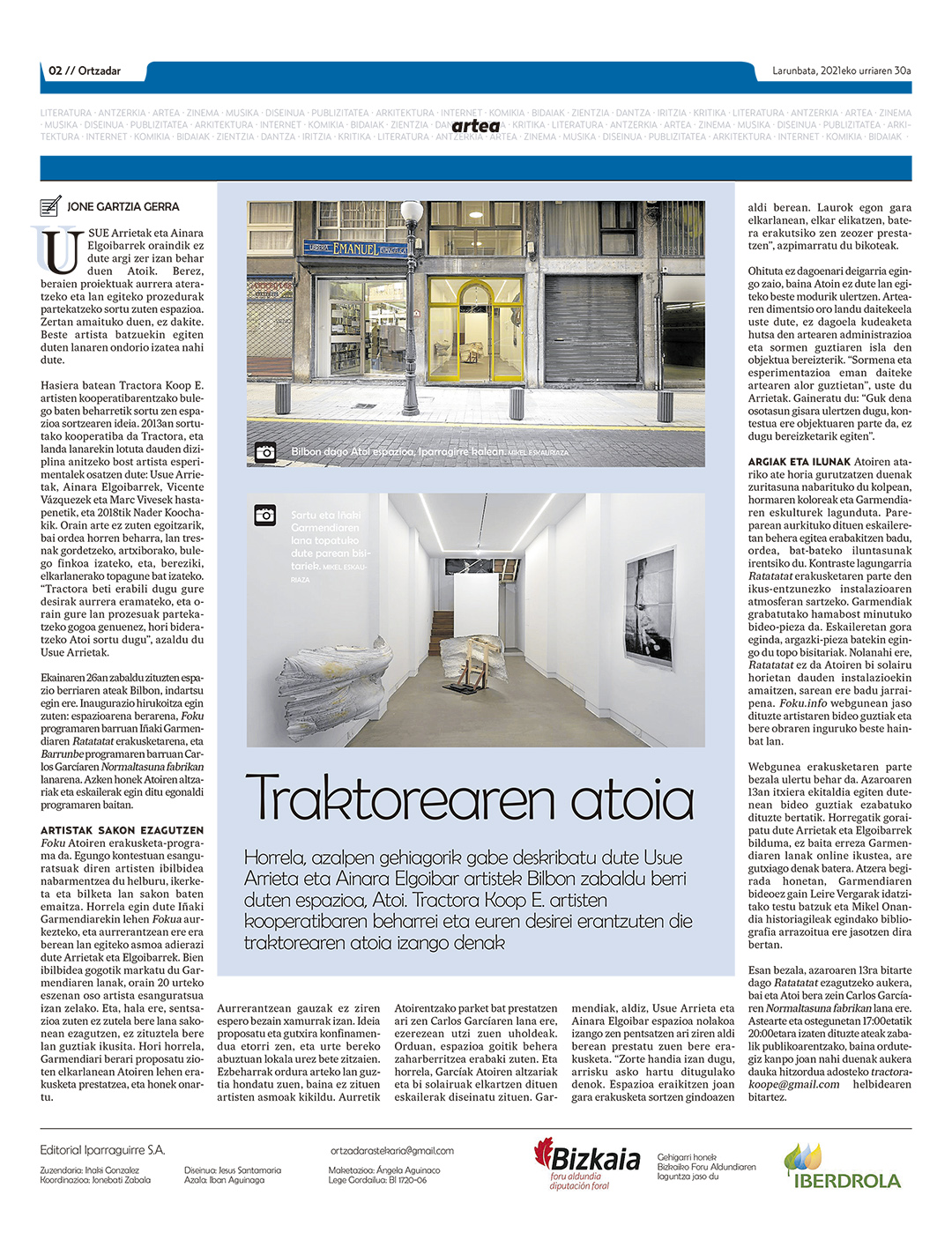
Journal review in which Jone Gartzia writes about Atoi and the exhibition titled “Ratatatat” that Iñaki Garmendia is showing in that space.