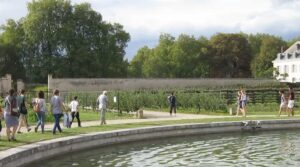
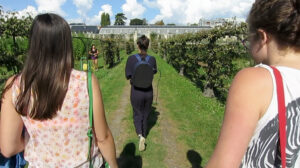
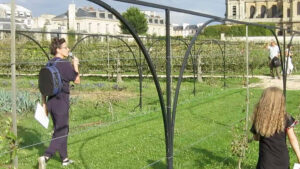
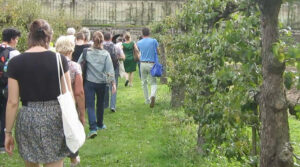
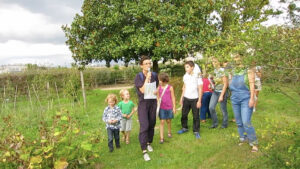
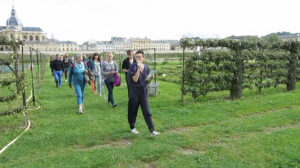
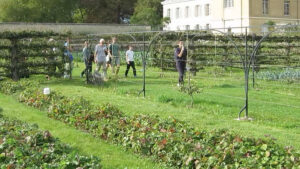
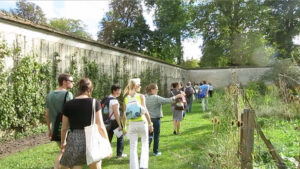
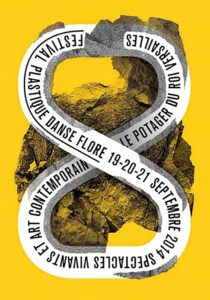
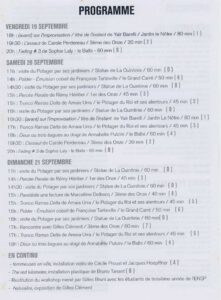
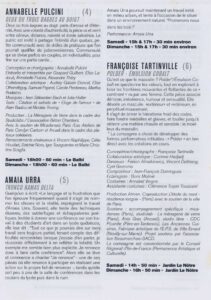
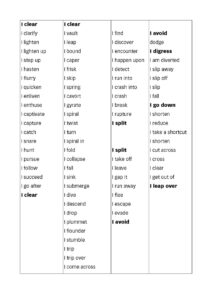
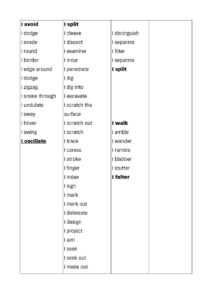
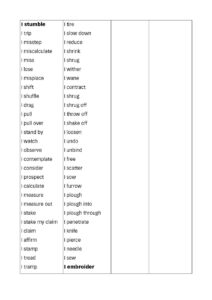
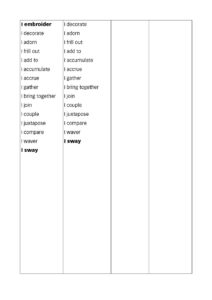
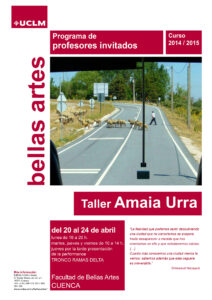
Amaia Urra is invited to take part in the Plastique, Danse, Flore festival, which takes place at Le Potager du Roi in Versailles, created by Jean-Baptiste de La Quintinie on commission from Louis XVI in the 17th century. Le Potager du Roi served as an experimental garden for testing ways of growing fruit and vegetables out of season to supply the king’s kitchen. Its director, Frédérique Séguette, was a fellow performer with Amaia on the tours of Jérôme Bel’s stage piece The Show Must Go On, and he approaches the festival with a focus on promoting visual and choreographic practices that challenge the notion of landscape and environment. For the occasion, Amaia presents a performance from the series Deriva de sinónimos, which she titled Tronco Ramas Delta, and in later presentations would come to be titled Je Marche —in French— or Camino —in Spanish—, meaning ‘I walk’ in English.
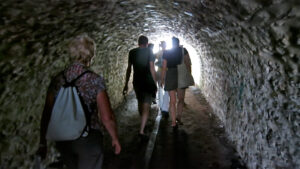
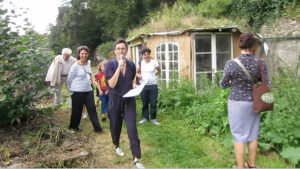
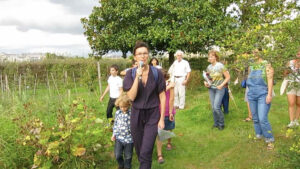
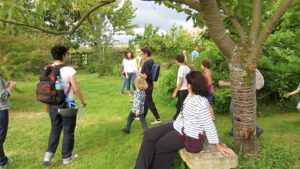
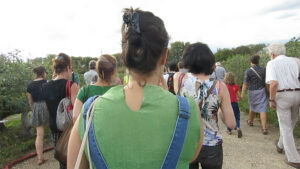
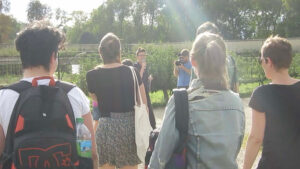
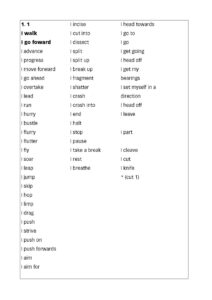
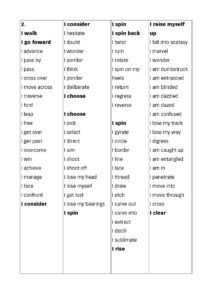
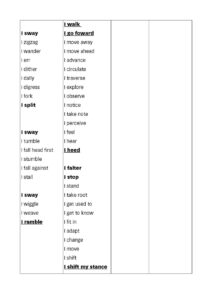
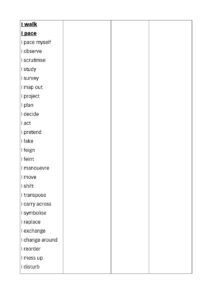
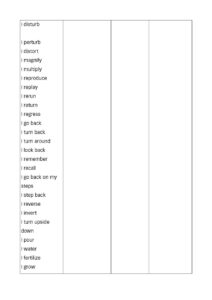
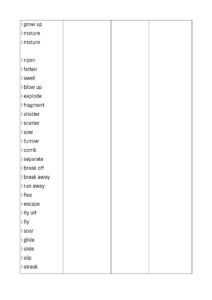
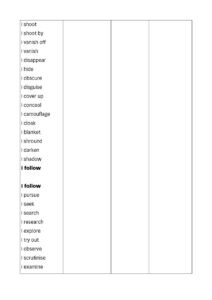
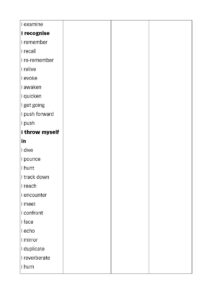
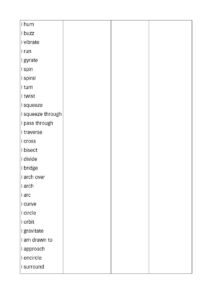
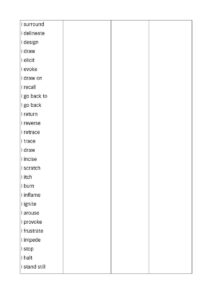
Tronco, Ramas, Delta is a Deriva de sinónimos for the verb ‘caminar (in English, ‘to walk’), hummed in the first-person singular of the present indicative. During the performance, Amaia, followed by the audience, walks briskly through the gardens with the portable PA system she previously used in Una vuelta-ta.
The triad formed by trunk, branches and delta does not belong to the field of botany, but rather to historical linguistics and dialectology, sometimes extended to taxonomy or information theory. The reference to botany is used in these contexts as an evolutionary and structural metaphor to classify the diversification of a phenomenon from its origin to its dispersion. The title, therefore, does not refer to any of the trees and plants in the King’s Garden, but to the tree-like structure itself that makes up the scores in the Derivas de sinónimos series.
See: Early works, Desaparezco (2012–), Renuncio (2012–), Inauguro (2014–), Tarareo (2014), Tronco, ramas, delta (2015), Comienzo (2025–)