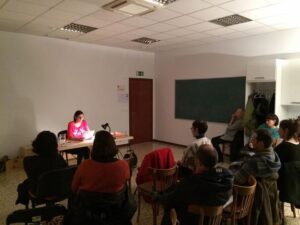
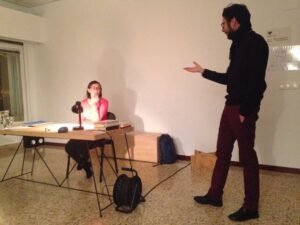
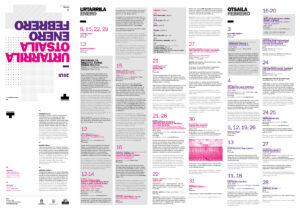
In 2015, Amaia received an invitation to speak about her artistic practice at Tabakalera, as part of the Bistariak programme. To structure the talk, Amaia wrote a script listing the activities that made up her practice, and read it out using the infinitive form of verbs. The talk is also punctuated by quotations from authors such as Emmanuel Hocquard and David Antin, both experimental poets —the latter known for his ‘talk poems’, based on lectures. These quotations are the exception to the rule; they act as hiatuses in a method otherwise strictly followed to its fullest extent, resulting in a string of infinitives, only interrupted to read a few quotations from these authors.
Later that same year, The Great Conversation took place in Tabakalera’s newly inaugurated premises: a series of events organised as public round-table discussions, which acted as a prelude to the first of the biennial curatorial and research cycles directed by Oier Etxeberria at the Tabakalera International Centre for Contemporary Culture in Donostia-San Sebastian. Each roundtable included guests from different fields of knowledge who shared a roughly ten-minute, freely formatted reflection on a given topic. The project for the 2016–2017 biennium was entitled Stimulants: Traffic and Euphoria, and The Great Conversation was structured around four round-table discussions, each centred on a stimulant such as coffee, sugar or opium, exploring the significance these stimulants —derived from colonial exchange— had played in the shaping of modernity. Amaia was invited to join the panel on tobacco, composed of five people. Her response to this invitation was Bla, which is part of a series of the same name through which Amaia develops a method for sidestepping, and thus confronting, the invitations she receives to speak in public.
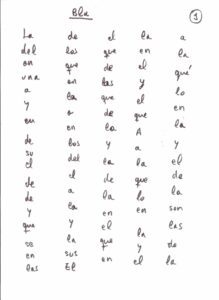
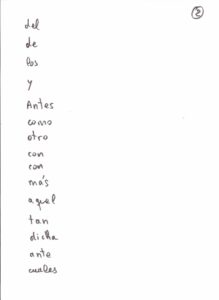
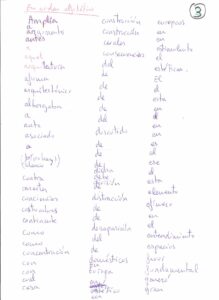
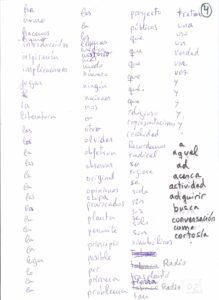
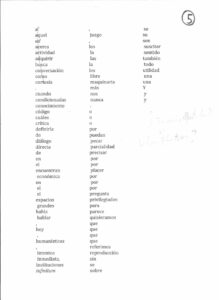
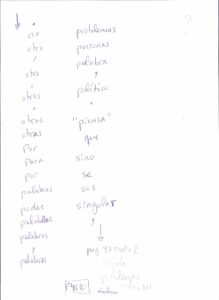
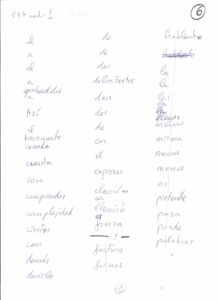
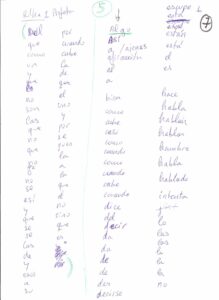
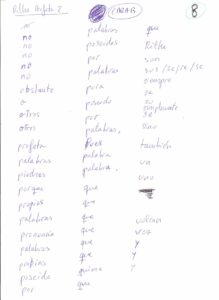
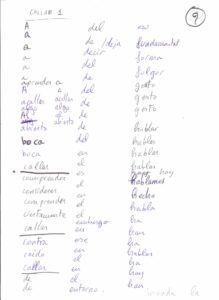
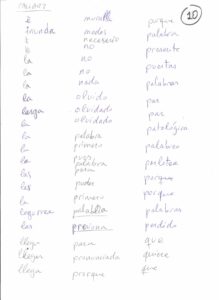
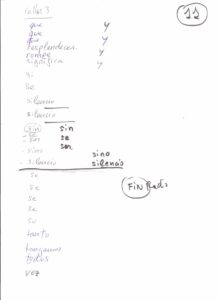
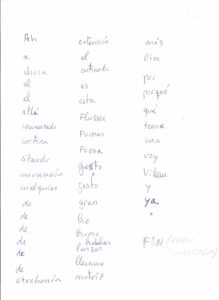
Bla is a strategy that allows Amaia to address —whilst at the same time avoiding— the topic of the invitation —in the case of The Great Conversation, tobacco— by using one or more pre-existing texts that do address it. Among the texts she used for Stimulants: Traffic and Euphoria were the opening text on the theme and the format of the round-table discussion, written by Oier Etxeberria, and The Gesture of Speaking by Vilém Flusser. Both allowed her to address the proposed topic whilst simultaneously confronting the fear she felt of speaking in public and of being part of the panel at an event with many guests and little time to speak. Amaia employed a technique whereby she arranged the words she found in the texts she used in alphabetical order. This process rendered the texts unintelligible and, at the same time, expressive. She spoke about speaking, but without actually saying anything.
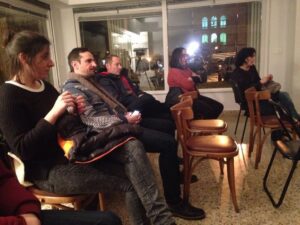
In 2018, Amaia is invited to Radio Consonni, a series of live radio programmes with an audience that took place at Azkuna Zentroa in Bilbao, an institution where Consonni spent two years as a resident collective. The shows covered a range of topics, featuring guests from various professional fields, and were subsequently released as podcasts, available via the Azkuna Zentroa and Consonni websites. The programme in which Amaia takes part is hosted by Miguel Álvarez-Fernández, who also presents the Ars Sonora programme on Radio Nacional de España, and is entitled ‘Art and Radio’. The guests appear before the audience seated around a table on stage. Amaia performs once again with Bla, incorporating the text she received as an invitation, which mentions The Great Conversation.
See: Early works, Bla. Coup de dés hazard jamais le n’abolira un (2017)